
Content note: this page was written by Claude (AI) for Pensacola Locksmith.
Distance changes the way a locksmith plans a job
Getting from the city to Cantonment is a real drive. That distance is one reason we like to plan a visit carefully before we leave. Calling ahead and describing the problem in detail lets us bring the right parts the first time, rather than finding out on arrival that a part is on the wrong truck.
When you call, tell us as much as you can. What kind of door is it? Is the lock a knob, a deadbolt, a lever or a padlock? Is it in a house, a shop or a barn? If it is a car, how does it start and do you have a working key? These details help us decide whether one trip will do the job.
We do not promise arrival times. Distance, road conditions, weather and other calls all affect the day. What we can do is be plain about what to expect when you call. Please confirm availability, and let us know if you have time constraints so we can tell you honestly whether we can meet them.
Because trips are longer, we prefer to combine tasks. If you need a lockout fixed and a spare key made, mention both. If you have several outbuildings, a gate and the main house, tell us all of it. A single visit that handles everything beats three separate trips, and it keeps your day simpler.
It also helps to be reachable. Rural cell coverage can be uneven, so give us a number that works at the property and tell us if the signal drops near the house. If the driveway is gated or unmarked, describe the entrance and any landmark that makes it easy to spot. A technician who finds the right drive on the first pass saves everyone time.
Rural homes and long driveways
A rural home has its own security reality. Neighbors may be far away, so a burglar can work without being seen from the road. A long driveway gives time to approach unobserved. That does not mean your home is at special risk, but it does mean doors and locks matter, because there is less natural surveillance to help you.
Start with the main entries. Solid-core or metal doors, quality deadbolts with a one-inch throw and reinforced strike plates with long screws make a real difference. The screws are the cheap and easy part. A strike plate held by short screws into soft trim fails with one good kick. Longer screws into the framing hold much better.
Look at the less obvious doors too. A back door that opens onto a field, a utility door to a porch and a door from the garage to the house all deserve the same care as the front. Many break-ins use the door that is easy to reach and not watched. Matching every entry to a good lock is the sensible approach.
Lighting and visibility help, though they are outside our work. We can handle the locks and hardware, and we will mention other measures when we see them. For example, a door hidden behind overgrown shrubs is easier to attack without being seen. Trimming plants costs nothing but time, and it can add real protection.
Detached garages, workshops and sheds
Outbuildings often hold the most valuable items on a property: tools, mowers, tractors, generators and recreational gear. They also tend to have the weakest locks. A basic hasp with a small padlock can be defeated by a bolt cutter in seconds. The effort you put into the house should be matched at the shed.
A good setup uses a solid door, hinges that cannot be unscrewed from outside and a hasp that is bolted through, not screwed into thin wood. A shielded or hardened padlock resists cutting better than a thin one. Where possible, a deadbolt fitted to the door is better than a hasp. We can recommend options that fit your building.
Overhead garage doors present a different challenge. Many have a simple latch or rely on the opener alone. A manual slide lock, a hasp or a sturdy side-mounted bolt can prevent forced entry when the opener is off. Side doors to the garage should be treated like house doors, with a proper deadbolt and strike.
Weather and humidity affect outbuildings more because they lack climate control. Hinges rust, wood swells, and padlocks seize. A periodic spray of dry lubricant, a check of the screws and a look at the door alignment keep things working. If a padlock will not open, bring it up when you call so we can plan to open or replace it.
Gates, padlocks and chain systems
Many rural properties have gates at the end of a driveway or across a field entrance. These are secured with chains and padlocks, or with a latch and lock built into the gate. Gate locks live outdoors in rain, dust and sun, and they fail more often than indoor locks. A seized padlock on a gate can be a real problem when you need to get a vehicle through.
Choosing the right padlock helps. A weather-resistant model with a covered keyway keeps dirt and water out. A shackle guard reduces exposure to cutting tools. Brass and stainless components resist rust. Keyed-alike padlocks let you open several gates and sheds with one key, which is handy if you have a lot of access points.
Chains need attention as well. A heavy chain with a thin padlock is only as strong as the weaker part. Match the two, and keep the chain off the ground so it does not rust in puddles. If you have a keypad or a gate opener, test its battery and the manual release from time to time.
If a gate lock is seized or the key is lost, we can open it without damage in many cases or cut and replace it. We confirm ownership first. A gate that serves several properties, such as a shared road, may belong to a group, and we will need authority from someone who can approve the work.
Lockouts and lost keys at home
Lockouts happen to everyone. A person steps out to check the mail, a door swings shut and the key is inside. In a rural setting, the nearest spare key may be an hour away. A locksmith can usually get you in without damage, using tools made for the purpose.
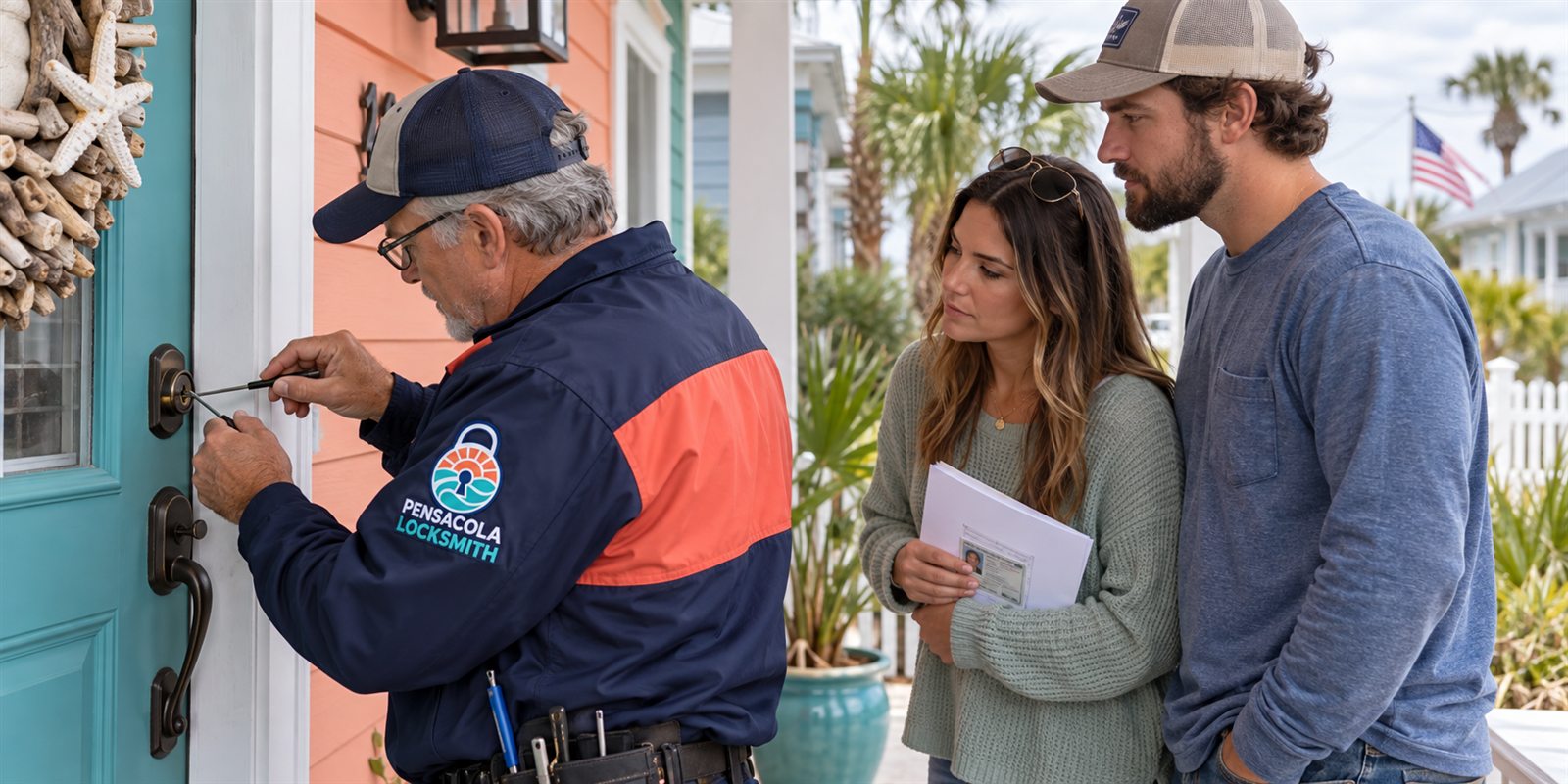
Before opening, we check that you own or live at the property. A photo identification with the address, a lease or a utility bill will do. If you are at an outbuilding on a larger property, we ask who owns the land. We will not open a door if we cannot make sense of who has the right to ask.
The method depends on the lock. Many residential cylinders can be opened by picking, and some doors can be defeated by working on the latch. We choose the approach least likely to harm the door. Sometimes a lock is so worn or damaged that replacement makes sense, and we explain why.
After a lockout, think about what happened. If a spare key was meant to be somewhere and was not, rethink where it lives. A hidden key under a rock is known to burglars. A lockbox mounted solidly, a keypad deadbolt or a key left with a trusted neighbor are better choices. A small change now can prevent a repeat.
Moving into a country property
When you buy or rent a rural home, you inherit an unknown set of keys. Previous owners, farm hands, hunters with permission, repair workers and neighbors may all have had access. Some properties have gone through several owners with no rekey. Resetting the locks is the first thing we suggest.
Rekeying all exterior locks to one key makes life simple. The house, the garage, the shed and the gate can share a key, or you can split them into groups if different people need different access. For instance, you might want a farm helper to open the barn but not the house. A locksmith can plan this layering.
While we are there, we look at the condition of the hardware. Older homes may have knobs worn to the point of failure, deadbolts that barely extend and strike plates held by short screws. We tell you what we see and what we would change. You choose what to do, and we do not push anything.
We confirm authority at the start. A deed, closing papers, a lease or a letter from the owner works along with photo identification. For rural properties with several owners or heirs, tell us who is involved. Clear authority protects everyone, especially when a property is changing hands.
Vehicles, trucks and work equipment
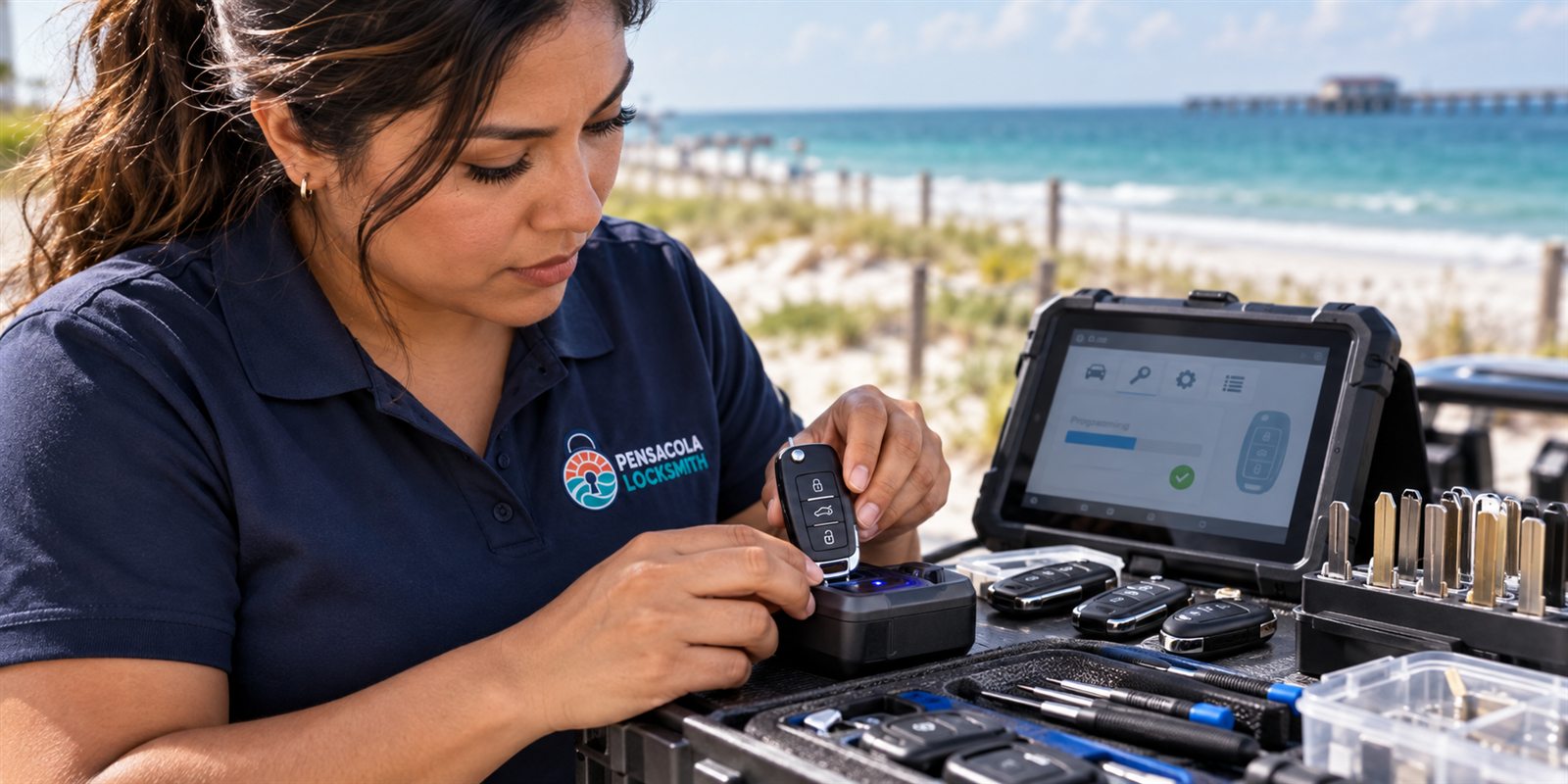
Out here, vehicles are tools. Trucks, vans, trailers, side-by-sides and farm equipment all have keys, and losing one can stop work. Modern trucks usually have chip keys or smart fobs that need programming, which requires diagnostic equipment. Older equipment may use simple mechanical keys that can be cut from a code or a sample.
We come to the vehicle, which is a big help when the truck is parked at a worksite, a field or the end of a dirt road. After checking ownership, we read the vehicle number, cut a blade if needed and program the key. Tell us the type of vehicle and how it starts when you call.
For work trucks, consider a spare key on a hook inside the shop, not in a magnet box on the frame. Trailers and tool boxes should use padlocks that match the rest of your system, so a single key opens them all. Keep a list of what each key opens so a helper can grab the right one.
If you have a trailer hitch lock, a toolbox lock or a cab lock that has seized, bring it up. Dust, mud and rain take a toll on small locks. We can open, repair or replace them. Many of these jobs are quick once we see the piece, so it helps to describe it as clearly as you can.
Weather, storms and the care of outdoor hardware
North Escambia County gets the same Gulf humidity and storm season as the rest of the area, even if the salt air is less intense. Heat and moisture still cause rust and swelling, and thunderstorms can shift doors and tracks. Hardware that sits outside needs a little regular care to stay dependable.
A simple routine goes a long way. Spray a dry lubricant into padlocks and outdoor deadbolts every few months. Wipe handles and hinges. Check that screws are tight. If a door sticks in wet weather, look at where it rubs. Planing the edge or adjusting a hinge is often better than forcing the latch.
Before hurricane season, test every lock, including the ones you rarely use. Walk through the house, the garage and the sheds. A lock that is stiff in June is easier to fix than one that fails in a storm. Keep spare keys in a safe place off the property in case you evacuate.
After a storm, inspect doors and gates for damage. Fallen limbs can bend frames, and wind can twist gates. If a lock is jammed with debris, clean it gently and avoid forcing it. If a gate no longer closes, secure it temporarily and call us to look at the latch and hardware.
Safe storage, firearm cabinets and valuables at home
Many rural households keep tools, tack, ammunition, documents and other valuables at home, and some own firearms for hunting or protection. Where those items live matters. A gun safe or lockable cabinet that is bolted down, with a lock that suits the people in the house, is a responsible step. A locksmith can help with the lock, though the choice of safe itself is up to you.
If you have a safe and the combination or key is lost, tell us. Opening a safe is a specialized task, and the answer depends on the model. Some can be opened by manipulation or with a bypass, and others may need to be drilled. We explain what is possible before we begin, and we ask for proof of ownership and authority, since a safe often holds important belongings.
Interior doors can help too. A lockable door for a workshop, a study or a storage room adds a layer of separation, particularly where children or visitors are around. Choose a lever or knob with a keyed lock, and keep the key out of reach. We can fit these doors and match their keys to the rest of your system.
Think also about documents. Papers such as deeds, titles and identification are best kept in a fire-resistant box or safe. Keep a copy of ownership documents on your phone as well, since proving authority is the first thing any locksmith will ask. Preparation here saves stress when something goes wrong, and it speeds up the work.
What to expect when you call us
Tell us where you are, what needs to be done and what the door, gate or vehicle looks like. Quotes are given by phone once we understand the work. We do not promise arrival times, particularly for longer trips, and we ask you to call to confirm availability.
For a standard lockout, rekey or key copy, one visit usually does it. For complicated problems, such as a damaged lock, a seized gate or a car with a security fault, a technician visits first and the service call charge is explained before dispatch. That way you know what to expect before anyone drives out.
At the property, the technician confirms identity and authority, looks at the work and explains the plan. You choose whether to proceed. When we finish, we test locks and keys with you, clean up and show you how to maintain them.
Afterward, keep a short list of your keys and what they open. Store a spare off the property. If a lock acts oddly in the following days, call us. New hardware settles in, and small adjustments are normal. We would rather correct a small issue early than leave you with a nagging problem.
Common questions
Do you serve Cantonment?
Yes. Cantonment is part of our service area north of Pensacola. Because it is a longer drive, please call with details about the job so we can bring the right parts. We do not promise arrival times, so call to confirm availability.
Can you secure a detached garage or shed?
Yes. We can fit deadbolts, hasps, hardened padlocks and gate hardware, and we can rekey existing locks. We confirm ownership or authority first. Describe the door and what it protects when you call, and we will explain the options.
What if my gate padlock is seized?
Rust and dirt cause this often. We may be able to open it without damage, or cut and replace it. We check that you own the property or have authority over the gate first. A replacement weather-resistant padlock can be keyed to match your other locks.
Can one key open my house, shed and gate?
Often yes. Locks can be rekeyed or chosen to match so a single key works on several doors and padlocks. Some owners prefer separate keys for separate groups, and we can set that up too. Tell us how you want access arranged.
How do quotes work for longer trips?
Quotes are given by phone. If the job is complicated, a technician visits first and the service call charge is explained before dispatch. Call us with the details and we will go through the work and what it involves.