
Content note: this page was written by Claude (AI) for Pensacola Locksmith.
Why a quick check matters
Locksmithing gives a stranger access to your home, your vehicle or your business. That makes trust central to the service. Most technicians are honest, careful people, but the trade also attracts operators who rely on customers not asking questions. A short check before you call keeps you in control, especially when you cannot easily walk away from the situation.
Stress changes behavior. A person standing outside a locked car at night will accept terms they would never agree to at a calm moment. Scammers know this and design their advertising, phone scripts and pricing to take advantage of the pressure. A habit of verifying before agreeing to anything is the most effective defense, and it takes only a few minutes.
Verification is also about outcomes, not just money. A technician who does not know the lock or vehicle can damage a door, a frame or an electronic system. A provider who is unaccountable is hard to reach if something goes wrong afterward. Confirming the basics helps you choose someone who is local, identifiable and willing to explain the work.
Look for a real local presence
Start with the listing itself. A genuine local business has a consistent name across its website, its map listing and its phone greeting. It lists a service area that makes sense and describes the kinds of work it does. A page that shows only a phone number and a generic claim about helping everyone is a weaker sign than one that explains its work in plain language.
Check whether the name on the website matches the name the person uses when answering the phone. Some call centers answer with a generic greeting such as locksmith services, rather than a company name. If the greeting is vague, ask politely who you are speaking with and what the business is called. A genuine business will tell you without hesitation.
Look for details that show local knowledge. A technician who knows the area, the typical building styles and the common issues, such as humidity-swollen doors or salt-corroded locks, is more likely to be rooted in the community. Be wary of a listing that claims a presence in every town but shows no way to verify a real address or a local contact.
Questions to ask on the phone
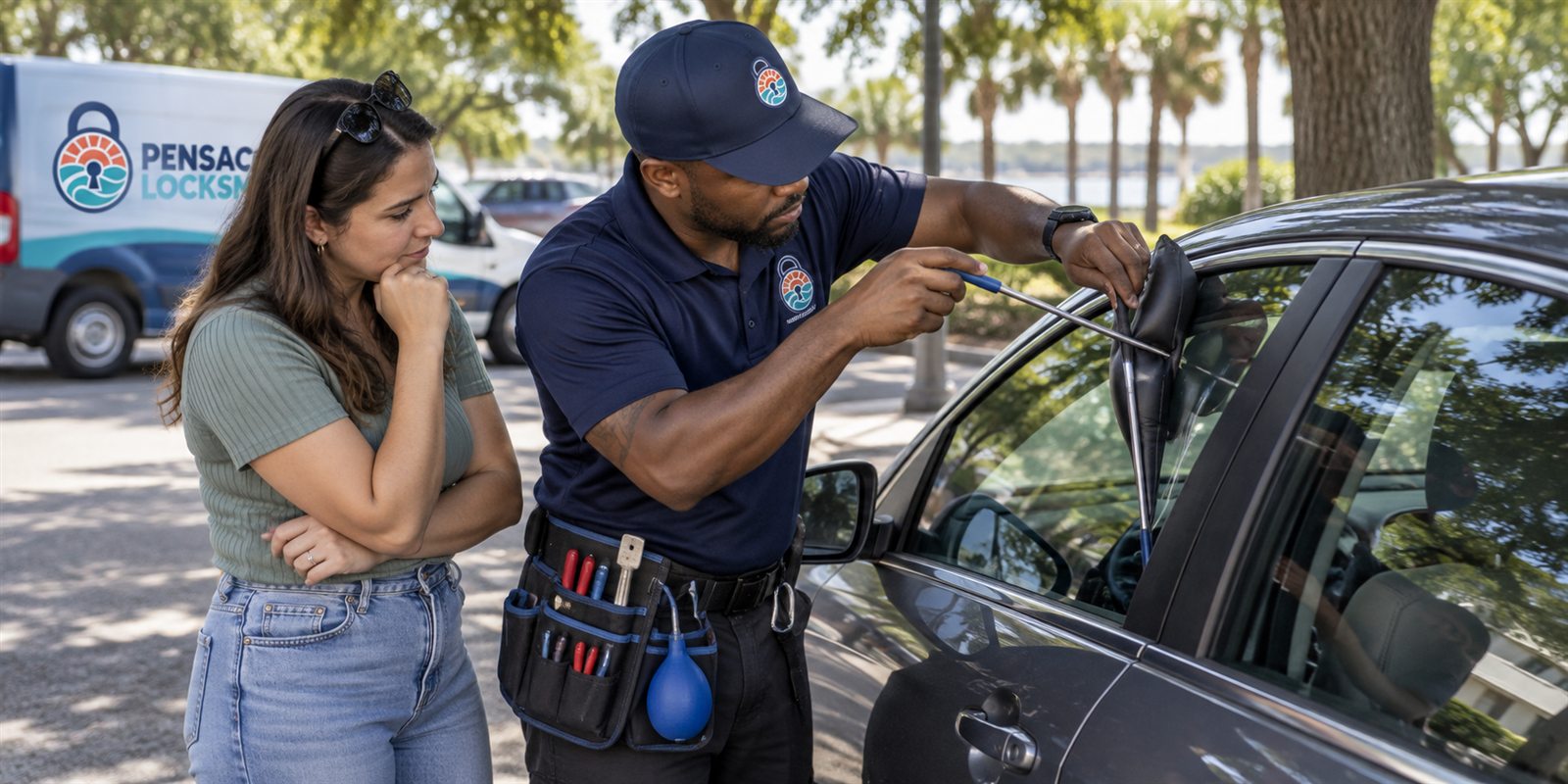
The phone call is your best verification tool. Ask for the name of the business and the name of the technician who will come. Ask where the technician is based. Ask whether the person you are speaking with is the one who will do the work, or whether they dispatch to others. Honest answers come easily, and evasive answers are informative too.
Describe your situation and ask for a quote by phone. A responsible provider will explain what is included and what might change the plan. Ask whether there is a separate service call charge, and how it works. If the job turns out to be complicated, a technician visits and the service call charge is explained before dispatch. Be cautious when someone refuses to give any information over the phone.
Ask what they will need from you, such as identification and proof of ownership. A real locksmith checks that you own the vehicle or home or have authority to open it. If a provider does not ask, that is a warning sign, not a convenience. Finally, ask how you will recognize the technician on arrival and what forms of payment they accept.
- What is the business name and where is it based
- Who will come to the job and how will I recognize them
- Can you give a quote by phone and explain any service call charge
- What identification and ownership proof do you need from me
- What payment methods are accepted
Red flags in ads and listings
Some advertising patterns should make you pause. A listing that shows a very low advertised figure for any job may be a bait tactic, because the final bill often climbs once the work begins. Genuine providers rarely quote a single number without hearing the details, since a lockout on a basic door differs from one on a high-security lock or a vehicle with an electronic key.
Be careful with listings that use many city names but have no clear address, or that list a street address that turns out to be a residence or an empty lot. Be careful with websites that look nearly identical to many others, using the same layout and the same phrases. Repetition across many towns can suggest a lead-generation operation rather than a local shop.
Pay attention to pressure. Phrases that push you to decide instantly, claim that you must pay immediately, or insist that the lock must be drilled are warning signs. Drilling is sometimes needed, but it is a last resort that a skilled technician considers only after trying less destructive methods. Ask what other options exist and why the technician is recommending this one.
Understanding call-center dispatch
A common issue in the trade is the out-of-area call center. These operations buy advertising in many towns, answer calls with a generic greeting, and then send the job to whoever agrees to take it. The person who answers the phone may be hundreds of miles away and may have no knowledge of your area. The quote they give can differ sharply from what the technician says on arrival.
This setup is not always dishonest, but it makes accountability harder. If something goes wrong, you may not know who to contact. You may also discover that the technician who arrives is a subcontractor with limited training who is paid per job, which can encourage upselling. The business name on your receipt may differ from the one you called.
To avoid this, ask directly whether the company dispatches to subcontractors, and where the technician is based. If you are told they are in the area, ask what area. Ask for the business name used on the receipt. If the answers are vague or change when you press, consider calling someone else. Taking a minute to ask is worth more than the time lost to a bad experience.
What to expect from a legitimate technician
A professional locksmith arrives in a way that matches the call. The technician introduces themselves, uses the business name you were told, and is willing to show identification. They ask for your identification and for proof that you own or have authority over the lock or vehicle. They examine the problem and explain the plan before they start.
They will explain the process, the likely result and any risks, including whether damage is possible. They will describe what is included in the quote and ask for your agreement before beginning. If the job turns out to be different from what you described, they will tell you before proceeding and discuss options. You should never feel rushed or cornered.
After the work, they test the result with you, provide a receipt that names the business and itemizes the work, and answer questions. They do not demand extra payment for matters that were not explained in advance. A technician who does careful work is usually happy to be thorough and transparent, because that is part of doing the job well.
Verifying the person at your door
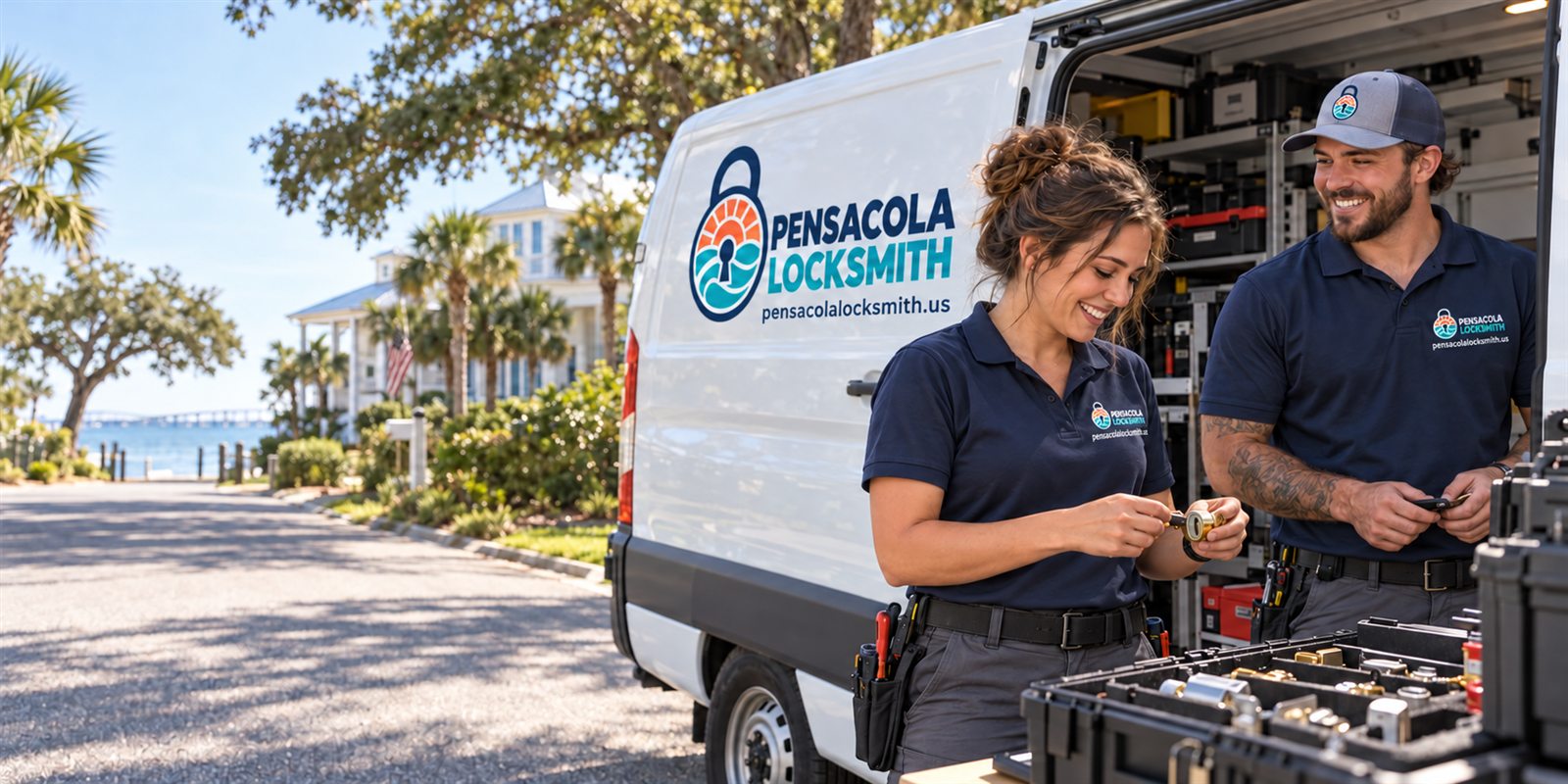
When the technician arrives, confirm that they match what you were told. Does the name match? Does the vehicle carry the business name, or is the vehicle unmarked? An unmarked vehicle is not proof of a problem, but it deserves a question. Ask politely for identification and the business name. A legitimate technician understands why you ask.
Before work starts, ask for the quote to be repeated and confirm what it covers. If the number has changed from the phone call, ask why. A change can be reasonable if the situation turned out different, for example a high-security lock instead of a basic one, but the technician should explain it clearly and give you the option to decline. You should never be asked to pay for work you did not authorize.
Keep an eye on what is being done. You do not have to hover, but being nearby helps. If the technician begins to drill or cut without discussing alternatives, ask them to stop and explain. If you are uncomfortable, you can decline the service. Afterward, request a written receipt, keep it, and note the business name and technician name for your records.
Reading online information with a careful eye
Websites and map listings are a useful starting point, but they are not proof of anything on their own. Read what a business says about its work and look for specifics: the kinds of locks it handles, the process it follows, the situations it can and cannot help with. Specific, practical writing is harder to fake than a page of slogans, and it tells you whether the people behind it understand the trade.
Opinions posted by other customers can be informative when read as a whole. Look for patterns rather than a single dramatic story, and notice whether the comments describe the same kind of experience. Be aware that opinions can be written by anyone, and that a listing with only glowing, vague remarks and no detail should be read with some skepticism. Real customers usually mention what was done and how the visit went.
Compare what different sources say. A name, address and description that match across a website, a map listing and the phone greeting suggest a stable business. Differences are not always sinister, but they are worth a question. If you find a business that explains its approach openly, including how it handles ownership checks and how quotes work, that transparency is a good sign in itself.
Special cases: cars, businesses and landlords
Vehicles raise their own verification questions. Cars with electronic keys need equipment and software that not every provider carries. Ask whether the technician can handle your specific type of key and how the process works, including programming. A provider who says they can do anything without asking about your vehicle may be overpromising. A good answer includes questions about year, make, model and key type.
Businesses have more at stake, since a lock problem can mean lost sales or exposed inventory. Ask whether the technician is comfortable with commercial hardware such as panic bars, door closers and master key systems. Make sure the person who authorizes work has the authority to do so, and keep records of what changes were made. A written receipt helps for audits and insurance questions.
If you are a tenant, remember that the landlord or property manager may control the locks. Contact them before hiring a locksmith, and share any rules about who may rekey or replace hardware. If you are a landlord, keep a clear record of every key issued. In each case, a good locksmith will ask about authority and may require confirmation before proceeding, which protects everyone involved.
Your own safety when meeting a technician
Meeting someone you do not know deserves common sense. If you are alone at night, choose a lit location with people nearby. Share your location and the technician's expected arrival with a friend or family member. Keep your phone charged. If something feels wrong, move to a public place and call us again or call local authorities.
At a home, do not let anyone in beyond what is needed for the job. Keep the technician in the area of the lock and not wandering through the house. If you are locked out and have no one with you, consider asking a neighbor to be present. At a business, have an employee or manager there when possible.
Be careful with payment. Pay only after you have received a receipt that shows the business name and the work performed. Avoid handing over a payment card information to anyone who cannot provide a clear record. Do not sign blank forms or agreements you have not read. If you are unsure about any of this, you can ask the technician to wait while you call someone you trust.
Verifying before you ever need one
The best time to verify a locksmith is when nothing is wrong. On a calm day, look up a local provider, read their website, call and ask the questions above, and save the number in your phone. Having a trusted contact saves you from searching in a crisis, when you are least likely to make careful choices.
You can also use that calm call to plan. Ask what kinds of work they handle, from lockouts to rekeying to smart lock installation. Ask what they would need from you in an emergency. Keep your proof of ownership in a handy place, such as photos on your phone, so you can respond quickly if the need arises. Talk with family members so everyone knows who to call.
Finally, review your own security. Do you have a spare key stored safely? Do your locks work smoothly? If a lock is worn or you have lost keys, consider addressing it now. A calm appointment is easier than an emergency. Call us to confirm availability, and ask any questions you have about how we work. We would rather answer questions now than have you guess later.
Common questions
What is the most important question to ask a locksmith on the phone?
Ask for the business name and where the technician is based, then ask for a quote by phone and how any service call charge works. A trustworthy provider answers plainly and also asks for proof that you own or have authority over the lock or vehicle. Evasive answers are a reason to keep looking.
How can I tell if a listing is a call center?
Signs include a generic greeting without a company name, many city names with no clear address, and a vague answer when you ask where the technician is based. Ask directly whether the job is dispatched to others and what business name will be on the receipt. Consistent, specific answers are a good sign.
Should a locksmith ask for proof that I own the vehicle or home?
Yes. A responsible locksmith checks ownership or authority before opening, rekeying or programming. Expect to show identification and registration, title, a lease or a utility bill. This protects the true owner. Be cautious with anyone who skips the step entirely.
What if the price changes when the technician arrives?
A change can be reasonable if the situation differs from what you described, but the technician must explain why before starting and let you decline. You should never be asked to pay for work you did not authorize. Ask for the quote to be repeated and get a receipt naming the business.
Is drilling a lock always necessary?
No. Drilling is a last resort used when other methods fail or when a lock is damaged. Many lockouts are solved without drilling by picking, decoding or using tools that bypass the lock. If a technician recommends drilling right away, ask what alternatives exist and why they are not suitable.