
Content note: this page was written by Claude (AI) for Pensacola Locksmith.
A peninsula community and why that affects service
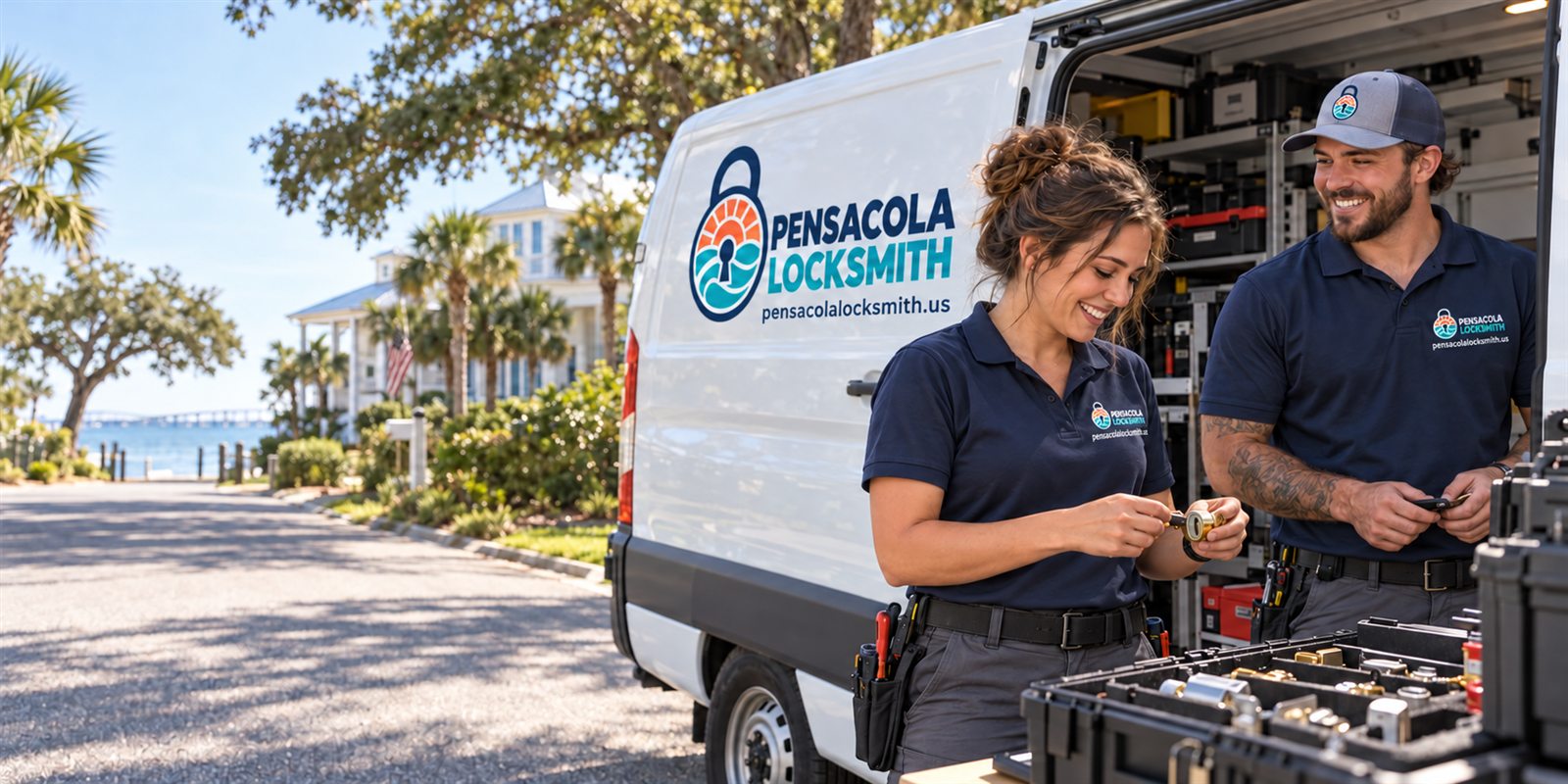
Gulf Breeze occupies a narrow strip of land between Pensacola Bay and Santa Rosa Sound. Reaching it from Pensacola means crossing a bridge, and for anyone who has sat in summer traffic there, that is a real part of planning a day. For a mobile locksmith, geography matters, because the route to your door is not always a straight line.
We ask where you are located, what the property looks like and how access works. A gated community, a private drive or a street with limited parking all change how we prepare. If your address is hard to find, a landmark helps, and so does having someone available to meet us at the street if the entrance is unclear.
We do not promise arrival times, since bridge traffic, weather and other calls change the day. What we can do is be honest on the phone about what to expect, and tell you whether the job can be handled on a single trip. Call to confirm availability, and tell us if you have any time constraints, such as a flight or an appointment.
When you live on a peninsula, a lost key can feel more isolating. A hardware store may not be near, and a dealership could be across the bridge. A mobile service that comes to the driveway removes a lot of the travel from the problem, whether the issue is a house door or a car key.
Waterfront homes and weather-resistant hardware
Homes close to the water face wind, salt and humidity every day. Hardware that looks fine on a showroom shelf may begin to pit and stick within a couple of seasons. Plated finishes wear through, mechanisms corrode and screws rust into the frame. When you choose a lock for a waterfront home, material matters as much as style.
Solid brass and stainless steel are common choices for exposed doors. Some manufacturers also offer finishes designed to resist salt. These parts cost more than basic hardware, but they tend to hold their appearance and their action longer. We can explain which options are available for your door and what each one means in practice.
Maintenance helps any lock last. A quick rinse of exterior hardware with fresh water, followed by a dry wipe, removes salt before it bites into the finish. A graphite or PTFE-based dry lubricant keeps the cylinder moving without the sticky buildup that oil leaves. Doing this a few times a year is far easier than replacing a seized deadbolt.
Door frames and strike plates deserve attention, too. Wood swells and shrinks with humidity, and a door that fit perfectly in winter can drag in August. A latch that sits a little off its mark wears faster and can fail to hold. A technician can shift a strike plate, adjust hinges and tighten screws so the door seats the way it should.
Garage doors, side doors and the many ways in
Many Gulf Breeze homes have attached garages, side entries and back doors that open onto patios or docks. People often think of the front door as the main entrance, but a burglar prefers the door that is easy to reach and out of sight. Each entry deserves the same quality of lock as the front.
The door between the garage and the house is often overlooked. It should have a solid-core door, a good deadbolt and a reinforced strike plate. If it has a hollow door and a basic knob, that is a weak link. We can recommend upgrades, and we are honest about which are worth the effort.
Doors to docks and boat houses face the harshest conditions. Constant moisture and salt chew through hardware, and these doors are often lightly used so problems go unnoticed. A lock that has not been turned in months may seize. Test those locks now and then, and keep a dry lubricant on hand.
Garage door keypads and remotes also affect security. An old remote left in a car can be stolen or copied. If you have bought a home recently, resetting the garage opener codes is a good idea alongside rekeying the locks. We handle the locks, and the opener manufacturer's instructions cover the code reset.
Moving in: the case for a fresh set of keys
When you buy or rent a home, you rarely know who holds a key. Previous owners, real estate agents, contractors, cleaners and neighbors may all have used one. Even in a friendly community, that is a lot of unknown copies. Rekeying the locks is a direct, affordable-in-effort way to start fresh.
Rekeying changes the pin pattern inside each cylinder, so the old keys no longer work and new ones do. The hardware stays in place, which means the job is usually quick and does not require new locks. We can match every exterior door to one key so you carry just one.
At the same time, look over the hardware you have. Are the deadbolts solid? Do the strike plates have long screws? Does the door close firmly? Older homes in the area may have original knobs that are worn out, and newer homes may have builder-grade locks that are fine for looks and less so for strength. We tell you what we see.
Remember to confirm ownership or authority when you call. A closing statement, lease or utility bill with your name can help. We will ask for identification and something that connects you to the address. This is a quick step that protects every homeowner and renter on the street.
Lockouts: calm steps first
A lockout is frustrating, especially when you are standing in a driveway with groceries or children. Take a breath and check the easy things first. Is a back door unlocked? Is a family member inside or nearby with a key? Is there a window that you can open safely and reach without risk? If none of those work, a locksmith can usually get you in without damage.
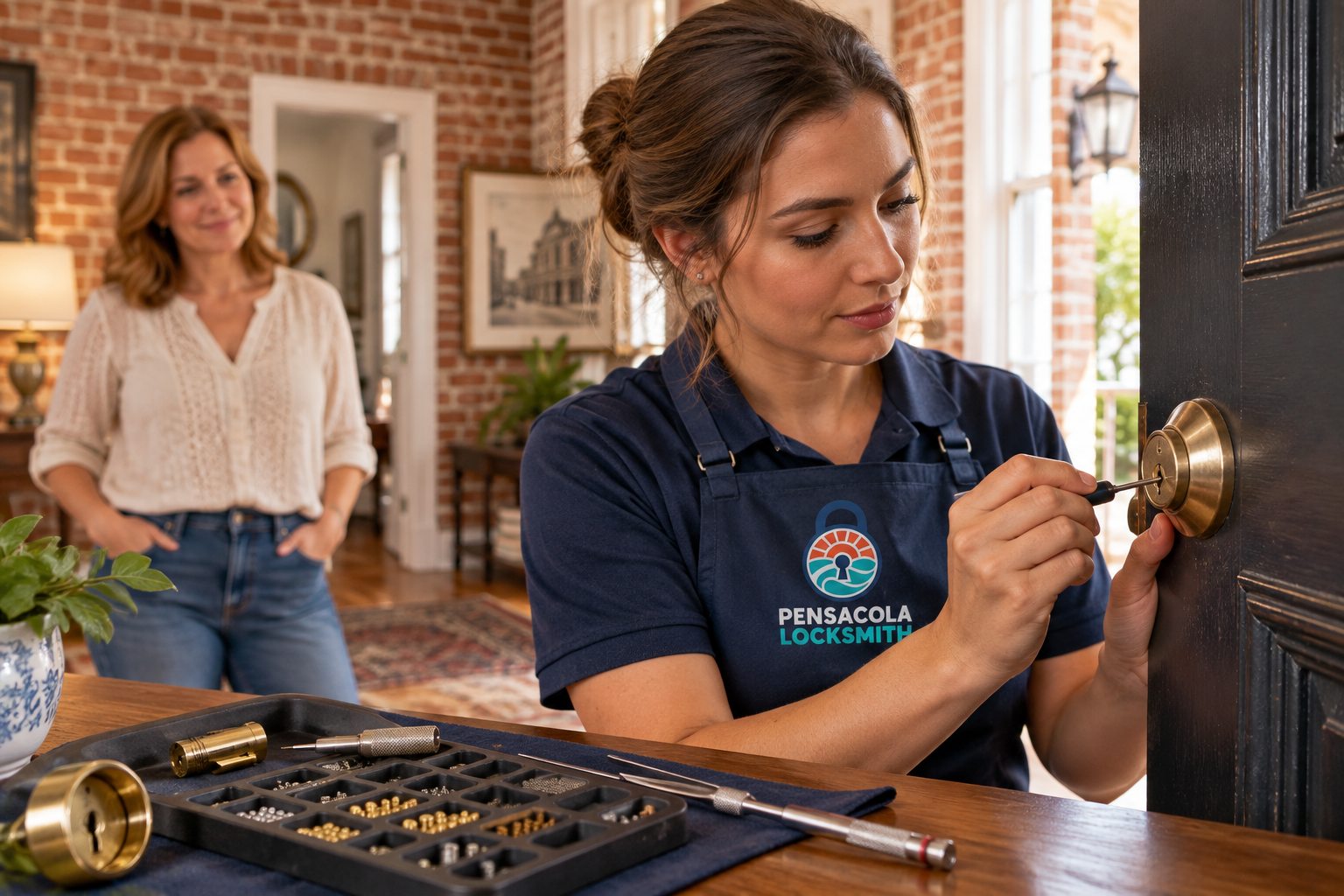
The method depends on the lock. Many residential cylinders can be opened with picking tools, and some doors can be released by working on the latch. We always start with the approach least likely to harm the door, frame or finish. Drilling is a last resort, and we explain why before we do it.
Before opening, we check that you are the owner or a resident. A photo identification with your address is ideal. A lease, a bill or a piece of mail may do. If you have neither, we can talk through other options. We will not open a door without some sign that the person asking has the right.
Once you are in, we suggest thinking about what caused the lockout. If a key was lost, a rekey makes sense. If a latch was catching, an adjustment can fix it. If you simply forgot, a keypad lock or a properly placed lockbox might be a good change. A few minutes now can prevent a repeat.
Car keys for people who live and commute here
Gulf Breeze drivers cross the bridge for work, shopping and school. A car that will not start because of a missing key is more than an annoyance, since it stops the whole day. Modern keys are small computers, and replacing them involves programming that regular hardware counters cannot do.
We come to the vehicle. After checking ownership, we read the vehicle number, cut the blade if the key has one, and program the new key or fob to the car. Whether yours is a basic chip key, a remote head key or a proximity fob, the process is done on site. No tow is needed in most cases.
If you have one working key, make a spare now. A copy made from a working key is usually simpler than starting from nothing. And when you need a replacement because the old fob has quit, bring it along when we meet. Even a damaged fob can give clues about the type of system the car uses.
Salt air reaches cars parked at waterfront homes as well. Fobs kept in a pocket near the water, a boat or a beach bag pick up moisture. If your fob has been wet, dry it and replace the battery. If it still fails, call us. Sometimes a new shell or a new board is all that is needed.
Safety around water and storms
Hurricane season shapes how many Gulf Breeze residents think about their homes. Before a storm, check that doors close firmly, locks turn smoothly and storm shutters, if you have them, are accessible. A sticky lock is the last thing you want when you are packing the car to leave.
After a storm, look at your doors. Wind can shift frames, and water can swell wood so that a door no longer latches. Debris may have blown into keyways. If a door will not lock, do not force it. A gentle cleaning with a dry lubricant sometimes recovers it, and a technician can adjust or repair what remains.
A secure home also needs a plan for emergencies. Keep a spare key with someone you trust, outside your home. Keep copies of ownership documents where you can reach them, whether on your phone or in a folder you can carry. If you are away and an emergency requires access, those papers are what allow a locksmith to help.
Safety means being able to leave quickly as well as keep intruders out. Interior thumb-turn deadbolts allow you to exit without a key, which matters in a fire. Keyed deadbolts on the inside can trap people. If your home has these, talk to us about safer options. Egress should never be a trade-off for security.
Home offices, small shops and professional suites
Gulf Breeze has a number of small businesses, from home offices to professional suites and shops. These spaces need locks that are reliable but not complicated. A small office may need a front door that is easy for staff to open each morning, a back door that stays secure, and an interior door that keeps records or cash out of casual reach.
Key control is the main concern in a small business. Who has a key, and what happens when an employee leaves? Rekeying after a departure is a straightforward way to keep control. A more organized approach is a restricted keyway, which makes it harder for anyone to copy keys without authorization. We can discuss whether that suits your size and budget of effort.
Door hardware at the entry sees constant use, and it wears. Closers lose tension, hinges loosen and latches fail to catch. A door that slams or hangs open is a security issue and a nuisance. A technician can adjust the closer, tighten the frame and test the lock so it closes cleanly each time.
As with homes, we confirm authority. A business owner, manager or authorized employee can request work, and we may ask for a document that shows the relationship, particularly when the space is leased. If the landlord controls the door, we will ask you to get their approval first.
Keeping a lock working between visits
Most lock problems build slowly, and the best repair is attention. Once in a while, work the key in and out of each lock and feel whether it moves smoothly. If it catches, a bit of dry lubricant in the keyway often helps. Avoid heavy oil or grease, which attracts dust and sand and makes the lock stiffer over time.
Check screws too. Door handles, deadbolt faceplates and strike plates all rely on screws that loosen with use and with swelling in humid weather. A quarter turn with a screwdriver is often all it takes. Replace any short screws in the strike with longer ones that reach into the framing. This is one of the most effective upgrades for the effort.
Pay attention to how the door closes. If you have to push or lift to lock it, something has shifted. Look at the gap around the door and at where the bolt meets the strike. Marks on the plate show where the bolt lands, and a misalignment is easy to see once you look for it.
Finally, keep a record of your keys. Know how many exist and who has them. If a key goes missing and you cannot say who held it, a rekey is the safest step. A small note in a drawer or a phone file can save time and worry later, and it helps us when you call.
Sliding doors, patio entries and view windows
Waterfront homes are built to enjoy the view, which means large glass doors and patio entries. Sliding doors in particular are often the weakest point of a house. Many have a thin latch that can be bumped or lifted, and the tracks may allow the door to be raised off its rollers if no anti-lift measure is in place.
Simple additions help a lot. A bar in the track blocks the door from opening even if the latch is defeated. A pin lock through the frame adds a second barrier. A secondary lock that mounts on the frame, positioned high on the door, is harder to reach from outside. These are inexpensive in effort and effective.
French doors and double doors have their own concerns. The inactive door is held by bolts at the top and bottom, and those bolts can be worn or missing. A technician can inspect them, replace weak ones and make sure the active door seats properly. Where the doors meet, a gap can let a tool in, so we also look at the astragal.
Salt and sun affect these doors constantly. Tracks fill with grit, rubber seals harden, and handles lose their finish. Cleaning the track with a vacuum and a brush, and wiping the handle, keeps them operating. If a sliding door has become hard to move, resist the urge to force it, since that tends to break the latch.
What to expect when you call
Tell us the address area, what you need, and how urgent it is. We will ask about the lock, the door, the vehicle or the key as relevant, and explain the likely steps. Quotes are given by phone. We cannot promise arrival times, and we ask you to call to confirm availability, particularly during storms, holidays and busy bridge traffic.
If the job is simple, such as a standard lockout or a rekey, a technician can usually handle it in one visit. If it is complicated, such as a damaged lock, a security fault or a door that needs repair, a technician visits first and the service call charge is explained before dispatch. Nothing is a surprise.
On arrival, the technician confirms identity and ownership or authority, looks at the door or car, and explains the plan. You decide whether to go ahead. We keep the work tidy, clean up debris and test everything before leaving, so you can see that it works.
After the job, keep any new keys in separate places and write down which doors they open. If a lock feels odd in the following days, tell us. Small adjustments are normal after new hardware settles into a frame. We would rather hear about it early and fix it right than leave a small problem to grow.
Common questions
Do you travel to Gulf Breeze?
Yes. Gulf Breeze is part of our service area, and we come to your home or vehicle. Because the route includes a bridge, traffic can affect timing, so we do not promise arrival times. Call us to describe the job and confirm availability.
What hardware holds up best near the water?
Solid brass, stainless steel and finishes made for salt exposure tend to resist corrosion better than basic plated steel. Regular rinsing and a dry lubricant also extend life. We can explain the options for your door and help you choose when you call.
Should I rekey after buying a house?
It is a sensible step. You usually do not know how many copies of the old keys exist. Rekeying changes the lock's internal pattern so old keys stop working. We confirm ownership or authority first, then rekey the doors you choose to match one key.
Can you make a car key at my driveway?
In most cases, yes. After we confirm ownership, the key is cut and programmed at the vehicle, so no tow is needed. Tell us how the car starts and whether you have a working key, and we will explain the job.
How are quotes handled?
Quotes are given by phone after we understand the work. If a job is complicated, a technician visits first and the service call charge is explained before dispatch. Please call so we can walk through it with you.