
Content note: this page was written by Claude (AI) for Pensacola Locksmith.
What happens inside a lock when it is rekeyed
Most house locks are pin tumbler cylinders. Inside the cylinder is a plug that turns when the correct key is inserted. A set of small spring-loaded pin stacks sits above the plug. Each key cut lifts its pin stack to exactly the right height, creating a clean line, called the shear line, so the plug can rotate. A key with the wrong cuts leaves some pins blocking the line.
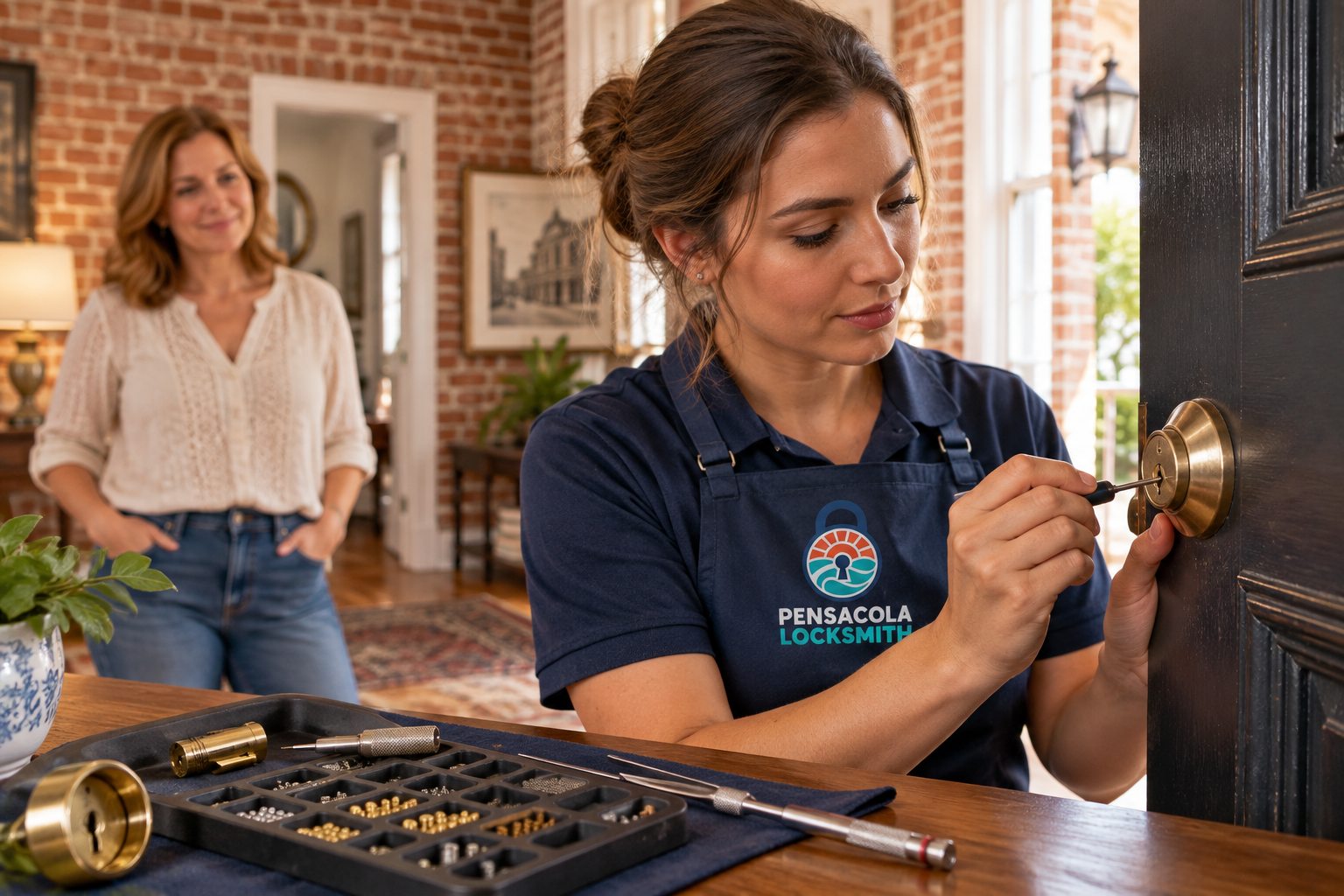
Rekeying means removing the plug, replacing the lower pins with new ones of different lengths, and reassembling it. The lock now has a new combination. A key cut to the new pattern opens it, and the old key, which lifts pins to the old heights, no longer lines them up. The exterior of the lock looks the same, and it bolts onto the door the same way.
Because the work happens inside the cylinder, it usually takes only a few minutes per lock once the technician has the plug out. The lock remains on the door for many designs, though some deadbolts and knobs are taken apart for the job. The result is the same level of security as before, with the added benefit that a key you no longer control stops being a threat.
Situations where rekeying makes the most sense
Moving into a new home is the most common reason. You have no idea how many copies the previous owner, their relatives, a contractor or a cleaner kept. Even if everyone is trustworthy, you cannot be sure. Rekeying on moving day removes that uncertainty, and it is among the first things worth doing in a new place.
A change in relationships is another. After a breakup, a divorce, a falling out with a roommate or the end of an arrangement with a caretaker, the person who has a key may no longer be welcome. Rekeying makes sure that only the people you intend can enter, and it avoids confrontation about returning keys.
Lost or stolen keys are a clear case. If your keys are missing and your address could be linked to them, change the lock. The same goes for keys given to a past employee or contractor who may not have returned them. Rekeying is a quiet, practical response that does not require buying new hardware.
Rekeying compared with replacing the lock
Both options end with a door that old keys do not open. Rekeying keeps your existing hardware, which means the finish, the style and the fit stay the same. It is often the lighter and quicker option. If your locks are in good shape and match the look you want, rekeying is usually the sensible choice.
Replacement makes sense when a lock is damaged, worn, loose or outdated, or when you want a different level of security or style. A cheap builder-grade lock may be worth upgrading rather than rekeying, since you would be paying to preserve a weak part. Replacement also lets you add features such as a keypad or a longer bolt.
A technician looks at the existing lock before recommending either. If the cylinder is sound, rekeying is straightforward. If the lock has hidden problems, such as a bent latch, a worn bolt or a poorly fitted strike plate, the technician says so. Sometimes the best answer is to rekey now and replace later. The decision is yours, and the technician explains the trade-offs.
Keyed alike: one key for every door
Many homes have a front door, a back door, a garage entry and sometimes a side door, each with a different key. That means a heavy ring and a long search at the door. Rekeying can set all of these locks to the same key pattern, so one key opens them all. This is called keyed alike, and it is one of the main practical benefits.
Keyed alike works best when the locks use the same keyway, the shape of the slot where the key goes in. If your locks come from different makers or use different keyways, they may not be able to share a key. A technician checks this first. In some cases, a lock can be swapped for a compatible one to complete the set.
Think about whether you want every door on one key. A single key is convenient, but it also means that losing it exposes every entry. Some households prefer one key for the main doors and a separate key for a workshop, shed or interior room. A technician can plan a mix that fits how you live.
Rekeying for rentals, tenants and landlords
A change of tenant is a natural moment to rekey. The previous occupant may have made copies or given keys to friends. Landlords who rekey between tenants protect the new resident and reduce disputes about who has access. It is a routine step in well-run rental properties, and it is often quick enough to fit into turnover time.
Tenants have a more limited role. In most cases, the lease or local rules shape what a tenant may do with locks. If you rent and want locks rekeyed, speak with the landlord or manager first. The technician will need permission from the owner or someone authorized to act, and may ask for a lease or a message.
Pensacola has many short-term rentals, military housing situations and student homes where occupants change often. Landlords with several units may want a master key system, where each unit has its own key and the manager has one key that opens all. A technician can plan a system that is practical to manage and easy to rekey as people come and go.
What a rekey visit looks like
The technician arrives, confirms your identity and authority over the property, and looks at each lock to be done. They check the brand and keyway, test the condition of each cylinder and note any issues, such as stiff operation or worn latches. They then explain the plan and any limits before starting.
For each lock, the plug is removed with a special follower to keep the pins in place. The old pins are replaced with new ones, springs are checked, and the plug is reinstalled. New keys are cut to match the new pattern. Each lock is then tested with the new key, and the old key is tried to confirm it no longer works.
You receive the new keys, usually with extra copies if you asked. The technician should demonstrate each lock, and you should try them yourself. It is wise to test every door before the visit ends, including locking from the outside, to make sure the bolts throw fully and the doors latch cleanly. Small adjustments are easy while the technician is still there.
Ownership and authority checks before rekeying
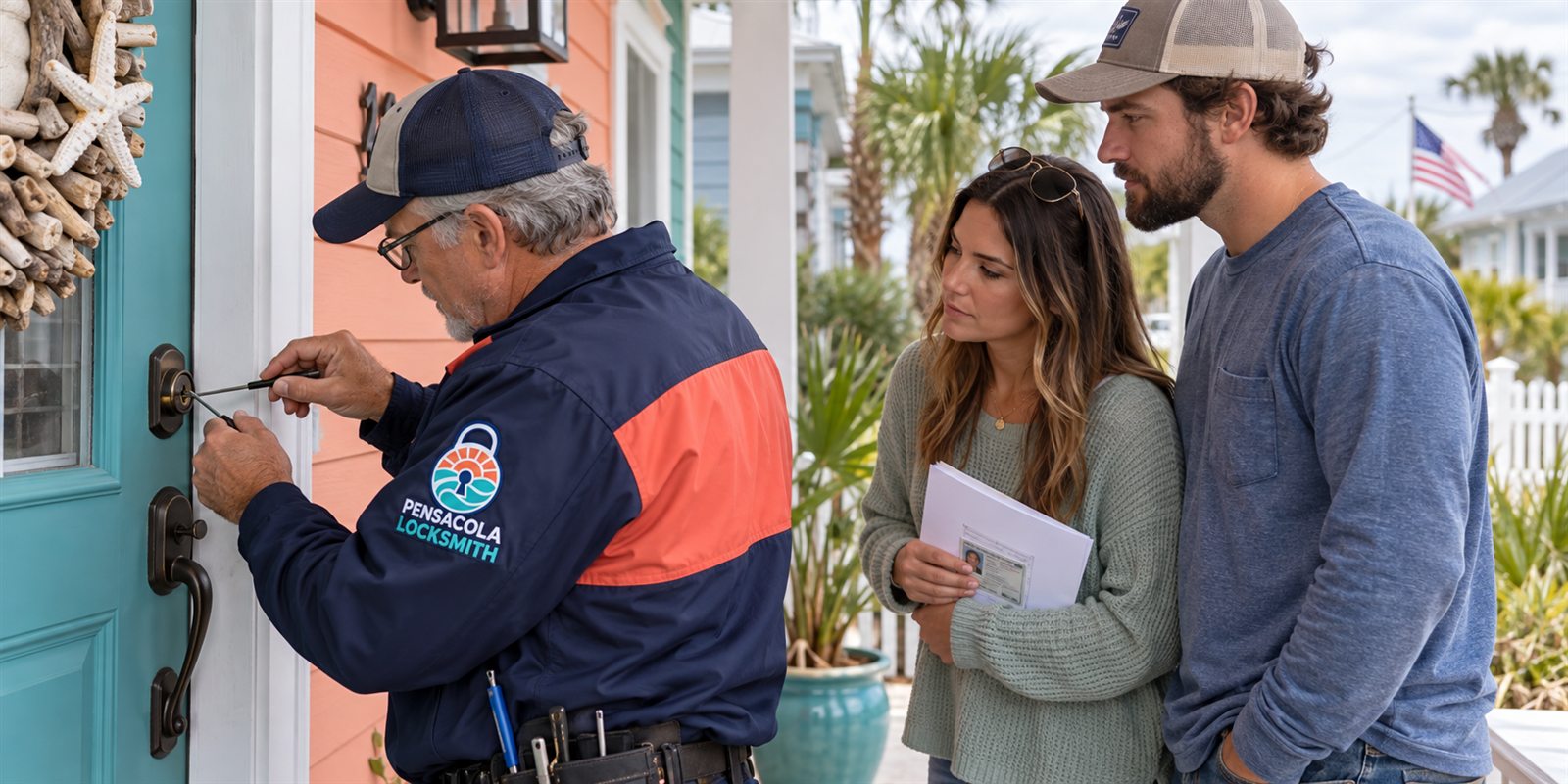
Changing who can open a door is a serious step, so the locksmith first confirms that you are entitled to do it. For an owner, a photo ID with the address, a utility bill or a closing document is typical. For a business, a lease, a business registration or a note from the owner or manager helps.
If you are a tenant, the technician may require the owner's permission, since rekeying changes access that the owner may need to keep. A written message or a call from the landlord usually resolves this. If you live in a managed building, the property manager may handle the request on your behalf.
These checks protect everyone. Without them, anyone could ask to have a former partner or roommate locked out of a home they are entitled to enter. Tell us your situation when you call, and we will explain what is needed. If a dispute is involved, we may suggest that the parties sort out access in writing first.
Limits of rekeying and when it will not work
Not every lock can be rekeyed. Some low-grade locks have no removable plug or use pins that cannot be changed. Others are damaged, corroded or worn to the point that new pins will not make them reliable. In those cases, replacement is the better answer, and a technician will say so.
Certain high-security locks have restricted keyways and controlled key blanks. Rekeying them requires specific parts and sometimes authorization from the manufacturer's system. A technician with the right tools can handle many of these, but you should expect to hear about extra steps or lead time when your locks are in this category.
Rekeying also does not fix a weak door. If the frame is cracked, the strike plate is held by short screws or the door is hollow and easily kicked, new pins in the cylinder add little. The technician will point out these weaknesses, so you can decide how much of the door deserves attention in the same visit.
Salt air, humidity and lock maintenance
Locks near the Gulf age faster. Salt air corrodes springs and pins, humidity encourages rust, and sand finds its way into exterior cylinders. When a lock is rekeyed, the technician can clean the plug and replace weak springs, which often makes it feel better than it has in years. That is a quiet benefit of the work.
After the visit, a little care helps. Use a dry lubricant made for locks and avoid heavy oils. Keep keys clean and dry. If a lock begins to stick, address it early, because forcing a stiff key is how keys break and cylinders wear. A technician can check the lock at your next visit.
Exterior hardware with a worn finish may look tired, and replacing it may be worthwhile after years of coastal weather. If your locks show surface corrosion or a pitted finish, mention it. A technician can suggest a replacement with a protective coating or a design suited to humid environments, and rekey the new lock to match your other doors.
A moving-day checklist for new homeowners and renters
The most useful time to plan a rekey is before the moving truck arrives. Walk the property and count every exterior lock: front door, back door, garage entry, side gates, sheds, a mailbox and any storage areas. Include sliding door latches and windows with locks. Write the list down, because it is easy to forget a lock when the boxes start piling up.
Next, ask the seller, landlord or manager how many keys exist and who holds them. You may learn that a real estate agent, a cleaner or a contractor still has a copy. Even trustworthy people lose keys, and you will not know whose bag it ended up in. Rekeying makes that question irrelevant.
Tell us the number of locks, the brands if you can see them, and whether you want them keyed alike. Mention any that are stiff, loose or damaged. A technician will bring suitable pins and keys, and can often replace a failing lock in the same visit, which spares you a second trip when you are already busy.
Finally, think about how many keys you need. Each adult in the household, a spare kept away from home and possibly one for a trusted neighbor is a reasonable set. Label the spares in a way only you understand, and avoid writing the address on any key tag. A lost key with an address on it is exactly what you are trying to avoid.
Rekeying for small businesses and offices
A business has more people with keys than a household, and turnover happens more often. Employees leave, contractors finish projects and managers change. If keys are not tracked, nobody can say who still has access. Rekeying after a departure is a straightforward way to close that gap, and it avoids the awkward task of chasing keys.
A simple key system helps. Assign each key a number, keep a log of who holds it, and stamp or tag keys so they cannot be copied casually. Some businesses use restricted keyways that can only be duplicated with authorization. A technician can explain which options suit a small office, a shop or a rental unit.
For a business, ownership checks apply as well. The technician confirms that the person requesting the work has authority, which might be the owner, a manager or the landlord. A lease, a business document or a call from the owner is typical. Having this ready when the technician arrives keeps the work moving.
Plan around business hours. Rekeying a front door or a back entrance briefly interrupts access, so schedule it when it will cause the least trouble. Call us to confirm availability and discuss timing. We will explain what the job involves, and how to hand out new keys so everyone who needs one gets it.
Managing new keys safely after the rekey
Once the locks are rekeyed, the job shifts to handling the new keys well. Count them and confirm that everyone who needs one has one. Keep a record of who holds each key, even for a household. When something goes missing, a list lets you decide whether another rekey is needed, rather than guessing.
Avoid copying keys at random places. A key cut by an unfamiliar machine may be slightly off, and a copy of a copy accumulates errors. Ask the technician for the number of copies you need at the time of the rekey, cut from the freshly set pattern. This gives you a clean set that works smoothly in every lock.
If a key is lost later, you do not need to panic. Rekeying again is possible, and it is a repeatable service. Because the locks are already set up and the hardware is the same, a second rekey is usually quicker than the first. The important thing is to act while the risk is fresh, and not to put it off.
Common questions
Will rekeying stop my old keys from working?
Yes. Rekeying changes the pins inside the cylinder so that the old key no longer lines them up, while a newly cut key does. The old key remains a piece of metal that fits the slot but does not turn. The technician tests this by trying the old key after the work.
Is rekeying better than replacing my locks?
It depends on the condition of the locks. If they are sound and you like them, rekeying is usually simpler. If they are worn, damaged or low quality, replacement may be wiser. The technician inspects them and explains the trade-offs so you can choose without pressure.
Can all my doors use the same key?
Often yes, if the locks share the same keyway or can be matched. This is called keyed alike. The technician checks your locks and tells you what is possible. Remember that one key opening every door is convenient but also means losing it affects every entry.
Do I need permission to rekey a rental?
If you are a tenant, the owner or manager normally needs to authorize it. We check ownership or authority before rekeying anything, because it changes who can enter. A lease and a message from the owner are usually enough. Call us and we will explain what to have ready.
How is the cost worked out?
Quotes are given by phone based on the number of locks and their type. If the job is complicated, a technician visits and the service call charge is explained before dispatch. Call us to confirm availability, and tell us how many doors you have and what brand of locks if you know.