
Content note: this page was written by Claude (AI) for Pensacola Locksmith.
What kind of key does your Infiniti use
Infiniti vehicles, like most luxury brands, have used a few general categories of keys over the years. Some carry a metal blade with a plastic head that holds a transponder chip. Others use a remote with a blade that cuts into the door and ignition. Many newer vehicles use an intelligent or smart key that you carry in a pocket, and the car recognizes it without you touching a button. Knowing which category you have is the first step to getting the right replacement.
The easiest way to tell is how you start the car. If you turn a key in a cylinder, you have a blade-style key with a chip inside. If you press a start button while the key stays in your pocket, you have a proximity key. Some owners are surprised to learn that even a push-button car still has a hidden emergency blade inside the fob. That blade opens the driver's door when the battery in the fob is weak.
We do not guess based on the badge alone. When you call, we ask how the car starts, what the fob looks like and whether you still have any working key. Those answers narrow down what we need to bring. Matching the key category before we arrive saves time at the curb and avoids a second visit because a part was not on the truck.
If you are unsure, send us a description or look for a button layout on the old fob. Lock, unlock, trunk and panic buttons point to a remote head key. A slim card-like fob with a few buttons usually points to a proximity key. We will confirm the exact type at your vehicle before any cutting or programming begins.
Information a locksmith needs before starting
Every key job starts with the vehicle itself. The technician needs the vehicle identification number, which is printed on a plate at the base of the windshield and on the driver's door jamb sticker. That number lets the locksmith look up the correct key code and the right type of transponder. It also shows that the car in front of us matches the paperwork you carry.
Before we open, cut or program anything, we check ownership or authority. That usually means a photo ID that matches a registration or title, or a lease or rental document that gives you the right to have the key made. This is not a formality we invent to slow you down. It protects you, because the same step stops someone else from having a key made to your car.
If the vehicle is a company car, a family member's car or a lease, bring whatever shows you are allowed to use it. A letter or message from the owner is sometimes enough along with identification, but we will tell you what we need when you call. Having these items ready on the day makes the visit short and calm.
It also helps to know how many keys you have left. If one key still works, the process is usually simpler, because the car can often be taught a new key while an existing one is present. If none work, the work is more involved but still done on site in most cases. Tell us honestly what you have, since that shapes the plan.
- Photo identification that matches the owner or authorized driver
- Registration, title or lease paperwork
- The vehicle identification number, readable at the windshield
- Any working keys or fobs you still have
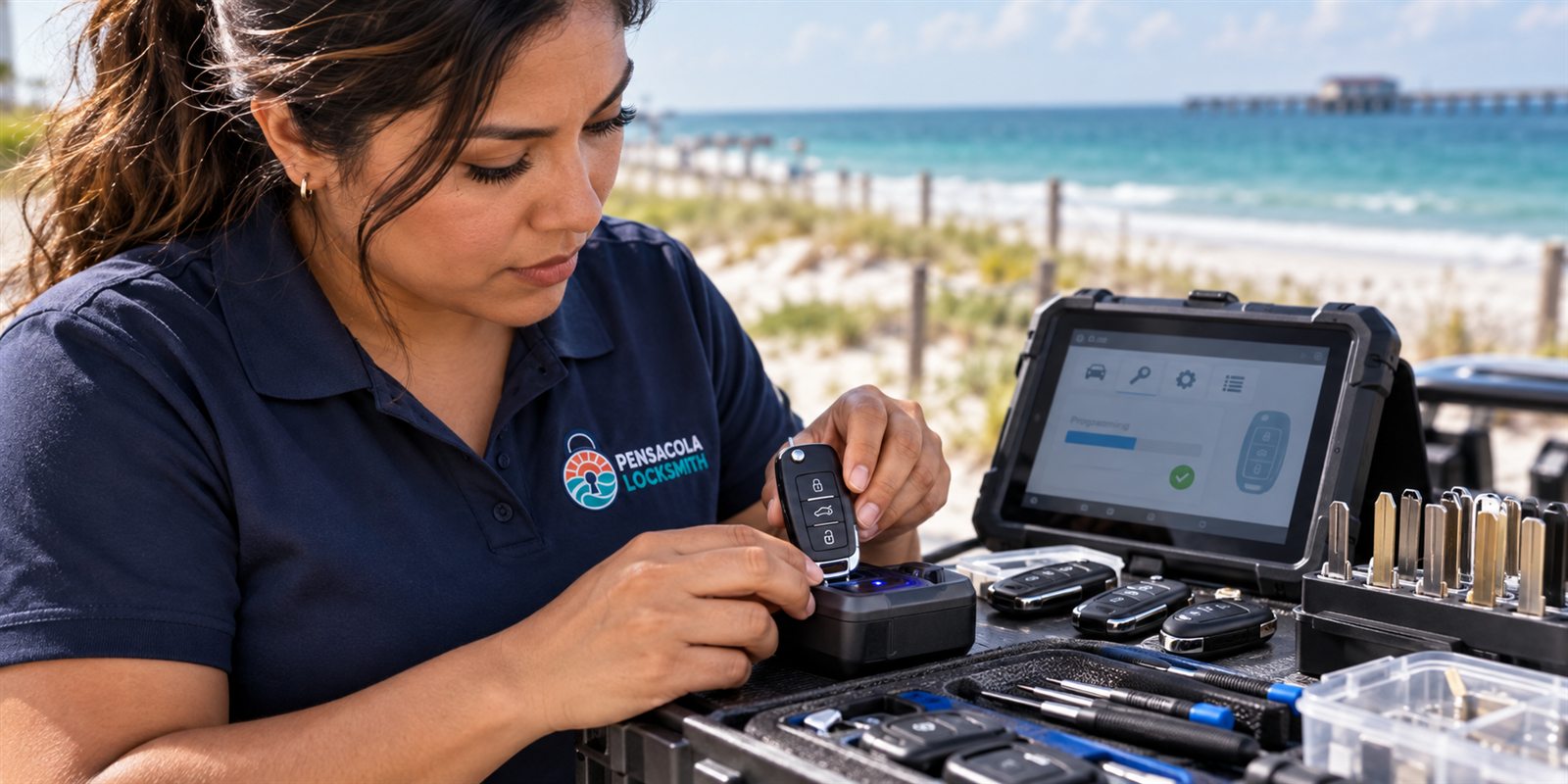
How programming a new Infiniti key works
A modern key has two jobs. The metal blade, if there is one, has to turn the lock. The chip inside has to answer the car when it asks who is there. Cutting the blade is mechanical work. Programming is the electronic handshake that teaches the car to accept the new chip and, just as important, to remember which keys it should trust.
To do the programming, the locksmith connects a diagnostic tool to the port under the dash and talks to the car's security system. Depending on the vehicle, the tool may read a code from the car, ask for a security sequence, and then register the new key. When this is done correctly, the car starts only for keys it has been told about.
Some vehicles allow a second key to be added when a working key is present, with a short sequence of steps. Others require the full tool-based process even for a spare. Which route applies depends on the system in your car, and we explain which one before starting. We would rather tell you it takes longer than rush a job and leave you with a key that fails later.
When the new key is registered, we test it on the lock, the ignition or start button, and each remote function. We also check that your older keys still work, or, if you lost one, that it can be removed from the car's memory. That last step is a quiet security benefit of getting keys programmed professionally.
When every key has been lost
All keys lost is the hardest situation, but it is not an emergency that requires a tow in most cases. Without any working key, the locksmith has to create a new one from the vehicle's data rather than copying an existing key. That means identifying the correct blade pattern, getting access to the car's security module through the diagnostic port, and registering a key from scratch.
The first problem is often getting into the vehicle. A locked luxury car with a smart key and no spare can be opened with non-damaging methods in many cases. We use tools meant to avoid scratching paint or bending door frames. If a door cannot be opened safely, we will tell you before proceeding rather than risk damage to the weather seals or window.
Once inside, the diagnostic work begins. With some systems, the car must be placed in a learning mode that takes several minutes, and the process cannot be interrupted. That is why we ask you to be patient and avoid opening doors or turning the ignition mid-process. A small interruption can force us to restart the whole sequence.
Afterward, we recommend making a spare right away if only one key was programmed. Being down to a single key again leaves you in the same position you were in this week. A second key made on the same visit is usually more straightforward, and it spares you another day of finding your keys under the couch cushions.
Smart fobs, batteries and what looks like a dead key
Not every key problem is a lost key. Many calls turn out to be a weak battery in the fob. The signs are a shorter range, a dashboard message about key detection, or the car refusing to start until the fob is held close to a certain spot. Replacing the battery is simple, and we can show you how, so you can do it yourself next time.
Most smart fobs hide a small release that slides out the emergency blade. That blade fits a keyhole in the driver's door handle, often covered by a small cap. If you have never used it, it is worth finding now rather than at night in a parking lot. Try it once in daylight so you know where the cover pops off.
If a fob has been dropped, wet or has a cracked case, the electronics may still be fine and only the shell needs replacement. We can sometimes move the working board into a new case rather than replace the whole fob. When a fob has truly failed, we will explain whether it is the board, the battery contacts or the programming.
Gulf Coast humidity and salt air are hard on small electronics. Keys that live in beach bags, pockets near the water and car cup holders collect moisture and corrosion over time. Keeping the fob dry, rinsing sand off the case and not storing it in a damp bag all help it last longer.
Making a spare before you need one
The best time to add a key is while you still have one that works. Copying from a working key is generally simpler than starting from nothing, and it avoids the situation where the vehicle has to be unlocked, towed or left sitting. Many owners wait until the last key is gone, then face the more involved version of the same job.
A spare also protects you from the small disasters that happen near the water. A key can slip out of a pocket on the beach, fall into a boat, or get lost in a bag at a rental. Having a second key at home means a lost one becomes an inconvenience, not an afternoon of phone calls and rearranging plans.
Think about where the spare lives. A drawer at home is better than a magnetic box hidden under the bumper, which is a known trick that thieves also know. If you travel, give the spare to someone you trust who lives nearby. Smart fobs should be kept away from the front door of the house, because relay devices can sometimes extend their signal.
When you call, ask us how the spare will be programmed and whether your existing key stays valid. In most cases it does. We will also explain how many keys the vehicle can store, since some systems have a limit. Knowing this up front helps you decide whether to add one spare or two.
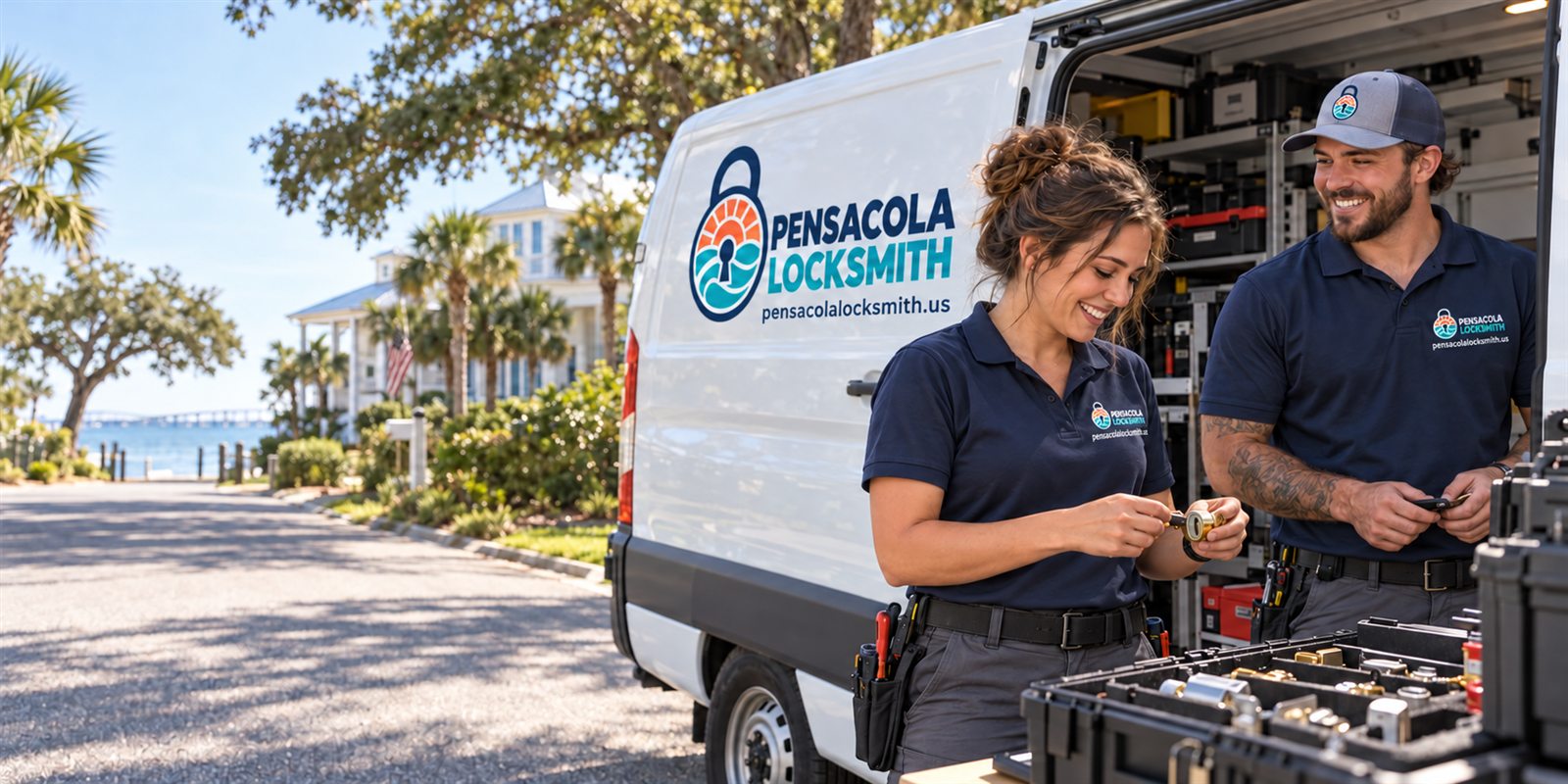
Why a mobile visit makes sense for these jobs
Towing a car to a shop is a cost and a hassle, and it can be unnecessary. A locksmith with the right tools can do the cutting and programming at the curb, in a driveway or in a parking lot. Pensacola drivers deal with distance, weather and heavy traffic around the bridges, so skipping the tow often saves a good part of the day.
Working at the vehicle also lets you see what is being done. You can watch the technician confirm the identification number, cut the blade and run the programming. If something looks different from what you expected, you can ask right then. Nothing happens behind a closed door.
Weather matters here. In summer heat or an afternoon storm, programming can take place inside the car while you wait in a shaded spot or at your door. We plan around rain and lightning, because tools and electronics do not mix with open doors and standing water. If conditions are bad, we may suggest a short delay for safety.
For military households, university students and visitors who find themselves stranded without a key, a mobile visit can be the only practical option. If you are far from home, we can still verify authority using documents on your phone, a rental agreement or a title copy. Call us and we will explain what is acceptable.
Mistakes owners make when a key goes missing
The most common mistake is ordering a cheap key online and expecting it to just work. Blank fobs sold through marketplaces are often the wrong frequency, carry the wrong chip, or come locked to another vehicle and cannot be reused. The result is a plastic shell that looks right and does nothing. Ask us before buying anything, because the right part matters more than the shape of the case.
Another mistake is pressing the start button repeatedly or trying every door while the car is searching for a key. This can drain the battery and, in some vehicles, trigger an alarm or a temporary lockout of the security system. If the car says it cannot find a key, stop, breathe and try holding the fob against the start button or the spot your manual describes.
Some people also give up too early and assume the vehicle must be towed to a dealership. Towing is sometimes needed, for instance when a security module has failed, but it is not the default. A call to us takes only a few minutes, and it tells you whether the job can be handled where the vehicle sits.
Finally, do not leave a damaged key in use. A cracked fob case or a blade that sticks in the door lock can fail at the worst moment. If a key is wearing out, make a copy while it still works. Waiting until it snaps, or until the buttons stop responding, turns a simple copy into a much longer job.
What to expect from the call and the visit
Start with a phone call. Tell us the make, the general type of vehicle, how it starts, and whether any key still works. We will ask where the vehicle is parked and whether it is in a garage, on a street or in a private lot. Based on this, we can give you a quote by phone and explain what to have ready.
We do not promise arrival times, since traffic, weather and other calls change the day. Call to confirm availability, and we will tell you plainly what to expect. If a job turns out to be complicated, such as a damaged ignition or a security module that needs more attention, a technician visits first and the service call charge is explained before dispatch.
On arrival, the technician checks ownership or authority, confirms the vehicle details and explains the steps. You can ask questions or decline the work at any point. After the key is made and tested, you will be shown how each button and function works and how to reach the emergency blade.
Before we leave, we recommend testing the key several times: lock, unlock, start, stop and restart. Try it with doors closed and open. If anything feels off, tell us right away. A short test on the spot is much better than discovering a problem the next morning when you are already late.
Common questions
Can you make an Infiniti key if I have lost every key?
In most cases yes. With no working key, the locksmith creates a new one using the vehicle's identification number and the diagnostic port. We confirm ownership or authority first, then open the car if needed, cut a blade and register the new key. If a case is complicated, a technician visits and the service call charge is explained before dispatch.
Do I need to tow the vehicle to you?
Usually not. The work is done where the vehicle is parked, whether that is a driveway, a lot or a street. The tools we use connect through the diagnostic port under the dash, so the car does not need to move. Call us to describe the location and confirm availability.
What do you need from me to start?
We need to confirm that the vehicle is yours or that you have authority over it. That means photo identification plus registration, title or lease paperwork. We also read the vehicle identification number at the windshield or door jamb. If you have any working keys, have them nearby, since that can simplify the process.
Will my old key still work after the new one is programmed?
Generally yes, if you still have it and it is working. If a key was lost or stolen, we can remove it from the car's memory so it can no longer start the vehicle. Ask about this when you call, and we will explain how it works for your type of system.
How do I get a quote?
Quotes are given by phone. Tell us the vehicle type, how it starts and how many keys you have left, and we will explain the job and what it involves. If the work turns out to be more complicated than it sounds, a technician visits first and the service call charge is explained before dispatch.