
Content note: this page was written by Claude (AI) for Pensacola Locksmith.
Jeep keys are built for a rough life, but not indestructible
Owners of Jeeps tend to use their vehicles hard. Keys ride in wet pockets, get dropped on trails and spend afternoons on a beach towel. Over time the rubber on a fob wears, the case cracks and the buttons stop responding. None of this is unusual, and a locksmith sees it often.
Many Jeeps use a key with a transponder chip, and a good number use a fob with integrated blade that folds out. Others, especially newer ones, use a proximity fob with a push-button start. The style depends on how the vehicle was built and equipped, not just the model name.
It helps to know that the problem may not be the key at all. A Jeep that does not start can have a weak battery, a corroded terminal or a faulty sensor. A technician can sort out the difference, and will tell you plainly if a new key will not fix what is wrong.
If your key has been soaked, do not keep pressing buttons hoping it dries by itself. Open the case if you can, take the battery out and let everything air dry. Moisture trapped in a closed fob keeps working on the contacts.
The security system behind the ignition
Jeep vehicles are known for an immobilizer system in which the car's computer checks a code stored in the key. The engine starts only when the code matches. Without a match, the dash can flash a security light, the engine may start and stop, or it may not turn over.
A copy cut at a general key counter opens the door and may even turn in the ignition, but the car will not run because the code is absent. This is the most common reason people are surprised by a copied key that works halfway.
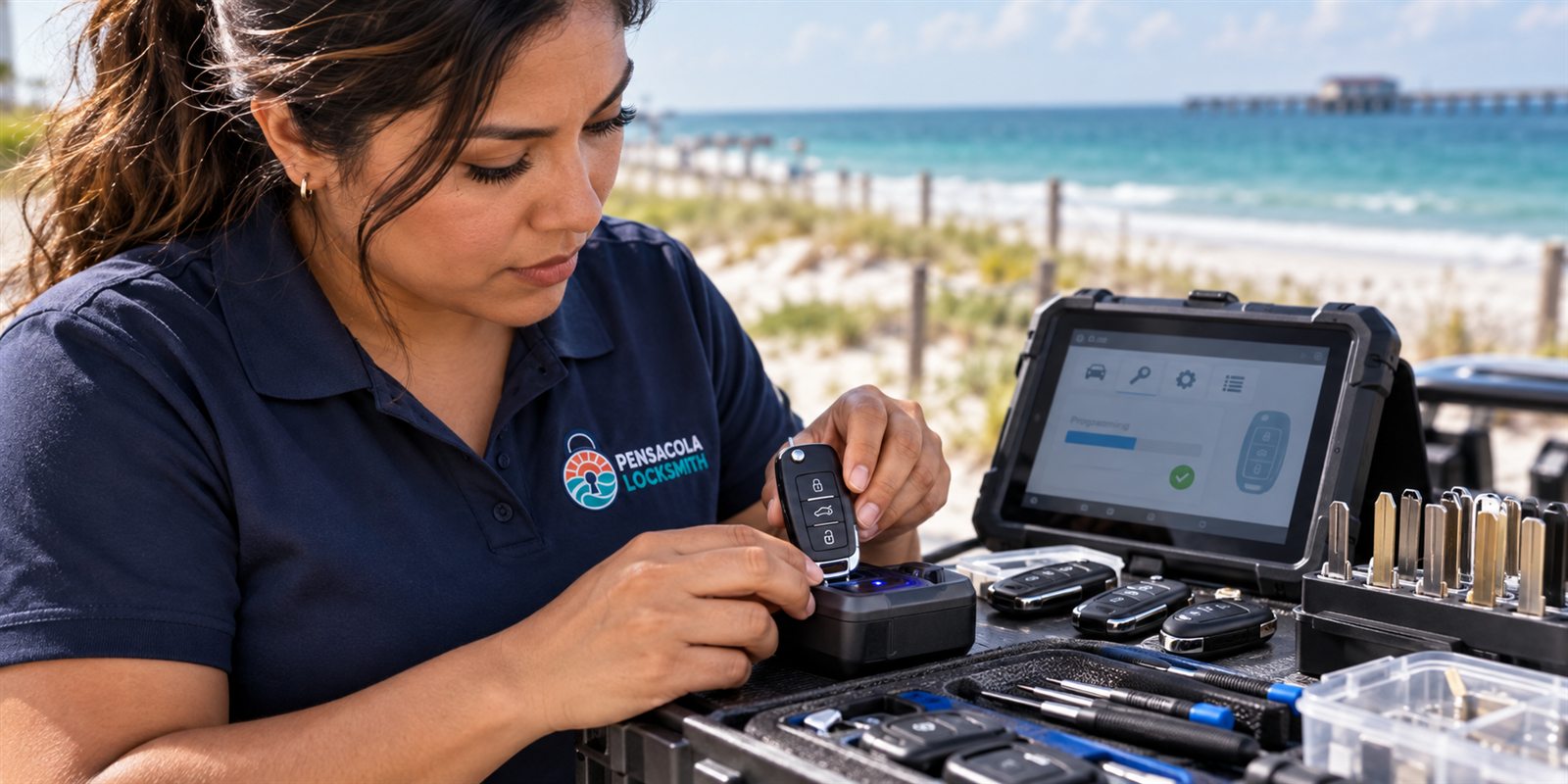
Programming registers a new key with the vehicle's computer. On some Jeep models this requires a security PIN, which is retrieved using the vehicle information and the technician's tools, after ownership is verified. The PIN is then used to authorize the new key.
Where the vehicle supports it, keys that were lost can be removed from the system as part of the visit. That matters if your key disappeared on a beach or trail and could be found by a stranger. Ask about it when you call.
What to tell the technician on the phone
Start with the basics: Jeep model, approximate year, and how many keys you have. Say whether the vehicle is locked, whether the key is broken off in the ignition or door, and whether the vehicle has a key slot or a start button.
Give the vehicle identification number if you can read it. It is on the dashboard near the windshield and on the door jamb sticker. This helps the technician confirm the key type and programming steps with certainty, which is important when similar looking Jeeps use different systems.
Be exact about where the Jeep is parked. A driveway is simple. A trailhead lot, a boat ramp area or a marina entrance may involve gates, soft ground or limited access. The technician needs space beside the driver door and a solid place to work.
If the vehicle has been modified, mention it. Aftermarket alarms, remote starters and replaced ignition parts can affect programming. Likewise, lift kits and large tires are fine, but a vehicle stuck in deep sand needs to be moved to firm ground before work begins.
Choosing between replacing, repairing and adding keys
Not every Jeep key problem calls for a brand new key. If the blade is fine but the buttons are dead, the fob electronics may only need a battery or a new case. If the case is cracked but the buttons work, a shell swap can extend its life. If the chip is cracked or the board is corroded, replacement is usually the sensible path.
Adding a key is different from replacing one. When you already have a working key, adding a second is the simplest job. When you have no key, the technician starts from scratch, and the effort, equipment and time are all greater. A spare made early is nearly always less trouble than a replacement made late.
Think also about how you use the Jeep. If you take it to the water often, a plain blade key with a rugged head might survive better than an elaborate smart fob. If you value convenience, a smart key is nice, but then a protective pouch and a spare matter more. The technician can talk through the tradeoffs for your vehicle.
Be honest about the condition of the old key. A key worn so badly that it barely turns the lock should not be used as a copy source, because copying worn cuts copies the wear. The technician may cut from code or the lock instead, and the result is a sharper, more accurate key.
Proving the vehicle is yours before anything is cut
A locksmith confirms ownership or authority before opening, cutting or programming a key. The usual proof is a photo ID matching the name on the registration or title. A bill of sale with a matching ID can work for a recent purchase.
This applies even when you are standing next to the Jeep with the hood up. Technicians are trained to decline work where authority cannot be established, because a key made for the wrong person can mean theft.
Jeeps owned by a family member, a company or a lender need the same care. A letter from the owner, a fleet document or a quick call to the registered owner can solve the problem. The technician will tell you what is acceptable once you describe the situation.
If you are a visitor driving a borrowed or rented Jeep, contact the owner first. They will have to confirm that a key can be made or the vehicle opened. This step can feel slow, but it is the right order, and it prevents trouble later.
Cutting and checking the blade
Jeep blades come in more than one profile. Some are edge cut like a classic key, while others use a milled channel. The technician selects the matching blank and cuts it on a portable machine, using a copy source, a code or information read from the lock.
When all keys are lost, the technician decodes the lock to determine the cuts. Door locks and ignitions can differ on the same vehicle, so the technician checks both and tests the blade in each. Do not worry if this takes a little while. Precision matters.
A new blade is tested in the door, the ignition and any other lock, such as a glovebox or tailgate lock where the vehicle has them. A key that only works in one lock is recut.
After cutting, the edges are cleaned. If a lock feels rough, the technician may recommend a cleaning and a dry lubricant. Avoid spraying oily lubricants into locks, because grit sticks to them, especially in sandy, salty Gulf Coast conditions.
Programming the chip, the fob and the extras
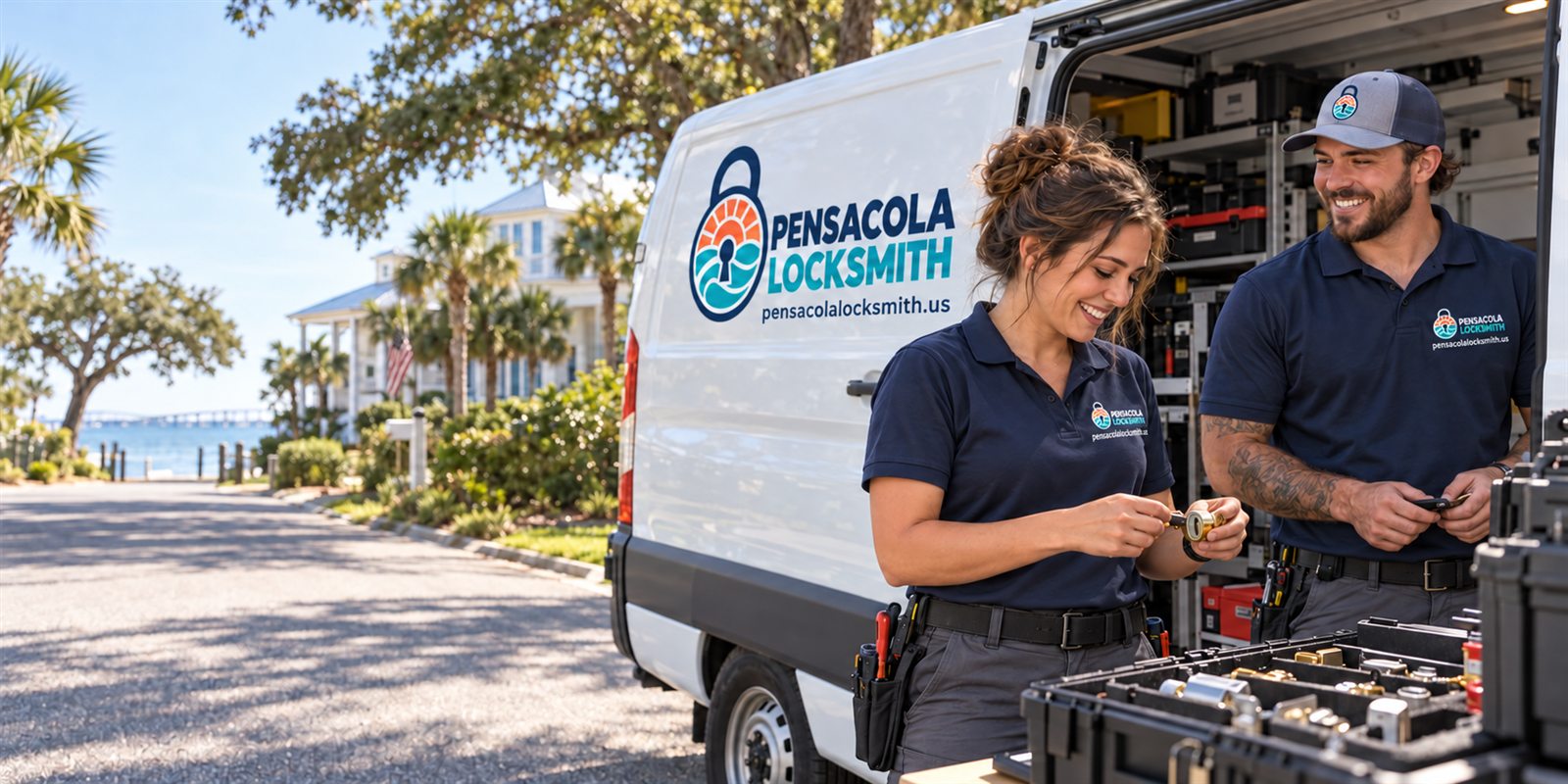
The technician plugs a diagnostic tool into the data port under the dash and communicates with the vehicle's computer. The new key is introduced, the code is written, and the technician confirms the engine starts. Some models allow a procedure with two working keys to add a third, though not every Jeep supports it.
Remote functions follow. Lock, unlock, panic, and any liftgate or tailgate button are tested. If the vehicle offers remote start through the fob, that function is checked too. Smart key models are tested for proximity detection and for proper shutdown when the fob leaves the cabin.
If the fob case is badly worn, the technician may transfer the electronics to a new shell or suggest a full replacement. A cracked case will keep letting in moisture, so a repair of the shell can be worth doing even when the electronics still work.
Be aware that programming time varies. Some Jeeps accept a key in a few minutes. Others require a wait period built into the security process, which the technician cannot shorten. Planning a little extra time avoids frustration.
Water, sand and salt: what the Gulf Coast does to keys
Anyone who drives a Jeep around Pensacola's beaches, bayous and boat ramps knows how fast sand and salt get into everything. Fine grit scratches key blades, wears the tumblers in locks and works its way into the ignition. Salt air speeds corrosion on metal parts.
A fob that has been dunked in saltwater is in more danger than one dipped in rain. Salt residue conducts electricity and eats the circuit board. If it happens, rinse nothing, power down by removing the battery, and let the technician inspect it quickly.
Prevention is not complicated. Keep the key in a sealed pouch while on the water. Rinse sandy blades with fresh water and dry them. Keep a spare at home. These habits cost almost nothing and protect against a long day stuck at a ramp.
Soft tops and removable doors are another Jeep quirk. If the doors are off or the top is down, a locked vehicle is a different problem from a closed one. Mention your setup so the technician knows whether the vehicle needs to be opened, and whether any accessories change the way locks are reached.
- Store the key in a sealed pouch near water
- Rinse sandy blades and dry them completely
- Keep a spare key at home or with someone you trust
- Replace a worn fob case before moisture ruins the circuit board
Aftermarket parts, alarms and remote starters
Many Jeeps carry extras added after purchase: alarm systems, remote starters, tracking devices and winch or light controls wired near the ignition. These are often installed well, but they sometimes tap into the same wiring the immobilizer uses. When programming begins, the technician may find that they interfere.
If an aftermarket alarm has a bypass module, it may need to be reset or temporarily disabled. Tell the technician what is installed and, if you have paperwork from the installer, bring it. Knowing the system saves guessing, and guessing around wiring is how small problems turn into bigger ones.
A remote starter can also hold its own copy of the key code. If the original key is replaced and the vehicle's list changes, the starter may need attention. This is not a problem with the new key, just a separate piece of equipment that needs to agree with the car.
Lifted or heavily modified Jeeps sometimes have relocated batteries or extra electrical loads. A weak or unusual power setup can interrupt programming. A technician may connect a stable power supply directly, and may ask you to turn off accessories like auxiliary lights and stereos while working.
Lockouts, broken keys and stuck ignitions
Sometimes the issue is not a lost key but a stuck one. A key that snaps off in the ignition or door needs careful extraction before a new key can be made. Technicians use thin extractors designed to grip the broken piece without harming the cylinder.
A Jeep that is locked with the key inside is a different job. The technician selects a method that avoids damaging paint, weatherstripping or electronics. Modern Jeeps have side airbags and wiring in the doors, so techniques that worked on older vehicles are not always appropriate.
If the steering wheel is locked and the key will not turn, do not force it. Gently rock the wheel while turning the key. If that fails, stop and call. Forcing can break the key, damage the ignition or strip the lock mechanism, and that adds cost and time.
Tell the technician whether children or pets are inside the vehicle. In an emergency like that, call emergency services first. A locksmith can help, but safety comes ahead of any lock issue, and the technician will not hesitate to tell you the same.
How the job is quoted and carried out
The process starts with a phone call. You describe the vehicle and situation, and routine jobs are quoted by phone. Please call to confirm availability for your location, since we do not promise arrival times.
If the job is complicated, such as a lost key on a push-button model, a technician visit may be needed first. The service call charge is explained before dispatch, so you know what you are agreeing to before anyone drives out.
On site, the technician checks ownership, inspects the vehicle, explains the plan and starts work. You will hear what each step is: cutting, connecting, programming, testing. Ask questions at any point.
At the end, test everything with the technician present. Start the Jeep more than once, try every button, test the emergency blade, and make sure no warning lights remain. If you want a spare, it is easiest to add it during this visit.
Preparing and planning ahead
Before the technician arrives, collect your ID, the registration or title, and any keys, fobs or pieces. If the Jeep is in a muddy, sandy or low area, move it to firm ground if it is safe to do so. A stable surface helps with cutting and programming.
If you have time, charge the battery. A weak battery can interrupt programming, and a tired Jeep that has been sitting after a storm or a long trip is a common cause of failed sessions. The technician can bring a power supply, but a healthy battery makes everything calmer.
Think about weather. Summer afternoons are hot and sudden storms are common, so a shaded or covered spot is better for people and tools. Hurricane season also means you should plan key spares well in advance of any warnings.
Finally, when the work is done, store your new spare properly. Resist the urge to hide a key in a magnetic box under the bumper. Those boxes get found, or fall off in sand. A spare with a trusted person is safer, and it is still available when you need it.
A few honest limits and tradeoffs
A locksmith can do a great deal, but it is worth being clear about limits. Some newer Jeeps use security systems that need manufacturer data, and in rare cases the data is not available to an independent technician. When that happens, the technician will say so clearly and explain what other routes exist, rather than making promises that cannot be kept.
There is also the matter of time. Cutting and programming sound simple, yet a clean job still takes patience. Rushing risks a key that works today and fails next month. A technician who explains the process and takes the time to test is doing the job the way it should be done.
Finally, a replacement key will not fix an unrelated fault. If the starter is worn, the battery is failing or the ignition switch is damaged, a new key will not change that. The technician will separate these issues so you do not pay for a key when the true cause is elsewhere.
Common questions
Can a Jeep key be made if I have no keys left?
Usually yes. After the technician verifies ownership, the lock can be decoded to cut a blade, and the new key is programmed to the vehicle's security system. This takes more steps than copying an existing key, and some models involve a security PIN or a built-in wait. Call us with the model and year for specifics.
My Jeep fob got wet at the beach. Can it be saved?
Often, if you act quickly. Remove the battery, let the fob dry completely, and avoid pressing buttons. Salt water is harsher than fresh water, and corrosion on the circuit board may make replacement more realistic. The technician can inspect it and tell you honestly whether repair is practical.
Will the old lost key still start my Jeep?
It might, unless it is removed from the vehicle's memory. Many systems let the technician erase old keys during programming so only the keys you hold will work. If your key was lost somewhere it could be found, ask about this when you call.
What proof do I need to show?
A photo ID and something that ties you to the vehicle, like a registration, title or purchase record. For vehicles owned by someone else or a business, bring written authority. The locksmith checks ownership or authority before opening, cutting or programming anything.
How is the cost worked out?
It depends on the key type, whether any key remains, and how involved the programming is. Routine jobs are quoted by phone. For complicated jobs a technician may need to visit first, and the service call charge is explained before dispatch, so you know in advance.