
Content note: this page was written by Claude (AI) for Pensacola Locksmith.
What a deadbolt actually does
A spring latch, the kind built into most knob sets, holds a door closed but is not meant to stop anyone. The slanted tongue can often be pushed back with a thin piece of plastic or a firm shove. A deadbolt is different because its bolt is a solid rectangular piece of metal that only moves when a key or thumb turn moves it. Nothing pushes it back on its own, so the door stays locked until someone turns the cylinder.
The bolt slides out of the door edge and into a hole in the frame. That hole is called the bolt bore, and it sits behind the strike plate. How far the bolt travels is called the throw. A longer throw means more steel sits inside the frame, which makes it harder to spread the door away from the jamb with a pry bar or a kick.
This is why a deadbolt is usually added above the main handle set rather than replacing it. The handle set keeps the door closed during daily use, and the deadbolt is the part that resists force. Most homes in the Pensacola area already have one, but the age, fit and condition of the hardware vary a lot, especially in older houses.
Single cylinder and double cylinder: the real tradeoffs
A single cylinder deadbolt has a key slot on the outside and a thumb turn on the inside. It is the common choice for house entry doors because anyone inside can leave quickly without searching for a key. In an emergency, such as a fire, that speed matters, and it is the main reason single cylinder locks are the usual recommendation for homes.
A double cylinder deadbolt needs a key on both sides. People choose it when there is glass near the lock, such as a sidelight or a door with a window pane, because a thumb turn within reach of broken glass can be turned from outside. The downside is real: if the key is not right there, the door becomes a trap. Local fire and building rules can limit where these are allowed, so talk it through before choosing one.
Our approach is to ask about the door first. How close is the glass, who lives in the home, are there children or older family members, and where would a key be kept? Sometimes the better answer is a single cylinder lock plus a different fix for the glass, like security film or a repositioned lock. We will tell you the tradeoff plainly and let you decide.
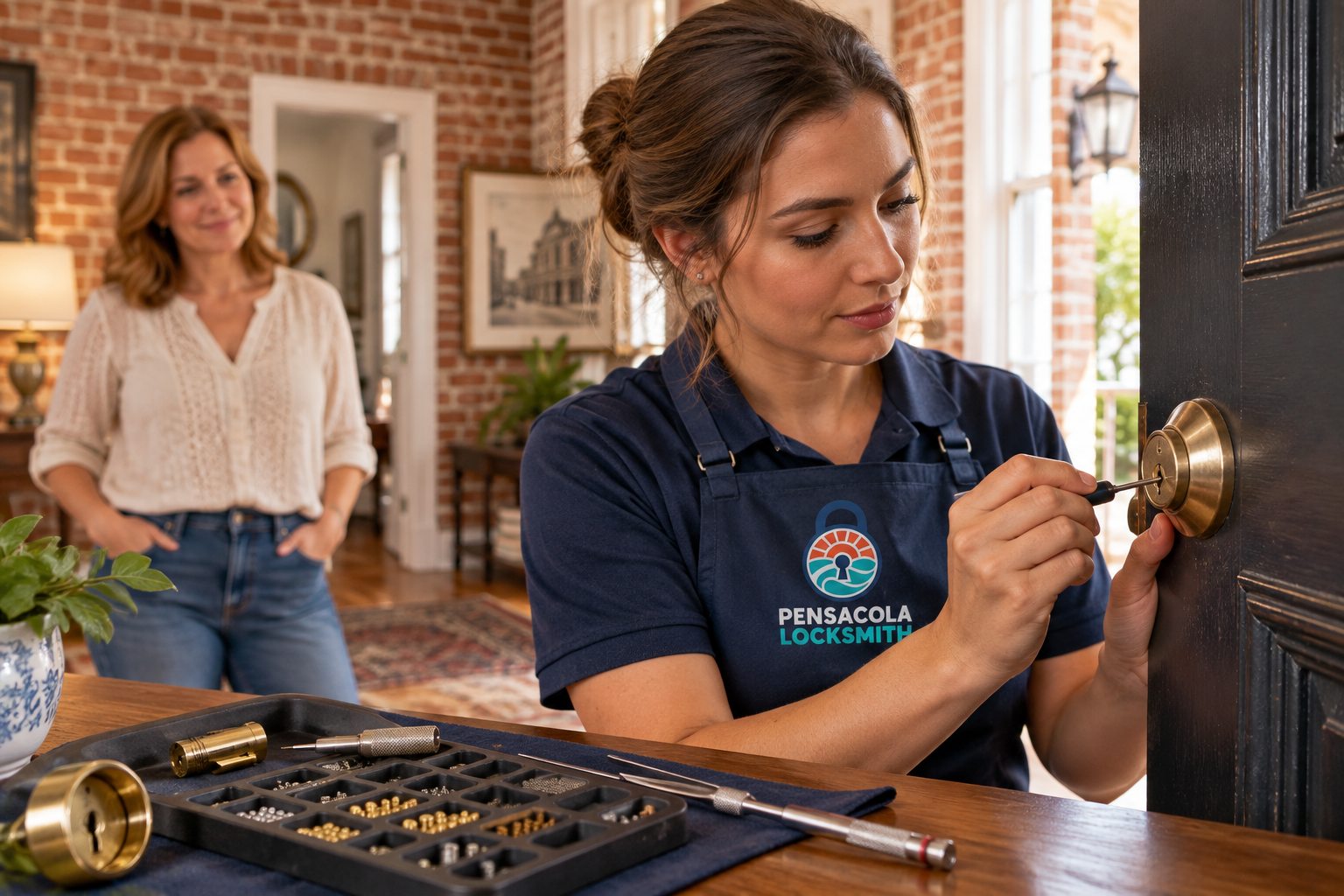
Strike plates and why they matter more than the lock
Most failed doors do not fail at the lock. They fail at the frame. A standard strike plate is a thin piece of metal held by short screws that bite into soft jamb wood. A hard kick can split the jamb at that spot and the door swings open with the bolt still extended. The lock did its job and the frame lost.
A reinforced strike plate changes this. It is a thicker plate, often paired with a longer box or a plate that spans more of the jamb, and it is fastened with long screws that reach through the jamb into the framing stud behind it. That ties the lock to the structure of the house instead of to a half inch of trim.
If you only do one upgrade to an existing door, this is usually the one worth doing. Technicians check whether the jamb is already cracked, whether old screws are stripped out, and whether the bolt lines up cleanly with the hole. A bolt that rubs or drags is a sign of a door that has shifted and needs adjusting before any new hardware will work well.
What the technician checks before drilling
A deadbolt installation starts with measuring and looking. The door thickness decides which latch and bolt will fit. The existing holes, if any, tell us whether a standard bore is already there. The backset, which is the distance from the door edge to the center of the lock hole, is usually one of two common sizes, and picking the wrong one means the lock will not seat properly.
We also check the material. A solid wood door, a hollow core door, a steel skin door and a fiberglass door all behave differently. Hollow doors may need a brace around the lock area, and fiberglass needs careful drilling to avoid cracking the face. Doors that have been painted many times, which is common in older Pensacola homes, can have bores that no longer match the hardware.
Finally we look at the frame and hinges. Short hinge screws are a common weak point, and swapping a few of them for long screws is a quick improvement. If the door does not close squarely, a new deadbolt will not fix it. We would rather adjust the door or tell you honestly that it needs carpentry than install a lock that fights the opening.
Ownership and what we ask when you call
Before we install, rekey or change a lock on a home or business, we check that you own the property or have the authority to make the change. That can be as simple as a conversation and an ID that matches the address, or a note from the owner if you are a tenant or property manager. It protects you as much as anyone else, since the same step stops a stranger from having your locks changed.
When you call, it helps to have a few details ready. Tell us whether the door is wood, metal or fiberglass, whether there is already a deadbolt, and whether you want it keyed the same as your other locks. Mention any glass beside the door and whether the frame looks damaged. A rough description is enough for us to talk you through the right type.
Quotes are given by phone based on what you describe. If the job turns out to be more involved than it sounds, such as a damaged frame or a door that needs fitting, a technician visits and the service call charge is explained before anyone is dispatched. You will not be surprised at the door. Please call to confirm availability.
Keying choices: matching your other locks
Many people want one key for everything. A deadbolt can be keyed to match an existing handle set, as long as the brand and keyway allow it. Otherwise the handle set can be rekeyed to match the new lock. Either way, the goal is a single key that works the front door, and sometimes a side or back door as well.
If you are moving into a home, the better question is who else has a key. Previous owners, tenants, cleaners and contractors may all hold copies. Installing a new deadbolt with fresh keys is one way to start clean, and rekeying the existing cylinders is another. The right choice depends on the condition of the old hardware and whether you like the way it feels in use.
For rental properties around Pensacola, including vacation units near the beaches, keying is often handled so each unit has its own key but the manager can still get in. That setup needs planning ahead of time. If you manage several doors, tell us up front so the keyways and bitting are laid out sensibly instead of patched together later.
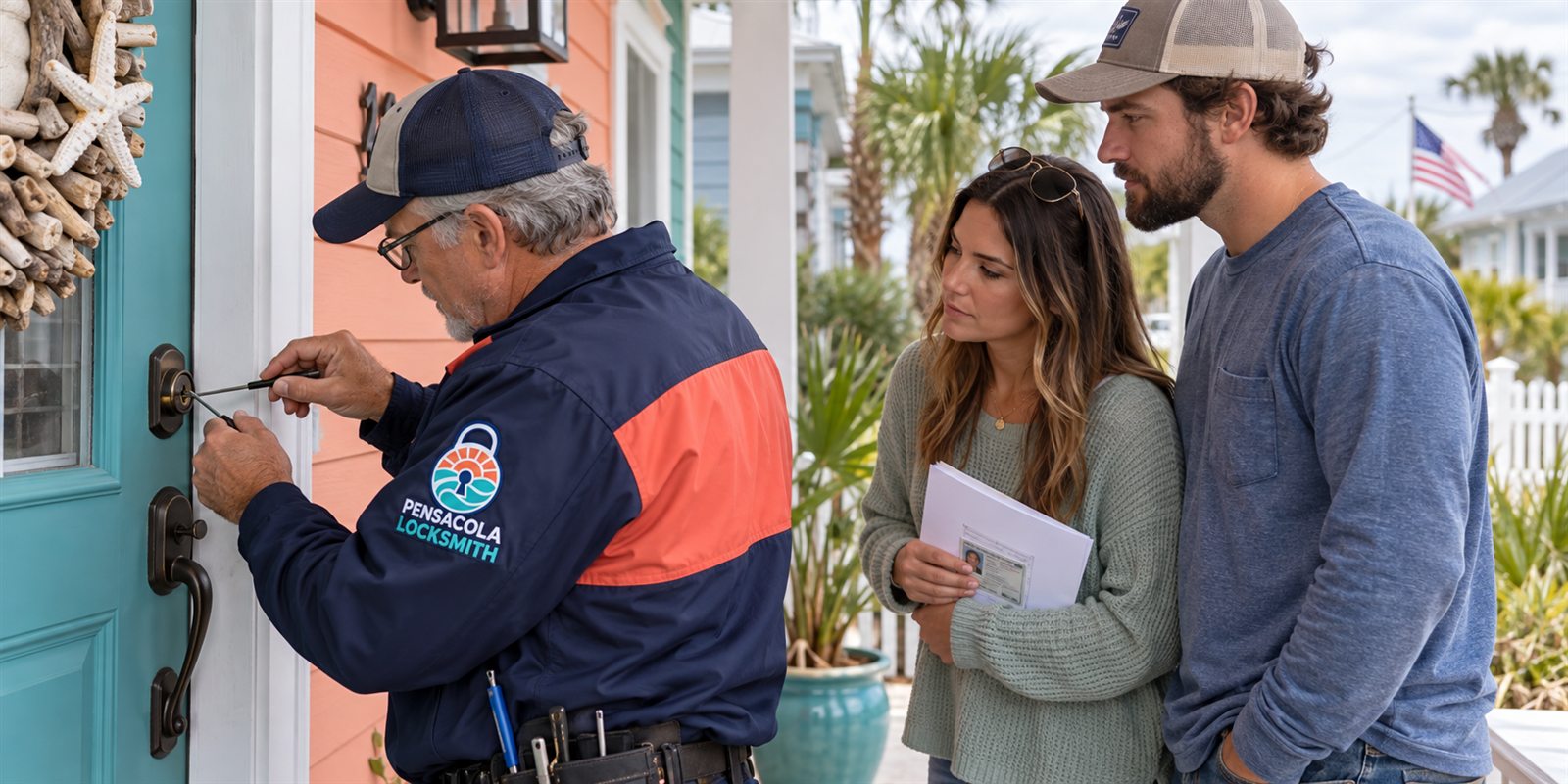
Coastal conditions and hardware that lasts
The Gulf Coast is rough on door hardware. Humid air, salt carried inland by breezes off Pensacola Bay, and summer heat all work on the finish and the moving parts of a lock. Cheap plated hardware can pit, and cylinders can get stiff or gritty. Doors close to the water feel this most, but even inland homes see swelling and sticking in wet months.
Choosing hardware with a solid finish matters, and so does installation. A bolt that is slightly misaligned will drag against the strike on a swollen door and wear faster. We set the bolt so it moves freely with a margin, because wood moves with the seasons and a tight fit in March can bind in August.
A small amount of maintenance helps too. Wiping the exterior, keeping the keyway clear of debris, and using a dry graphite or a lock specific lubricant occasionally keeps things smooth. Heavy oils attract dirt. If a key starts to feel rough going in, that is a good time to call before it breaks off in the cylinder.
Hurricane season, rentals and other situations
During hurricane season, people often think about doors in terms of wind and water. A deadbolt with a deep throw and a well anchored strike helps keep a door seated against pressure, though it is not a substitute for proper storm protection. If you are preparing a home, a quick look at hinges, strike screws and the door itself is worth the time before a storm warning rather than during one.
Landlords and short term rental owners face a different problem: turnover. Guests come and go, and lost keys are common. A deadbolt that can be rekeyed quickly, or a setup that allows a keypad later, can save trouble. Some owners pair a mechanical deadbolt with a smart lock added at a different time, and the two can coexist.
Military families moving in and out of the area, and students near the university and college campuses, often need a fast turnaround on a new place. We can help sort out what is worth changing and what can wait. The basic first step is always the same: check ownership or authority, check the door, and explain the plan before any work starts.
Replacing an old deadbolt versus adding a new one
Sometimes the question is not whether to have a deadbolt but whether the one on the door is still worth keeping. A lock that sticks, a thumb turn that spins freely, a key that has to be wiggled, or a bolt that no longer extends all the way are signs of internal wear. Parts inside a cylinder are small, and years of humid air and daily use take their toll. Replacing the whole unit is often simpler than chasing each symptom one at a time.
Replacement is usually quicker than a fresh installation because the holes already exist. The technician removes the old lock, checks that the bore is clean and round, and fits the new bolt and cylinder. If the old lock was a different size or backset, we may need to adjust the opening, and we will point that out before starting. Old paint buildup around the edge plate can also be cleaned up for a tidier finish.
When there is already a working deadbolt that is simply loose or mismatched to your other keys, rekeying may be all you need. Rekeying changes the internal pins so old keys stop working, and the lock stays on the door. We will tell you honestly if the lock itself is good enough to keep. Not every job needs new hardware, and we would rather save you the extra work.
Small mistakes that weaken a good deadbolt
A few common habits undercut a perfectly good lock. The first is leaving the bolt unthrown because the door is closed and it seems fine. A latch alone offers very little resistance, so using the deadbolt every time you leave or go to bed is what makes it worth having. The second is hiding a spare key nearby, under a mat or in a planter, where it is the first place anyone looks.
The third is a door that does not line up. If you have to lift or push the door to get the bolt to slide, the bolt is bearing on the edge of the hole rather than moving freely. Over time that wears the metal and makes the lock hard to use, and eventually people stop locking it. A small adjustment to the strike or hinges often solves the problem and is worth doing early.
The last is ignoring a damaged frame after a break in attempt or an old repair. Cracked wood around the strike, filled holes, or loose trim can hide a weak spot. A technician can look at it and tell you whether it needs a plate, a repair, or a full frame fix. Locks work best when the entire opening is treated as one system.
What to prepare before the visit
A little preparation makes the visit smoother. Clear the area around the door so the technician can reach the lock and the frame, and move any mat or furniture that blocks the swing. If a pet is in the home, put it in another room, since an open door and a curious animal rarely mix well. Have every existing key for that door on hand so we can test them and decide what to do with the old ones.
Think about what you want from the new lock. Do you want it keyed to match another door, do you want a finish that fits the handle set, and do you want a thumb turn that is easy to grip? Some people with arthritis prefer a larger lever style thumb turn. Mention anything like that when you call, because it changes which hardware makes sense and avoids a second trip.
If you are a tenant, check with the landlord or manager before the visit, since many leases limit lock changes and we need to confirm authority. If you own the home, a quick walk around at the other doors is worthwhile. While one technician is already there, it can be efficient to look at the back door and any side entrances in the same visit, so ask us about them when you call.
Common questions
How do I know if I need a single or double cylinder deadbolt?
For most home entry doors, a single cylinder with a thumb turn inside is the better choice because you can leave quickly in an emergency. A double cylinder makes sense mainly when there is glass within reach of the lock. We talk through the door, the glass and who lives in the home before recommending one.
Can you install a deadbolt in a door that has never had one?
Usually yes. The technician measures the door thickness, checks the material and drills the bore and edge hole to fit. Hollow doors may need reinforcement around the lock. If the door or frame is too damaged, we will say so and explain what needs to be repaired first.
Is a stronger strike plate really worth it?
In many cases it is the most useful part of the upgrade. A longer plate with long screws ties the lock to the framing behind the jamb, which resists kicking much better than short screws in soft wood. It is a small change that addresses the most common failure point.
Do I have to prove I own the property?
We check ownership or authority before installing or changing locks on a home or business. That might be an ID that matches the address, or permission from the owner if you rent or manage the place. It protects the people who actually live there.
How is the price decided?
Quotes are given by phone based on your description of the door and lock. If the job looks complicated once we know more, a technician visits and the service call charge is explained before dispatch. Please call us to confirm availability in your part of Escambia County.