
Content note: this page was written by Claude (AI) for Pensacola Locksmith.
How business locks differ from residential ones
A home door may open a dozen times a day. A shop door can open hundreds of times, and a door to a back office might be used by several employees with different roles. Commercial hardware is built with heavier springs, thicker cases and stronger internal parts so it keeps working under that load. Residential grade locks installed on a busy storefront often wear out quickly.
The doors themselves are different too. Many businesses use aluminum framed glass doors, steel doors in hollow metal frames, or wood doors in older buildings. Each needs a different type of lock body and strike. A storefront door with a narrow stile, for example, cannot hold a standard house deadbolt, and needs a lock made for a slim edge.
There is also the matter of how the door must function. Some doors need to lock from the outside but always allow exit from the inside. Others must stay unlocked during business hours and lock automatically at closing. A technician will ask how the door is used and who needs access before suggesting hardware, because the right answer comes from the use, not the brand.
Common storefront hardware and what each does
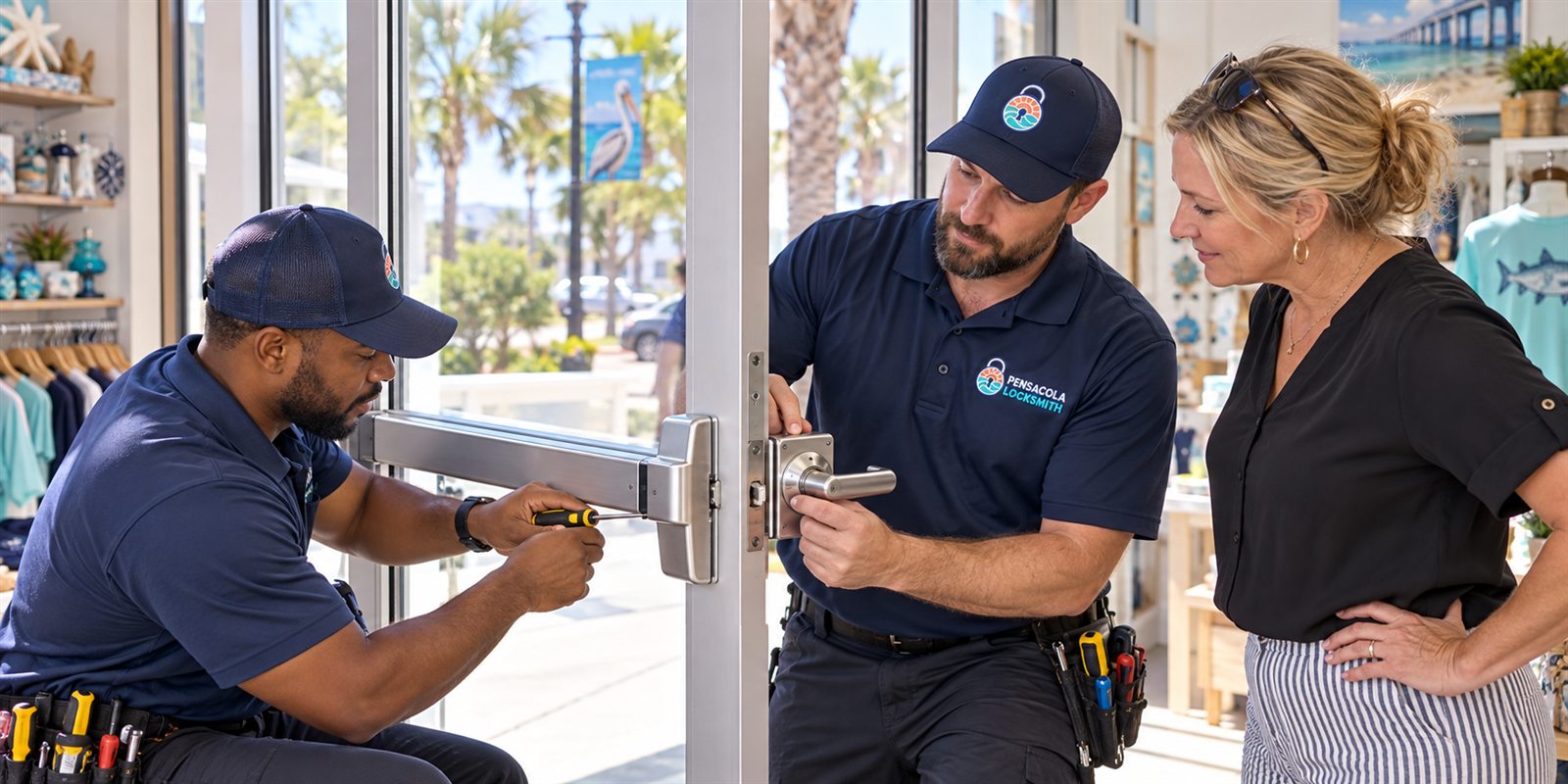
Storefront glass doors often use a surface or rim mounted lock, a pivot style bolt at the top and bottom, or a cylinder that locks into the frame. Each of these has different weak points. A hook bolt, for example, hooks into the strike and resists prying, while a simple latch may not. We look at what is on the door and how it has aged.
Offices and interior suites commonly use cylindrical or mortise locks. A mortise lock sits in a pocket cut into the edge of the door and is common in older commercial buildings. Replacement parts can be specific, and an experienced technician can often repair what is there rather than swapping the whole door. Finish, handing and function all need to match.
Exit devices, often called panic bars, are used on doors that serve as emergency exits. They must release the door quickly from the inside under pressure. Servicing them involves both security and safety, and any change should keep the exit working properly. We will tell you when a device is beyond a simple adjustment and needs a more careful look.
Master key systems explained plainly
A master key system lets different keys open different groups of doors. A change key opens a single door. A master key opens several doors. In larger buildings there may be a grand master that opens everything. The idea is to give each person only the access they need, while letting an owner or manager open all of it.
Designing a system begins with a list of doors and a list of people. We map out who needs access to what, then decide on levels. The more levels you add, the more complex the system becomes, and a poorly planned system can create unintended keys that open doors they should not. This is a real technical concern, and good planning avoids it.
Planning ahead also matters for growth. If you expect to add tenants or rooms, the system should leave room for new combinations. A rushed system built around today's needs can be difficult to extend later. We prefer to take the time at the start, document the layout, and give you a clear record of which key opens which door.
Key control: keeping track of who has what
A master key system is only as good as the discipline around it. If keys are copied freely, handed to contractors and never collected, the system loses meaning. Key control is the practice of knowing who holds each key and getting it back when they leave. It sounds basic, yet it is the thing most businesses neglect.
A simple key log can be enough for a small office. Record the key number, who has it, the date issued and the date returned. Larger sites often use restricted keyways, which means copies can only be made with authorization. That stops casual duplication at a hardware counter and keeps control with the owner or manager.
When an employee leaves under difficult circumstances, or keys go missing, the question becomes whether to rekey. Rekeying changes the pins inside the locks so old keys stop working, and it is often more practical than replacing hardware. We can work out which doors need it and which can stay as they are, so you only address what is actually at risk.
Authority checks: who can authorize work on a business
Before opening, rekeying or changing locks at a business, we confirm that the person asking has authority to do so. That might be the owner, a manager, or a property representative. A business card, a lease, a document with the business name or a call to a known contact can all help. This step protects against someone trying to get into a space they do not control.
In multi-tenant buildings, authority can be layered. A tenant may control a suite while the building owner controls common doors, exterior doors and mechanical rooms. A tenant cannot authorize work on a door that belongs to the landlord, and a landlord should not change a tenant's lock without following the lease. We ask who controls which door before starting.
If a lockout happens after hours and the person on site is not the owner, we may ask to speak with someone who can approve the work. That can feel slow, but it protects the business. We explain this when you call, so you know to have the right person available and to bring any needed identification.
Lockouts, broken locks and damage after a break in
When a business cannot get in, the clock matters to the owner, but we still work carefully. The technician identifies the lock type and decides whether it can be opened without damage. Many commercial locks can be opened non destructively. If a lock is broken or jammed, we explain whether it should be repaired or replaced, and what that means for the door.
After an attempted break in, the damage often goes beyond the lock. Bent frames, split jambs and broken glass panels may all need attention. A temporary fix can secure the opening for the night, and a longer term repair can follow. We tell you honestly which parts are our work and which may need a glazier, carpenter or door company.
Documentation can matter for insurance and for your own records. We do not provide legal advice, but keeping notes on what was damaged and what was done is useful. Photos taken before repairs, a note of the lock type and the date of work all help anyone who needs to understand the incident later.
Access control, keypads and door closers
Some businesses prefer a keypad or electronic reader instead of keys, especially where staff changes often. An electric strike or magnetic lock can be tied to a keypad, a card reader or a button at a front desk. These systems involve power, wiring and sometimes a fire alarm connection, so the design needs care.
A keypad on a back door can be a practical step for a small business. Codes can be changed when a person leaves, and there is no key to be lost or copied. For larger setups, a network connected system may keep logs. We talk through which approach fits your size and tolerance for upkeep before recommending one.
Door closers are an overlooked part of security. A door that does not close fully every time may never latch, and a lock cannot protect a door that stays ajar. A technician checks the closer, hinges and strike alignment during any visit. Often a small adjustment makes the whole opening work better and reduces wear on the lock.
Coastal and seasonal conditions for business doors
Pensacola's humid, salty air hits business hardware hard, especially on doors facing the water or the weather. Exterior cylinders can corrode, and aluminum frames can develop rough spots. Choosing finishes and parts that resist corrosion helps, and regular cleaning of exposed hardware keeps problems from building.
Seasonal changes affect businesses in different ways. Shops that serve visitors may see spring and summer surges, with doors opened more often and keys passed among seasonal staff. That is a good time to review key control and make sure everyone with access still needs it. A quiet period is a good time to schedule maintenance.
Hurricane season brings preparation. Boarding up, moving valuables and shutting down are all part of the routine. It is useful to confirm that doors latch properly, that hinge screws are tight and that you have working spare keys stored off site. After a storm, we can check locks that have been exposed to water and debris and tell you which need service.
Multi-tenant buildings and property managers
Property managers deal with turnover. When a tenant moves out, the unit often needs rekeying so the old keys no longer work. Doing this on a consistent schedule keeps the building secure and avoids disputes about who still has access. A system that makes rekeying simple, such as locks that can be rekeyed in place, saves time on repeated cycles.
Common areas add another layer. Mail rooms, utility closets, storage rooms and shared entrances may all have their own keys. A clear plan, with a record of which key opens which area, helps the manager keep order. We can help organize this so the building does not end up with a drawer of mystery keys.
If you manage more than one property, tell us at the start. A consistent approach across buildings, with a single master level for the manager and clear lines between tenants, reduces confusion. It also makes training new staff easier. Call us with a rough description of the buildings and we can talk through how to structure the system.
Preparing for a business visit and getting a quote
Before you call, gather a few facts. What kind of doors are involved, how many, and what is the current hardware like? Is the problem a lockout, a broken lock, or a plan for new keying? Who is the person authorized to approve the work, and will they be available? A short description helps us suggest the best next step.
Quotes are given by phone based on what you describe. Commercial jobs can be complicated, and when they are, a technician visits and the service call charge is explained before dispatch. We would rather keep it clear and honest than quote something that changes at the door. Please call to confirm availability, since schedules can shift.
At the visit, the technician inspects the doors, confirms authority, explains what needs doing, and then does the work. You receive keys, and if a master system is involved, a written record of the layout. We encourage you to store that record safely and share it only with people who truly need it.
Restaurants, retail and customer facing spaces
Customer facing businesses have a special balance to strike. The front door must welcome people during open hours and lock securely at night. Back doors are used for deliveries, trash and staff, so they get far more wear than the front. Hardware choices should reflect that, with sturdier locks in the places that see constant traffic and simple, reliable operation where staff are in a hurry.
Cash handling and stock rooms deserve their own thinking. A back office with a small safe, or a stock room holding valuable inventory, may need a lock with more restricted keys than the front door. Limiting who can enter these rooms is a matter of both security and fairness to employees, since a missing item then has fewer possible explanations.
Seasonal tourism around the Pensacola area brings temporary staff and extra deliveries. A clear process for issuing and collecting keys at the start and end of a season keeps things orderly. If you prefer not to hand out keys at all for some doors, keypad entry on a back door may be an easier option for the busy months.
Maintenance that prevents lockouts
Most business lockouts have warning signs. A key that sticks, a latch that no longer catches, a handle that wobbles or a door that has to be pulled hard before it will lock are all hints that something is wearing out. Fixing a worn part early costs less than dealing with a failed lock during a busy day.
A simple routine helps. Once or twice a year, walk through every door. Check that each one closes and latches on its own, that keys turn smoothly, and that screws are tight. Clean exposed hardware and keep keyways clear of grit. Use a lubricant made for locks and avoid heavy oils that collect dust.
If you are unsure about a door, call us before the problem grows. A technician can look at the hardware and tell you what is normal and what needs attention. Maintenance visits are also a good time to update your key records and decide whether any keys should be retired. That small step keeps a growing business organized.
Common questions
What is the difference between rekeying and replacing business locks?
Rekeying changes the internal pins so old keys stop working, while the lock stays on the door. Replacing swaps the whole lock. Rekeying is often practical when keys are lost or staff changes, and replacement makes sense when the hardware is worn, damaged or no longer suits how the door is used.
Can you set up a master key system for a small office?
Yes. We list the doors and the people, decide on access levels, and key the locks so each person gets what they need. We also keep a record of the layout. Planning carefully at the start helps avoid unintended keys and makes it easier to add doors later.
Who has to approve work on a rented space?
That depends on who controls the door. A tenant can usually authorize work on a suite, while the building owner controls shared doors and exterior entrances. We confirm authority before opening, rekeying or changing any lock, and may ask to speak with the right contact.
What should I do after a break in attempt?
Make sure it is safe, document the damage with photos, and call us. A technician can secure the opening and repair the lock or tell you if the frame or door needs other trades. We explain what is needed and what can wait.
How are commercial jobs priced?
Quotes are given by phone based on your description. If the job is complicated, a technician visits and the service call charge is explained before dispatch. Please call us to confirm availability for your location in Pensacola or Escambia County.