
Content note: this page was written by Claude (AI) for Pensacola Locksmith.
How a key actually works
A standard pin tumbler lock contains a row of small spring loaded pins of different lengths. When the right key goes in, the ridges and valleys of its blade lift each pin to exactly the height that lets the cylinder turn. The shape of the blade is the code. If one ridge is a fraction too high or low, a pin binds and the lock refuses to turn.
The blade also has grooves along its length, called the keyway profile. These grooves guide the key into the cylinder and keep out keys of other brands and shapes. Two keys can have the same cuts but different profiles, and one will not fit the other's lock. This is why a key must be matched by blank as well as by cut.
Understanding this makes copying less mysterious. A copy must follow the original in profile, depth and spacing of each cut. A tiny error repeated across five or six cuts adds up. That is why the quality of the machine, the blank and the person using them matters more than most people expect.
How a copy is made
The usual method uses a duplicating machine with two vises. The original goes in one, and a blank of the same type goes in the other. A guide traces the original while a cutter shapes the blank to match. The operator aligns the two carefully, because a small shift at the start spoils every cut that follows.
A second approach is cutting by code. If the key's code is known, through a number stamped on the key or found by measuring the cuts, a machine can cut a fresh key to the factory specification. This avoids copying wear from an old key, and often gives a smoother result. It is useful when the original is damaged.
After cutting, the key is cleaned of burrs. Tiny metal fragments left on the blade can scratch the inside of the lock and stop the key from turning smoothly. The new key is tested in the lock it is meant for. A good copy should slide in without effort and turn without any wiggling or force.
Why copies of copies go bad
Every time a key is copied, a little accuracy is lost. A copy made from a copy inherits the errors of both, and after a few generations the key may barely work. If your key is already a copy, it is better to find the original or to cut by code. That is the best way to keep the lock in good shape.
Wear on the original matters too. A key used daily for years has rounded edges and shallower cuts. A copy taken from it will be worn from the start, and the lock itself may have adapted to the worn key. A fresh, correct key can feel different in an older lock, sometimes stiffer, though it is usually the better key.
Quality of the blank is also a factor. Blanks made from soft metal bend and wear quickly, especially on frequently used doors. Choosing a good blank for a lock you use every day pays off over time. If a key keeps failing, bring it in. We can tell whether the key or the lock is the real problem.
Keys that cannot be copied freely
Some keys are restricted. Their blanks are not sold openly, and copies can only be made by authorized sources with proof of the right to have them. Restricted systems exist to help owners control who holds copies. Businesses, property managers and some homeowners use them.
You may see words like do not duplicate stamped on a key. That marking is a request, not a lock, and it does not stop a blank from being cut at an ordinary shop. A restricted key system works differently, because the blank itself is controlled. The difference is the point.
If you hold a restricted key, we may need to confirm that you have the right to copy it. That might mean a letter from the property owner, a card from the system or a call to the authorized contact. This step protects the people who own the system. It is not meant as an obstacle, and we explain what is needed on the phone.
High security keys and what makes them different
High security keys are designed to resist copying and picking. They may use cuts on the side of the blade rather than the top edge, a dimpled pattern drilled into the face, or a sliding element built into the key. These designs need special machines that standard key shops often do not have.
Many of these systems are tied to a card or a registration. The owner has a record, and extra keys can only be ordered with that authority. This keeps control with the owner but can slow a simple copy request. If you have a high security key, find out where it came from before you need a spare.
We can often tell you whether a key is standard or high security from a description or a look at the blade. If it is a type we can cut, we do so with the right equipment. If it needs the manufacturer, we explain the path and what proof you will need. It is better to know in advance.
Transponder and car keys in brief
Many car keys contain a chip, and a cut blade alone may not start the engine. Cutting the blade is one part, and programming the chip is another. A copy cut for a vehicle may turn the door lock but leave the engine silent until the key is programmed. We cover car key programming on our automotive page.
For basic duplication, the question is whether your key has a chip, a remote or a plain blade. A plain metal key is straightforward. A key with a thick plastic head is likely to have a chip. A key with buttons is a remote. Tell us what you have, and we can explain the steps.
Vehicle keys also require an ownership check, because a key gives control over a valuable item. We ask for a registration or title that matches your ID. This is the same standard we use for any job involving a vehicle. It applies even to a simple duplicate, and we explain it before beginning.
Home, garage, mailbox and padlock keys
Most household keys are standard types and are straightforward to copy. Front door keys, back door keys, garage service door keys and mailbox keys all fall into this group. The challenge is matching the right blank among the many available. Brand names and keyway shapes vary, so bring the key itself rather than describing it.
Padlocks are a special case. A padlock key can look plain but be a restricted or high security type. Some padlocks are designed so keys can only be copied through the maker. Others use common blanks. We check the key and tell you what is possible before cutting.
Mailbox keys deserve a note. Some are controlled by a postal authority or a property manager, and copies may require permission. Do not assume that a small, simple key can be copied by anyone. If in doubt, ask the manager or landlord first, and bring any paperwork that shows your right to have a copy.
Business keys and key control
For a business, key duplication is about control. Who has copies, who authorized them and where they are stored all matter. If copies are made casually, the business loses track of who can enter. A restricted keyway, a sign out sheet and a clear policy help keep order.
We recommend that an owner or manager authorize every copy request for business keys. We may ask for a name, a role and a way to confirm authority before cutting. For a large site, an authorized list kept on file makes this faster. It is a small step that prevents big headaches.
When an employee leaves, collect their keys. If keys are missing, think about rekeying. A rekey costs less effort than the damage from a stolen item or an unexplained entry. We can help you decide which doors are most at risk and which can wait. A planned approach to keys saves time later.
Coastal wear: salt, sand and sticky locks
Pensacola's climate wears on keys and locks. Salt air corrodes metal, and sand gets into pockets and cylinders. A key that lives in a beach bag often picks up grit that grinds the inside of a lock. A rough, dull key can scratch the cylinder and speed up wear.
If a key feels sticky going in, resist the urge to force it. Clean the key with a dry cloth and check the lock for debris. A small amount of lock lubricant, usually a dry graphite or a lock specific product, can help. Avoid heavy oils that attract dirt.
When a key is badly worn, replace it before it breaks. A fresh key cut from the correct code or a clean original restores smooth operation. It also reduces strain on the lock. If both the key and the lock are worn, we can discuss rekeying or replacing the cylinder. Early action saves trouble.
What to bring and how to prepare
Bring the original key, not a copy of a copy if you can avoid it. If you have a few keys that do the same job, bring the one in the best condition. If the key is part of a set that works with a master system, tell us. Bring any card or paperwork that came with a restricted key.
Tell us how many copies you need and what they are for. A family might want four copies for a home, with different people using them. A rental property might need several for turnover. Knowing the purpose helps us choose the right blanks and give advice on managing the keys.
Check each new key before you leave the visit. Try it in the lock it is meant to open, and make sure it turns smoothly. If it feels tight or sticks, tell us right away. A quick adjustment now is better than a stuck lock later. We would rather take another minute than send you home with a poor copy.
Mobile key cutting, quotes and ownership checks
We are a mobile service, which means we come to your home, business or vehicle. This is helpful when keys are tied to a lock that needs to be tested on site, or when you cannot leave a business. We bring the equipment needed for most standard and many specialty keys. Call to confirm availability for your location.
Quotes are given by phone based on your description. Tell us the type of key, how many copies and whether it is restricted, high security or for a vehicle. If the job is complicated, a technician visits and the service call charge is explained before dispatch. We aim to be clear before work begins.
For homes, vehicles and businesses, we check ownership or authority before duplicating keys where it matters, especially for restricted systems and car keys. That is part of keeping the community's property safe. A short conversation at the start keeps things simple, and it protects you and the people who rely on your locks.
When a new key will not fix the problem
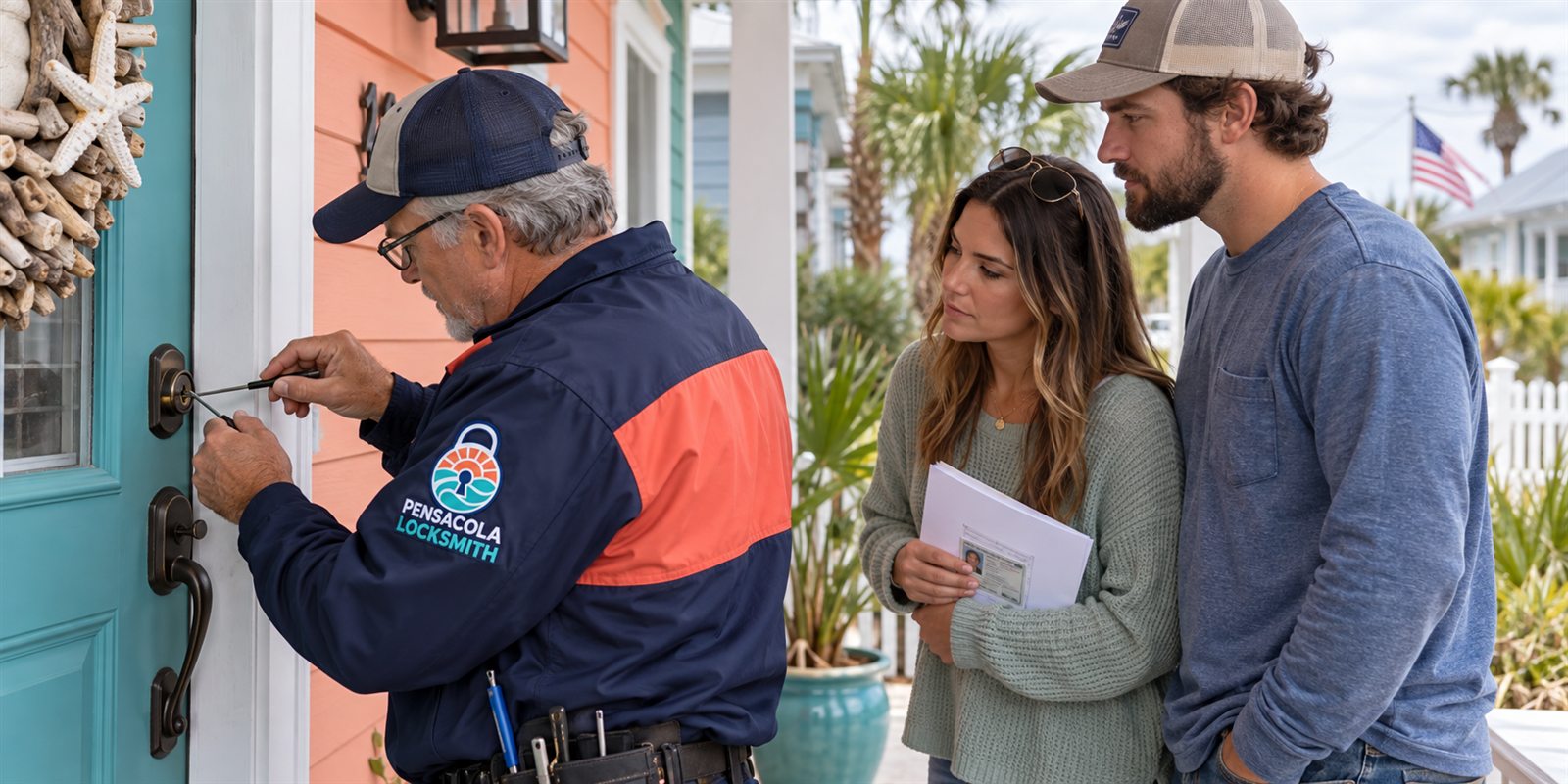
People often assume that a key that sticks or will not turn needs replacing, so they ask for a copy. Sometimes the key really is the problem. But just as often the lock is worn, dirty or misaligned, and a perfect new key will behave the same way. Before cutting anything, a technician tries the old key, compares it to the lock and listens to how it moves.
Signs that the lock is at fault include a key that works in one lock but not another of the same brand, a key that turns only when lifted or pushed, and a cylinder that feels gritty. In those cases, cleaning, rekeying or replacing the cylinder is the better answer. A new key would simply wear out in the same way.
A related situation involves doors that have shifted. If the latch no longer lines up with the strike, turning the key feels hard even though the lock is fine. Adjusting the door or strike can solve it. We would rather solve the real cause than sell you a key that does nothing, and we will say so honestly.
Sharing keys without losing track
Once you have extra copies, the next job is managing them. Give each copy a purpose and a person. Write down who has which key, and when it was handed out. Ask people to return keys when they no longer need them, such as after a house sitter leaves or a contractor finishes work.
Colored caps or small tags can help you tell keys apart, but avoid tags that show the address or name the lock. A lost key with an address on it is an invitation. Use a code that only you understand, or keep the information in a separate list.
If you realize that you cannot account for a key, treat it seriously. The risk is not always high, but the cost of rekeying is usually modest compared to the worry. A quick call can help you decide. We prefer to help you keep control over your keys than to cut more copies that add to the confusion.
Common questions
Why do copies of copies work badly?
Each copy carries small errors from the one before it, and the errors add up. After a few generations, the key may not lift the pins correctly. It is better to copy from the original or to cut a new key by code if the original is worn or damaged.
Does do not duplicate on a key stop it from being copied?
No. That stamp is a request and not a lock. Real restriction comes from a controlled blank and an authorized process. If your key is part of a restricted system, we may need proof of authority before copying it.
Can you copy any key?
Standard house and padlock keys are usually simple. High security and restricted keys need special equipment or authorization from the maker. We look at the key and tell you what is possible and what proof may be required before we cut anything.
Why does a copied car key not start the engine?
Many car keys contain a chip that talks to the vehicle. A cut blade will turn the lock but cannot start the engine until the chip is programmed. We check vehicle ownership before programming, and explain the steps.
How do I get a quote?
Call us and describe the key, the number of copies and the lock. Quotes are given by phone. If the job is complicated, a technician visits and the service call charge is explained before dispatch. Please call to confirm availability in Pensacola or Escambia County.