
Content note: this page was written by Claude (AI) for Pensacola Locksmith.
What a settled neighborhood does to door hardware
Established neighborhoods like Brent tend to have homes that have been lived in for a long time, and the locks on them tell that story. A front door lock that has been turned thousands of times develops slack in the cylinder, the latch drags against a strike plate that has shifted slightly, and the key itself, copied from a copy of a copy, no longer matches the original cuts closely. None of this feels urgent until the day the key sticks or snaps.
When a technician looks at a worn lock, the first question is whether the wear is in the key, the cylinder or the door. A key that turns stiffly in one lock and smoothly in another points to the cylinder. A key that works only when you lift the door slightly points to hinges or a sagging frame. Fixing the wrong part wastes time and money, so the diagnosis comes before any parts are touched.
Many longtime homeowners in older areas have never changed their locks since moving in, and sometimes they inherited keys from earlier owners, relatives, contractors and neighbors. Even without any bad intent, an unknown number of keys in circulation is a quiet security gap. A conversation about who has had access over the years often leads to a simple rekey, which is far gentler on the budget and the door than a full replacement.
It also helps to think about the whole entry, not only the cylinder. Look at the door edge for splintering, at the weatherstripping for gaps, and at the screws in the hinges for stripped heads. A technician walking up to a Brent front door will often notice two or three of these things within a minute, and mentioning them costs nothing. You can then decide which are worth addressing now and which can wait for another day, without any pressure to do everything at once.
Rekeying: the practical answer for many Brent homes
Rekeying changes the internal pin arrangement of a lock so that old keys no longer work and a new key does. The lock body stays on the door, the finish stays as it is, and the work is usually done on site with the cylinders removed, reset and put back. For a house where the hardware is still solid but the key situation is a mess, it is often the sensible choice.
The technician will first check that the lock is in good enough shape to rekey. If the latch is bent, the finish is flaking off or the cylinder is loose in its housing, rekeying only buries the problem. In that case replacing the hardware makes more sense, and the choice is explained plainly so you can decide, including the tradeoffs between keeping existing hardware and upgrading to something sturdier.
One practical benefit is key consistency. If your front door, back door and side door all have different keys, rekeying can often bring them onto one key where the hardware allows it. People carry fewer keys, and the household stays organized. As with every rekey, we ask you to confirm you own or are authorized to manage the property before the work begins, because changing who can enter a home is not something to do on someone else's say so.
Timing is flexible. Rekeying takes less time than most people expect, because the technician is working with the parts already in your door rather than waiting on new hardware. Keep the old keys until the job is finished so the technician can use one to confirm which cylinders are being changed, then discard or recycle them afterward. If a key was lost, it is worth telling the technician, since that affects how thorough you may want the rekey to be across all doors.
- Old keys stop working after a rekey
- Existing locks and finishes stay on the door
- Several doors can often share one key
- Worn or bent hardware may need replacing instead
Deadbolts, strike plates and the parts that get overlooked
A good deadbolt is only as strong as what it is anchored to. In many older houses the strike plate is held by short screws that bite only into the thin door jamb, so a firm kick can split the wood even though the bolt itself holds. Replacing those with longer screws that reach the framing behind the jamb is one of the most modest and effective strengthening steps available, and a technician can do it during almost any visit.
The latch side of the door matters as well. If the bolt does not extend fully into its hole because the door has swelled or shifted, the lock is effectively half engaged. In a humid climate like the Gulf Coast, wooden doors take on moisture and move with the seasons, which is why a door that locked well in winter can feel stubborn in a damp summer.
Technicians look for small signs: scuff marks around the strike, paint buildup on the latch, a bolt that has to be forced home. These point to alignment, not to a bad lock, and adjusting the strike or the hinge screws frequently solves the complaint without replacing anything. It is the kind of honest, modest fix that saves a customer from buying hardware they never needed.
Hinges deserve a mention too. Three screws in each hinge are often just short screws that barely grip the jamb, and replacing a few with long ones turns a flimsy door into a solid one. If the door rubs the frame at the top corner, the fix is frequently a hinge adjustment rather than planing the door. Small, careful corrections like these keep a lock turning smoothly and make the door feel as if it was hung yesterday.
Locks on busy commercial strips
Brent also has the kind of commercial frontage where doors are used constantly: small shops, offices, service businesses and the people who come and go from them. A storefront door might be opened and locked many times a day, by several employees, and the hardware takes more punishment than any residential lock ever will. Closers slam, crash bars wear, and keys get duplicated casually.
For a business owner, the most useful locksmith conversation is often about key control. Who has keys, which doors do they open, and what happens when an employee leaves? A rekey of the main door, combined with clear records of who holds what, solves a surprising number of worries. Where more control is needed, higher-security cylinders with restricted keyways make unauthorized copying harder.
Commercial work also means thinking about how the door is used. Exit hardware, closers and latches need to work for the people inside as well as keep strangers out, and a door that is hard to open from the inside is a safety problem, not a security feature. Before any commercial rekey or lock change, the technician confirms that the person asking has authority over the premises, whether as owner, tenant or manager.
If you run a business here, consider a short written record of every key and code. Note who received which key, when, and whether it can be duplicated. When something changes, such as a new hire or a departure, you will know at once whether to rekey. It sounds like paperwork, yet it is the habit that separates tidy small businesses from ones scrambling to figure out who can open the back door.
If you are locked out: what helps before we arrive
A lockout is stressful, but a few minutes of calm checking can make the visit smoother. Walk around the property and look for a door or window you may have left unlocked, though do not force anything or climb where you could fall. Check that you do not have a spare key with a family member, neighbor or at work. If you do, retrieving it may be quicker than waiting for anyone.
When you call, be ready to describe the door: front, back, garage entry or a commercial storefront, and what kind of lock it appears to be. Mention whether the door has a deadbolt, a knob lock or both, and whether the key is lost, broken or simply locked inside. That information lets the technician bring the right tools and know whether a simple non-destructive opening is likely.
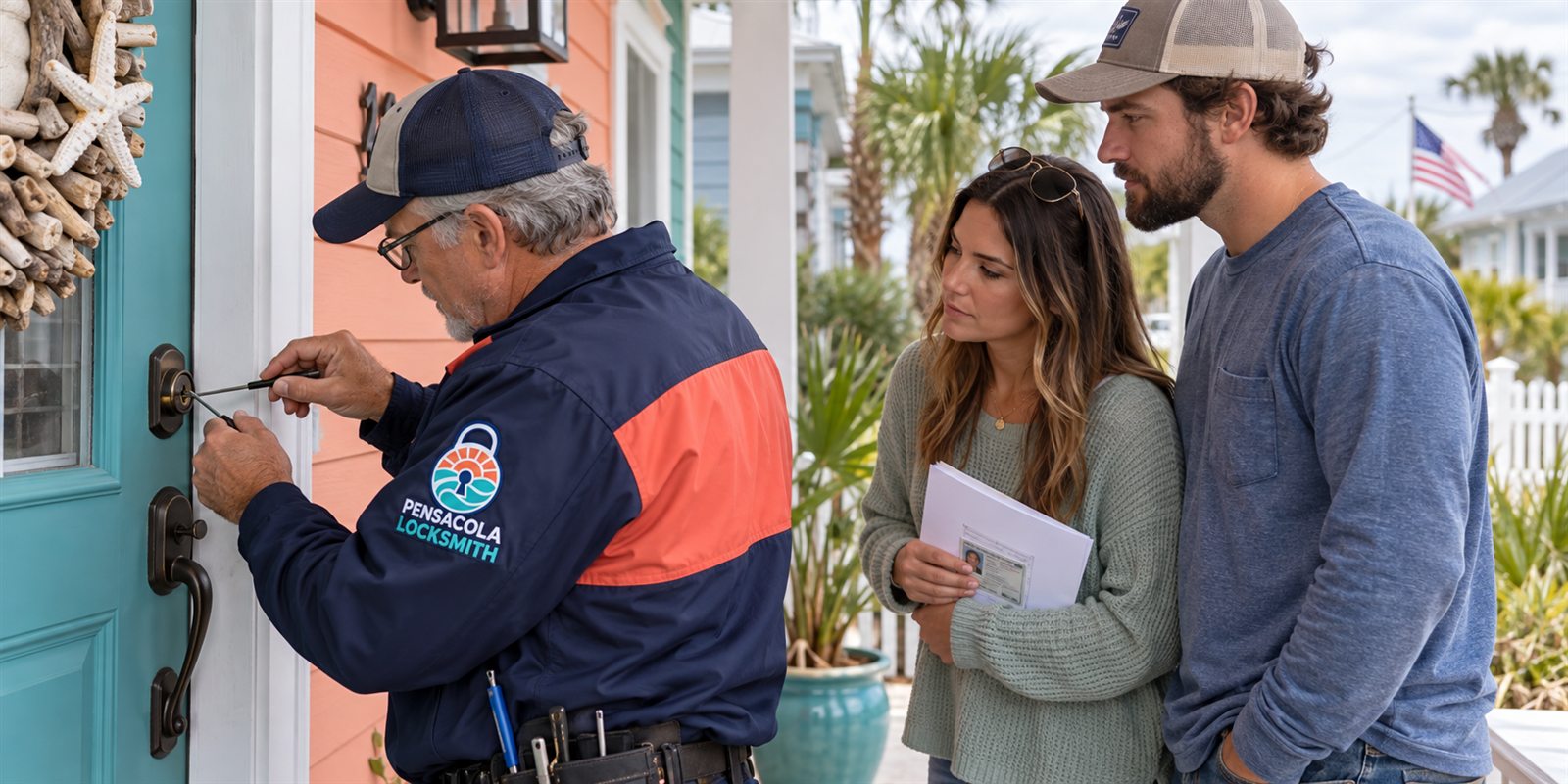
Most residential lockouts can be resolved without damaging the lock, using methods that manipulate the lock rather than break it. Before opening, the technician will ask for proof that you live there or are authorized to be there, such as identification showing the address or other reasonable evidence. This is routine and protects the real occupant of every home, including yours. Please call us to confirm availability for your area.
A few things make a lockout faster to resolve. Keep identification handy, stay near the door, and if you are outside with children or pets, mention it on the call so the situation is understood. If the lockout involves a car or a business, say so up front, because the tools and approach differ. We cannot promise any particular arrival time, but clear information from you helps the technician prepare so the first visit does the job.
Humidity, heat and the way Gulf Coast weather treats locks
Brent is not right on the beach, but the whole Pensacola area lives in a warm, humid, salt-influenced climate, and locks feel it. Moisture gets into key pins and springs, tarnishes brass, and encourages corrosion in cheap plated hardware. A lock that feels gritty or sluggish is often telling you that dirt and moisture have built up inside, not that it has failed.
Technicians generally recommend a dry graphite or a dedicated lock lubricant rather than heavy oils, which attract dust and turn into sludge. A light touch every so often keeps pins moving freely. If a key has become hard to insert, trying a cleaning and light lubrication before assuming the lock must be replaced is reasonable, though a worn or bent key may be the real cause.
Heat matters too. Doors exposed to afternoon sun expand and sometimes bind, and metal hardware on those doors can become uncomfortably hot. Quality hardware with decent finishes holds up better against these cycles than bargain sets. When a customer asks whether to spend more on hardware, a straightforward answer is that finish quality and internal materials matter most in a climate like this one.
Think also about hardware materials. Solid brass and well-plated steel hold up against corrosion better than thin zinc, and stainless fasteners rust less than bare steel screws. For exterior doors that get weather, a technician might suggest a better finish or a sealed cylinder if your current lock is already showing green or white crust. Nobody needs to buy the most expensive item, only the one suited to a damp, warm environment where metal works hard.
Getting ready for hurricane season
Anyone living on the Gulf Coast knows hurricane season changes how you think about your house. Doors take a lot of stress in high winds, and a door that latches reliably and sits square in its frame is far more likely to stay shut. A deadbolt with a properly set strike and solid hinge screws is part of that picture, although it is only one part of overall storm preparation.
Before a storm, many people also think about their keys and lock access. If you are leaving town, make sure someone trustworthy knows how to reach your home afterward, and think about whether a spare key is stored somewhere secure. After a storm, doors that have swollen from moisture or been struck by debris sometimes will not lock properly, and a technician can often realign or repair them.
We do not make promises about storm-time availability, and nobody honestly can. Conditions change, roads close and demand rises. What we can say is that preparation before the season, such as tightening hardware, checking for worn parts and organizing spare keys, reduces the odds of an urgent problem. If you need help after an event, please call to confirm availability for your area.
Another storm-season habit is to photograph your doors, locks and key tags while everything is in order. If an insurance claim or repair is ever needed, those images help show the condition of the entry before any damage. Keep spare keys out of obvious hiding spots like under a mat or a flowerpot, which are the first places anyone looks. A small lockbox or a trusted neighbor is a better arrangement and costs far less than a replacement door.
How a visit works and what to expect on the call
Everything starts with a phone call. You describe the situation, we ask a few questions about the door, the lock and what has happened, and you receive a quote by phone before anyone is sent. That quote is meant to be clear so you are not surprised later. If the job turns out to be more complicated than it first sounded, a technician visits to assess it and the service call charge is explained before dispatch.
On arrival, the technician confirms who you are and that you are entitled to have the work done. For a home, that might mean identification matching the address. For a business, it might mean showing you are the owner, manager or tenant. This step is never personal. It is the reason a locksmith can be trusted with access to places people care about.
After the work, test everything. Turn each key several times, lock and unlock from both sides, and make sure the door closes without catching. If you are rekeyed, ask for all the new keys to be tried in every affected lock. A good technician expects this and will wait while you check, because a lock that works only most of the time is not finished.
Finally, be honest with the technician about what you want. If you only need a key made and nothing else, say so. If budget is tight and the lock is working but ugly, say so as well. A good locksmith lays out options and lets you pick, instead of steering you to the largest job. The aim is a Brent home or business that is secure, convenient and sensible, with the work explained in plain language along the way.
Common questions
Do you serve Brent for both homes and businesses?
Yes. Brent has residential streets and busy commercial frontage, and the work ranges from rekeying a house to changing a storefront lock. Call us, describe the door and the situation, and we will confirm availability for your location and give you a quote by phone before sending anyone.
Is rekeying better than replacing my old locks?
It depends on the condition of the hardware. If the lock is solid and only the keys are the concern, rekeying is usually the gentler option. If the latch is bent, the finish is failing or the cylinder is loose, replacing may be the honest recommendation. The technician will explain the tradeoffs on site.
What do I need to show before you open a door?
We check ownership or authority first. For a home, that usually means identification showing the address or other reasonable proof you live there. For a business, it means showing you are the owner, tenant or manager. It protects the real occupant, and we ask everyone the same way.
Can my sticky key be fixed without a new lock?
Often yes. A key that sticks may be worn, bent or carrying dirt, and the lock may only need cleaning and a light dry lubricant. If a duplicate of a duplicate is the culprit, cutting a fresh key from the original or from the lock itself can help. Replacement is a last step.
How do I get a price?
Quotes are given by phone after you describe the job. If it is more complicated than it sounds, a technician visits to assess it, and the service call charge is explained before dispatch. You can then decide whether to go ahead, so nothing is a surprise when the work begins.