
Content note: this page was written by Claude (AI) for Pensacola Locksmith.
What a busy commercial corridor demands from a lock
A storefront door is used far more than a house door. It may open and close hundreds of times in a day, with deliveries, customers, cleaners and staff all passing through. Hardware that was fine for a quiet office begins to wear quickly in that setting. Latches stop catching cleanly, cylinders get stiff, and door closers slam or fail to pull the door fully shut. A door that does not latch is the same as a door that is not locked.
Along a corridor with a lot of traffic and many small businesses, the most common calls are simple ones. A key snapped in the lock at opening time. A back door that will not stay secured after closing. A glass door with a floor lock that no one can find the key for. Each is a small problem that becomes a large one when the business cannot open or cannot be closed safely.
A locksmith who comes to the location can look at the whole door, not just the lock. That includes the strike plate, the hinges, the closer and the frame. Many commercial lock complaints are actually alignment problems. If the door sags a little, the bolt no longer meets the strike, and swapping the lock will not fix it. Looking at the full picture avoids paying for the wrong repair.
Business lockouts and who is allowed to authorize
When someone calls to be let into a business, the locksmith needs to know that the caller has the authority to ask. That may be the owner, the manager, or the tenant named on the lease. A business door is not a place for guesswork, since opening it for the wrong person can mean stolen stock, cash or records. Expect questions, and expect to show identification or something that ties you to the business.
Sometimes the question is more complicated than it looks. A manager may be locked out of a space leased by a company that has changed hands, or an employee may be asking after being told to leave. The locksmith will not take sides in a dispute. If authority is unclear, the right step is to contact the property owner or management first and then call again with that sorted out.
Most business lockouts are solved without damaging the door. Depending on the hardware, the technician may work the lock itself, bypass the latch, or open a panic bar that has been secured incorrectly. Glass storefront doors with a bottom or top rail lock have their own methods. Tell us what the door looks like, what kind of lock you see, and whether an alarm will go off when the door opens.
Rekeying after an employee leaves
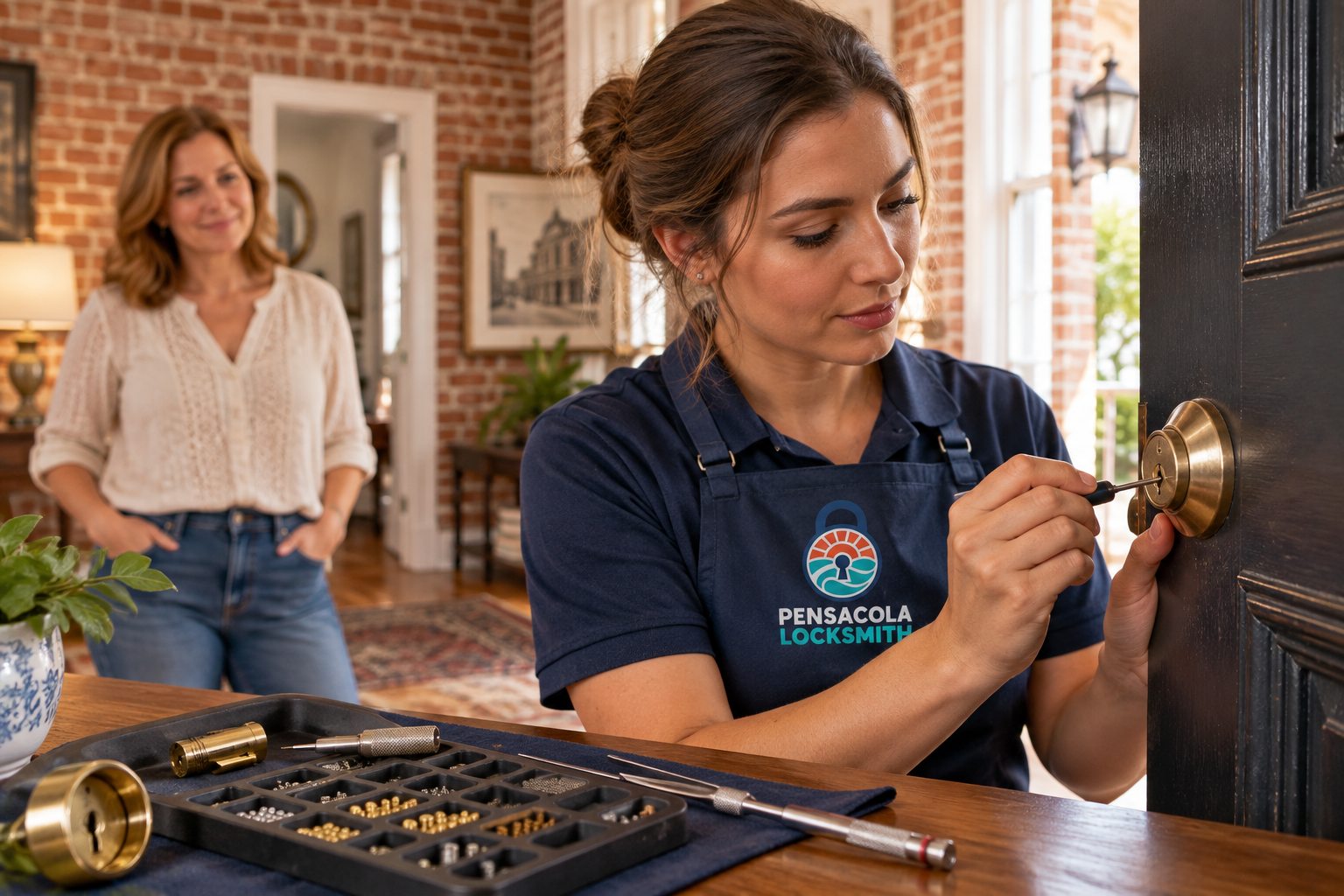
Keys are access, and access should end when someone's role ends. If an employee leaves and still holds a key, the business is relying on trust that no one has copied it. Many businesses never ask for keys back, never keep a list of who has one, and discover years later that there are far more keys in circulation than anyone remembers. Rekeying resets that problem at a reasonable cost in time.
Rekeying means changing the internal pins of the lock cylinder so that the old key no longer works and a new key does. The lock hardware stays in place, so the door looks the same. A good rekey is usually completed at the door in a short visit, and every lock in the building can be set to the same new key or kept on separate keys depending on how the business wants to organize access.
This is a good moment to decide how many keys are needed and who truly needs one. Some businesses use a master key system, where each person has a key that opens only the areas they need while a manager's key opens everything. Others simply keep a small number of identical keys and track them. Whichever approach fits, writing down who holds what is worth the few minutes it takes.
Panic bars, exit devices and life safety
Commercial buildings have to let people leave quickly, even when the door is locked from the outside. That is the job of a panic bar or exit device, and it is one of the places where locksmith work meets safety. A door that traps people inside when a fire or emergency happens is a danger and may break local safety rules. A locksmith will not agree to make a door less safe, even if it seems more secure.
When a panic bar sticks, fails to retract the latch, or will not latch at all, the cause is usually adjustment, wear or a bent strike. Fixing it may involve adjusting the dogging mechanism, replacing a worn latch, or realigning the door. These repairs take care and the right parts. It is better to have an exit device repaired than to chain or block a door, which is a common and risky shortcut.
If your business has a back door that people use for deliveries, consider how it is secured during the day and at night. A door that is propped open for convenience becomes an invitation. A locksmith can discuss options like an electric strike, a keypad, or a simple closer that keeps the door shut without relying on people to remember. The best solutions are the ones staff will actually use.
- Never chain or block an exit door to make it feel safer
- Have worn exit devices repaired rather than disabled
- Keep a list of who holds each key
- Rekey whenever someone with a key leaves
Retail doors, glass and storefront hardware
Storefronts often use aluminum and glass doors with narrow frames, and the hardware inside them is compact. The lock may be a small cylinder in the door edge or a thumb turn and hook bolt. These locks are made for convenience as much as security, and they can be defeated more easily than a residential deadbolt. That does not mean they must be replaced, but it does mean it helps to know what you have.
A common upgrade for a glass door is a better cylinder or a surface-mounted deadbolt, if the door and frame allow it. Another is adding a secondary lock at the top or bottom so the door is held at more than one point. A locksmith can explain what the frame is able to take. Some aluminum frames cannot support heavy hardware, and forcing it in creates new problems.
Gulf Coast humidity and salt air are hard on exposed metal. Storefront hardware near the coast corrodes sooner than in dry regions, and sticking or seizing is more likely with older cylinders. A technician can lubricate, clean or replace parts before they fail. Replacing a worn cylinder before it breaks is almost always easier than responding to a key snapped in the lock at opening time.
Office suites and shared buildings
Many offices along a commercial strip sit inside shared buildings where one landlord manages several suites. Here, the question of who can change a lock matters. A tenant may be allowed to rekey their own suite door, while the building entrance, common areas and shared utility rooms stay under the landlord's control. Before work begins, the locksmith will want to know what is yours to change.
If you lease space, check the lease or ask the property manager whether you may change locks and whether the landlord keeps a key. Some leases require a copy to be provided. Doing it the wrong way can create a conflict that costs more than the lock. A locksmith can do the work properly once the permission and key arrangements are clear, and will respect whatever limits the landlord has set.
Interior doors are worth thinking about as well. An office that holds payroll files, a server or a cash drawer may need a stronger lock on that one room, even if the front door is standard. Choosing where to spend effort is a matter of asking what would hurt most if it were taken. A short conversation about that usually leads to a better plan than replacing every lock in the suite.
High-security keys and key control
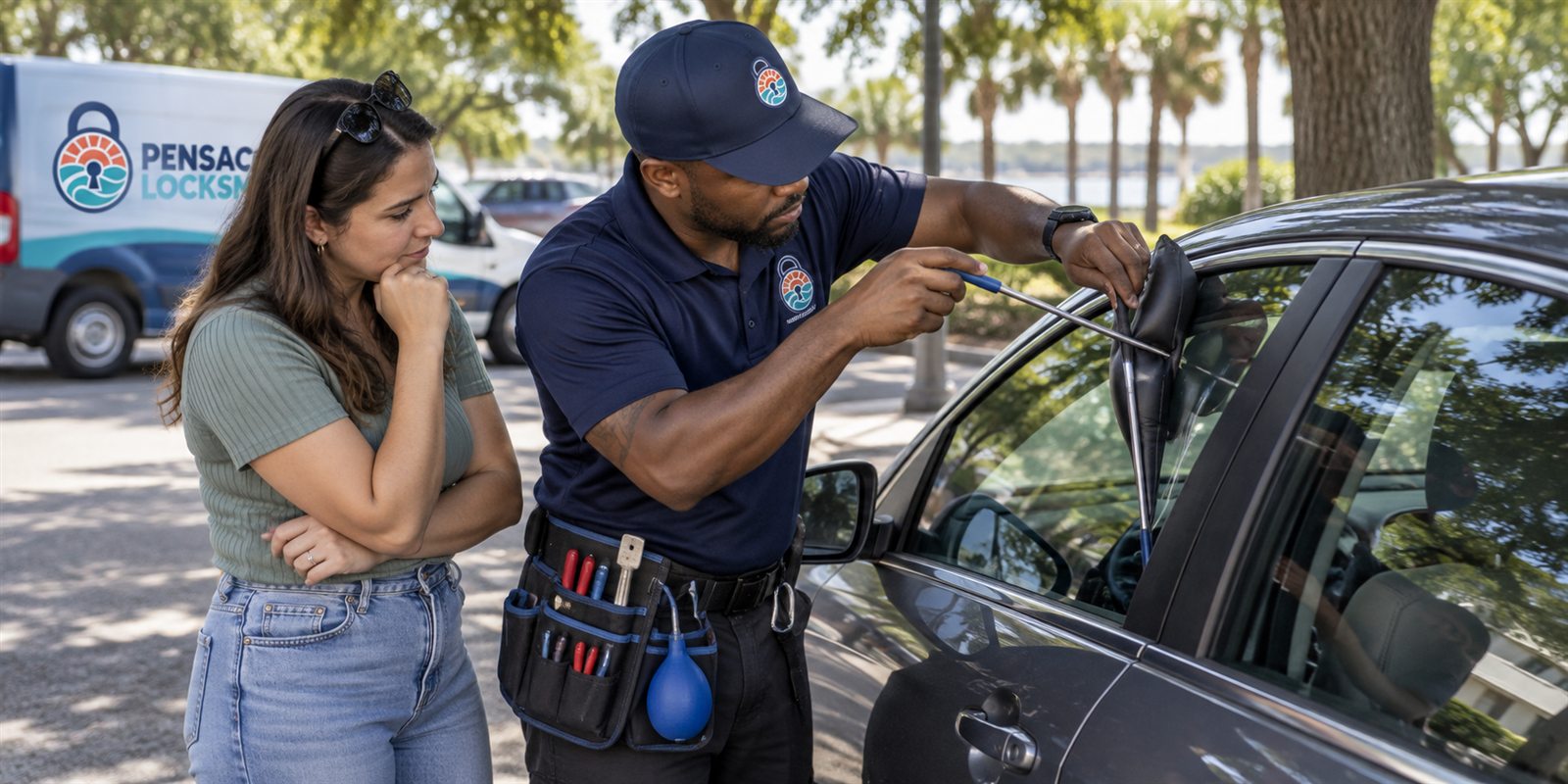
Standard keys can be copied at almost any hardware counter, which is convenient and also a weakness. A business that wants control over who can duplicate its keys can choose a restricted key system, where the blank is controlled and copies require authorization. This does not make a lock unpickable, but it does make casual duplication much harder, and it gives the owner a clear record of who has what.
Restricted keys cost more in time and money than ordinary ones, so they suit businesses with real exposure: pharmacies, offices with confidential records, shops with high-value stock. For many small businesses, a good standard deadbolt, careful key tracking and prompt rekeying are enough. Matching the level of security to the risk is a better approach than buying the most elaborate system available.
Whatever system you choose, the habits matter more than the hardware. Number or label keys, keep a log, collect keys at departure, and rekey when the log has gaps. Avoid stamping the business name and address on a key tag, since a lost set then becomes a map to your door. A locksmith can help set this up, and a technician will confirm your authority before changing a system.
Electronic access and keypad locks
Keypad and card access systems are common in offices and some retail back rooms. They remove the problem of lost keys but bring new ones: codes get shared, batteries die, and a power outage can leave an electronic lock in an unexpected state. Hurricane season and summer thunderstorms make power problems a real consideration on the Gulf Coast, so it is important to know what your system does when power fails.
Most electronic locks are either fail secure, meaning they stay locked when power is lost, or fail safe, meaning they unlock. Which one is right depends on the door. An exit route must remain usable, while a storeroom may be better staying locked. Many systems also have a mechanical override key, which should be kept somewhere safe and not forgotten in a drawer.
A locksmith can service many keypad locks, change codes, and replace failed units, though some commercial access systems are managed by a separate provider and need that provider's software. Describe what you have and what it is doing, and we will say honestly whether it is something we can handle. If it needs a technician visit to assess, the service call charge is explained before dispatch.
Planning ahead so a lock problem does not close the doors
A small business can protect itself with a few quiet preparations. Keep a spare key to the main door with a trusted person off site. Know where the keys to the back door, the storage room and any padlocks are, and who is allowed to use them. Write down what type of lock each door has, and note which doors are showing wear. This list takes ten minutes and saves a lot of confusion during a bad morning.
Look at your doors once a month. Does each one close and latch by itself? Does the key turn smoothly? Is the strike plate loose? Are there scratches or pry marks near the latch, which might suggest that someone has tried the door? Catching a worn latch early is simple. Catching it after a break-in is not.
If a lock fails during business hours, call us, describe what is happening, and tell us whether the door can be secured in the meantime. We cannot promise an arrival time, so please call to confirm availability. When the job is straightforward, you will get a quote on the phone. When it is not, a technician visits and the service call charge is explained before dispatch, so there are no surprises.
After a break-in or attempted entry
A business that has been broken into, or that finds signs of an attempt, has two jobs at once: protect the property and document what happened. Contact the police first and let them look at the scene before anything is changed. Photographs of damaged doors, frames and locks matter for any insurance claim, so wait for the report before repairs unless the building cannot be left open.
Once the scene has been recorded, the door needs to be made secure again. A locksmith can assess whether the lock, the strike, the frame or the door itself was damaged. Sometimes a cylinder can be replaced and the door is as good as before. Other times the frame is split or the latch is bent, and the repair has to include reinforcement so the same attack does not work twice.
Temporary measures are acceptable when a full repair cannot happen right away. A secure lock on a damaged door is better than leaving a building open overnight. Be wary of anything that makes the door hard to open from inside, because exit routes still have to work. Tell us what you see on the phone, and we will describe what can be done on site and what needs a second visit.
After the repair, rekey all the locks that a thief could have had access to, especially if keys, a cash drawer key or an access card were taken. It is easy to forget that a stolen key to a back door is as good as a broken lock. A fresh set of keys and a short review of how doors are used after hours can close the gaps.
Common questions
Can you open my business if I am locked out?
Usually yes, once we confirm you have the authority to ask. That means the owner, manager or tenant named on the lease. Expect to show identification and something tying you to the business. If authority is unclear, we will ask you to contact the property owner first. Call us and describe the door and the lock.
How do I stop a former employee from using an old key?
Have the locks rekeyed. Rekeying changes the internal pins so the old key no longer works, while the lock hardware stays in place. It can often be done at the door in one visit. You can then issue new keys only to the people who need them and keep a simple log.
Do you repair panic bars and exit devices?
We can often adjust or repair them, and we will not agree to disable one. A door that traps people inside is a safety problem. If a panic bar sticks or will not latch, a technician can check the latch, strike and alignment and tell you whether it needs adjustment or parts.
What if my lease limits changes to the locks?
Check the lease or ask the property manager before work begins. Many leases allow a tenant to rekey their own suite door but require the landlord to keep a key. We will respect those limits and confirm your authority before changing anything.
Can a keypad lock be repaired instead of replaced?
Often, yes. Dead batteries, worn keypads and loose latches are common and fixable. Some commercial access systems are managed by a separate provider and may need their software. Call us, describe the unit, and we will say whether we can handle it. Complicated jobs begin with a technician visit and a service call charge explained first.