
Content note: this page was written by Claude (AI) for Pensacola Locksmith.
The security handshake that happens every time you start the car
When you turn a key or press a start button, something quick happens before the engine fires. A small antenna ring around the ignition sends out a low-power signal. The chip inside your key wakes up, answers with a code, and the car's immobilizer module compares that code with the ones it has stored. If the answer matches, fuel and spark are allowed. If not, the engine may crank briefly and then stop.
This system exists to stop theft by hot-wiring or by using a simple copy of the cut. It is the reason a metal-only duplicate from a hardware counter opens the door but leaves the dashboard showing a key or lock symbol. The car is not broken. It is doing exactly what it was designed to do when it does not recognize the key.
Programming, then, means teaching the car to recognize a new key. Depending on the vehicle, this can mean registering a new chip code, pairing a remote to a body control module, or doing both. The technician needs to be able to talk to the car's computer, which is why a diagnostic tool and the right software are as important as the key blank.
Transponder keys: the chip inside the plastic head
A transponder key carries a tiny glass or ceramic chip, often no larger than a grain of rice, sealed inside the plastic head. It has no battery. It is powered briefly by the signal from the ignition ring, and that is why such keys keep working for many years without maintenance. Chips come in several families, and each manufacturer uses specific ones.
To program one, the technician connects a tool to the car, selects the vehicle, and follows the procedure for adding a key. In some cases the car allows onboard programming if two working keys are present. In others, the tool must read a security code, or the process requires a timed sequence of ignition cycles that cannot be rushed.
A common mistake is buying a cheap online blank with the wrong chip. The key may be cut correctly and still refuse to program, because the chip type is not compatible. Technicians stock blanks matched to the vehicle, and they check the chip before cutting, which prevents wasted effort and avoids damaging the car's key list with a failed attempt.
Remote head keys and flip keys
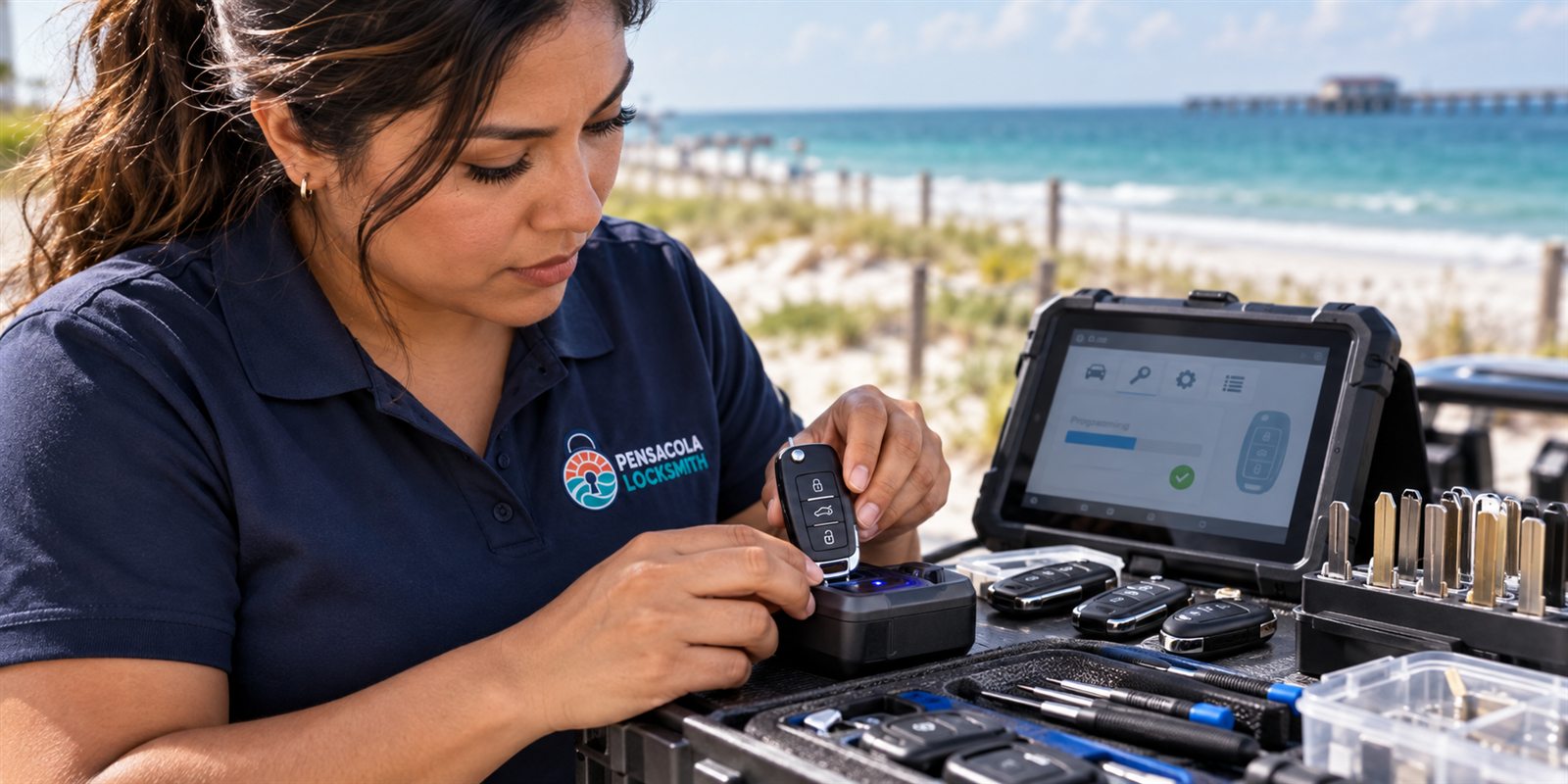
Many keys combine a transponder with a remote that locks and unlocks the doors. These have a small circuit board and a battery in the head. Programming happens in two stages. The chip is registered for starting the engine, and the remote is paired so that the buttons control the locks, the trunk and sometimes the alarm.
The two stages do not always work the same way. A chip may program with a diagnostic tool, while the remote pairs through a button sequence or through a different tool function. A technician will test each function separately. It is possible for the engine to start but the buttons to be dead, or for the buttons to work but the key to be unable to start the car.
Flip keys, where the blade folds into the fob, add a mechanical element that wears. The hinge, the spring and the small pin inside can fail long before the electronics do. If your flip key's blade will not stay out, the board may be fine, and the technician may be able to move it to a new shell rather than programming a completely new key.
Push-to-start and proximity keys
A proximity key does not need to touch anything. The car sends out short-range signals, and the fob responds when it is close. Doors unlock when you pull the handle, and the engine starts when you press the button with the fob inside. Behind this convenience is a more complex security exchange, often with rolling codes that change on every use.
Programming these fobs usually requires a capable diagnostic tool and the right access to the vehicle's security data. Some vehicles allow a technician to add a fob with the existing key present. Others need the full reset of the key list, where all fobs are programmed again in a single session. The technician will explain which situation applies before beginning.
If a proximity fob stops working, check the battery first. A weak battery produces a message such as key not detected, even when the fob is in your pocket. Most fobs have a backup method, such as holding the fob against the start button or a marked spot, that lets you start the car until the battery is replaced.
When a spare is cheaper in effort than a lost key
Programming a key while you still have a working one is almost always easier than programming after losing the last one. The technician can use the existing key to authorize the new one, and many vehicles accept this quickly. There is less risk, less waiting for security timers, and no need to prove your way into a car that cannot start.
When every key is gone, the vehicle requires a more thorough process. The technician must obtain the security information, cut a key blank from code, and program the first key from a clean start. We describe that process on the all keys lost page, and it is the reason a spare matters so much.
If you only have one key, think of the next step as a precaution. Call us to confirm availability and discuss adding one or two more. The visit is shorter, the process is calmer, and you are not dealing with a stranded car in a hot parking lot or a late-night parking spot.
What a technician checks before programming begins
The first check is the vehicle itself. The technician confirms the VIN, the key type, the ignition style and whether there are any warning lights that would suggest a deeper fault. A failing battery or a low system voltage can cause programming to stop halfway, so a stable power supply is often connected to the car for the duration.
The second check is the key. The technician reads the blank's chip type and frequency, and confirms the remote parts match the car's receiver. A key with the wrong frequency may look identical and still never pair. This is where experience helps, because the markings on the case often do not tell the whole story.
The third check is ownership. Before any new key is registered, the technician confirms the person asking owns the vehicle or has authority to act. A new key is a way to drive the car away, so a careful locksmith treats it with the seriousness it deserves. Please have identification and registration ready.
Limits and trade-offs worth knowing
Not every vehicle can be programmed by anyone outside the manufacturer. Some systems protect their data tightly, and a few require special tokens or online authorization. A reputable technician will not promise what the car cannot allow. When a vehicle is in this group, you will hear about it on the phone, along with the realistic alternatives.
Another trade-off is key quality. A well-made key and a poorly made one may both program and run the car, and yet behave differently over the next year. Cheap shells crack, cheap buttons wear out, and weak batteries drain quickly. Technicians generally prefer parts that fit the vehicle properly, and they will tell you if a part is a poor match.
Finally, there is the question of used keys. A used key from another car of the same type might look right, but many chips can be locked to their original vehicle and cannot be reused. Some can be reset, many cannot. Ask before buying one, because a key that cannot be programmed is simply a piece of plastic.
Programming after a battery change, a repair or a swap
Sometimes a key stops working after something else changes. A replaced ignition cylinder, a new body control module or a repaired immobilizer can leave the car expecting a different code than the keys carry. The keys have not failed. The car simply lost the list it was using, and the keys must be introduced again.
A dead car battery can also scramble the car's learned data, particularly on older systems. After a new battery goes in, the remote may need to be resynchronized, and the car may need to relearn something about the key. This is usually quick, but people often assume the key has died and order an expensive replacement they did not need.
If your key suddenly stopped working after any repair or part swap, tell the technician. That information shortens the diagnosis. Often the answer is reprogramming rather than a new key, and the technician can tell you before ordering anything whether the existing keys can be saved and reintroduced to the car.
What to expect during the visit
The technician arrives, confirms the vehicle and your authority to have keys made, and sets up beside the car. A diagnostic tool is connected through the vehicle's data port, usually under the dashboard. The tool reads the vehicle and offers the correct procedure. You may be asked to sit in the driver's seat and turn the ignition when told.
Programming can take from a few minutes to a longer session, depending on the vehicle's design. Some cars impose a security delay that cannot be skipped. During that time the technician stays with the car, and it is normal to see lights and messages on the dash. Please avoid pressing buttons or opening doors unless asked.
When programming is done, every key is tested one at a time. The technician starts the engine, locks and unlocks the doors with each remote, and checks that any old keys still behave as intended. You should see the results yourself before the technician leaves, and ask any questions about how the keys should be stored and used.
Keeping keys working in a salt-air climate
Gulf Coast humidity is hard on small electronics. Moisture can get into a fob through the button gaps and corrode contacts, and salt air speeds up that process. A fob that spends days in a beach bag or a damp pocket will fail sooner than one kept in a dry spot, so try to keep your keys out of the sand and spray.
If a key does get wet, open the case if you can, remove the battery, and let it dry fully before putting it back. Do not use a hair dryer on high heat, because the chip and board can be damaged. If the fob stays unresponsive after drying, the board may need replacing, and the chip may still be reusable.
Keep a spare battery on hand, and replace the battery in your fob every couple of years, or sooner if the range drops. A fresh battery is cheap compared to a stranded car. If you would like a technician to look over your key and spare, call us and we will explain how a quick check works.
Programming for households, workplaces and shared cars
Families who share vehicles often end up with a collection of keys with no clear record of which ones are programmed. A technician can tell you how many keys a vehicle has registered, in many cases, and can remove any that are no longer wanted. This is useful when a key has been lost or a relationship has changed.
Small businesses with work trucks and vans face a related issue. Former employees, unreturned keys and borrowed vehicles leave open questions about who can start what. Resetting the key list so that only the current keys work is a practical step for many cars, and it can be done in the same visit as adding new ones.
For any of these, the ownership check applies. We confirm that the person ordering the work has authority over the vehicle. If you are acting for a business, bring a letter, a registration in the company name or a call from the owner. It keeps the process orderly, and it protects everyone who depends on the vehicle.
Common warning signs that a key needs attention
Keys usually give hints before they fail completely. The remote may need several presses before the doors respond. The car may take two or three tries to start, with a key or lock symbol flashing briefly on the dash. The range of the fob may shrink until you must stand next to the car. Each of these deserves a look, and most can be sorted out before you are stranded.
A flashing security light after you turn the key often means the car did not read the chip. That can be a worn key, a damaged chip, interference from other keys on the same ring or a problem in the ignition antenna. Try the spare key. If the spare works, the first key is the likely culprit. If neither works, the car side deserves inspection.
Physical damage matters too. A key that has been dropped many times, bent, chewed by a pet or run through a washing machine can have a cracked chip even when it looks fine. Because the chip is hidden, you cannot see the problem, and the only reliable test is to try it on the vehicle with a diagnostic tool.
If you notice any of these signs, do not wait for a complete failure. Call us to confirm availability, describe what the car is doing, and we can help you decide whether a battery, a repair, a reprogramming or a new key is the right step. Catching it early almost always makes the visit calmer.
Common questions
Why will my cut key not start the car?
Most modern vehicles check for a coded signal from a chip in the key before allowing the engine to run. A key that is only cut to fit the lock can open the door but is not recognized by the immobilizer. The key must be programmed to the car so that its chip code is stored in the vehicle.
Can you program a key I bought online?
Sometimes, if the key has the correct chip type and frequency for your vehicle. Many online keys are the wrong type or are locked to another car and cannot be reused. Call us before buying, describe the vehicle and the key, and we can tell you whether it is likely to work.
Do I need an existing key to program a new one?
Not always. Some vehicles make it easier when a working key is present, but a technician can usually program a first key from the vehicle itself when all keys are lost. That takes more steps and ownership must be confirmed. A few vehicles have restrictions, and we will tell you on the phone.
How long does programming take?
It varies with the vehicle. Some cars finish in a few minutes, while others require a security delay or a longer session with a diagnostic tool. We do not promise a set time. Call us to confirm availability, and the technician can give a realistic expectation once the make and key type are known.
Will programming a new key stop my lost key from working?
On many vehicles, yes, if the technician resets the key list so that only the keys present are registered. This is helpful if a key was lost or stolen. Not every car supports it, so ask during the call. The technician will explain what your specific vehicle allows before starting work.