
Content note: this page was written by Claude (AI) for Pensacola Locksmith.
Why a BMW key is not just a key
A BMW key is a small computer that happens to have a blade attached. Inside the head sits a circuit board, a chip that holds an encrypted identity, and a battery or charging circuit. The car's security module talks to that chip every time you start the engine, and the two have to exchange the right information before the engine is allowed to run.
That is why a quick copy from a hardware counter will not work. Even if a blade turns the door lock, the car will not start unless the electronics match. Cutting is only one part of the job, and often the simpler part.
The upside of this design is strong protection against theft. The downside is that replacing a lost key takes proper equipment, correct blanks and careful steps. A locksmith who works on BMW vehicles regularly understands these details and will tell you plainly what your car needs.
The key forms you may be holding
BMW has used several forms across its lineup. Some vehicles use a remote key with a folding or fixed blade, which you insert into the ignition. Others use a proximity fob, where you carry the key and press a start button on the dash, with the car sensing the fob nearby.
The proximity systems are sometimes called comfort access. With them, the car unlocks when you touch the door handle and locks when you walk away or touch a sensor. A hidden emergency blade, usually released with a small catch, opens the driver door if the battery is dead.
Some keys have a display or extra function buttons for remote climate control, parking assistance or other features. These are separate from the core security function, but the technician needs to know what features your fob offers so each can be tested.
If you are unsure what you have, describe the ignition. A slot means one family of systems, and a button means another. A photo of the fob helps a technician narrow it down.
What the technician must know before arriving
The most important detail is the vehicle identification number. BMW key data is closely tied to the VIN, and the technician uses it to identify the right key type and security module family. You can find it on the dash near the windshield and on the driver door jamb.
Also say how many working keys you have. Having one is very different from having none. With a working key, the technician can often add another key more simply. With none, the process involves reading information from the car, and in some cases a visit to inspect before a firm quote is possible.
Describe the car's location and whether it is locked. Garages, tight parking structures and street spaces all affect how the technician sets up. The car needs to be reachable at the driver door and, ideally, near a place where a diagnostic cable can reach the data port.
Mention any warning lights currently on the dash. A security light or a message about the key can offer clues about what state the system is in.
Ownership checks matter more on a premium vehicle
The locksmith checks ownership or authority before opening, cutting or programming a BMW key. A photo ID and a registration or title that match are the usual proof. If the car is leased or financed, the registration may show another name, and extra paperwork may be needed.
Because these vehicles are attractive to thieves, technicians tend to be especially careful. Do not be surprised by questions about how you acquired the car, when you last saw the key or whether it was stolen. They are not accusations, just part of responsible practice.
If you drive a company vehicle or one owned by a relative, bring written authority. A short letter, an email from the owner or a call to the owner at the time of the visit can fill the gap. Sorting this out before the technician arrives avoids delay.
When the paperwork cannot be satisfied, the technician may decline the job. That is frustrating but correct. A key made for the wrong person is the exact event the process is designed to prevent.
How a replacement key is created
The process begins with preparing the key. A new blank with the right chip and board is selected, and its blade is cut if the key has a mechanical component. Cutting is done with a portable machine, using a copy source, a code derived from the VIN where available, or by decoding the lock.
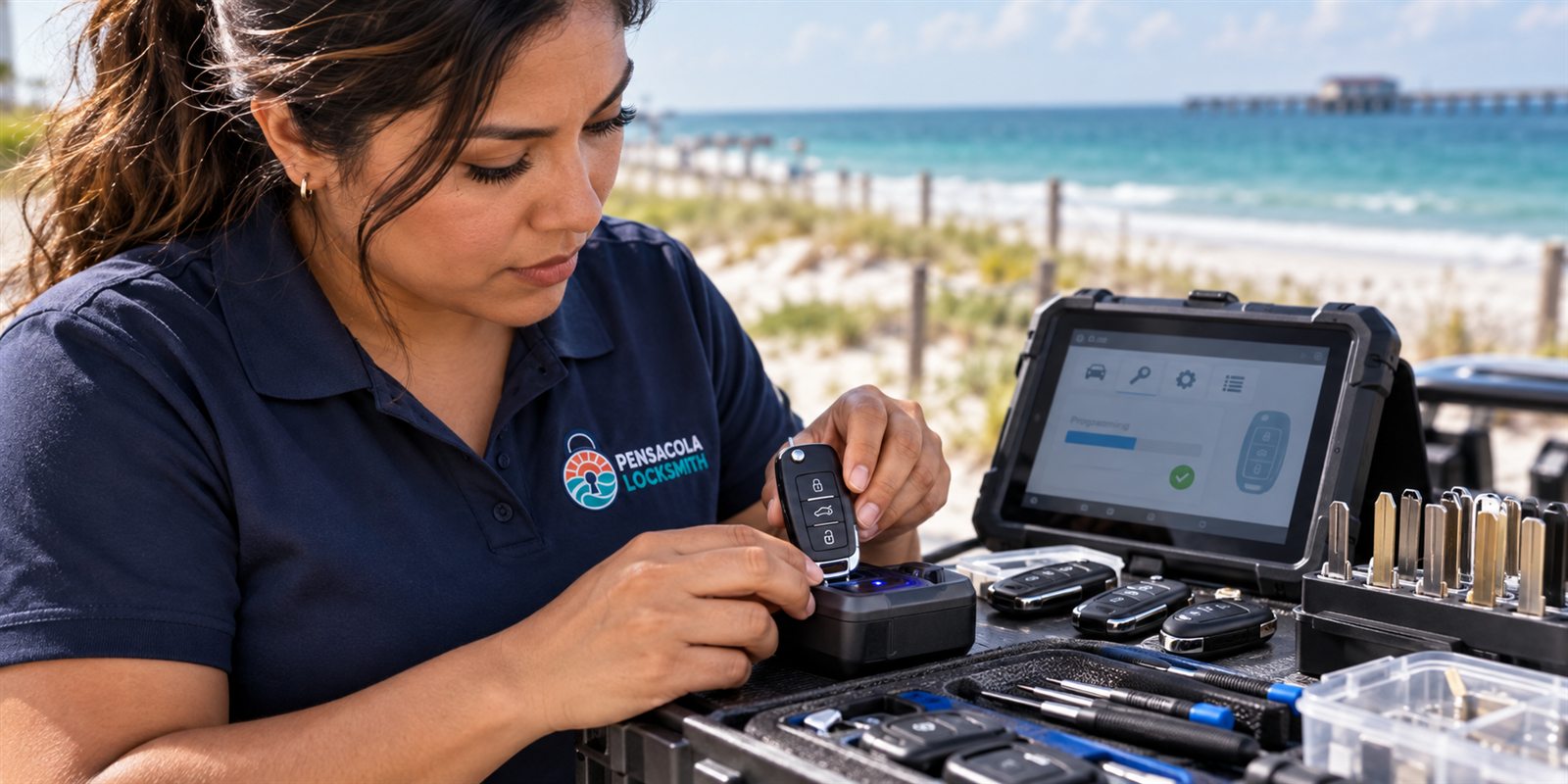
Next, the technician connects diagnostic equipment to the car's data port and reads the security module. For many BMW vehicles, the key must be coded to the car by writing its identity into the module. The technician selects the car, reads the necessary data and then adds the new key.
The remote functions are checked afterward. Lock, unlock, boot or trunk release and any extras are tested. On proximity models, the technician checks that the car detects the fob in several places in the cabin and that the push-button start works.
If the key needs to be prepared with data that must be read from the vehicle, the process can take longer. The technician will explain what is happening, and you should not be alarmed if it takes some time.
What happens to the old keys after a new one is added
When a new BMW key is coded to the car, the security module updates its list of trusted keys. Depending on the system and the method used, the older keys may stay active, or the technician may be able to disable the ones you no longer have. This is one of the most useful decisions in the whole job, and it is worth discussing before work starts.
If a key was stolen along with a wallet or bag, you probably want it disabled right away. If it is simply lost at home somewhere, you may prefer to keep the list as it is in case it turns up. The technician can explain what the car supports and how each choice affects the other keys you hold.
One practical point: if the technician disables old keys, any key you want to keep must be present during the session so it can be registered again. Bring every key and fob you own, even ones you rarely use. A key left behind at home may stop working after the list is rewritten.
After the work, try each key you intend to keep. Start the car with each one, press its buttons and open the door with the emergency blade if it has one. It takes only a few minutes, and it confirms the list is what you expect before the technician leaves.

When every key is lost
All keys lost is the hardest case on any modern vehicle, and the BMW is no exception. With no key to copy or authorize from, the technician must communicate with the car's security system directly. Depending on the system, this may involve reading a module, accessing data through the data port, or in some cases removing a component for bench work.
That is why a technician may need to visit the vehicle before giving a final quote. The service call charge for such a visit is explained before dispatch. You decide whether to go ahead, with no surprises.
Some situations are beyond what a mobile service can do at the roadside. If a security module is locked or damaged, a technician will tell you plainly, and explain what other options exist. Honest answers are better than hopeful promises.
If the car must be moved, the technician can advise on how to do so safely. In the meantime, avoid repeated start attempts or trying forum-style workarounds, which can lock modules and make a straightforward job harder.
Batteries, charging and fob upkeep
Some BMW keys use a standard coin battery, while some designs have a rechargeable cell that charges when the key is in the ignition. The type depends on the key, not just the car. A key that gradually weakens is often just in need of a new cell.
Replacing a battery is usually a small task, but the case can be tricky to open without marking it. A technician can do it on site, test the key afterward and make sure the contacts are clean. If you try yourself, note the battery orientation and avoid touching the circuit board.
Water, salt air and heat are the main enemies of the electronics. A fob left on a dashboard in summer or dropped in the surf can fail quickly. Dry a wet fob with the battery out, and have a technician inspect it before you rely on it.
Keep your key away from strong magnets and from other fobs and cards that might interfere with signals in a bag. Most of the time this is not an issue, but a key that behaves oddly in a crowded pocket may just need space.
- Replace the fob battery when the dash warns you
- Keep the key out of direct sun and away from water
- Know how to release the emergency blade
- Keep a tested spare in a safe place at home
Spare keys: the quiet protection
The best time to make a BMW spare is while you still have a working key. The process is simpler, the information needed is available and the car does not have to be rescued from an all-keys-lost state. Many owners wait until a key is gone, which makes the same job heavier.
Treat the spare like a valuable part. Keep it somewhere that is not the car, ideally at home in a secure spot. Do not hide it on the vehicle. Thieves know the places.
Test the spare occasionally. A fob that sits in a drawer for years may have a dead battery or may have lost its sync in some systems. A quick check every few months keeps it ready.
If you buy a used BMW, ask how many keys exist and whether any were lost. A used car with a mysterious key history is worth securing: have a technician add keys and, where possible, remove ones you cannot account for.
Daily life in Pensacola and what it means for keys
Pensacola's mix of beaches, bay, heat and humidity is harsh on electronics. A key that spends the day on a beach towel or in a wet pocket can suffer. Salt residue is conductive and corrosive, and it creeps into the smallest gaps.
People who live or work near the naval air station, students at the university and college, and visitors who rent vehicles all bring different patterns of use. A rental BMW with a missing fob needs the owner's authority, and a student sharing a car with roommates needs a plan for who holds which key.
Hurricane season is a good time to check your key arrangements. If you evacuate, you want all keys together and dry. If your driveway floods, keys left inside the car are at risk. Pack them with your documents.
A little attention to how and where the key is carried pays off more than most people expect. A pouch, a clip or a dedicated pocket protects a fob that costs far more than the effort of looking after it.
What a mobile locksmith can and cannot do
Mobile service handles most BMW key situations, but there are limits. A damaged security module, an unusual security update or a vehicle with a lockout state that requires specialized bench equipment may need more than a roadside visit. The technician will say so as soon as they know.
What the technician can do is give a clear picture of the situation. They can check whether the key is the problem, whether the car is accepting new keys and whether other components are at fault. That clarity helps you choose what to do next.
Another limit is availability of data. Some BMW models need information that is accessible to approved tools only after proof of ownership. The technician follows the proper channels, and that can take time. Be ready to provide documents and be patient.
A locksmith is not a repair shop for electrical faults. If the car has a battery problem or an ignition fault, a new key will not fix it. You will be pointed to the right kind of help.
How the visit works from call to finish
Call us and describe the vehicle and situation. Routine jobs are quoted by phone. Please call to confirm availability for your location. If the job is more complicated, such as all keys lost, a technician may visit first, and the service call charge is explained before dispatch.
On arrival, the technician confirms ownership or authority, inspects the car and explains the plan. The work is done in stages: key preparation, cutting if needed, connection to the vehicle, coding and testing.
When finished, test everything with the technician present. Start the engine more than once, try each button and the emergency blade, and confirm that the dash is clear of warnings. Keep any old key pieces safe or hand them over.
Add a spare during the same visit if you can. It saves a second call and gives you a backup, and the technician already has the car prepared for it.
Questions worth asking before you agree to the work
A good locksmith welcomes questions, and a few are especially useful on a vehicle like this. Ask whether the key being supplied is new or previously used, since used electronic keys sometimes cannot be reused. Ask what happens if programming fails partway, and how that would be handled.
Ask whether the technician will test every function and, if the car has extra features, which ones can be tested. Ask how the old keys will be treated. Ask what the plan is if the car refuses to accept a new key. The answers tell you a lot about the technician's experience and honesty.
Be wary of anyone who promises an exact result before seeing the car. Modern vehicles vary, and a responsible technician will qualify an estimate until key facts are known. Quotes are given by phone for routine jobs, and when a visit is needed first, the service call charge is explained before dispatch.
Finally, ask what you should do to keep the new key healthy. The answers usually include a protective pouch, a prompt battery change and a tested spare. These are small habits, and they keep the next key problem from becoming the next afternoon spent waiting.
Common questions
Can a mobile locksmith make a BMW key without the dealership?
In many cases yes. With the right equipment, the technician verifies ownership, prepares a key and codes it to the car at your location. Some situations, such as damaged security modules, are harder and may need more than a roadside visit. We will tell you plainly what your vehicle needs.
Why is a BMW key more involved than a regular key?
The key contains an encrypted chip and electronics that must match the car's security module. A cut blade alone opens a lock but will not start the engine. Programming writes the key's identity into the car, which takes proper equipment and careful steps.
What if I lost every key to my BMW?
It can usually be solved, but it takes more work. The technician checks ownership, then reads information from the car's security system and creates a new key. A visit to inspect the vehicle may be needed before a firm quote, and the service call charge is explained before dispatch.
Do I need the VIN?
It helps a great deal. BMW key data is closely tied to the vehicle identification number, so having it ready lets the technician identify the right key type quickly. It is found on the dashboard near the windshield and on the driver door jamb.
Can the fob battery be replaced on site?
Usually, yes, if the key uses a replaceable battery. Some keys have rechargeable cells that may need other handling. The technician opens the case carefully, replaces the cell, tests the functions and tells you if the circuit board shows damage or corrosion.