
Content note: this page was written by Claude (AI) for Pensacola Locksmith.
Understanding the family of keys a Lincoln might use
Lincoln vehicles have used several broad styles of keys across the years, and it helps to sort yours into a category before ordering anything. One category is the chip key, a metal blade with a plastic head that carries a transponder. Another is the remote head key, which adds lock and unlock buttons to that same plastic head. A third is the intelligent or proximity key, a fob you carry that lets you unlock and start the car without removing it from a pocket.
These categories behave differently when something goes wrong. A chip key that loses its chip can still turn the ignition lock but will not start the engine. A remote head key may keep starting the car while the buttons quit working. A proximity fob with a dead battery may still start the car if held in the right spot, and it almost always hides a mechanical blade for the door.
A quick way to tell what you have is to look at how you drive off. If you twist a key in the column, you have a blade-style key. If you press a button on the dash with your foot on the brake, you have a proximity system. If you can do both, you may have a fob with a key blade that also fits an ignition cylinder, which we sometimes see.
We prefer to identify the type before arriving, so the right blanks and programming data come with us. Tell us how the car starts, whether the fob has a visible blade, and how many buttons you see. That conversation takes a couple of minutes and prevents the most common cause of repeat visits, which is a part that does not match.
Papers and details to have in hand
Before any key is cut or programmed, we need to confirm that you are the owner or someone with authority over the vehicle. In practice, that means a photo identification and a document that connects you to the vehicle, such as a registration, title or lease. We do this for every vehicle, whatever the make, because a key to a car is a key to everything inside it.
The vehicle identification number comes next. It appears on a plate at the lower corner of the windshield and on a label inside the driver's door frame. The number tells the locksmith the correct key blank, and in many cases the code needed to program the new key. We read it ourselves at the car and compare it with your paperwork.
Company vehicles and cars driven by a family member need a little extra thought. If the title is in another person's name, bring a note or message from that owner along with identification, and call us beforehand so we can explain what will be acceptable. Fleet drivers should have a work order or letter from the employer on hand.
If any key still works, set it aside and keep it with you. A working key makes certain programming routes available and can save time. If every key is gone, tell us that clearly. There is no judgment in it, and it only changes the steps we plan to follow on site.
- Photo identification
- Registration, title or lease document
- The vehicle identification number
- Any keys or fobs still working
The two halves of a replacement: cutting and teaching
A replacement key has a physical half and an electronic half. The physical half is the blade, which must match the pattern of the door lock and ignition cylinder. Some blades are cut on the edge, and some have a groove cut into the side of the blade, usually called a laser or high-security cut. These need a different machine than a simple edge-cut key, and not every shop carries it.
The electronic half is what teaches the car to accept the new key. A diagnostic tool plugs into the port under the dash and speaks to the vehicle's security module. The locksmith places the car in a mode that accepts new keys, registers the chip or transmitter, and confirms that the car sees it. Until that is done, the key may open the door but will not start the engine.
Remote functions are often programmed in a separate step. Lock, unlock, trunk release and panic are tied to the remote transmitter, which has its own rolling code. If the remote does not respond after the key works in the ignition, that second step may need repeating. We test each button before leaving so you are not discovering a dead trunk button in a grocery store lot.
Some systems also let us erase keys that are no longer wanted. That matters if one was lost or if you bought a used vehicle and do not know how many keys are out there. Removing unknown keys from the memory is a smart security step, and we discuss whether your car supports it when you call.
If the last key is gone
When no key is left, the job becomes a fresh creation rather than a copy. The locksmith identifies the key pattern using the vehicle identification number, works out the blade cut and prepares a transponder that can be registered. The car's security system has to be accessed through the diagnostic port, and that can take longer than adding a spare.
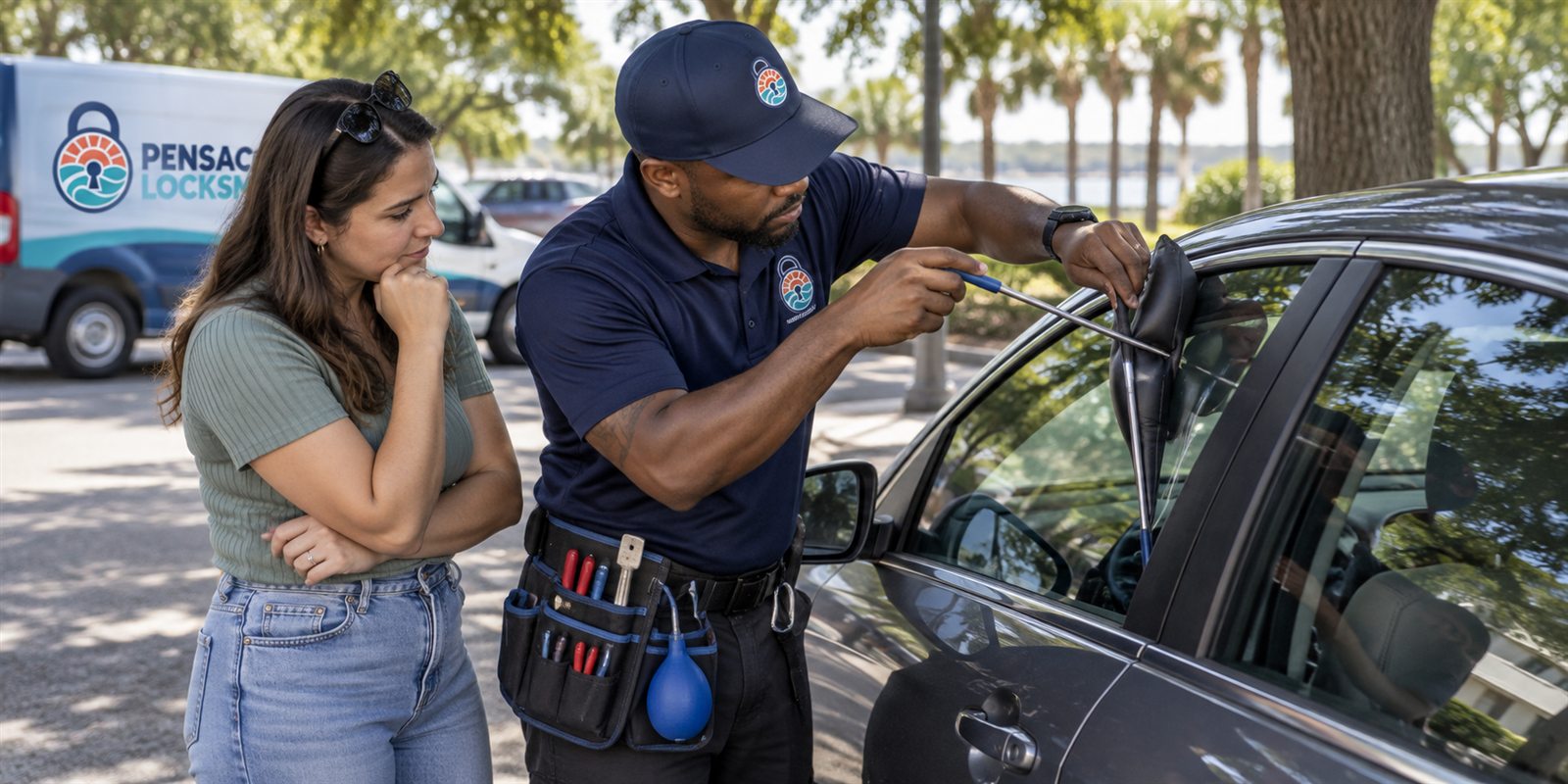
Getting into a locked Lincoln comes first, and we take care with it. Modern doors have air bags, wiring and sensors inside the panel, and brute force can cause costly damage. We use tools designed to reach the lock or the handle without scratching the paint or tearing the weather stripping. If a door cannot be opened safely, we will say so before trying anything risky.
Once inside, the programming may include a waiting period built into the car, during which the security system takes several minutes to accept a new key. During this time, please avoid opening doors, pressing the start button or using the remote. A small interruption can cancel the sequence, and we would need to start over.
After the new key works, think seriously about adding a second one before leaving. A single key puts you back in the same exposed position. Having two means one can stay in a safe place at home, and the other can be the one that goes to the beach, work or the gym.
Proximity fobs: batteries, backups and range
The proximity fob is convenient, and it also creates new reasons for calls. A weak coin battery shortens the range, causes the dashboard to warn that no key is detected, or leads to a car that starts only if the fob is held against a particular spot. Your owner's manual usually shows that spot, often near the start button or in the console.
Replacing the battery is a small job that most people can do with a thumbnail. The back of the fob opens, the old cell comes out, and the new one goes in with the same side up. If the fob does not respond after this, the problem is likely something other than the battery, and we can look at the circuit board and the programming.
Every proximity fob hides a mechanical backup. A small latch releases a thin metal blade, and the driver's door handle often has a cap that hides the lock. Many owners have never used it. We suggest trying it once so you know how, because a dead fob at a gas station is a poor time to discover a cap that will not come off.
Salt air and humidity along the Gulf Coast are unkind to small electronics. A fob that sits in a swim bag, a boat cooler or a pocket near the water collects moisture. If a fob has been wet, let it dry, replace the battery and avoid pressing buttons repeatedly. If it has been submerged, call us so we can evaluate it.
The value of an extra key made in advance
Adding a key while a working one is available is usually a gentler process than starting from none. The car is already awake to a trusted key, so the system may allow a new one to be added with less complexity. It also means no emergency, no tow and no waiting around with a locked vehicle while plans fall apart.
Think about the real-world ways keys vanish in this area. Beaches, boats, rental properties, long drives to visit family and parking lots at the base or the university all offer chances to lose a key. A spare at home turns a loss into a minor annoyance, and the lost key can be cancelled so it cannot be used by anyone who finds it.
Where you keep a spare matters. Tucking a key in a magnetic box under the bumper is an old habit, and thieves know it as well as you do. A better place is inside your home, away from the front door, or with a trusted friend. Proximity fobs in particular should not sit near the entry, because their signal can sometimes be extended by relay devices.
When you ask for a spare, we will explain how many keys your vehicle can store and what happens to the existing ones. Some systems allow only a limited number, and it is useful to know that before you pay for something you cannot register. A short phone call sorts this out.
Why working at the vehicle is often the sensible choice
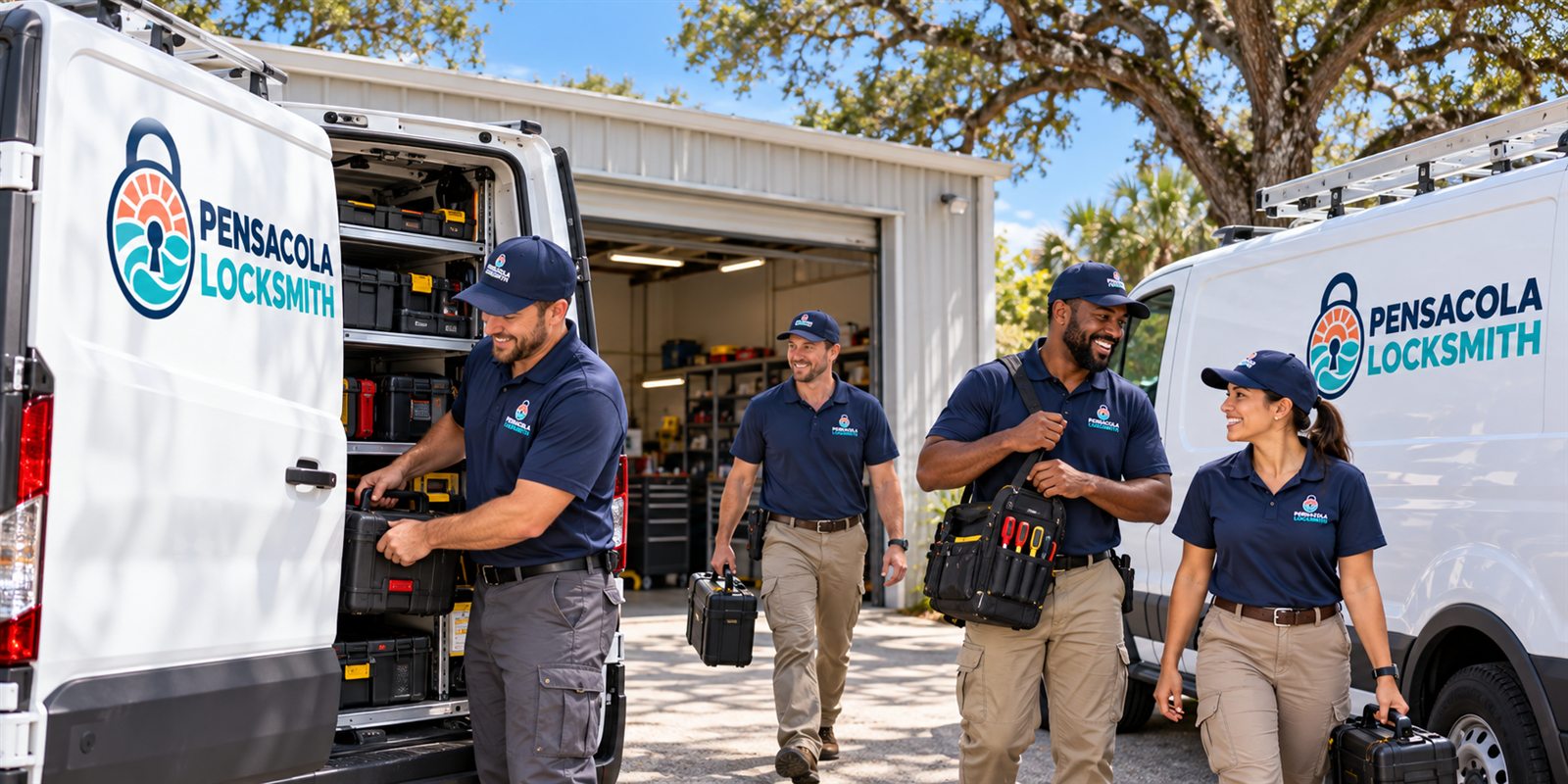
Moving a car that cannot start is awkward. It means a tow truck, a wait at a shop and a lost day. Because the key tools are portable, the same work can be done at a driveway, a workplace lot or a street. For many people in the Pensacola area, that is the difference between a bad hour and a ruined day.
Being on site also lets you watch the process. You can see the technician read the vehicle number, cut the blade, connect the tool and test the finished key. If you have questions, you can ask them while the work is happening. Nothing happens out of sight.
Weather affects how we plan. Summer storms bring lightning, standing water and sudden downpours, and open car doors with exposed electronics do not mix well with that. If conditions turn bad, we may move the work under a carport or suggest a short pause. Safety for you, the technician and the vehicle comes first.
Visitors and people far from home can also use this service. If you are here on vacation, in school, or stationed nearby and have lost a key, a mobile visit saves you from hunting for a shop in an unfamiliar town. You will still need to show ownership or authority, which can often be done with documents on a phone.
Frequent mistakes that make key problems bigger
One common mistake is buying an unknown fob online and assuming it will program. Many of these are built for a different frequency or a different year range, and some are locked to another car after first use. By the time a locksmith is called, the money is spent and the part cannot be fixed. A phone call before purchase prevents this.
Another is forcing a key that sticks. If a blade turns hard in the ignition or door, forcing it can bend the blade or damage the cylinder. Spraying a thick oil into a lock can also attract dirt. A light dry lubricant meant for locks is the better choice, and calling us first is better still.
Some owners ignore the early signs of a worn key. A fob button that works only after several presses, a case that is cracked, or a blade whose edges are rounded off are warnings. Copying a key at this stage is simple. Waiting until it fails turns a quick copy into the longer job of making a key from nothing.
Finally, people often forget to test a spare before they need it. A key that was programmed last year and never used may not work now. Take your spare out once or twice a year and run it through the lock, the ignition and the buttons. If something has gone wrong, you will learn about it while you still have time.
Questions worth asking before any key work begins
A little curiosity at the start prevents surprises later. Ask the locksmith what type of key your Lincoln actually uses, and how the new one will be made. A straightforward answer tells you the technician understands the system. Vague answers about universal fobs or quick tricks are worth questioning, because key systems differ and shortcuts often fail.
Ask what happens to your existing keys. In many vehicles, adding a key leaves the old ones working, while in others the system may require every key to be present or re-registered. If a key was lost or stolen, ask whether it can be deleted from the car's memory. The answer affects your security, and it should be part of the plan.
Ask how the finished key will be tested. A careful technician checks the blade in the door and ignition, confirms the car starts and stops, runs through each remote button and shows you the backup blade. If a technician hands you a key without testing, politely ask for a test. It takes a minute, and it is your assurance that the job is complete.
Ask about the process if something goes wrong. If the key fails later, who do you call, and what will they do? We welcome calls after a visit, and we will tell you plainly whether the issue is a programming fault, a battery or a worn part. Open conversation after the work is part of doing the job properly.
How the call and visit usually go
Please start with a call. Tell us what you drive, how it starts, where it is parked and whether any key works. We will ask a few questions about the fob and about the lock, then explain what the job involves. Quotes are given by phone, once we understand the work. We do not promise arrival times, and we ask you to call to confirm availability.
If the job sounds more complicated than a normal key, such as a damaged ignition, a broken key in the lock or a security module fault, we may recommend that a technician visits first. In that case, the service call charge is explained before dispatch, so there is no surprise when the technician shows up.
At the vehicle, the technician checks ownership or authority, reads the vehicle number and explains the steps. You decide whether to go ahead. When the key is made, we test it on the door, the ignition and each button, and we demonstrate how the backup blade works if your fob has one.
After the visit, keep your new key and spare in separate places, and let us know if anything behaves oddly in the next few days. We would rather hear about a small issue now than have you live with it. A good key job should feel boring afterward, and that is the goal.
Common questions
Do you work on proximity fobs as well as older chip keys?
Yes. We handle chip keys, remote head keys and proximity fobs. The right approach depends on how your Lincoln starts and what type of key it uses, so tell us when you call. We confirm ownership or authority at the vehicle before cutting or programming anything.
Can a new key be made if I have lost all of mine?
In most cases, yes. The locksmith uses the vehicle identification number to find the key pattern, creates a new key and registers it with the car through the diagnostic port. It may take longer than adding a spare. If the job is complicated, a technician visits first and the service call charge is explained before dispatch.
Do I have to tow the vehicle?
Usually no. The work is done where the vehicle is parked. The tools connect through a port under the dash, so the car does not need to move. Some unusual faults may need more attention, and we will tell you plainly if that is the case.
What if my fob works only when held close to the start button?
That usually points to a weak battery in the fob, since the car can read a weak signal only at very close range. Replacing the battery often solves it. If it does not, the fob board or the car's receiver may need attention, and we can check that at your vehicle.
How do I find out what the job involves?
Call us and describe the vehicle, how it starts and what keys you have left. Quotes are given by phone. We also ask you to call to confirm availability, since we do not promise arrival times.