
Content note: this page was written by Claude (AI) for Pensacola Locksmith.
Reading the key in your hand
Start by looking closely at what you have. A plain metal key with a rubber or plastic cover and no buttons is the simplest style, and in some cases it still contains a chip. A key whose head is thicker and has lock and unlock buttons is a remote head key. A flat fob with no visible blade, used for push-button start, is a smart fob.
Some Honda keys have an edge-cut blade, with cuts along the sides, and others use a laser-cut blade, with a milled groove down the middle. The difference matters because they are cut on different machines. A locksmith with a portable cutter that handles both kinds can make either style at your location.
If you are unsure what you have, a photo of the front and back of the key, plus a quick description of how the car starts, is plenty. Ignition by turning a key means a blade is involved. Ignition by pressing a button means a smart system. Each leads to a slightly different approach, which we explain by phone.
How the car decides whether to trust a key
Modern Honda vehicles use an immobilizer. A tiny chip inside the key answers a signal sent from around the ignition, and the engine computer only allows the engine to start when it recognizes the code. A key without the right chip will often turn the ignition and crank the engine, yet the engine will not run.
With smart keys, the same idea works wirelessly. The vehicle sends out a short-range signal when you touch a door handle or press the start button, and the fob replies with an encrypted response. Proximity entry and start only work if the fob has been registered with the vehicle's control modules.
This is why hardware store copies only partly work. A plain copy can open a door and turn the lock, but without the chip programmed in, it will not start the car. A careful locksmith explains this honestly and does not cut a key that cannot do the job. The programming step is as important as the cutting.
Spare key versus lost-key situations
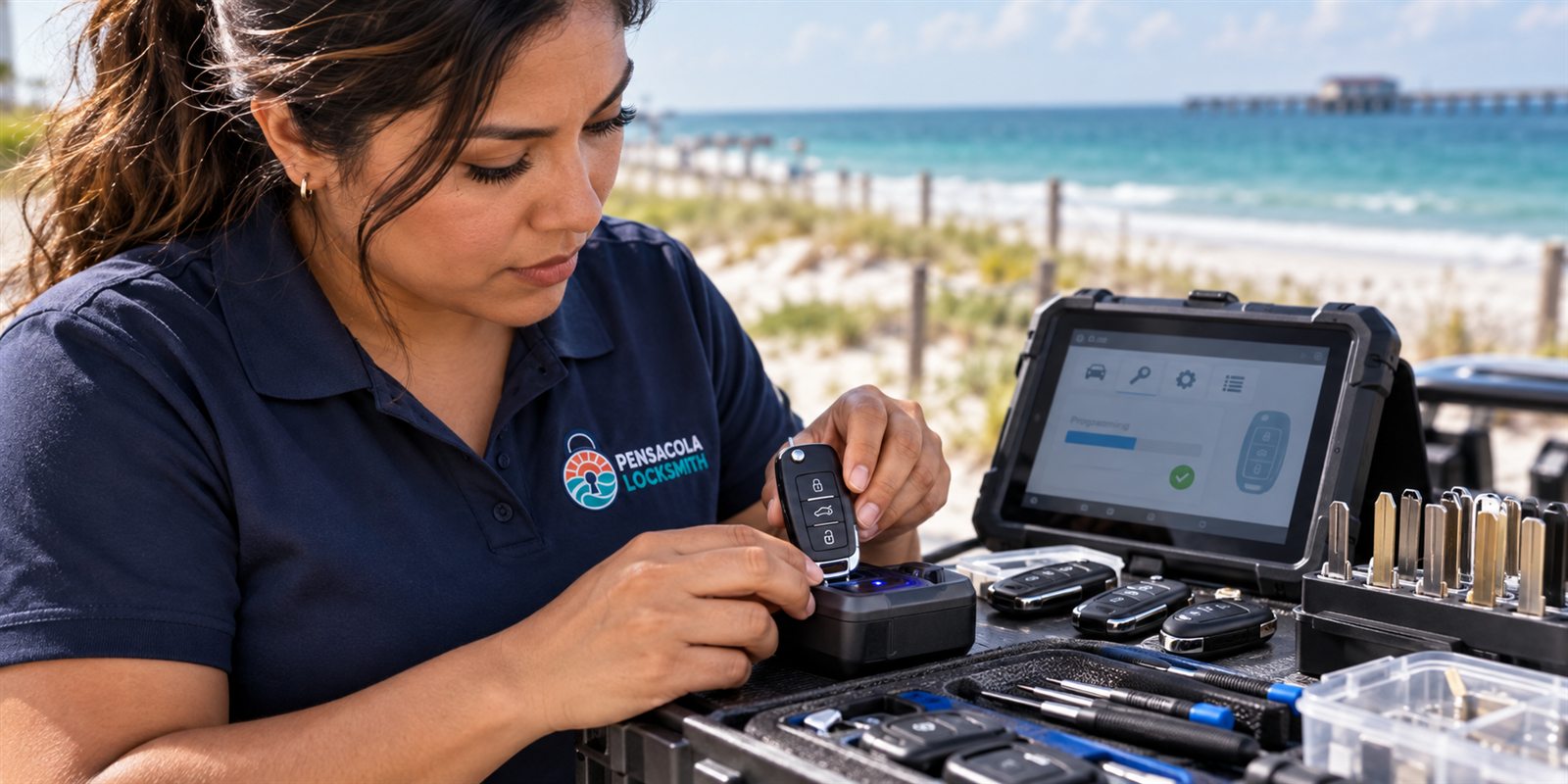
If you still have a working key, the process is simpler and quicker. The technician reads information from the vehicle, cuts a new blade, and adds the new key to the vehicle's memory using the existing key as authorization on many systems. Costs and time tend to be lower than a full lost-key job.
If all keys are gone, the technician takes a different path. After checking ownership, a key is cut from the vehicle information or by reading the lock, and the new key is registered with the immobilizer through the vehicle's diagnostic port. Some vehicles need extra steps or have longer waiting periods built into their security.
If you have even one key left, consider making a spare now. A second key lets you handle a lost key calmly rather than as an emergency. For a household with multiple drivers, a spare for each is sensible. We can talk through your situation by phone and recommend the least complicated route.
Remote head keys and the buttons that stop working
Many people who call about a Honda key say the key still starts the car but the buttons do nothing. This is common and usually straightforward. The remote function is separate from the immobilizer chip, and it can fail on its own because of a weak battery, worn button pads or a lost registration.
A new battery is the first thing to try. If the remote still does not respond, the remote may need to be reprogrammed to the vehicle. Some remotes can be paired using a sequence of ignition turns and button presses. Others require diagnostic equipment. We test, then choose the approach that works.
If the case of the key has cracked, it is sometimes possible to move the electronics into a new shell. That can restore the key's feel without replacing the chip. If the circuit board is damaged or the buttons are worn through, a complete replacement key is more sensible. We explain the choice plainly.
Smart fobs: push-button start and proximity entry
A smart fob lets you unlock the doors by touching the handle and start the engine by pressing a button, with the fob staying in your pocket. It is comfortable, but it brings its own failure modes. A weak battery, interference and water damage are the main ones, and each has a different remedy.
If your dashboard shows a warning that the fob is not detected, or the car only starts when you hold the fob against the start button, the battery is the first suspect. Many smart fobs contain a hidden emergency blade, which opens the driver door when the fob is dead. Know where yours is before you need it.
When a smart fob is lost, a replacement must be both cut, if it has an emergency blade, and paired to the vehicle. The technician registers the new fob and, where the system permits, removes the lost one so it will no longer work. If you worry about theft, mention this when you call.
What to have ready before you phone
Gather the vehicle make, model and approximate year, and the VIN, which you can read through the windshield at the dashboard or on the driver door jamb. The VIN allows us to match the correct key blank and, where possible, the cutting information in a legitimate way.
Be clear about what you have and what you need: no keys, one key, a broken key, a fob with dead buttons, or an extra key. Note the location of the vehicle and any access issues, such as a locked garage or a tight space. Photos of the key and the ignition help.
Have your documents ready: registration or title and a government-issued photo ID. If the vehicle is owned by a company or a rental firm, written authorization from the owner is required. We verify ownership or authority before cutting or programming any key. This is standard practice and protects owners.
The visit from start to finish
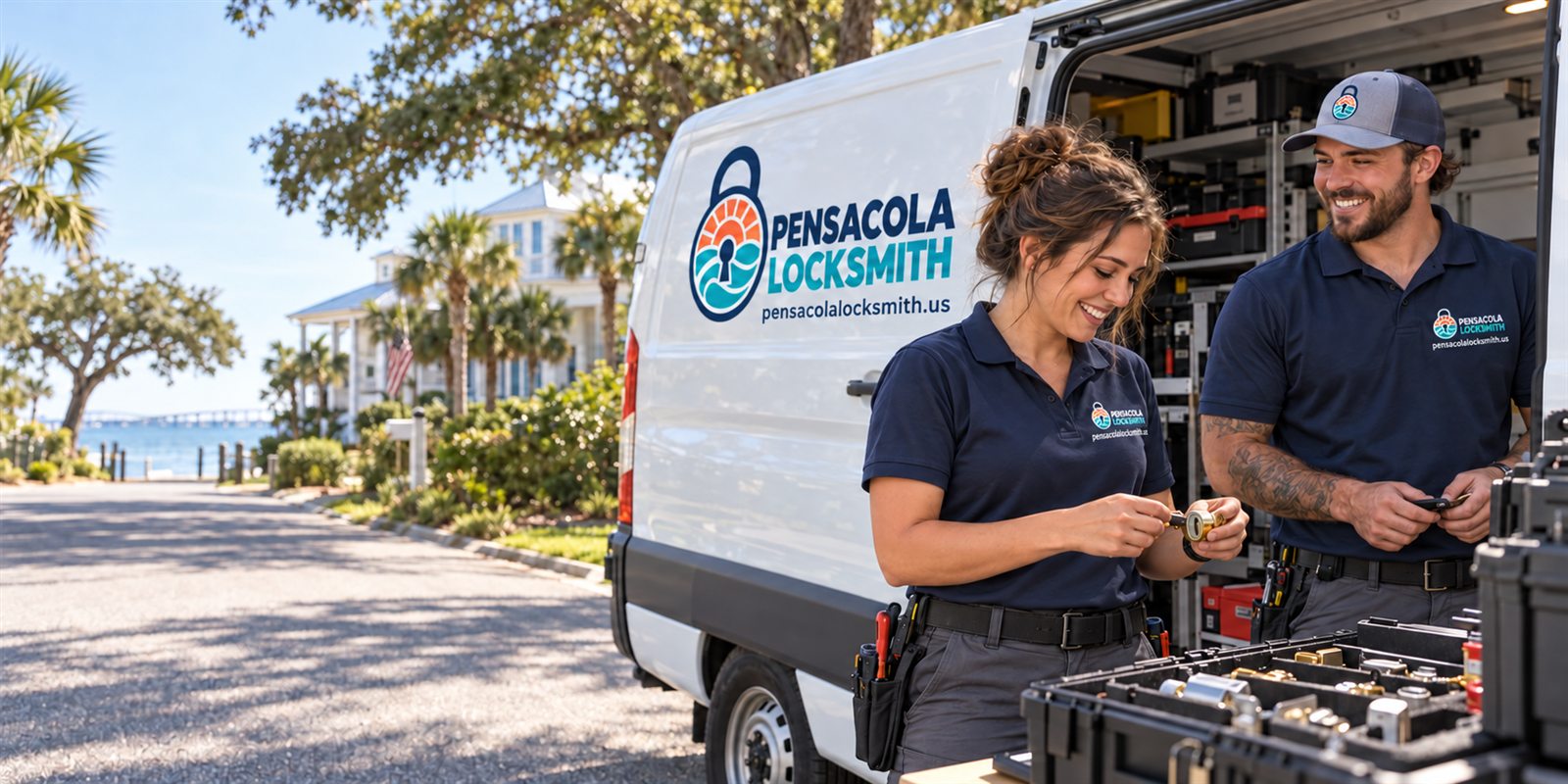
On arrival, the technician confirms ownership and identity, checks the vehicle details and inspects the ignition, door locks and the key you have. If a blade needs cutting, it is done on site using a portable machine, and the cut is verified in the lock before any programming begins.
Next comes the electronics. The technician connects a programming tool to the vehicle's diagnostic port and follows the process for that system, which may involve a security access step, registering the key and testing communications. For vehicles with several keys, all are often programmed together so none are left unregistered.
At the end, everything is tested: manual lock, remote lock and unlock, trunk release, panic and engine start. You get a brief explanation of what was done. The vehicle stays where it was parked, so there is no tow and no day without a car. We confirm that you are comfortable before the technician leaves.
Ignition cylinders, door locks and the worn key problem
Sometimes the problem is not the key but the lock it goes into. An ignition cylinder that is worn or dirty can fail to turn a perfectly good key. A key that has been copied several times may have drifted out of spec. Door locks that stiffen in humid air can feel like a key problem when they are a lock problem.
If the key goes in but resists turning, do not force it. Try gentle wiggling of the steering wheel, which may release a steering lock that is binding. If that does not help, a technician can inspect the ignition and decide whether a new key, a cleaning or replacement of the cylinder is appropriate.
A freshly cut key from the vehicle's code often feels smoother than a worn original, and it can solve the issue without any parts. Where an ignition cylinder is replaced, the new cylinder is keyed to match your key or a new key is created. We describe the likely approach before work starts.
Salt air, sand and the life of a fob
Keys at the beach live a rough life. Sand works into key blade grooves and into fob buttons. Salt dries on contacts and attracts moisture. A pocket full of damp towels and sunscreen is no friend to a fob. These conditions explain many of the fob failures we see near the Gulf.
Simple habits help. Keep the fob in a dry bag or zipped pocket. Wipe the key after beach days. Replace the battery every couple of years before it fails completely. If the fob gets wet, open it, dry it and let it rest in a dry place before trying a new battery.
Spare keys deserve care too. A spare that lives in a hot glovebox or a humid drawer can degrade. Keep it in a cool, dry place away from the vehicle. A spare is only helpful if it works when needed, and it is a good idea to test it occasionally on the lock and the ignition.
Working with us
Call us with the vehicle details and what has happened. Quotes are given by phone based on the vehicle and key type. We will tell you what we need, what the work involves and whether anything about your vehicle makes it more complicated than average. No pressure, no vague answers.
If the job turns out to be complicated, a technician visits and the service call charge is explained before dispatch. Please call to confirm availability in your part of Pensacola or Escambia County. We can meet you at home, at work, at a parking lot or near the beach where practical.
If you are not sure whether you need a new key or a battery, ask. We would rather help you avoid unnecessary work. Our aim is a key that starts the car, locks and unlocks reliably, and gives you confidence that you are not one lost key away from a bad day.
Used vehicles and the one-key problem
Buying a used Honda often means getting a single key. Previous owners may have lost the others, or the dealer may have handed over only what was in the glovebox. A vehicle with one key is a vehicle one accident away from a lost-key job, and it is wise to treat that as a project for the first week of ownership.
A second key should be made from the original while it is still available, which is the simplest and fastest route. Test every function when the new key is made, including remote buttons and the trunk release. If the existing key is worn, a new key cut from the code will usually perform better than a copy of a copy.
If you suspect that previous owners still hold keys, ask about deleting unknown keys from the vehicle's memory. When the system allows it, the technician can reprogram so that only the keys in your hand work. It is a reasonable precaution for any used vehicle, especially when the history is unclear.
Honest limits of what can be done on site
Mobile service handles most key situations, but not every one. A few vehicles need information that must come from the manufacturer's channels, or a security process with a waiting period. Occasionally, a damaged immobilizer module or wiring fault means the problem is not the key at all, and the vehicle needs a repair shop.
If we find that your issue falls outside what a locksmith can fix, we say so plainly and suggest sensible next steps. We would rather tell you that on the phone or at the vehicle than collect a fee for work that cannot succeed. If a technician visit is needed to find out, the service call charge is explained before dispatch.
Sometimes the result is a compromise, for example a transponder key that starts the car without remote buttons, with a remote added later. That is perfectly reasonable if it gets you moving. We lay out the choices clearly so you can decide what suits your timing and your needs.
Caring for a Honda key so it lasts
A key lasts longer when it is not asked to carry the world. A heavy keychain hanging from the ignition pulls on the cylinder every time you drive, wearing the key and the lock together. Keep the vehicle key on a light ring, and move the rest of your keys to a separate holder that you detach before driving.
Protect the case. Remote head keys often crack at the junction between the plastic head and the metal blade, particularly after drops on hard surfaces. A cracked case lets moisture in and exposes the circuit board. A simple silicone cover costs little and shields the key from knocks, sand and spray.
Test your spare every few months. Lock and unlock with it, start the engine and see that the remote buttons respond. Spares that sit in drawers can develop dead batteries or corrosion without anyone noticing. Finding out on a quiet afternoon is far better than finding out in a parking lot at night.
Common questions
Why does my Honda start but the key buttons do not work?
The remote function is separate from the immobilizer chip. A weak battery, worn button pads or a lost registration are the usual causes. Try a fresh battery first. If that fails, the remote may need reprogramming to the vehicle, which a technician can do on site.
Can a Honda key be made if I have no working key?
Yes in most cases. After confirming ownership, the technician cuts a blade from the vehicle information and registers a new key with the immobilizer through the diagnostic port. It takes longer than copying from a working key but is done at your vehicle.
What is the difference between a remote head key and a smart fob?
A remote head key has a blade and buttons in one piece and is turned in the ignition. A smart fob has no blade needed to start and works with push-button start and proximity entry. They are made and paired differently, so describing which you have helps.
What do you need to confirm ownership?
Registration or title in your name and a government-issued photo ID are the usual items. For business or rental vehicles, written authorization from the owner is needed. We check this before cutting or programming any key.
How do I get a quote and schedule a visit?
Call us with the make, model, approximate year and your situation. Quotes are given by phone. If the job is complicated, a technician visits and the service call charge is explained before dispatch. Please call to confirm availability.