
Content note: this page was written by Claude (AI) for Pensacola Locksmith.
Signs it is time to replace a lock instead of repairing it
Locks give clear signals when they are near the end of their life. The key turns only with jiggling, the bolt does not slide fully into the frame, the knob wobbles on the door, or the latch catches intermittently. A lock that was once smooth and now needs force to operate is usually worn inside, and forcing it risks breaking a key.
Damage is another reason. A lock that has been forced during a break-in, bent by a kick, cracked by a hit or drilled in a failed entry attempt should not be trusted afterward. Even if it still seems to work, hidden damage can weaken it. Replacing it restores confidence, and a technician can check the door for related damage at the same time.
Finally, a lock may be simply unsuited to the door. Cheap builder-grade hardware common on many homes can be defeated more easily than a better lock. If you have been meaning to improve security, or if your lock is decades old, replacement is a natural time to make that change, and the technician can walk you through the choices.
Understanding hardware grades without the jargon
In the United States, residential and light commercial locks are commonly rated by grade, from Grade 3 as the lightest to Grade 1 as the most robust. The grade reflects how much abuse the lock is tested to withstand, including repeated cycles and force applied to the bolt and latch. It is a useful guide, though it is not the only thing that matters.
A Grade 3 lock is common in homes and is adequate for many situations, while Grade 2 offers a stronger build that is often a good balance for entry doors. Grade 1 is the heaviest and is typically used in commercial settings, though some homeowners choose it for their main door. A higher grade usually means thicker metal, stronger internal parts and a longer expected life.
Remember that a lock is only part of the system. A strong deadbolt in a weak frame can still fail. The door, the strike plate, the screws and the hinges all contribute. A technician looks at the whole assembly and tells you where a better lock would help and where other improvements would matter more.
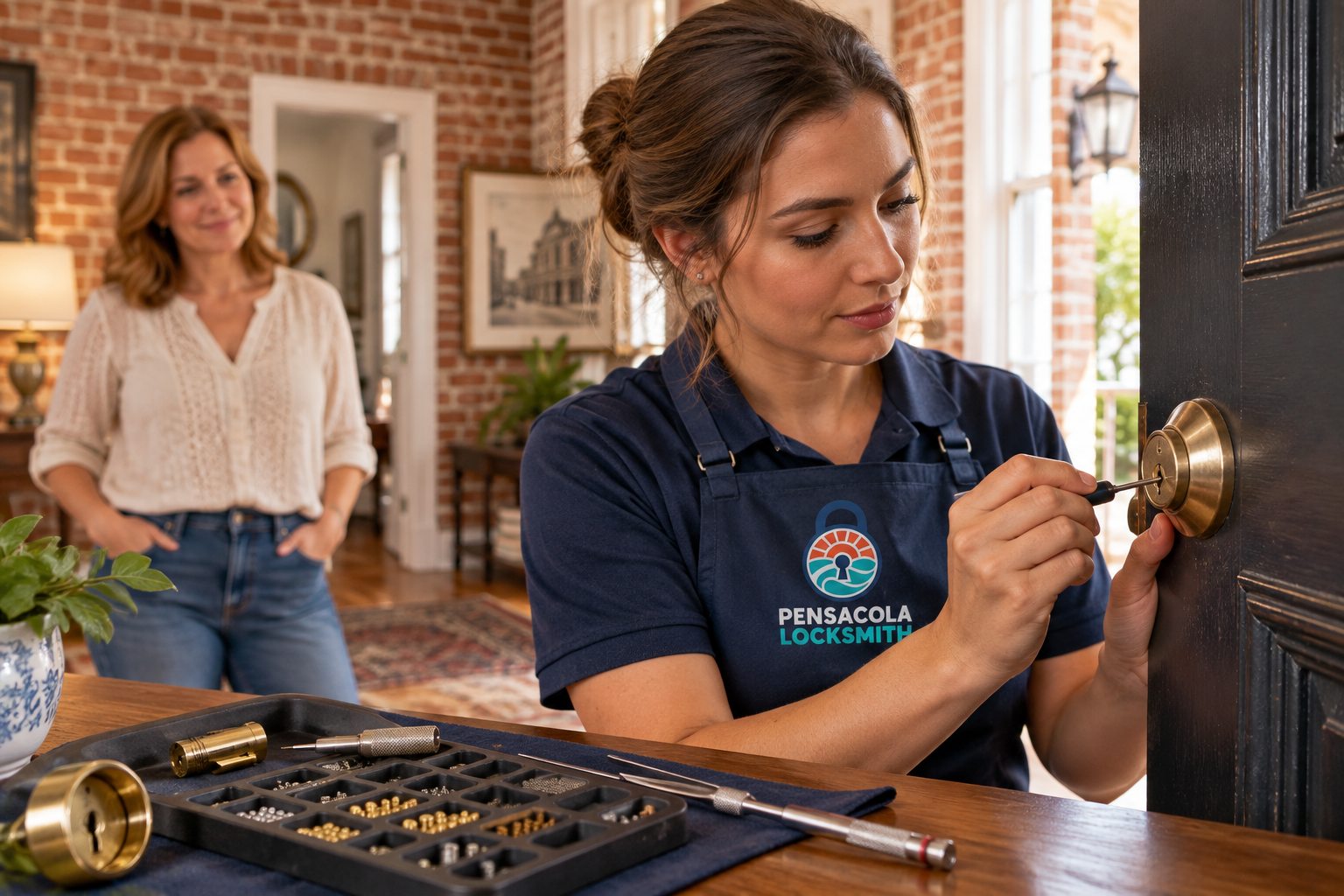
Types of locks you might choose
A deadbolt is the standard choice for exterior doors. It uses a solid bolt that extends into the frame and is not spring-loaded, so it cannot be pushed back with a thin tool. Single-cylinder deadbolts have a key on the outside and a thumb turn inside. Double-cylinder versions need a key on both sides, which raises safety questions in an emergency.
Knob and lever sets handle the latching and the daily opening of the door. Levers are easier to use for people with limited grip, and many prefer them for that reason. Combination sets pair a knob or lever with a deadbolt. Some have a keyed lever and a separate bolt, and others combine them into one body.
Electronic options include keypad deadbolts, smart locks and fingerprint models. They remove the need to carry a key, allow temporary codes for guests or cleaners and can log use. The trade-offs include batteries, possible electronic failure and sometimes weaker mechanical backup. The technician can explain which models have a reliable physical key as a fallback.
Door preparation: what the technician checks first
Before installing a lock, the technician measures the door. They look at its thickness, the diameter of the large bore hole for the lock body, the smaller hole for the bolt, and the backset, which is the distance from the edge of the door to the center of the bore. Standard sizes cover most doors, but older or custom doors may differ.
They then inspect the door's condition. A door that is warped, swollen, cracked around the lock area or rotted at the edge will not hold new hardware well. Humidity in the Gulf region causes wood doors to expand and contract, and salt air can attack metal ones. Fixing these issues first gives the new lock a solid base.
The edge of the door, where the latch and bolt sit, should be flat and undamaged. If previous installations have left chipped or oversized holes, the technician may use reinforcing plates or fillers to restore a clean fit. A well-prepared door makes the new lock operate smoothly and last longer than one forced into a damaged opening.
The strike plate and door frame matter as much as the lock
The strike plate is the metal piece on the frame that receives the bolt and latch. Many builders install it with short screws that bite only into the thin trim. In a kick-in attempt, these screws pull out, and the frame splits. Replacing them with long screws that reach the wall stud is one of the most effective upgrades at a very small effort.
A reinforced strike plate, sometimes with a long plate that spans a section of the frame, spreads force over a larger area. Where the frame is already cracked or weak, the technician may suggest a repair or a reinforcement kit. These steps are inexpensive compared to the security they add, and they are often overlooked.
Alignment matters too. If the bolt does not enter the strike cleanly, the door has to be pulled or lifted to lock, which wears the hardware and frustrates users. The technician checks that the bolt slides in freely with the door closed, and adjusts the plate or the hinges if needed, so the lock works without any fight.
How the installation is done
The technician removes the old lock, noting its type, how it was fastened and any damage it left. They clean the bore holes and check the door edge. If the new lock matches the existing preparation, installation is straightforward. If not, they may need to enlarge or fill holes, or install a conversion plate to bridge the difference.
The new bolt or latch is fitted into the edge of the door and checked for smooth movement. The exterior and interior pieces are connected through the door with screws, making sure the spindle and tailpiece line up with the mechanism. Over-tightening can bind the lock, so the technician tightens evenly and tests as they go.
Then the strike plate is installed or adjusted, and the lock is tested repeatedly with the door open, then closed. The key should turn easily, the bolt should extend fully, and the handle should return crisply. Only when everything operates smoothly does the technician consider the job done, and they show you how each part works before leaving.
Keys, keying and master systems
New locks arrive with keys already cut, but you can often choose how they are keyed. For a house, keyed alike means every new lock uses the same key. That avoids a heavy ring and confusion at the door. For a business or rental, a master key system lets a manager open every unit while each tenant has a key that opens only their own.
Consider restricted keyways when security is a priority. These use blanks that are not sold openly, so copies are made only through an authorized source. This reduces the chance that someone duplicates a key without your knowledge. It also means you must come back to the same provider for copies, so think about that convenience trade-off.
Ask the technician for as many keys as you need, and test each one. Keep a spare in a safe place. If you are replacing locks because of a lost key or a change in who lives in the home, the new locks mean the old keys no longer work, but only if you have actually collected or accounted for the replacement set.
Ownership and authority checks before work begins
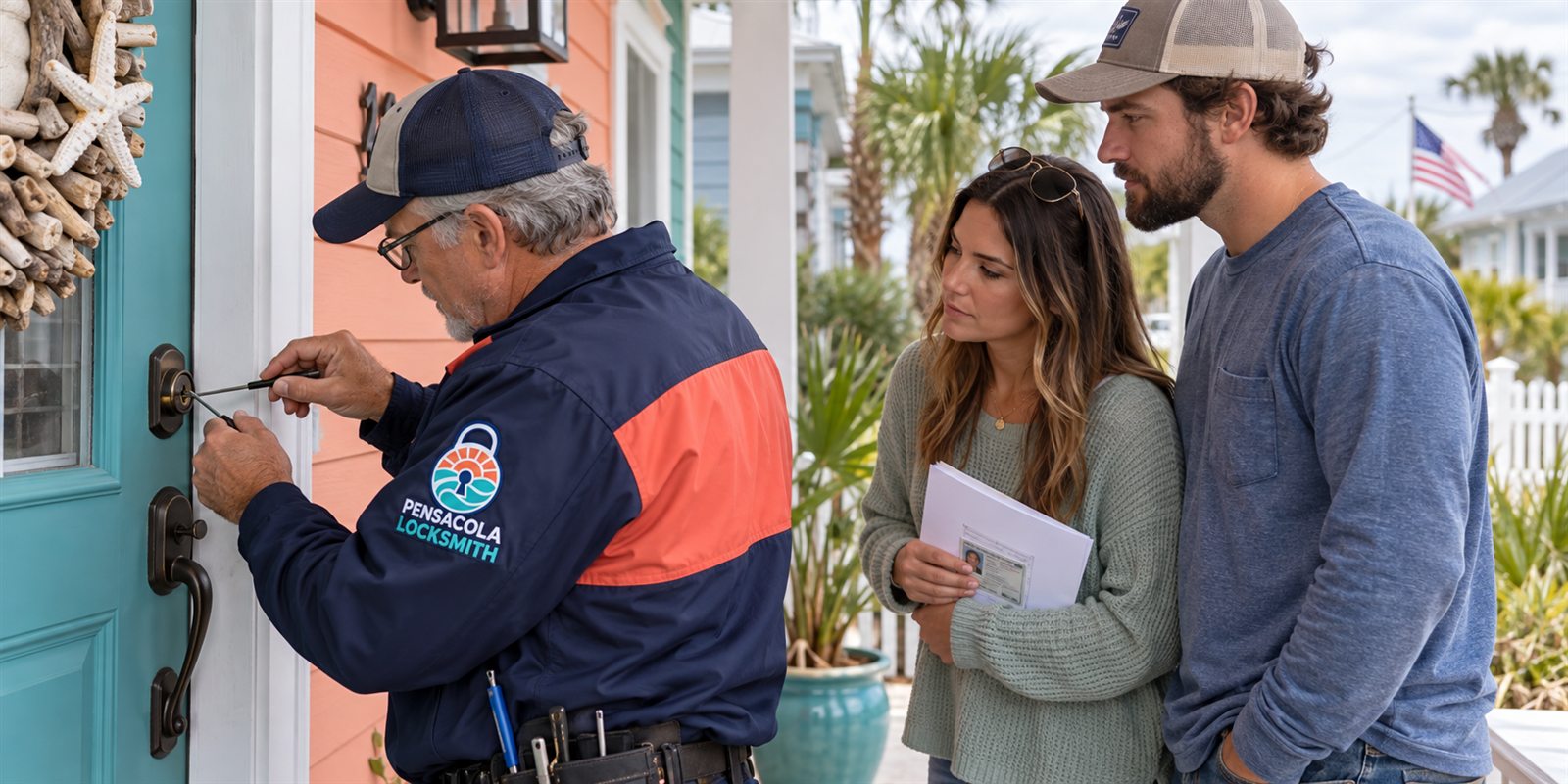
Changing a lock changes who can enter, so a locksmith checks that the person asking has the right to do it. Owners can usually show a photo ID with the address, a utility bill or a closing document. The technician may also look at the property to confirm that the situation matches what was described.
Tenants usually need permission from the landlord or manager, because the lock is part of the property. A short message or a call to the owner is often enough. In some leases, tenants may change locks if they provide a key to the owner, while others forbid it. It is worth checking your lease before ordering.
These checks also protect you. Without them, anyone could have a lock removed from a home where they have no right to be. If you are in a dispute over access, such as after a separation, a technician may ask for additional proof or suggest that the parties agree in writing. We explain what is needed when you call.
Matching hardware to a coastal environment
Locks on exterior doors near Pensacola Bay and the Gulf face tough conditions. Salt air accelerates corrosion, humidity encourages rust and strong sun fades finishes. Hardware with a protective coating, solid brass components or corrosion-resistant finishes lasts longer in these conditions than basic painted steel.
Door position matters. A door facing the water or in direct weather will wear its hardware faster than a sheltered entry. A technician can recommend a more durable lock for such doors, and a more modest one for interior or protected entrances. This avoids overspending on a door that does not need it.
Maintenance helps any lock. Wipe exterior hardware occasionally, use a dry lubricant made for locks and avoid heavy oils that gather dirt. Check screws now and then, because the vibration of daily use can loosen them. A lock that stays tight and clean will keep working smoothly well past the time a neglected one would fail.
Older and historic doors need extra care
Many older Pensacola homes have doors that are thick, tall or hung in unusual ways. Some carry mortise locks, where a rectangular pocket is cut into the edge of the door. Replacing a mortise lock needs a matching body, and modern bore-hole locks do not fit without major changes. A technician can often find a compatible mortise replacement or rebuild the original.
Historic charm is worth protecting. Drilling new holes in an original door can reduce its character and value. A technician who respects this will look for ways to preserve the door, such as using existing preparations, adding a surface-mounted deadbolt or rebuilding the old mechanism. Tell us if your door is special so we can plan around it.
Older frames can be soft, rotted or loose. New locks need a solid base, so repairs may be advisable before installation. A modest carpentry fix is easier now than after a failed lock or a break-in. The technician can advise on what is needed and whether to arrange a carpenter, without pressure to take on more than you want.
Rental properties, businesses and multiple doors
Landlords and property managers often change many locks at once, whether at tenant turnover or during a security update. Planning ahead saves time. Count the doors, note the lock types and decide on a keying plan before the technician arrives. A tidy plan makes the visit smooth and leaves you with a system that is easy to manage.
Short-term rentals in the Pensacola area benefit from keypad or smart locks, since guests come and go and codes can be changed between stays. The trade-off is battery management and the need for a mechanical backup. A technician can install a model that suits the property and show you how to reset codes.
For businesses, think about who needs access to which doors, and when. Employee turnover is a security risk if keys are not tracked. Restricted key systems and electronic access can help. Call us to confirm availability and describe your property, and we will talk through a practical approach before any work is scheduled.
Safety details: fire exits, thumb turns and emergencies
Security should never trap people inside. For most homes, an interior thumb turn on a deadbolt lets anyone leave quickly without a key. Double-cylinder deadbolts, which need a key on the inside, can slow an escape during a fire or storm emergency. Many local codes discourage them on residential exits, so think carefully before choosing one.
Hurricane season adds its own considerations. Doors must hold up against wind pressure and may be reinforced with additional bolts. Storm preparations sometimes involve extra latches or bars. Keep any such device simple enough that everyone in the home can operate it in the dark, and make sure children and older relatives know how.
Consider the people who may need to enter your home in an emergency, such as a caregiver, a neighbor or emergency responders. Smart locks with temporary codes or a lockbox for a spare key can make that easier. Plan these arrangements before the need arises, and remember to remove access when it is no longer needed.
A technician can walk through these questions with you. The goal is a lock that stops intruders and still lets the right people in and out without trouble. If a design seems to create a risk in an emergency, say so, and we will suggest an alternative that offers a better balance.
After the lock change: testing and follow-up
Once the new locks are in, test them thoroughly with the technician present. Lock and unlock each door from outside using the key, and from inside using the thumb turn. Close the door gently and firmly, and make sure the bolt extends fully into the strike without catching. Try each key you received, including spares.
Over the next few weeks, notice how the lock behaves. A new lock should feel smooth, and a stiff or noisy one may need adjustment. Humidity can make a door swell slightly in summer, changing how the bolt meets the strike. If you notice binding, a small adjustment now prevents long-term wear.
Keep the paperwork and packaging information for your new locks, including the brand and model. It helps if you need replacement parts or additional keys later. Store a record of how many keys exist and who holds each one. If a key goes missing, you will know what to do and how quickly to respond.
Finally, think about the rest of the door. If the technician pointed out a weak frame, short screws or a flimsy hinge, consider addressing them soon. A new lock on a weak door is only part of the answer. Call us to confirm availability if you want help with follow-up work, and we will explain what is involved.
Common questions
How do I know whether to rekey or replace?
If your locks are in good condition and you simply want new keys, rekeying is usually simpler. If locks are worn, damaged, loose or too weak for the door, replacement makes more sense. A technician inspects them, explains the trade-offs and lets you decide without pressure.
What do the lock grades mean?
Grades rate how much testing a lock can withstand, from Grade 3 as the lightest to Grade 1 as the most robust. A higher grade generally means stronger parts and longer life. The door, frame and strike plate also matter, so a technician looks at the whole assembly, not just the lock.
Will new locks fit my existing door?
Usually, since most doors use standard bore holes and backsets. Older or custom doors may differ, and a technician measures before ordering. If the preparation does not match, adapter plates or minor door work can solve it. Mortise locks on older doors may need matching replacements.
Do I need permission to change locks on a rental?
If you rent, the owner or manager normally must approve, since the lock is part of the property. We check ownership or authority before changing any lock, because it affects who can enter. A lease and a message from the owner are typically enough. We explain what to have ready when you call.
How do I get a quote for lock changes?
Quotes are given by phone based on the number and type of locks. If the job is complicated, a technician visits and the service call charge is explained before dispatch. Call us to confirm availability and tell us about your doors, so we can plan the visit properly.