
Content note: this page was written by Claude (AI) for Pensacola Locksmith.
A truck or car that cannot wait for a tow
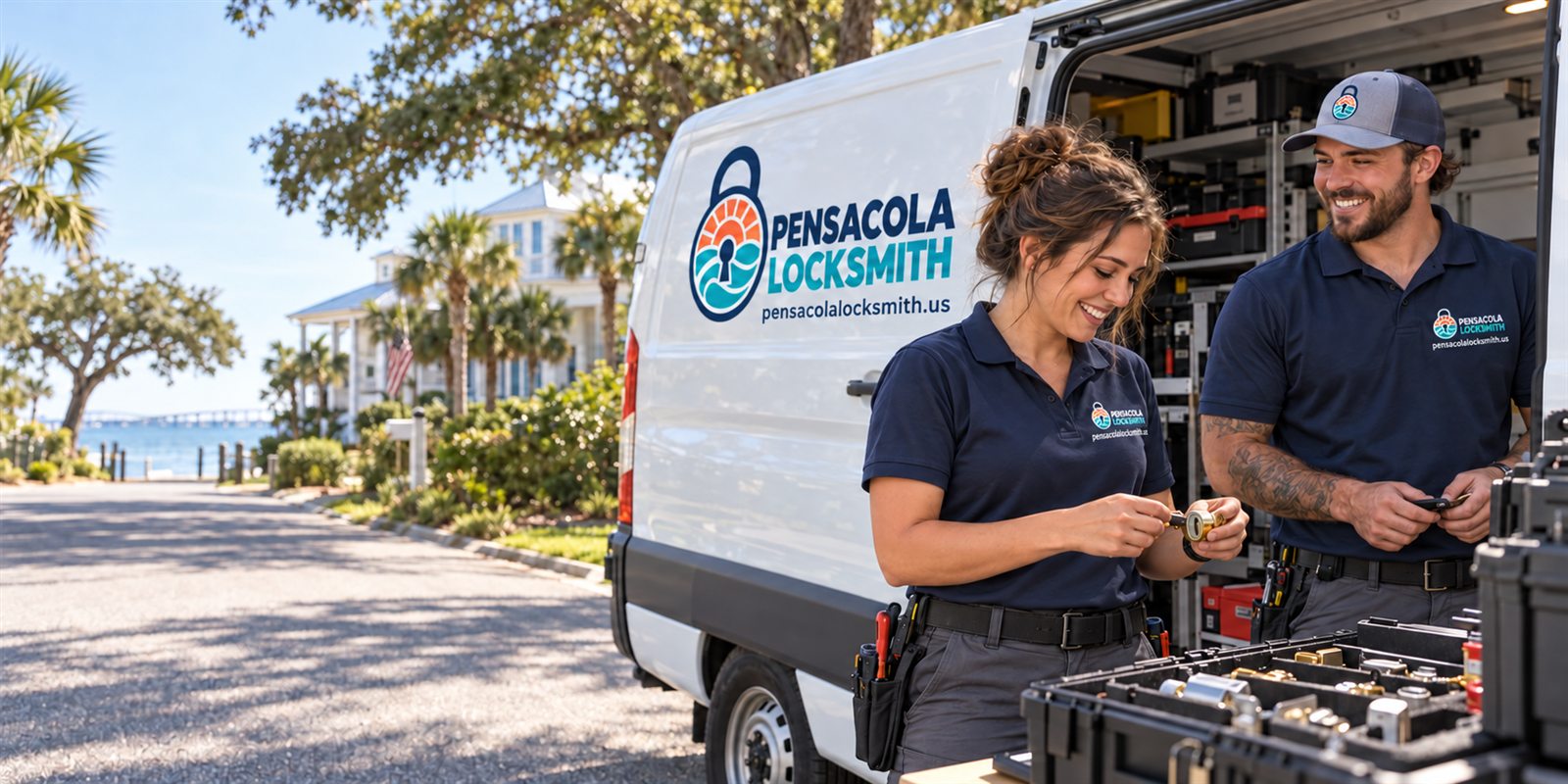
A pickup that carries tools, or a car that gets a family to work and school, is rarely a vehicle people can leave in a shop for days. When the key is gone, the first instinct is to arrange a tow. In many cases that is unnecessary, because the cutting and programming equipment travels in the locksmith's service vehicle.
Ram and Dodge vehicles are built by the same group, and many of them share key hardware and security system logic. That makes it easier for a technician who knows the family to work across pickups, vans, sedans and muscle cars, while still checking details for each vehicle.
The practical benefit of mobile service is that the vehicle stays where it is, and you stay with it. If the truck is in a work yard, a driveway or a parking lot, the technician comes there. You avoid a tow bill, a ride home and a second trip to collect the vehicle.
Key styles you may find across the lineup
Ram and Dodge vehicles have used several key forms over time. Some have a transponder blade key with a plastic head. Others have an integrated key fob, often the style with a flip out blade and lock, unlock and panic buttons built into the head. These are commonly called remote head or integrated keys.
Newer vehicles often offer a proximity system with a push-button start. The driver carries a fob and starts the engine by pressing the button, with the car checking that the fob is nearby. A small emergency blade is hidden inside for doors if the battery dies.
Some trucks also have separate remote fobs in addition to the main key. A work truck might have a key for the ignition and a small fob for doors, bed locks or a liftgate. A technician needs to know exactly what your truck uses so that each piece is addressed.
Because key types vary within a single model across different equipment levels, the technician relies on the vehicle identification number and an inspection rather than a guess from the model name.
The Sentry key idea and why it matters
Ram and Dodge vehicles have long used an immobilizer concept in which a coded transponder in the key is read by a module near the ignition. The engine is permitted to run only when the module and the engine computer agree on the key's identity.
The practical result is that a copied blade without the proper chip will turn the ignition but not start the vehicle, often showing a security light on the dash. This catches many people off guard, especially when a hardware counter makes a quick copy and the vehicle refuses to cooperate.
To add a new key, the technician needs to put the vehicle into a learning state. On some models this requires a security PIN, which is obtained using vehicle information and approved tools, once ownership is verified. With the PIN, the technician authorizes the new key and, if needed, erases lost keys.
This is a security feature and it should be respected. It exists so that a thief with a copied blade cannot drive away, and it is the reason the locksmith asks for proof of ownership first.
Checking ownership on trucks and work vehicles
Before any key is made, opened or programmed, the locksmith confirms who you are and that you have the right to the vehicle. A photo ID and a registration or title are the standard documents. For a vehicle bought recently, a bill of sale along with the ID may be accepted.
Work trucks add complications. Many belong to a business, a leasing company or an employer, and the person who calls may be a driver or a manager rather than the registered owner. In these cases a written letter, a company document or a call from the owner is often needed.
Do not be offended by these steps. A locksmith who skips them is a risk to every vehicle owner, including you. A quick phone call to your fleet manager or office, made before the technician arrives, can prevent a long delay.
If you are unsure what will be accepted, ask during the call. The technician can tell you what to gather so the visit can finish in one go.
What to have ready before you call
The call goes better when you have key facts at hand. Know the model, the approximate year, how many keys you have and whether the truck or car is locked. Also know if you have a push-button start or a keyhole, since that tells the technician which kind of system is involved.
Find the vehicle identification number. It is located on the dash near the windshield and on the door jamb sticker. A photo helps, and the number lets the technician confirm key type, programming steps and, where available, the cut code.
Think about location. A truck parked in a yard, a beach lot or a roadside shoulder each has its own challenges. The technician needs enough room to open the door fully, a stable surface for equipment and ideally some shade, particularly in Pensacola's summer heat.
If a key is broken, bring all the pieces. If you have an old fob, even if it no longer works, bring it. It may help the technician identify the correct hardware and confirm which buttons the vehicle expects.
How the blade is cut for a pickup or a car
Cutting a key for a Ram or Dodge begins with identifying the blade style. Some use a conventional edge cut, others a milled groove cut. The technician selects the right blank, and if you hold an existing key, copies its pattern. If not, the lock can be decoded or a code can be used.
The process is done with a portable cutting machine, which allows the technician to make accurate cuts in the driveway, with the vehicle in sight. Precision matters, because a slightly off cut can bind in the ignition or wear it faster than a clean one.
After cutting, the key is tested in the door lock, the ignition and any extra locks such as a tailgate or toolbox lock if present. If a lock is stiff, the technician may suggest cleaning. Dust, salt air and years of use tend to make truck locks sticky.
For trucks with multiple locks on different keys, the technician can discuss whether the vehicle can be set up so a single key handles several locks, depending on the lock hardware involved.
Programming steps and what can go wrong
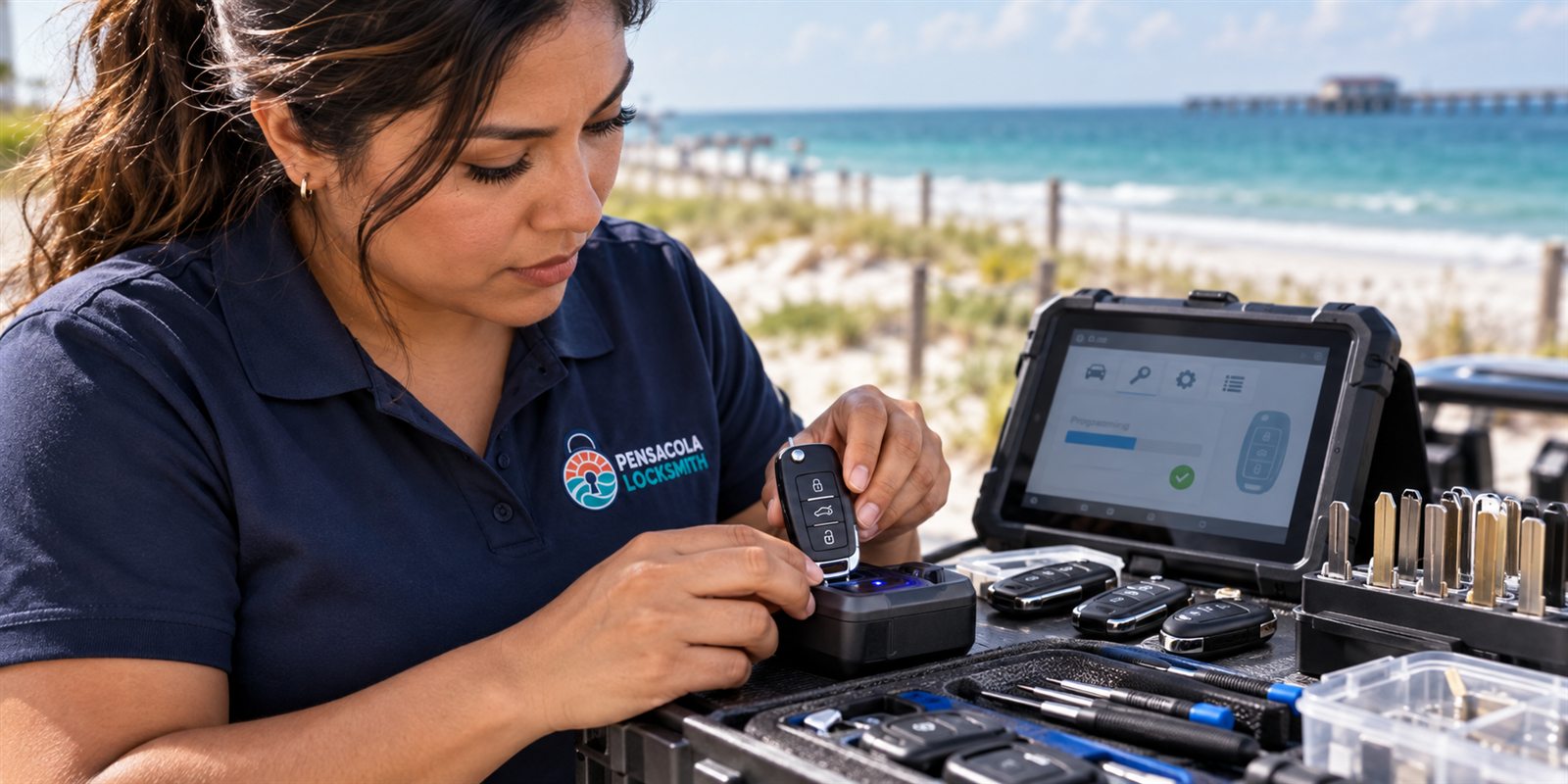
Programming starts by connecting the diagnostic tool to the vehicle's data port, usually under the dash on the driver side. The technician reads the vehicle's information, enters a security PIN if required, and starts a key learning procedure. The new key is presented, and the system stores its identity.
Remote buttons are then taught. Lock, unlock, panic and any tailgate or remote start buttons are tested. For smart key models, the technician checks that the car detects the fob inside the cabin and that the start button works with it.
Problems that sometimes appear include a low battery, which can interrupt a programming session, a damaged data port, or an aftermarket device interfering with communication. The technician may connect a power supply during the session and will tell you if something blocks the process.
In some cases the vehicle imposes a waiting period before accepting a new key. This is part of the security design. It cannot be shortened, and the technician will explain how long it takes so that you are not left wondering.
Fob wear, batteries and everyday care
A truck key takes abuse. It rides in a tool belt, a dirty pocket or the cup holder, and it falls on gravel. The rubber buttons wear, the shell cracks, and moisture gets in. When a fob behaves oddly, the cause is usually battery or contact wear rather than the electronics.
A new coin battery is a small, inexpensive fix that technicians can do on site. If the case is cracked, the circuit can often be moved into a new shell. If the board itself is corroded or broken, replacement is the honest answer.
On the Gulf Coast, humidity and salt air speed up corrosion. Keep the fob out of the truck bed, off the dashboard in direct sun and away from wet clothing. A small pouch or a lanyard can protect it, and a spare kept at home makes a big difference.
If the fob gets wet, remove the battery and let it dry thoroughly before trying it again. Pressing buttons while it is wet can make corrosion worse.
- Keep a spare key at home and test it now and then
- Replace the fob battery before it fails
- Avoid leaving the fob in direct sun on the dash
- Remove the battery from a wet fob and let it dry
Lockouts, broken keys and worn ignitions
A key can fail in other ways. It can snap in the ignition, bend in a door lock, or wear until it no longer turns the tumblers. A broken piece needs careful extraction with thin tools before anything else, so the cylinder is not damaged.
A truck locked with the key inside is another common call. The technician chooses a method that protects paint, weather seals and the wiring inside the door. Modern vehicles have electronics in the doors, which makes brute force a bad idea.
Worn ignitions deserve attention. A key that must be jiggled to turn, a steering wheel that binds or a key that will not come out can point to a worn cylinder rather than a bad key. The technician can inspect and tell you whether a new key will help or the cylinder needs work.
If children or pets are locked inside a hot vehicle, call emergency services first. Locksmith help is valuable, but safety always comes ahead.
Heat, humidity and storm season on the Gulf Coast
Pensacola summers bake dashboards, and heat is hard on batteries, plastic and electronics. A fob left in a hot truck can warp, and a vehicle battery that has been cooked is more likely to fail in the middle of a programming session. Parking in shade, when possible, helps both.
Humidity brings corrosion to key blades and locks, particularly near the bay and beaches. A lock that feels rough may be early corrosion. A cleaning and a dry lubricant can restore it, and the technician can do this while on site if you ask.
Hurricane season is a good reminder to organize keys. Evacuations, flooded driveways and power outages make a missing key far more painful. Gather every key and fob, including spares, with your documents, and keep them dry and together.
Military families, students and seasonal workers often have vehicles that change hands or travel. If you recently bought a used truck, find out how many keys came with it, and consider making a spare before you need one.
How the visit works, step by step
Call us and describe the vehicle and situation. Routine jobs are quoted by phone. Please call to confirm availability for your location. If the job is more involved, a technician may need to visit before giving a firm figure, and the service call charge is explained before dispatch.
When the technician arrives, ownership or authority is checked first. The vehicle is then inspected, the plan is explained and the work begins. Expect to hear what is being done at each step, whether it is cutting, connecting a tool, or testing.
When the work is done, check everything while the technician is still present. Start the engine more than once, press every button and try the emergency blade in the door. Make sure no warning lights remain on the dash.
Consider adding a spare in the same visit. It is usually more convenient than a second call, and it gives you a safety net. Store the spare away from the vehicle, and keep your documents in a safe, dry place.
Honest limits and good habits
A locksmith can handle most Ram and Dodge key problems, but some jobs depend on the vehicle's condition. A failing immobilizer module, a damaged ignition switch or a faulty antenna ring will not be fixed by a new key. The technician will tell you plainly when the issue lies elsewhere.
Some newer vehicles use security systems that need data not always available outside the manufacturer. If that applies to yours, the technician will explain the options without false promises. Honest answers are part of doing the job well.
The best habits are simple. Keep a spare. Test it. Replace batteries on time. Avoid hiding keys on the vehicle. And when something does go wrong, stop trying risky workarounds that can lock the system, and call for help with the details you have gathered.
Common questions
Does my Ram or Dodge need a security PIN to add a key?
Some models do. The PIN is obtained using vehicle information and approved tools once the locksmith has verified ownership, and it lets the technician authorize a new key. Others use different procedures. Tell us the model and year when you call, and we can explain what your vehicle is likely to need.
Why does my copied key turn the ignition but not start the engine?
The vehicle looks for a coded signal from a chip in the key. A blade without a chip, or with an unregistered chip, can turn the lock yet still leave the engine disabled. The key needs both the correct cut and programming to the vehicle's security system.
Can you work on a company truck?
Yes, as long as authority is shown. Bring a letter or document from the company, or have the owner or fleet manager confirm by phone. The locksmith checks ownership or authority before opening, cutting or programming, which protects the business and the driver.
What if the key broke off in the ignition?
Stop turning it and call. The technician removes the broken piece with thin extraction tools, checks that the cylinder is undamaged and then cuts and programs a new key if needed. Forcing the piece can push it deeper or harm the lock, making the repair harder.
How do I get a price?
Quotes are given by phone based on the key type, whether you have a working key and what programming is required. If a complicated job needs a visit first, the service call charge is explained before dispatch. Please call us to confirm availability for your area.