
Content note: this page was written by Claude (AI) for Pensacola Locksmith.
Thinking of a door as one working system
People usually call about a single symptom: a handle that spins loose, a latch that will not catch, a door that slams or drags. The symptom is real, but the cause is often somewhere else in the opening. A latch that misses its strike may be a hinge problem. A door that will not close may have a swollen edge or a bent closer arm.
For that reason a technician begins by looking at the whole opening rather than the part you pointed to. The hinges, the gaps around the door, the latch bolt, the strike plate, the frame, the threshold and any closer are all part of the picture. Gaps that are wider at the top than the bottom, for example, usually point to a loose upper hinge.
Treating the system rather than the symptom saves repeat visits. Replacing a worn handle on a door that is hanging crooked will give you a handle that wears out again quickly. Fixing the hang first, then the handle, gives you a repair that lasts. We explain what we find in plain language so you understand why each step is needed.
Handles and levers: why they loosen and break
Door handles take more abuse than almost any other household part. Knobs are twisted, levers are leaned on, and children and pets hang from them. Over time the set screws work loose, the internal spindle wears and the springs inside weaken. A handle that droops or does not return to level is a handle on its way out.
Many loose handles can be tightened. Technicians check the set screw on the side of the handle, the mounting screws that hold the rose to the door and the through-bolts on a full lockset. Stripped threads or cracked chassis mean it is time for a replacement, and a quality lever from a reputable maker is worth choosing over the thinnest builder version.
Choice of handle matters for daily use too. Levers are easier on arthritic hands and are often preferred for accessibility. Knobs remain common on older homes. Finishes in humid coastal air vary widely in durability, and plain brass or good plated finishes outlast cheap painted ones. We can talk about options that suit your door and your routine.
Latches, bolts and strikes: the quiet source of most complaints
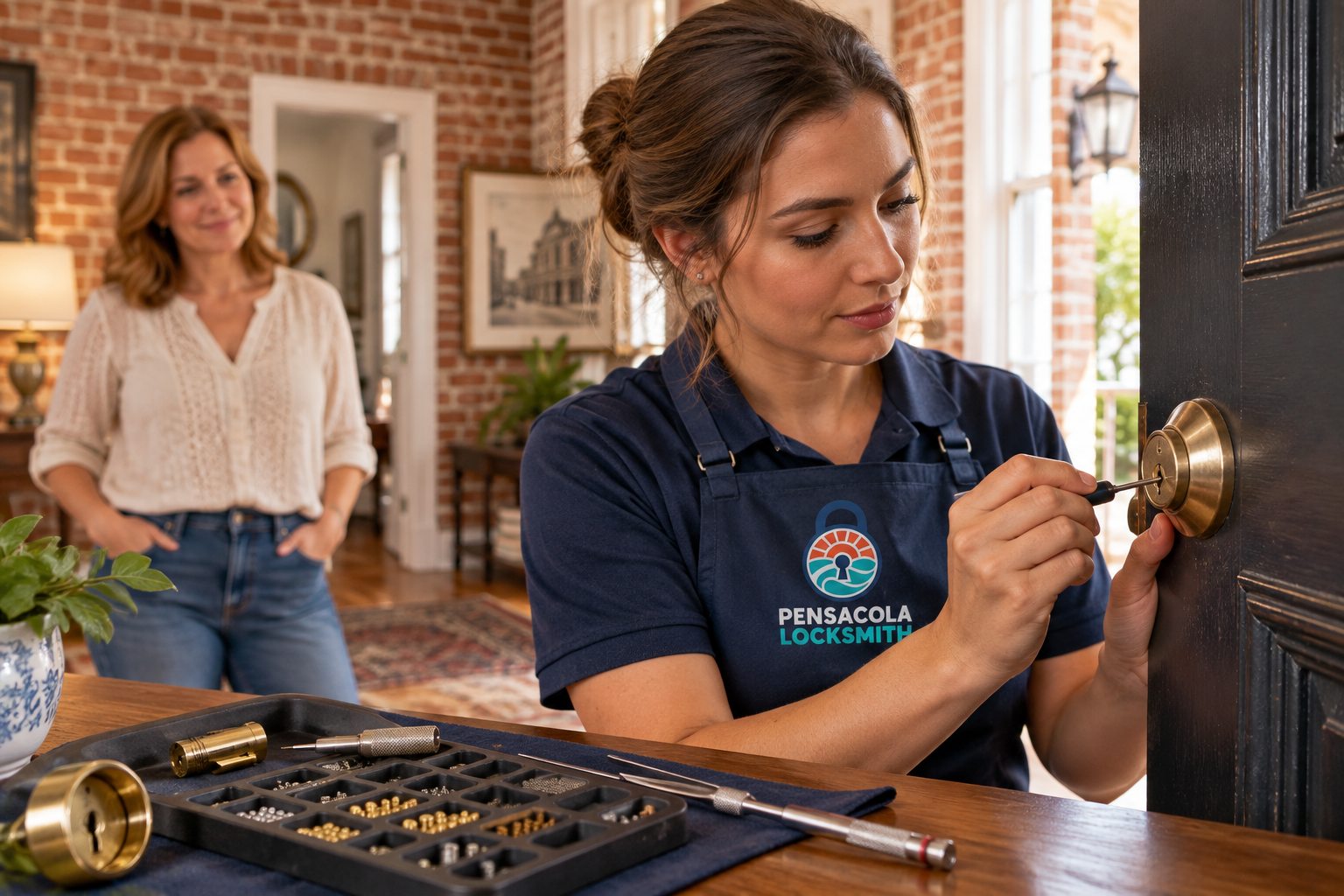
The latch is the small spring-loaded tongue that holds a door closed. It lines up with a hole in the strike plate on the frame. When the line-up slips by even a few millimeters, the door either refuses to latch or catches only barely. A door that must be pulled hard to close is a classic sign of a misaligned strike.
Adjusting a strike is often a short job. The technician checks where the latch actually meets the plate, marks the offset, and either files the opening, shifts the plate or replaces it with an adjustable one. Where the wood around the plate has split, the mounting holes are filled and re-drilled so the screws bite into solid material.
Deadbolts follow the same logic. A bolt that drags when thrown is often rubbing the edge of the strike hole, and forcing it with the key can wear the cylinder. Longer screws into the framing behind the trim improve both function and resistance to forced entry. Small details at the strike make a big difference to how the whole door behaves.
Hinges: the part nobody looks at until the door drops
Hinges carry the entire weight of the door, and over the years the screws loosen in the soft wood of the jamb. The door sags, the gap at the latch side narrows, and the bottom corner starts to scrape. Many people assume the door has swollen when what has really happened is that the hinges have let go.
The remedy is to remove the short hinge screws and replace the top hinge's screws with longer ones that reach into the stud behind the jamb. This pulls the door back into position and usually restores a clean, even gap. Where the screw holes are stripped, wood filler or dowels give the new screws something to bite into.
Worn hinge pins and bent hinges are also common, particularly on heavy exterior doors or doors with a closer pulling on them. Replacing hinges one at a time keeps the door hung while work is done. Coastal air corrodes steel hinges, so stainless or brass options are often a better long-term choice for exterior and garage-side doors.
Door closers: slamming, sticking and stalling
A door closer is a hydraulic or spring-loaded arm that pulls a door shut at a controlled speed. Commercial doors, fire doors, pool gates and some residential doors rely on them. A closer that slams, stalls before it latches or leaks oil is not doing its job, and it can create both a safety issue and a nuisance.
Most closers have small valves that control the closing speed and the final latching speed. Adjusting them is a matter of careful quarter turns, with testing after each one. A closer that has lost its fluid cannot be properly adjusted and should be replaced. Mounting position, arm angle and the size of the closer matter too, since an undersized unit fights a heavy door.
Closers on exterior doors work against wind, temperature and humidity, so the closing speed can drift through the seasons. A door that closes perfectly in spring can stick in summer or fail to latch on a windy day. Checking the closer when you notice the change, rather than ignoring it, usually keeps the repair modest.
Exit devices and commercial doors
Businesses often use panic bars, also called exit devices, on doors that must open easily from the inside. These devices have a long push bar, a latch at the door edge and sometimes rods that reach the top and bottom of the door. They take a lot of use, and the moving parts need occasional attention.
Common problems include bars that stick, latches that do not retract fully, loose mounting and a trim that no longer matches the strike. Because exit devices relate to life safety, repairs must keep the door easy to open from the inside at all times. A technician will not make a change that blocks or slows egress.
For shops, offices and rental units, a routine check of the exit devices, closers and strikes a couple of times a year is a good habit. Small issues like a slightly misaligned strike are quick to fix, while a neglected device may eventually fail in a way that locks people out or leaves the door unable to secure.
Climate, salt air and storm effects on hardware
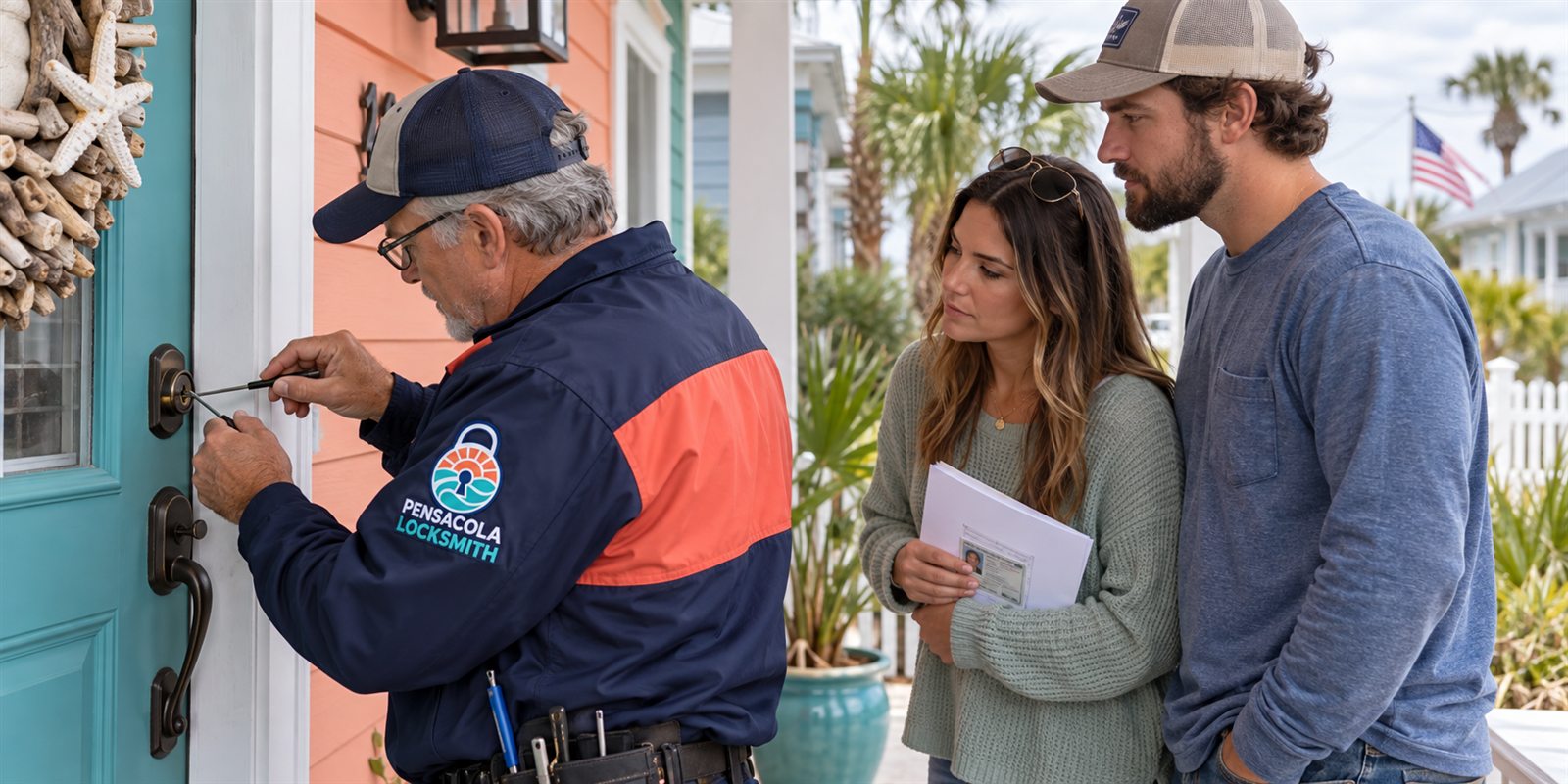
Pensacola's humidity and salt-laden air work on door hardware constantly. Steel parts corrode, plated finishes pit, and wooden doors swell and shrink with the seasons. A door that fits perfectly in dry weather may bind in humid months, and a latch that was smooth in January may squeak and stick in August.
Storm season adds another layer. Wind pressure can flex doors and frames, loosening hinges and shifting strikes. After a major weather event, it is worth checking that exterior doors still close and latch smoothly, and that the bolt reaches fully into the strike. Moisture that enters through gaps can swell door edges and warp them.
Choosing durable materials, keeping finishes intact, and using the right lubricant keeps hardware serving longer. A dry lubricant on latches and hinges works better than heavy oil, which attracts dust and sand. For doors facing the water, stainless steel hardware, though a little costlier, tends to outlast plated alternatives and is worth considering at replacement time.
What a hardware checkup involves
A checkup is a simple walk-through. The technician opens and closes each door several times, watching for rubbing, noise and uneven gaps. They look at the latch and bolt travel, test the handle return, check the strike alignment and examine hinges for loose screws or wear. Closers are checked for speed, fluid leaks and arm condition.
The technician also notes weather stripping, thresholds and door sweeps, since a door that is hard to close often has a swollen sweep or a worn threshold. These are not lock parts, but they affect how the lock performs, and a cooperating opening is the goal. We point out what falls outside our work so you can address it separately.
At the end, you receive plain notes: what was fine, what was repaired, and what should be watched. This is especially useful for landlords, property managers and business owners who maintain many doors. A short list of doors to revisit in six months makes planning easier and prevents emergency calls on a busy day.
Repair or replace: how to decide
Repair is usually the right first step. A handle that needs tightening, a strike that needs adjusting or a closer that needs a quarter turn are simple fixes that restore normal function. If the hardware is solid and the door is in good shape, there is rarely a reason to replace everything.
Replacement makes sense when parts are worn out, cracked or corroded beyond cleaning, or when hardware is a cheap model that fails repeatedly. It also makes sense when you want a different style, better security or accessibility. Matching the existing bore and backset keeps the job simple and avoids drilling the door.
Sometimes the honest answer is that the door itself is the problem. A warped, rotted or badly damaged slab will not hold hardware well no matter how good the hardware is. In that case we explain the issue and suggest you consider a door repair or replacement before investing in expensive hardware that will not have a stable home.
Calling us and getting ready
When you call, describe which door is affected, what it does or fails to do, and whether it is an entry, interior, garage or business door. Mention the handle style and whether the door has a deadbolt, closer or exit device. Quotes are given by phone for straightforward jobs, and we will tell you plainly what is likely involved.
If the issue looks more complicated, a technician visits to look at the opening, and the service call charge is explained before dispatch. Please call to confirm availability for your area. Before the visit, clear the area around the door, and keep any parts that fell off, since they help identify the right replacement.
Because we change and repair access hardware, we confirm ownership or authority before starting work. Tenants may be asked for permission from the landlord, and managers for a simple record. It is a normal step that protects owners, residents and businesses, and it keeps the process clear and respectful for everyone involved.
Garage-side, patio and interior doors each have their own habits
Not every door in a house lives the same life. The door between a garage and the kitchen opens and closes dozens of times a day, often with arms full of groceries, and it is subject to temperature swings and humidity from the garage side. Its hinges and latch tend to wear faster than the front door, and a sagging garage-side door is a very common complaint.
Patio and sliding doors have their own wear pattern. Rollers flatten, tracks fill with sand and grit carried from the beach, and the latch hook loses its bite. A sliding door that must be lifted and shoved to lock is not secure, and it is also hard on anyone with limited strength. Cleaning, roller adjustment and a replacement latch usually bring one back to life.
Interior doors are the least demanding, but bedroom and bathroom privacy sets still fail. Small push-button locks jam, and the emergency release slot on a privacy lock can break. Knowing how to open a privacy door from the outside is important for safety, especially with children in the house. We can repair or replace these and show you where the release is.
Warning signs worth acting on early
Doors rarely fail all at once. A latch that needs an extra tug, a handle that sits slightly low, a bolt that squeaks as it slides and a door that scrapes the frame at one corner are all early signs that something is drifting. Each is a small repair today and a larger one if ignored for a season.
Listen as well as look. A new rattle when the door closes, a grinding feel in a handle or a clunk from the closer arm are clues. Pay attention to gaps too: a visible light line along one edge of the door that was not there last year usually means the door has moved on its hinges or the frame has shifted.
Security signs matter as well. If the strike plate screws are short, if the frame near the bolt is cracked or if the deadbolt does not throw fully, the door is easier to force. These are quiet problems that you may not notice until the worst moment. A short inspection can find them and fix them before they matter.
What you can do yourself and when to stop
Some care is easy for any homeowner. Wipe handles and latches occasionally, use a dry lubricant on the latch tongue and hinge pins, and tighten visible screws with the right size driver. Do not overtighten, since stripping a screw hole in soft wood turns a ten-second fix into a repair.
Stop if something feels wrong inside the mechanism. If the handle spins freely without moving the latch, if the bolt will not retract with the key, or if a part has visibly broken, further force will usually make things worse. A lock that is only partly working can trap someone inside or leave a door unlocked without anyone realizing it.
Avoid drilling new holes in the door or frame unless you know the hardware layout, because misplaced holes cannot be undone. Avoid spraying heavy oil into cylinders and latches. If you are unsure, take a photo and call us. A short description over the phone is often enough to say whether the job is a quick adjustment or a replacement.
Common questions
Why does my door latch only when I push hard?
The latch is probably missing the strike hole by a small amount. This can come from sagging hinges, a shifted strike plate or a swollen door edge. A technician checks the alignment, tightens hinge screws and adjusts or replaces the strike so the latch enters the opening cleanly and the door closes without force.
Can a loose handle be tightened instead of replaced?
Often yes. Many loose handles just need set screws or mounting screws tightened. If threads are stripped, the spindle is worn or the internal chassis is cracked, replacement is the better route. We check the handle and the door together and explain which option makes sense.
My door closer slams. Is that a quick fix?
Sometimes. Closers have adjustment valves for closing and latching speed, and small quarter turns can calm a slam. If the unit has leaked its fluid or the arm is bent, adjusting will not help and replacement is needed. We test the closer before deciding.
Do you repair commercial exit devices?
Yes, we service common exit devices and closers on business doors. Repairs always keep the door easy to open from the inside for safety. We confirm authority for the property before work and explain what we find. Call us to describe the device and confirm availability.
How is door hardware repair priced?
Quotes are given by phone based on your description of the door and the problem. If the job is complicated, a technician visits and the service call charge is explained before dispatch. Please call us to talk it through and confirm availability for your location.