
Content note: this page was written by Claude (AI) for Pensacola Locksmith.
Coastal living and what it does to door hardware
Homes on the water look wonderful and ask a lot of their hardware. Every exterior lock is exposed to humid air that carries salt, and the effect builds over time. Finishes lose their shine, screws develop rust streaks, springs inside the lock slow down and the key begins to feel gritty. Many owners accept this as normal until the day the key will not turn. A coastal environment makes regular attention to locks a smart habit instead of an afterthought.
The damage is gradual and often hidden. Salt crystals form inside keyways as moisture evaporates, and fine sand blown from nearby shorelines works into the mechanism. Lubricating with the wrong product makes it worse, since oily sprays attract dust and create a paste. A dry lubricant made for locks, applied sparingly, is generally the better choice. Wiping the exterior hardware with a damp cloth occasionally also helps remove salt before it can do harm.
Because this community is across the water from the main service area, a visit takes planning. Please call us to describe the problem and your location, and to confirm availability. A mobile locksmith carries cylinders, blank keys, hardware and tools in the vehicle and can usually complete the work during a single visit, which is helpful when a return trip would be long.
Choosing coastal rated door locks and fasteners
If a lock has failed because of corrosion, replacing it with the same type will lead to the same result. Materials matter. Solid brass bodies, stainless steel fasteners and finishes designed for marine environments hold up better than plated steel. Ask about the base metal as well as the finish, because a decorative coat over an easily corroded core will not last. The right product may cost more, but it is usually cheaper than repeated replacement.
Fasteners deserve as much attention as the lock. Use stainless screws for the lockset, the strike plate and the hinges. Plain steel screws corrode into the wood and become nearly impossible to remove. Long screws in the strike plate that reach the framing improve security and also help the door withstand wind loads during storms. Door sweeps and weatherstripping reduce the amount of salt-laden air that reaches the lock.
There are tradeoffs between appearance, cost and durability. Some corrosion resistant hardware comes in fewer styles. Some very decorative finishes fade quickly in coastal sun. Your technician can discuss these honestly and help you pick something that suits the home and lasts, without pushing the most expensive option. The most important thing is a lock that keeps working with a modest amount of care.
Sliding doors, French doors and doors to the deck
Waterfront houses usually have lots of glass and several doors that open to a deck, patio or pool area. Sliding doors are among the most common weak points because their latches are small and their tracks fill with sand and debris. A door that rattles in its track, lifts out of place or latches only if it is pushed hard is not secure. In humid air, aluminum frames corrode and rollers wear, making the door harder to close fully.
A technician will check the latch, the rollers and the track. Replacing a worn latch is often simple. A secondary device, such as a pin through the frame or a bar in the track, adds a second layer. Some owners choose a keyed sliding door lock so the door can be secured from outside when they leave. Whatever you choose, an exit from the inside should remain easy and obvious, as it matters for safety.
French doors have their own issues. Double doors usually have one fixed leaf secured with bolts at the top and bottom, and the active leaf latches into it. If those bolts are loose or corroded, the doors can be pushed apart. A locksmith can service or replace them, and can add a deadbolt designed for double doors. Check these doors regularly, because they are often used less than the front door and neglected.
Lockouts: porches, decks and pool areas
A common lockout in a waterfront home involves a door to the deck or pool. Someone steps outside, the door closes and the latch engages. The key is inside and the rest of the house is locked. It happens especially on windy days when doors swing shut, or when a child pushes the lock button from inside. If you are outside in summer heat or in the evening, the problem can become uncomfortable quickly.
Do not try to force a sliding door or break a pane. Glass breakage is dangerous and expensive. Check whether any other door or window is unlocked, whether a neighbor has a spare and whether a household member can bring a key. If not, call us and describe the door. Tell us whether anyone is inside who might need help; if there is a safety concern, call emergency services first. The technician confirms authority before opening, so have an ID with the address ready.
Opening a sliding door or a deck door without damage is usually possible using appropriate methods. Once inside, we can check why the door latched and offer ideas, such as a door stop, a keypad lock or a spare key kept in a safe place. Prevention is simple once the cause is clear.
Rekeying a coastal home
Rekeying is an efficient way to control who has access to your home without replacing hardware. It is especially common when buying a house, which may be a second home or a seasonal residence with a long history of keys. Past owners, renters, cleaners and contractors may all have held copies. Rekeying makes all of those keys useless and gives you one new key for all exterior locks.
The process involves removing each lock cylinder, changing the pins to match a new key and reinstalling it. The door hardware stays on the door, so the look is unchanged. A rekey can often be completed on site in a single visit. Before starting, the locksmith checks that you own the property or have authority to change the locks, which is why ID, closing paperwork or a lease may be requested.
If a coastal lock is badly corroded, rekeying may not work because internal parts have worn or seized. In that case a new cylinder or lockset is the better route. The technician will test the lock first and explain which situation applies. Honest advice here saves you from paying for a rekey that will not last.
Seasonal homes and homes left empty
Many coastal homes are not occupied year-round. Owners travel, rent the place out, or use it for part of the year. An empty house is a security concern, and locks are the first line of defense. A seasonal owner should consider rekeying when management changes, when cleaners or contractors leave or when a rental period ends. A keypad lock with changeable codes is another option, though it needs checking for battery life before each absence.
Humid, closed-up houses also create lock problems. Doors swell, deadbolts bind and keys stick after weeks of disuse. When you return, a lock that feels stiff should be serviced instead of forced. A technician can clean and lubricate the lock, adjust the door and replace parts as needed. Do this early in your stay, before a small stiffness becomes a locked-in or locked-out situation.
If you rent the home to guests, be careful about key control. Keys can be copied, lockboxes can be shared and codes can be passed around. Rekeying between rental seasons or using codes that expire for each guest are practical ways to regain control. The locksmith needs proof that you own the home or manage it with written authority before making any changes.
Vehicle keys and locked cars on the shore
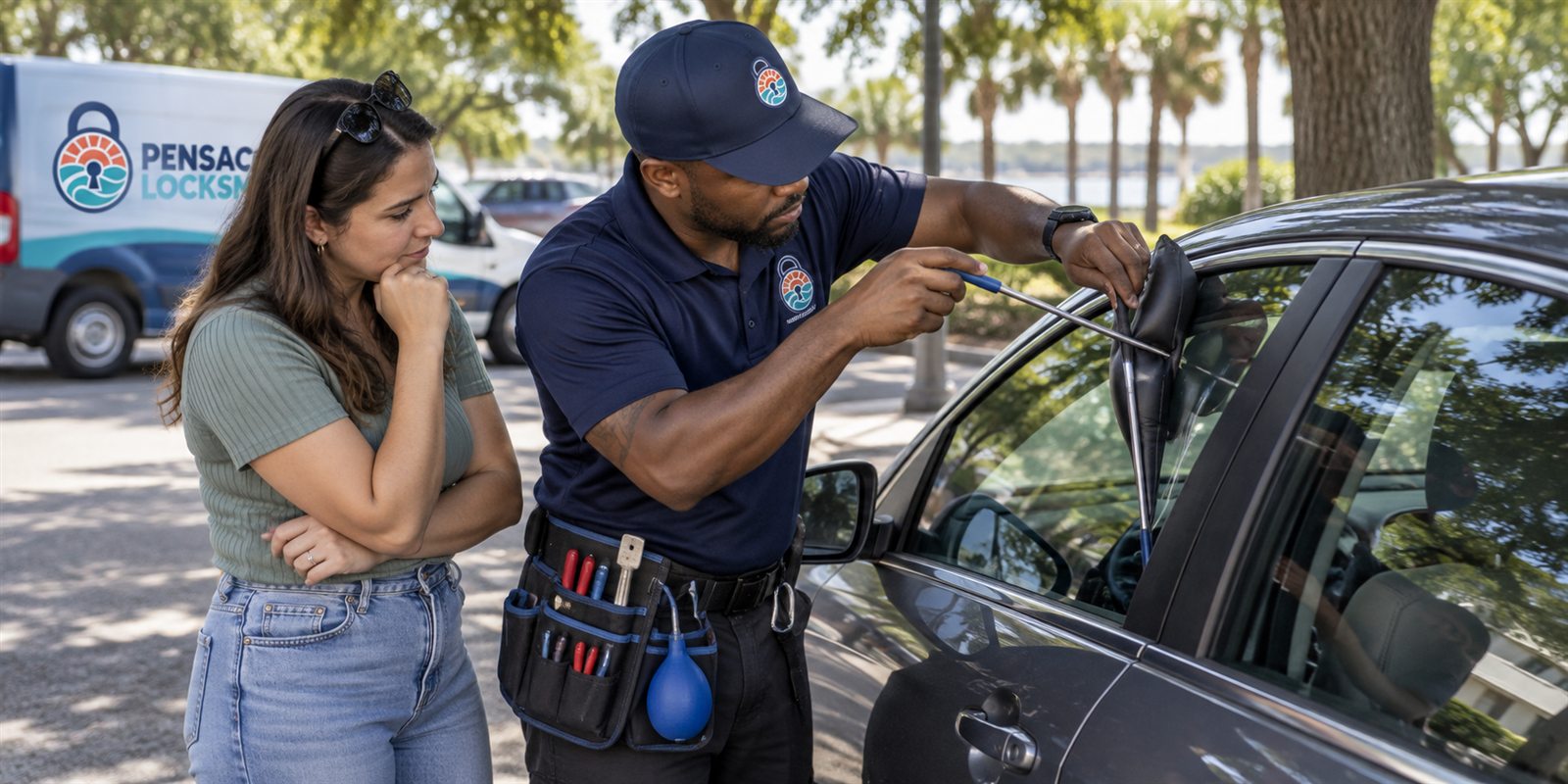
Keys get lost on the beach, dropped in the water or left on a car seat. A mobile locksmith can open a locked vehicle, cut a replacement key and, for many vehicles, program a new transponder key at your location. What is possible depends on the vehicle and the key type, which generally falls into categories such as metal keys, chip keys, remote head keys and push-button start fobs. Tell us about your key when you call.
If a child or pet is locked in a vehicle, particularly in warm weather, call emergency services immediately. A closed car heats quickly, and waiting for a locksmith may be too slow. For ordinary lockouts, the technician checks ownership or authority, usually through registration or title and photo ID, then opens the vehicle using tools designed to avoid damage.
Salt and sand are hard on key fobs. Fobs that have been dropped in water or sand may stop working, and often the problem is a battery or corroded contacts. A locksmith can sometimes replace a battery or clean the contacts, which is much simpler than replacing the fob. If a key has been in saltwater, dry it as best you can and avoid pressing buttons until it is dry.
Garages, boat storage and equipment sheds
Waterfront lots often include garages and sheds that hold boats, paddleboards, bicycles and tools. These buildings are exposed to the same salt as the house, and their locks tend to receive less care. A hasp and padlock that is three years old can already be seized. Replacing a padlock with a marine rated one and using stainless hardware gives much better life. A technician can open a seized lock if the key is lost, then replace it and cut matching keys.
The overhead door deserves a check, too. Many garage doors have a simple latch lock on the inside that is easy to defeat, and some have gaps that allow the emergency release cord to be hooked from outside. These issues are often fixable by adjusting the release or adding a second lock. A locksmith can advise, though garage door repairs themselves may require a specialist.
The door between the garage and the house should be treated as an exterior door. It needs a deadbolt, a solid strike and a door that fits well. Owners often leave this door lightly secured because it feels internal. It is worth fixing, since a burglar who gets into the garage should face a real barrier.
Storm preparation for locks and doors
Hurricane season is real on this coast, and coastal homes take the brunt of wind and surge. Before a storm, check that each door closes firmly and that deadbolts fully extend into well fastened strike plates. Loose doors can be forced open by wind pressure, and weak frames can fail. Sliding doors benefit from a secondary lock or bar. Shutters protect the glass but do not replace good locks.
Afterwards, salt water intrusion and debris cause lock trouble. Rinse affected locks with fresh water if you can, dry them and apply a suitable lubricant. Locks that have been submerged or heavily coated with salt are usually better replaced, particularly on exterior doors. If a door was forced open or damaged by debris, a locksmith can repair or replace the hardware and help secure the home before permanent repairs.
After major storms, demand is high, roads may be affected and bridges may be restricted. Call to confirm availability and be patient. Take photographs of damage before repairs for insurance purposes, and keep records of work done. Have your ID and proof of ownership available, since a locksmith will confirm authority before changing anything.
Keypads, smart locks and keeping a key backup
Coastal homeowners often like the idea of a keypad lock, because keys are easy to lose near the water and nobody wants to leave one under a planter. A good keypad deadbolt lets you come in with wet hands, share a code with a guest and remove it afterward. The important choice is the model. Look for one made for exterior doors, with a sealed keypad and a battery compartment that keeps moisture out, and make sure a mechanical key override is included.
Installation depends on the door. Humidity makes wood and composite doors swell, and a bolt that binds in the strike will drain batteries and wear the motor. The technician checks the door's fit, adjusts the hinges or strike if needed and then installs and tests the lock with the door open and closed. Setting user codes, explaining how to change them and showing where the batteries go are part of the visit, so you feel comfortable before the technician leaves.
Keep a backup plan. Batteries fail eventually, electronics can fail and a code can be forgotten. Keep the mechanical key somewhere safe but not hidden on the door, and consider leaving a spare with a trusted person. Replace batteries on a regular schedule, perhaps when you change smoke detector batteries. A lock that is convenient but unreliable is worse than a plain one, so test it occasionally and treat the first low-battery warning seriously.
Getting ready for your call
When you call, give your address and any directions that help, including gate codes, shared driveways or landmarks. Explain what is locked and what you need. If you can, describe the lock's brand or type, and send a photo. If a key is broken in a lock, do not try to remove it with pliers; this often pushes it deeper.
Gather proof of ownership or authority. For a home, ID matching the address, a deed, a lease or a utility bill. For a rental, written authority from the owner. For a vehicle, registration or title and photo ID. The locksmith checks before opening, rekeying or programming.
Quotes are given by phone after you describe the job. If it is complicated, a technician visits first and the service call charge is explained before dispatch. Please call to confirm availability for your location, since service across the water requires planning. Ask about your options, and expect a plain explanation.
Common questions
Do you serve Oriole Beach?
Our base is Pensacola and Escambia County, and Oriole Beach is across the water in Santa Rosa County. Please call us to describe your location and the job, and to confirm availability before anyone is dispatched.
Why does my lock key feel gritty?
Salt crystals and fine sand can build up inside the cylinder in coastal air. Clean it and apply a dry lubricant made for locks. Avoid oily sprays, which attract more dirt. If it stays rough, have it serviced before the key breaks.
How can I make my sliding door more secure?
Check that the latch engages, the track is clean and the door cannot be lifted out. A pin, a bar in the track or a keyed sliding lock adds protection. Make sure you can still exit easily from the inside.
Can you rekey a seasonal home?
Yes. Rekeying makes old keys useless and gives you a new key for all exterior locks. The locksmith checks ownership or authority first. If a lock is badly corroded, replacement may be better than rekeying.
What if my key fob got wet?
Dry it as best you can and avoid pressing buttons until it is dry. Often the issue is a battery or corroded contacts, which can sometimes be fixed without replacing the fob. Call us with details of the vehicle and key.