
Content note: this page was written by Claude (AI) for Pensacola Locksmith.
Think in layers, not in locks
People tend to judge a door by the lock, but a door is a system of five or six parts that all have to hold. The slab, the frame, the hinges, the latch, the deadbolt and the strike plate each carry a share of the load when someone pushes, kicks or pries. A deadbolt of the highest grade will not help if the wood around it splits on the first hard blow.
A helpful way to picture it is a chain. Whatever link breaks first decides the strength of the entire door. On most older homes, that link is the wooden jamb where the bolt enters. The bolt may be thick and solid, but the screws in the strike plate are short and bite only into thin trim. Fixing that one weak link often improves security more than replacing the lock.
So start by asking where each part could fail. Is the door hollow or solid? Are the hinge screws long enough? Does the frame show cracks or rot? Is there a gap between the door and the jamb where a tool could slip in? Walking through those questions takes nothing but your attention, and it tells you where to spend effort first.
Good security is also about being sensible, not paranoid. You are not trying to build a vault. You are trying to make the door take longer and make more noise than a casual attempt is willing to risk. Layers do that. Each additional step adds friction, and most opportunistic trouble stops when friction appears early.
The door slab itself
Front doors come in solid wood, steel, fiberglass and hollow core, and each material behaves differently. Steel and fiberglass doors resist impact well and do not swell in humid weather, which is helpful on the Gulf Coast. Solid wood looks beautiful but can warp, and a wood door that has absorbed moisture often sticks in summer and loosens in the cooler months.
A hollow core door, common as an interior door, has no place at the front of a house. If you find one there, replacing it is worth discussing. Many exterior doors have a foam or wood core wrapped in a thin skin, and while they are acceptable, they are easier to break through than solid slabs. Knock on the door: a dull, solid sound is better than a light, hollow one.
Look at the area around the lock. Doors have a bore for the latch and another for the deadbolt, and too much wood removed between them can weaken the edge. A reinforcement plate that wraps the edge around the bores helps spread force. It is a modest hardware item and can often be added to an existing wood door without replacing it.
If your door has glass panels or sidelights close to the lock, think about whether someone could break the pane and reach in to turn the thumbturn. A deadbolt that needs a key on both sides solves that problem but creates a fire safety concern, so most homes use another approach: a security film on the glass, or placing the lock out of arm's reach.
The frame and the strike plate
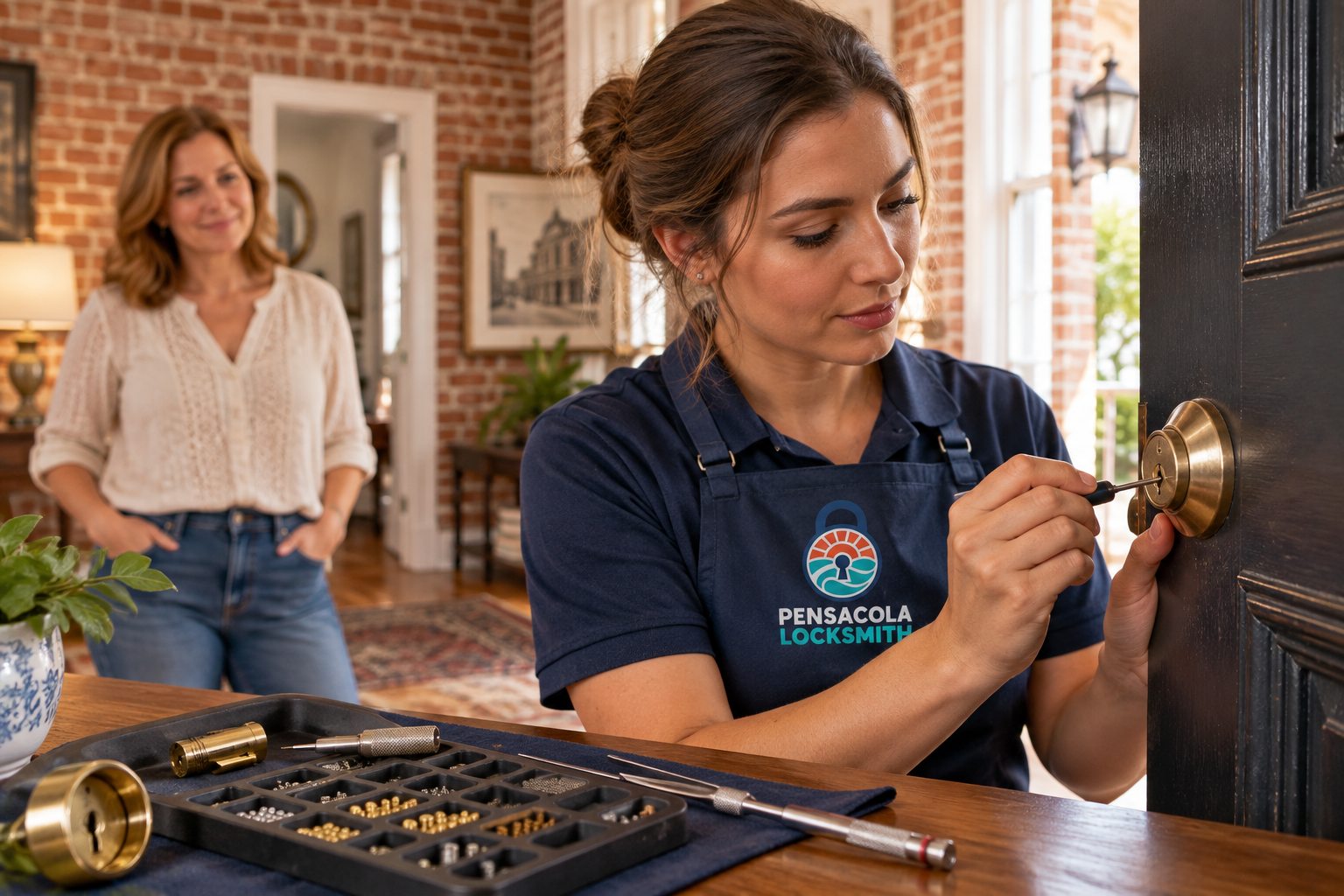
The strike plate is the small metal piece on the jamb that receives the latch and the deadbolt. Most builders attach it with short screws that only reach the thin jamb trim. When someone kicks the door, the force is concentrated on those screws, and the jamb splits. Replacing the screws with ones long enough to reach the wall framing behind the jamb is one of the best-value upgrades available.
A reinforced strike plate, sometimes called a box strike or a security strike, is longer and uses more screws. Some models wrap around the jamb edge to hold the wood together. When you install one, the screws should penetrate well into the stud, which usually means three inches or more. A technician checks the stud position and avoids splitting the wood while driving the screws.
Examine the jamb for cracks, rot and old repairs. In a humid climate, the bottom of the frame often takes on moisture from splashes and rain, and soft wood does not hold screws. If the wood is spongy, patching or replacing the section may be needed before any hardware will hold. Putting a lock in rotten wood gives you a false sense of safety.
Door jamb reinforcement kits exist that cover the jamb with a steel channel. They can be effective, and also bring a different look to the door. Whether to use one depends on your door, your taste and the condition of the frame. A good technician explains the tradeoffs rather than selling one answer for every home.
Hinges and the hinge side
Attackers do not always go for the latch side. The hinge side matters too, especially on doors that open outward, where the hinge pins are exposed. A door with exposed pins can have them tapped out and removed. To prevent that, a security stud or a non-removable pin keeps the door in place even if the pins are gone.
Check the hinge screws. Like the strike, they are often short, and they hold the door by gripping only the trim. Replace at least one screw in each hinge with a long screw that reaches the framing. This ties the door to the house structure and makes the hinge side far stronger. It is inexpensive work and can be done during a lock visit.
Look at the number of hinges. Standard doors have three, and a tall or heavy door might use four. Adding a hinge can help a door that sags, which in turn keeps the latch and deadbolt aligned. A door that sags will not close squarely, and a bolt that barely reaches its strike is much easier to defeat than one that seats fully.
Finally, pay attention to the gap around the door. A uniform gap that is narrow and even is both weather-tight and security-tight. A wide or uneven gap is a sign of wear or movement. Adjusting the hinges, shimming them lightly or replacing worn components restores the fit, and it often makes the door close more smoothly and quietly.
The deadbolt and latch
A deadbolt is a separate bolt that moves with the key or thumbturn, and it should extend at least an inch into the strike. A latch alone, the spring bolt that holds the door closed in the knob, is not a security device. If your front door relies on the knob lock alone, add a deadbolt. If it has one, check that the bolt actually reaches into the strike plate and moves freely.
Quality varies a lot. Look at the grade marking on the box when buying, and pay attention to features like a hardened steel insert in the bolt and a solid, thick cylinder. Cheap deadbolts have thin bolts and soft metal. A modest increase in quality at this one point is easy to justify, since the bolt is the part that holds the door shut against force.
Pick resistance also varies. Cylinders can be made to resist picking, bumping and drilling in different ways. Standard cylinders are fine for many homes, and upgraded ones suit people with special concerns. A technician can talk you through which options fit your situation without pushing a more elaborate lock than you need.
Think about key control as well. Some cylinders use restricted keys that cannot be copied at a general hardware kiosk, which helps if you want to know exactly how many keys exist. Others work with a keypad or smart lock in addition to a physical key. Whatever you choose, test the lock from outside and inside and make sure it throws smoothly and completely.
Lighting, landscaping and the view from the street
Hardware is only part of the picture. A front door that sits in deep shadow, behind overgrown shrubs and with no porch light, invites attention. Good lighting that turns on at dusk, or a motion light on the porch, makes anyone working at the door visible to neighbors and passersby. A visible door is a harder target than a hidden one.
Trim hedges and trees so that sight lines from the street and neighboring homes remain clear. Dense plants right at the door give cover. Coastal landscaping often leans toward thick tropical growth, which is lovely but worth keeping cut back near entrances. Gravel or noisy surfaces near windows and doors can also discourage anyone who prefers to move quietly.
Think about deliveries. Packages left on the porch announce that no one is home and can hold a person's attention. Use a locker, a neighbor or a delivery option that requires a signature if you are away for a while. Mail that piles up is another sign. Small routines support the physical security of the door.
Consider a peephole or a doorbell camera so that you can see who is there without opening up. Cameras can help, though they depend on your internet connection and power. A wide-angle viewer works without either. Choose whichever suits your household, and remember that seeing a visitor is useful, but opening the door is still your decision.
Storms, humidity and Gulf Coast conditions
Living near the coast changes how a door behaves. Salt air corrodes cheap hardware, so look for finishes made for marine climates and rinse exposed metal occasionally. Humidity swells wood and can make a door stick, leading people to leave it unlatched. A door that closes smoothly encourages everyone to lock it every time.
Hurricane season adds a different concern. A door that fails under wind pressure can let a storm into the house. Strong frames, long screws, and well fitted bolts help resist uplift and pressure. In some homes, additional storm-rated doors or shutters are used. Those are specialist decisions, and a locksmith can address the lock and strike side, while a door contractor handles impact products.
After a major storm, check the door again. Frames can shift, hinges can loosen and weatherstripping can tear. A door that was tight in June can be out of true by October. Test the bolt, look at the gaps, and look for moisture around the bottom of the frame. Early attention prevents bigger repairs and keeps the lock working as intended.
Do not forget keys and codes during storm prep. If you evacuate, you will want a reliable way back in, and you may leave a spare with someone you trust. Keep your house key accessible and consider writing down a keypad code somewhere safe. A little preparation before a storm saves a lot of stress on the way home.
Sequencing the upgrades
If you are not sure where to begin, a sensible order is this. First, install long screws in the strike and hinges, which is cheap and powerful. Second, check the deadbolt and replace it if it is loose or low grade. Third, add a reinforced strike plate and a door edge reinforcer. Fourth, address lighting and visibility. Fifth, consider cameras or smart features.
That order delivers the most improvement for the least cost and trouble. You can do the first two steps in an afternoon. The third step might call for a technician if the door needs trimming. By the time you reach the fifth, you will have a well built door and can decide whether electronic extras make sense for your household.
Keep records. A note of the date you made each change helps if you sell the home or hire help later. It also reminds you when to check and service things. Locks and frames wear slowly enough that you forget them, and an occasional look keeps them dependable.
Be careful about overbuilding one point while ignoring others. A thick deadbolt on a thin door is not impressive. A strong door in a weak frame is the same story. Aim for balanced strength across the system, and the whole door will resist better than any single flashy part.
Working with a locksmith on your front door
A locksmith can assess the door in person, check each part and tell you honestly which upgrades are worth the money. Call us to talk through what you have, and to confirm availability. Quotes are given by phone, and when a job is more complicated, a technician visits and the service call charge is explained before dispatch.
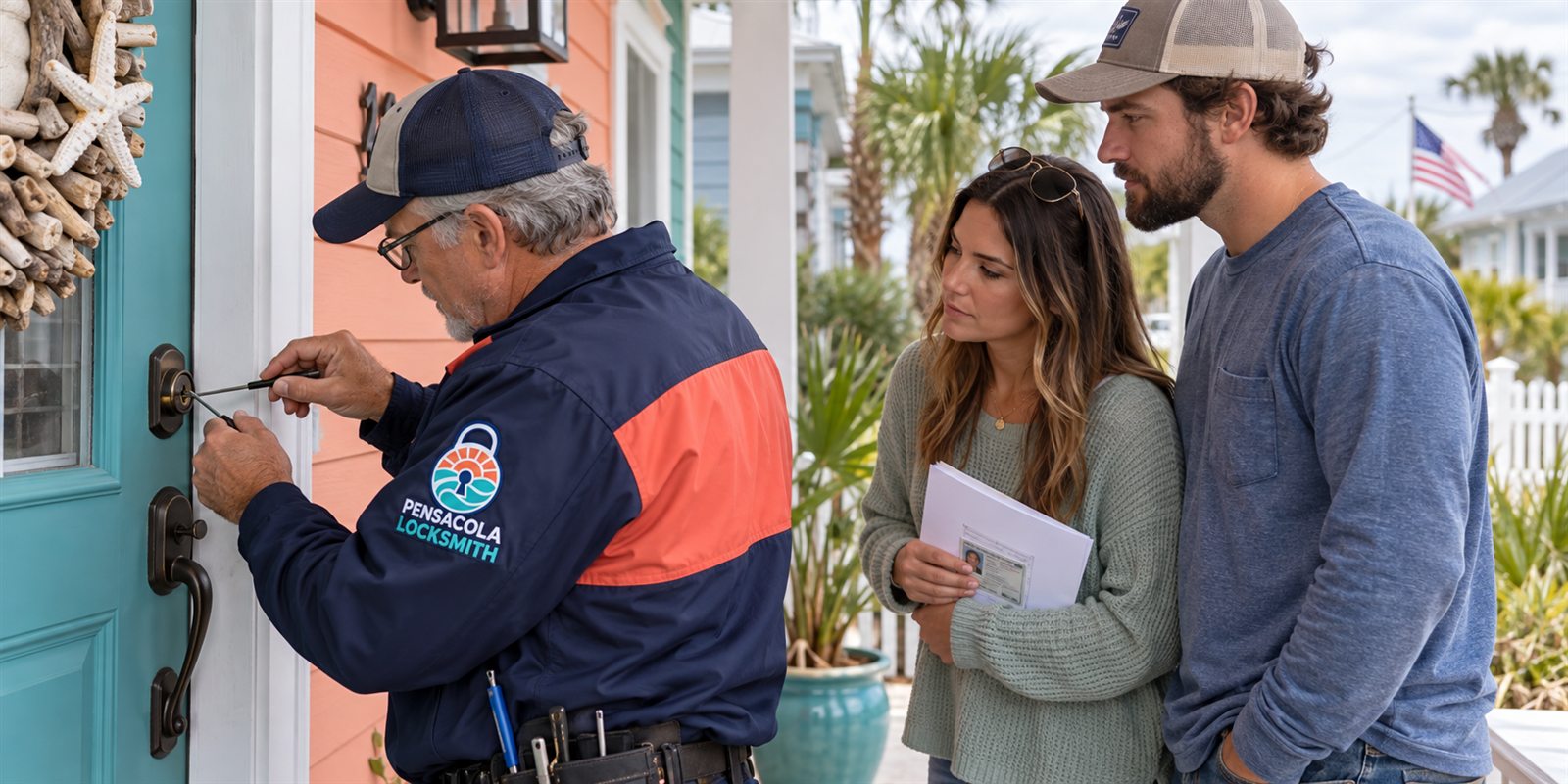
Before opening, rekeying or replacing hardware, the technician will check that you own the home or are authorized to make the change. This is a normal, protective step and not an inconvenience. Have a utility bill, ID or lease available so the process goes smoothly.
Describe what you see. Is the door wood, steel or fiberglass? Does it stick or rattle? How many keys exist and who holds them? The more you share, the more accurately the technician can plan parts and time. Photos of the lock, the strike and the frame are a big help.
Afterward, test everything with the technician present. Lock and unlock several times, check the bolt extension, and ask how to maintain the hardware. A short lesson in care, such as using dry lubricant and not forcing a sticking key, adds years of service to any installation.
Common questions
What is the most effective single upgrade for a front door?
Longer screws in the strike plate and hinges, long enough to reach the wall framing, are among the most effective. They tie the door to the structure so force is spread through the house frame. It is a small job that costs little and makes a visible difference in how the door holds up under pressure.
Do I need a deadbolt if my knob already locks?
Yes, a knob lock uses a spring latch that is meant to hold the door closed, not to resist force. A deadbolt adds a solid bolt that extends into the frame and cannot be pushed back. A technician can add one to a suitable door or replace an existing deadbolt that is loose or worn.
Is a smart lock safer than a regular deadbolt?
Not automatically. Safety depends on build quality, installation and how you manage codes or keys. A smart lock can reduce lost key worries but adds batteries and electronics. Choose a solid mechanical base with a good bolt, then decide if the convenience features suit your household. We can talk through the choices by phone.
My door sticks in summer. Does that affect security?
It can. Swollen wood or sagging hinges may stop the bolt from fully seating, and people sometimes leave a sticky door unlatched. Adjusting hinges, trimming the door or fixing the strike alignment restores a clean fit. Humid Gulf Coast weather makes this common, and a technician can correct it during a lock visit.
Will a locksmith check that I own the house?
Yes. Before opening, rekeying or changing hardware, we check ownership or authority, such as an ID with a matching address, a lease or a closing document. It protects you and your neighbors by keeping lock service from being used on a door the requester has no right to enter.