
Content note: this page was written by Claude (AI) for Pensacola Locksmith.
Signs that the battery is the problem
A fob battery rarely dies all at once. It fades, and the symptoms creep in. You may find that you have to stand closer to the car for the buttons to work. You may press unlock twice or three times before the doors respond. The small indicator light on the fob, if it has one, may look dim or flicker. In a push-button car, the dashboard may show a message about the key battery.
Another sign is inconsistency. The fob works perfectly in the morning and fails in the afternoon, or works near the car but not across a parking lot. Temperature affects weak batteries, and a battery that is nearly spent may behave worse in cold or hot weather. On the Gulf Coast, a fob left in a hot car can have its battery drained faster than you might expect.
If these patterns match your experience, the battery is the first thing to replace. It is the most likely cause, it is quick to test, and the fix is inexpensive in time and effort. Replacing a battery before assuming a deeper problem is sensible, provided you do it with care to avoid damaging the fob.
Signs the problem is not the battery
Some failures look like a weak battery but are not. If a new battery makes no difference at all, the fault is elsewhere. If the fob has been dropped, soaked or crushed, look for visible damage: a cracked case, a loose button, moisture or green and white powder inside, which is corrosion. Water damage is one of the most common causes of a fob that dies suddenly.
A fob whose buttons work, as shown by the indicator light, but whose command is not received by the car points to a different issue. The transmitter chip or antenna on the board may be damaged, or the fob may have lost its pairing with the car. Likewise, if one button fails and others work, the problem is likely a worn contact pad under that button.
A fob that unlocks the doors but will not start the car is a separate matter, usually involving the immobilizer chip or pairing. In that case, a new battery may still be worth trying, but expect the cause to lie deeper. If you suspect a damaged board, a technician can test the fob with the right equipment and tell you whether it is worth repairing.
Finding the right battery
Most fobs use a small round lithium coin cell. The type is usually printed on the battery itself, with a code that includes numbers like 2032, 2025 or 2016. The first two digits give the diameter and the last two the thickness. These sizes look similar but are not interchangeable, since a thinner cell may fit loosely and make poor contact, and a thicker one may not fit at all.
Open the fob and read the code on the old battery before buying a new one. Take a photo of the original in place so that you remember how it sits. Buy a good quality cell from a reliable source, because cheap or old batteries may have already lost some charge. A battery that has been sitting on a shelf for years is not the best choice for something you want to last.
Some fobs have a sealed rechargeable battery or a battery soldered to the board, and these are not user-replaceable in the same way. If you can find no way to open the case or no removable cell, do not force it. Look up your fob type or ask a locksmith. Some designs need the case to be split carefully, and a rushed attempt can damage it.
Opening the fob without damaging it
Many fobs have a small slot at the seam of the case. Look for it along the edge or near the key ring hole. Insert a thin, flat tool, such as a small flathead screwdriver wrapped with a bit of tape, or a plastic pry tool, and twist gently. The two halves should separate with a soft click. Work slowly around the seam rather than prying in one spot, which can crack the plastic.
Some fobs hide a screw under a sticker or inside the emergency key slot. If the case will not open easily, check for a screw before applying more force. A flip key may require removing the metal blade first, since the blade can cover the seam. Your owner's manual or a quick description to a locksmith can point you to the right method for your fob.
Work on a clean, flat surface, preferably with a light cloth underneath. Small parts such as rubber button pads, contact springs and the battery can scatter. Keep everything in order as you remove it. Avoid touching the circuit board with bare fingers more than necessary, as skin oils and static can affect electronics, and do not bend the board.
Swapping the battery step by step
Note which side of the battery faces up. The positive side, marked with a plus sign, is usually up, but not always, and a reversed battery will not work and could cause harm to the electronics. Lift the old battery out using a plastic tool or a fingernail rather than a metal screwdriver, which can bend the contacts or short the board.
Slide the new battery into place, making sure it sits flat and is held firmly by the contacts. Do not touch the flat faces more than necessary, because oil from fingers can reduce contact. Check that the contacts have not been bent out of shape. They should press gently against the battery. If they are loose, the fob will be intermittent.
Close the case, aligning the halves, and press until they click shut. Check that no gaps remain and that the rubber buttons are seated properly. Then test every button: lock, unlock, trunk, panic if it has one. Try it near the car and at a distance. If the fob works, you are done. If it does not, double check the battery orientation before assuming a deeper problem.
- Read the battery code before buying a replacement
- Photograph the old battery in place
- Use plastic tools to lift the old cell
- Test every button after closing the case
Will the fob forget its pairing?
A common worry is that changing the battery will erase the fob's connection to the car. For most vehicles it will not. The fob stores its identity in memory that survives a short battery change, and the car's recognition of the fob is held in the car's own computer. So, in the majority of cases, you swap the battery and the fob simply works again.
There are exceptions. On some fobs, if the battery is out for too long or the contacts get disturbed, the fob may need to be resynchronized. The procedure is typically a short sequence of door and button actions, or a start with the fob in the backup spot. Your owner's manual will describe it if your car needs it.
If the fob works for locking and unlocking but the car will not start after a battery change, give it a moment and try the backup spot. If it still fails, the problem may be pairing rather than power. A locksmith with programming equipment can often resolve this on site after confirming ownership of the vehicle.

Dealing with corrosion and moisture
If you open the fob and see white or green powder, or the battery looks leaky or discolored, moisture has been at work. Humid coastal conditions make this more common. Do not just fit a new battery and close the case. Corrosion can spread and continue to damage the contacts and the board, and the new battery will drain faster or fail to connect.
A gentle cleaning can help. Remove the battery, then use a cotton swab lightly dampened with isopropyl alcohol to wipe the contacts and any affected board areas. Let everything dry completely before reassembly. Avoid water, and avoid scrubbing hard, which can scrape away thin traces on the board. Do not use abrasive tools on the circuit.
If the corrosion is extensive, or the fob has been immersed, repair may not be possible. Rinsing a soaked fob and drying it in rice is a popular idea, but proper drying and cleaning matter far more than any kitchen trick. If the fob does not recover, a replacement fob will have to be obtained and programmed. We can discuss options once we know what you have.
The emergency key and backup start
Nearly every fob has a way to get you into and moving even when the battery is dead. Most hide a small metal key inside the case, released by a slide or button. This key opens the driver door lock, sometimes concealed behind a cap on the handle. Knowing how to release it matters, since many people never discover it until they need it.
For starting, push-button cars usually have a spot where you can hold a dead fob so the car can read it. It may be a marked area in the console, a slot, or beside the steering column. Press the brake and push the start button while holding the fob there. This works because the car reads the chip at very close range without needing battery power.
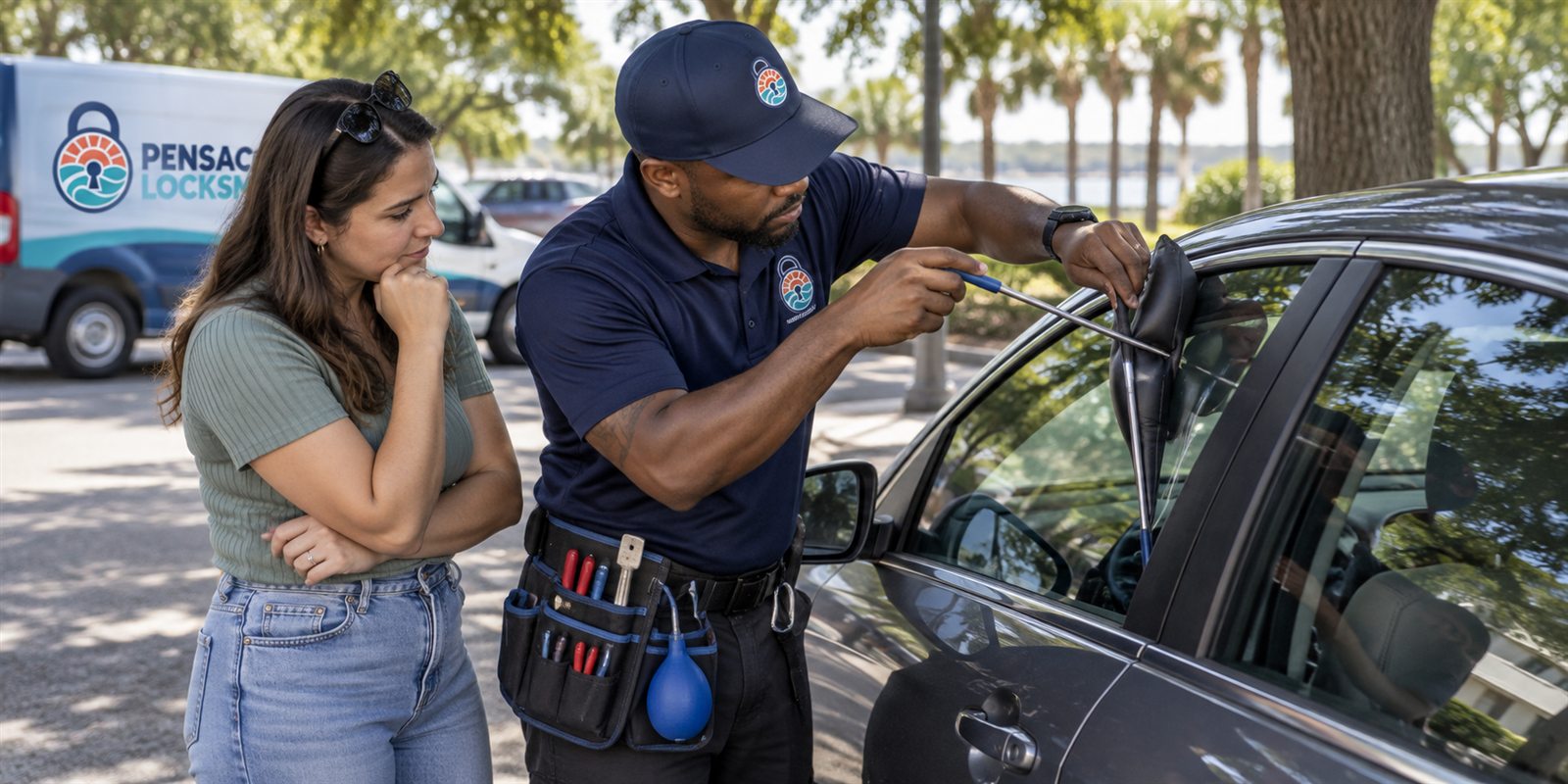
Practice both while nothing is wrong. Find the hidden key, try it in the door, and find the start spot. If you know them in advance, a dead fob is a small nuisance rather than a stranding. If you cannot find them, check your manual, or call us and describe your vehicle. Opening a vehicle always involves confirming ownership first.
When to hand it to a locksmith
If you are uncomfortable opening the fob, or if the case is sealed, a locksmith can do the replacement without damaging it. A technician also has the right tools for fobs with hidden screws or tight seams, and can test the fob afterward. This is a sensible choice for expensive or unusual fobs that you would hate to break.
If a new battery does not fix the problem, a technician can test whether the fob is transmitting, whether the buttons respond, and whether the car receives the signal. They can tell you whether the board is damaged, whether the fob needs reprogramming, or whether a replacement is the sensible route. A diagnosis saves you from buying parts that will not help.
When you call, tell us the make and general age of the vehicle, the style of fob, and exactly what it does and does not do. Quotes for straightforward work are given by phone. If it is a complicated problem, a technician visits and the service call charge is explained before dispatch. Ownership of the vehicle is confirmed before we program or replace anything. Call us to confirm availability.
Replacement and spare fobs
If a fob is damaged beyond repair, a replacement must be sourced and programmed. The new fob must match the frequency and type your car uses, and it has to be introduced to the car. Used fobs from unknown sources are risky, since some are locked to another vehicle and cannot be reused. A new or properly reset fob is a safer choice.
A spare fob is worth having made before the last one fails. Programming an additional key when you still have a working one is generally a more straightforward process than recovering from a total loss. It also gives you a backup stored somewhere safe, which can save a day of stress. Test the spare every few months and replace its battery along with the main one.
Remember that programming a fob gives access to a vehicle, so we check ownership: registration or title and a photo ID. This is the same step that protects your car from being accessed by someone else. If you cannot show these documents right away, tell us on the phone and we will explain what is possible.
Making a fob battery last
A fob battery lasts longer if the fob is treated well. Do not leave it in direct sun or a hot car, because heat shortens battery life. Do not keep it next to a phone or other electronics for long periods, which can cause the fob to wake up and transmit unnecessarily. Avoid pressing buttons needlessly, as each press draws a small amount of power.
In a push-button car, a fob that is kept close to the car overnight, for example in a hallway near a garage, may keep communicating with the car and drain its battery. Some owners store the fob a little farther away or in a signal-blocking pouch to avoid this. Your manual may include advice on conserving the battery.
Replace the battery on a schedule rather than waiting for failure. Once a year or when the range begins to shrink is a reasonable rule. Write the date on a note or in your phone. A planned swap takes a few minutes. A failed fob in a parking lot, in the rain or after a long day, is much more stressful.
Common questions
How do I know if my fob battery is dead?
Common signs include reduced range, needing multiple presses, a dim indicator light, and a dashboard message about the key battery. If the fob has become inconsistent lately, the battery is the most likely cause and the first thing to replace.
Will the fob need reprogramming after a battery change?
Usually not. The fob keeps its identity and the car keeps its record of the fob. In some cases a short resynchronization is needed, which your manual describes. If the fob still fails, a locksmith can check pairing after confirming ownership.
What if a new battery does not help?
The fob may have a damaged board, corroded contacts, a worn button pad or lost pairing. A technician can test the fob and tell you whether repair, reprogramming or replacement is the sensible choice.
Can I get into the car if the fob is dead?
Most fobs hide a small metal key that opens the driver door. Many push-button cars also have a backup spot where you hold the fob to start the car. Learn both before you need them, and check your owner's manual.
Do you replace fob batteries?
We can help, especially with fobs that are sealed or hard to open. Call us with the vehicle and fob style. Quotes for simple work are given by phone, and complicated jobs begin with a visit and a service call charge explained before dispatch.