
Content note: this page was written by Claude (AI) for Pensacola Locksmith.
Taking stock before touching anything
Careful work in a preservation setting begins with an inventory. Before a technician changes a single screw, it helps to walk the house and list every lock, latch, bolt and hinge: front door, rear door, porch doors, interior doors, closets, and even window sash fasteners. Photographs of each, taken straight on and from the side, create a record that is useful now and years from now.
The inventory also reveals patterns. A house may have originals on the main floor, replacements added in a mid-century update and a few modern deadbolts bolted on in a hurry by a previous owner. Knowing which is which helps you decide where to preserve, where to repair and where a modern part is perfectly acceptable. Not everything old is worth protecting at any cost, and not everything new is an insult to the house.
Sit with the technician and mark each item as keep, repair, replace or undecided. This simple exercise stops decisions from being made on the fly, and it gives you a plan you can follow over time. You do not need to complete everything at once. Many owners work through the list over months, tackling the most urgent doors first and leaving the rest until budget and time allow.
If you are working with a contractor, painter or restoration carpenter, share the inventory with them too. Painters in particular can bury a latch or fill a keyhole without meaning to. A short conversation before the work starts, with a note on what must be masked or removed and what must not be touched, avoids a lot of trouble. We are happy to coordinate with trades where you ask us to, as long as you remain the one making decisions.
Rim locks, box locks and other surface hardware
Not every old lock is a mortise lock. Many historic houses also use rim locks, the boxy cases screwed to the inside face of a door, and box locks that combine a latch and a bolt in one visible unit. These are fairly simple mechanically, which makes them repairable, but their screws, springs and keepers wear over time and loosen with repeated use and seasonal swelling.
A common problem is a rim lock that has pulled away from the door because its screws no longer bite into tired wood. The fix might involve plugging the old holes with hardwood dowels and driving new screws, a method that is invisible once done and keeps the original lock in place. Another frequent issue is a weak spring that fails to push the latch out. Replacing the spring is cheap and gentle.
Keepers and strikes deserve equal attention. A bolt might be perfectly fine, but the keeper on the frame has worn, splintered or shifted. Reinforcing the wood around it, then setting a sound keeper in the right place, restores the lock's grip. Sometimes the best security upgrade for a historic door is not new hardware at all, but a solid anchor for what is already there.
Sometimes a lock cannot be repaired and a replacement is the honest answer. In that case, the best approach is to find a part that matches the original in size, mounting pattern and appearance, so existing holes and mortises are reused. A technician can often source reproduction hardware or salvage a matching piece. Keep the failed original, labeled, because a future owner may want it for reference or restoration.

Cleaning and caring for original finishes
Original hardware often carries a finish that has aged beautifully, such as the soft glow of old brass or the darker patina of bronze. Aggressive polishing can strip that depth and leave a harsh, shiny surface that looks out of place. Before cleaning, a technician considers whether you want the metal bright or whether the aged look is part of the charm.
For light cleaning, a soft cloth and mild soap are usually enough. Avoid abrasive pads and harsh chemicals, which can scratch or etch the surface. If lacquer has flaked, it may be best to leave the surface as it is or to have a professional metalworker redo the finish. A locksmith can advise on what the hardware is likely made of, and where it is wise to stop and call a specialist.
Moisture and salt in the Gulf Coast air do not spare brass and bronze. Plan on periodic wiping, especially for exterior hardware near porches. A thin coat of wax applied sparingly can protect metal, though it needs reapplying. We will tell you honestly what we think will last and what will need regular attention, so you can decide how much maintenance fits the way you like to care for your home.
For interior doors with porcelain, glass or wooden knobs, handle them gently. Those materials are brittle and the spindle behind them is often the actual problem. A loose knob usually has a set screw that has backed off, or a spindle that has worn. Tightening the screw or replacing the spindle returns the feel without touching the knob itself. Small, patient repairs like these are what keep a historic house feeling original.
Hinges, pins and the structure that carries the lock
A door is only as good as what holds it, and hinges are often the unsung problem in older homes. Hinge leaves wear where the pin rotates, screws strip out of old wood, and the top hinge carries much of the weight and loosens first. A drooping door pulls the latch away from the strike, and owners blame the lock when the hinge is at fault.
Restoring hinges can be simple. Replacing small screws with longer ones, packing stripped holes with wooden dowels and glue, or adding a thin shim behind a leaf can bring a door back to square. If the hinge pin is worn, the pin can be replaced or the hinge reseated. Original hinges are worth keeping where possible, since matching them later may be difficult.
Where a door is heavy, such as a solid front door with a leaded glass panel, the hinge load is considerable. A technician may recommend adding a third hinge or switching to ball-bearing hinges in a matching finish, a change that is subtle yet helpful. Always check the frame as well, because a hinge screwed into soft, rotted wood will not hold no matter how good the hinge is.
There is a tradeoff between authenticity and function that every owner of an older house must weigh. A door can be restored to work as it did a century ago, with all its quirks, or adjusted so it behaves like a modern one. Neither is wrong. Tell the technician which you prefer, and be willing to hear when a feature, such as a loose-fitting latch, is part of the charm and when it is simply a flaw.
Security in a house that must stay original-looking
Owners in a preservation district often want better security without a visible change. There are practical ways to achieve that. A modern deadbolt can be installed on the interior-facing part of the door or in a position that keeps the original hardware untouched. Strike plates can be upgraded and hidden behind trim. Windows can receive discreet locks that are hard to see from outside.
Consider the whole picture. A strong lock does not help if a nearby window is easy to open or a side door has a weak frame. A walk around the exterior with the technician, noting each way in, tends to highlight a few obvious gaps. Fixing those is often more valuable than adding a showy lock to the front door that was never the weakest link.
Keep in mind that some changes might be subject to review in a district like this. We are not in a position to advise on local rules, and owners should check with the appropriate office before altering visible features. What we can do is keep work minimal, reversible and well documented. For example, filling old holes with matching wood rather than leaving gaps, so the door can be returned to its earlier appearance.
Lighting and visibility are inexpensive security tools that suit a historic setting well. Motion-sensitive fixtures in a style that fits the house, trimmed shrubs near windows and clear sightlines from the street all discourage unwanted attention. They do not interfere with original materials, and they work alongside good locks. A locksmith is not the only professional who can help here, and we will say so honestly where another trade is better placed.
Rekeying and key management for an inherited or purchased home
Many North Hill homes change hands through sale, inheritance or family transfer, and every transition raises the same question: who else has keys? Contractors involved in renovations, previous tenants and relatives may all have copies. A rekey changes the working key without disturbing the visible hardware, so it suits a house where the look is a priority.
For original locks with their own cylinders, rekeying is often possible where the cylinder can be removed and re-pinned. If the cylinder is a very old type, the technician may suggest a compatible replacement cylinder in a similar finish. The bodies stay in the doors, the knobs stay on, and only the part that governs the key changes. Most of the time you will not notice the difference by sight.
As with every home, the technician checks ownership or authority first. A deed, closing statement, estate paperwork or a lease with written permission from the owner will do. This is not bureaucracy for its own sake. A house of this age is valuable to many people, and a locksmith who changed its keys for the wrong person would do real harm. A little paperwork protects everybody.
If you have recently completed a renovation, ask the contractor for a list of who held keys, lockbox codes or alarm codes during the project. Then rekey and change codes after completion. Renovation periods involve many people entering and leaving, and the house is often left unlocked for convenience. Resetting access once the work is over is a quiet, sensible step that puts you back in control of your own front door.
Lockouts and stuck doors without damage
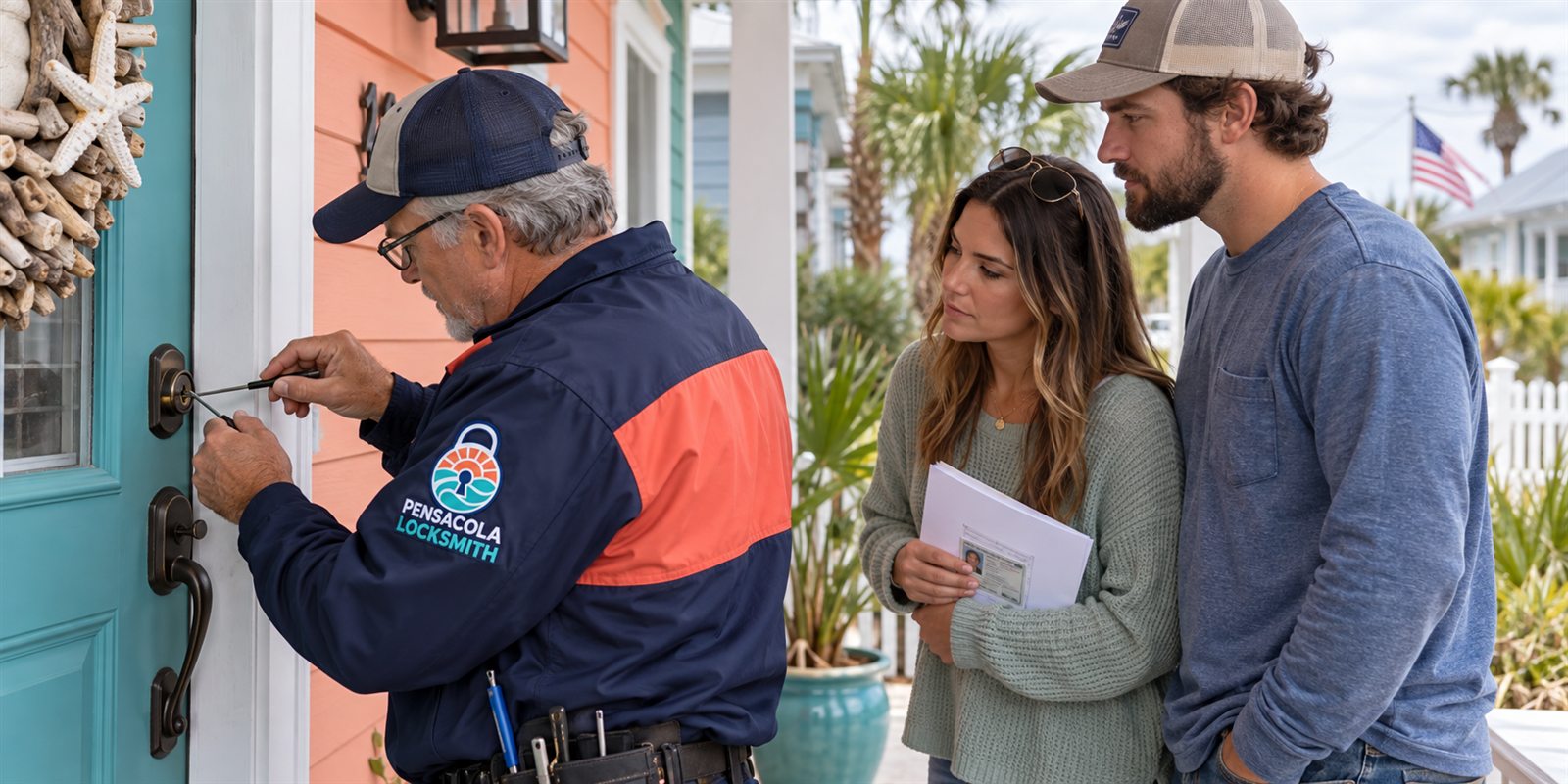
When someone is locked out of a historic home, the instinct is to force the door. Please resist it. Original doors may be solid and beautiful, but their frames and old paint can crack, and replacement parts are hard to match. A technician will try to open the lock without harming the wood or the hardware, and will explain any risks before moving to more intrusive methods.
Tell us what you see on the door: the style of knob, any separate key cylinder, a rim lock on the inside, a sliding bolt. Photographs help if you can share them. We also need to confirm that you are entitled to enter, so keep identification ready. If the house is vacant and you are the owner or an authorized agent, bring documentation showing that relationship.
We cannot promise arrival times, as they depend on conditions and demand. Please call to confirm availability for your area. In the meantime, check whether there is any safe, legitimate way in, such as a porch door you may have left unlocked, without climbing or forcing anything. A calm, careful approach protects both you and a house that is irreplaceable to its owners.
Windows deserve a note even though they are not doors. Original sash locks, or catches, often work poorly after decades of paint and shifting. A technician can loosen, tighten or replace them with matching pieces, and add a pin or a secondary stop that is almost invisible. Ground-floor windows and those over porch roofs are the usual priorities. Fire safety still matters, so any window used as an exit must be easy to open from inside.
Porches, vestibules and the doors people overlook
Historic homes frequently have more doors than modern ones: screen doors, vestibule doors, porch entries, pantry doors, cellar hatches and doors to servant stairs or attics. Each has its own hardware, and each may carry a history of repairs. Screen door hooks and latches, though humble, are part of the character and often need only tightening.
Porch doors are the first line of defense, but they are exposed to weather. Wood swells and paint seals the edges, and metal rusts. A technician can service these doors by cleaning latches, tightening screws and adding discreet weatherstripping so the door shuts firmly. If the porch door is the only barrier to a glassed entry, ensure it can be locked securely without making the porch impractical.
Do not forget the less visible spaces. A cellar door or an attic hatch is sometimes secured by nothing more than a hook. Adding a simple bolt or lock, in a style that fits, closes an unnoticed path. When planning, think about fire safety as well: a lock should never trap people inside, and a technician will make sure any change still lets someone leave quickly.
One more practical tip: keep a folder, paper or digital, for the house. Include the inventory, photographs, notes on any repairs, receipts and the contact details of the people who did the work. When something changes, you have a history to consult. When you sell, it becomes a valuable gift to the next owner, who will appreciate knowing how the locks were cared for and what to expect from them.
How a visit works and how to prepare
Start with a call. Describe the house, the doors, the problem and your priorities, particularly how much of the original hardware you want to keep. We will give you a quote by phone based on that description. If the work is complicated or the hardware unusual, a technician visits to assess it first, and the service call charge is explained before dispatch.
Before the visit, clear access to the doors, remove any cover plates you can safely remove, and gather any keys, even broken ones. Move pets to a safe room, since old doors may be left open during work. If you have notes or photographs from earlier repairs, show them. The more the technician knows about the house, the fewer surprises there are on the day.
After the work, test each door a number of times, in dry and damp weather if you can. Keep removed parts together and labeled, and store them in a safe place with your house records. Ask the technician for care instructions specific to your hardware. Over time, this tidy approach gives you a clear record of your home's locks and what has been done to them.
Common questions
Can original hardware stay on my door and still be secure?
Often yes. Reinforcing the frame, anchoring the strike with long screws and adding a modern deadbolt in a discreet position can improve security without removing original pieces. The technician will explain the tradeoffs for each door so you can choose how much to change.
How do you repair a loose rim lock?
Usually by plugging stripped screw holes with hardwood dowels and glue, then driving new screws, which keeps the original lock in place and is invisible afterward. A weak spring or worn keeper can also be replaced without replacing the whole lock.
Should I polish old brass hardware?
Gently, if at all. Aggressive polishing strips the aged look and can scratch the surface. A soft cloth and mild soap is usually enough. For flaking lacquer or damaged finishes, a specialist metalworker may be a better choice, and we will tell you if we think so.
Do you check ownership before rekeying a historic home?
Yes. We ask for proof that you own the property or act for the owner, such as a deed, closing statement, estate paperwork or a lease with owner permission. We apply this check to every home, and it protects occupants and owners alike.
How are quotes given?
By phone, based on your description of the doors and the problem. If the work is complicated, a technician visits to assess it, and the service call charge is explained before dispatch. Please call to confirm availability for your area.