
Content note: this page was written by Claude (AI) for Pensacola Locksmith.
Why keys snap in the first place
A key is a thin piece of soft metal asked to do a surprising amount of work. Every time you turn it, it pushes against a stack of small spring-loaded pins and then rotates a plug against whatever resistance the lock and the door put in the way. Over thousands of turns, the metal fatigues, much like a paper clip bent back and forth until it parts.
Most breaks happen at the weakest spot, which is usually where the blade meets the shoulder or at a deep cut in the middle of the blade. A key that has been copied many times, or copied from a worn copy, often has a slightly wrong shape, so it takes more force to turn. That extra force is what finally snaps it.
The lock itself is often the real culprit. A lock that is dirty, dry, corroded or misaligned with its strike resists the key every time. People notice the key getting stiff and keep forcing it for weeks. Then one morning the blade gives up. The break is the visible symptom of a problem that was growing quietly.
What to do in the first minute
Stop turning. This sounds obvious, but the instinct after a snap is to try again, jiggle what is left, or push the remaining piece deeper to see if it will catch. Every one of those moves risks driving the fragment farther into the lock or bending the pins that were holding it, and both make removal harder.
Look at what you have. If part of the key is still sticking out of the lock, there may be enough to grip with a pair of fine pliers. If nothing sticks out, the fragment is sitting deeper inside the plug and needs a thin extractor tool. Either way, avoid pulling hard on a piece that is barely visible, since a slipped grip can push it further in.
Keep the broken pieces. The part in your hand tells the technician what kind of key it was, how it was cut, and how much of it is still in the lock. If you can safely do so, place both pieces in a pocket or small bag. Do not try to glue them back together. Adhesive can run into the keyway and turn a removal job into a lock replacement.
Things people try that make it worse
Superglue on the broken end, a hammer tap to seat the key, and a screwdriver forced into the keyway are the three most common mistakes. Glue can bond the fragment to the lock for good. A hammer can bend the pins and jam the plug. A screwdriver scratches the keyway and often leaves metal chips behind that cause further trouble.
Lubricant is another trap. A quick spray of heavy oil may seem helpful, but it can attract dust and grit and turn into a sticky paste over time, especially in a humid coastal environment. A dry graphite or a lock-specific lubricant used sparingly is safer, and many technicians prefer to clean the lock first and lubricate only after the work is finished.
Finally, resist the urge to take the lock apart yourself unless you know exactly how that model is built. Knobs and deadbolts have springs, small retaining clips and tiny pins that fly across a driveway when released. Putting them back in the right order without the proper tools is difficult, and a half-assembled lock is a security problem as well as a nuisance.
- Do not glue the key back together
- Do not hammer the key or the lock
- Do not push a screwdriver into the keyway
- Do not flood the lock with heavy oil
How a technician removes a fragment
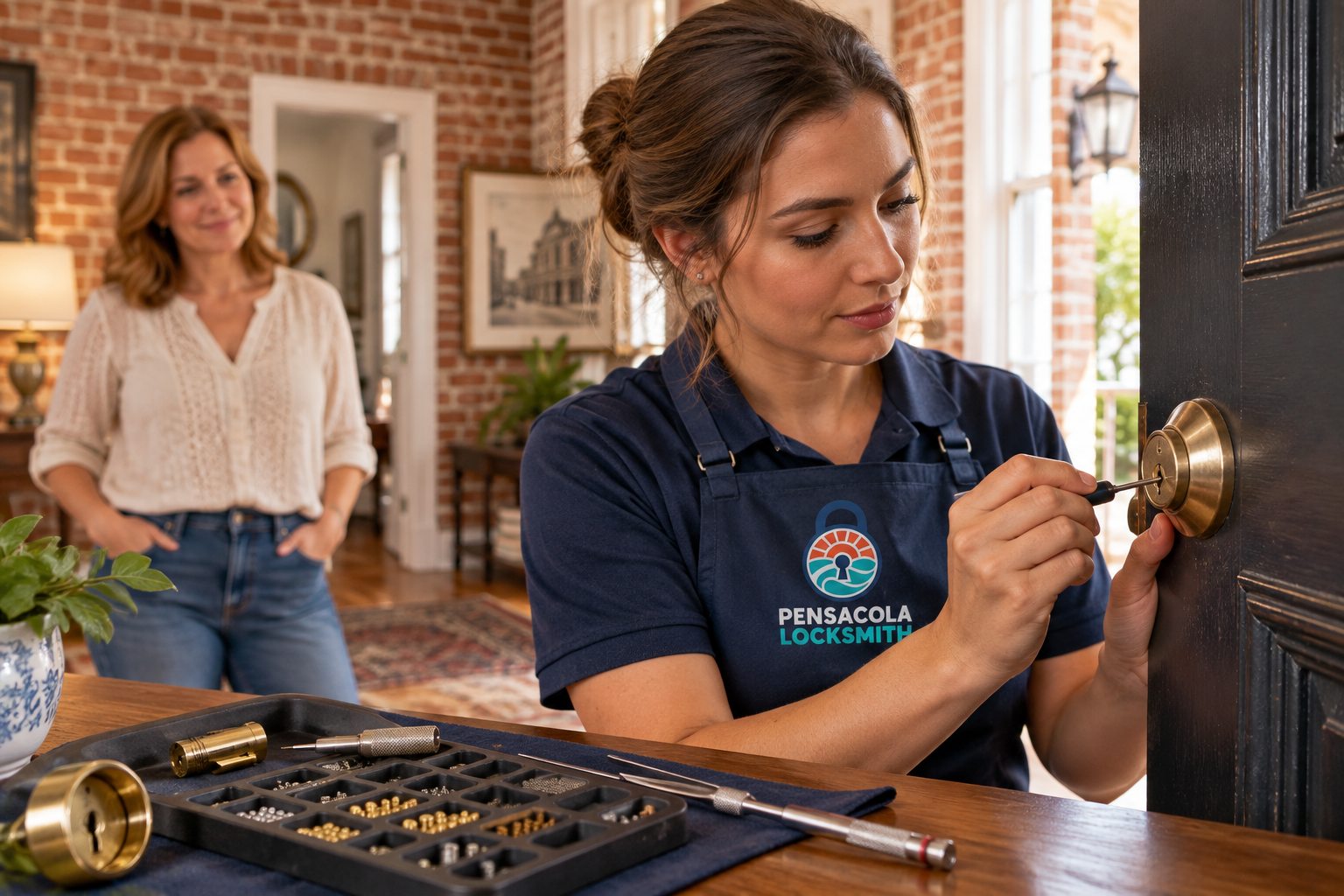
The tools are small and specific. An extractor is a thin, flat piece of spring steel, often with a tiny hook or barbed edge, that slides into the keyway alongside the fragment. The technician slides it in, hooks the cut edge of the broken blade, and pulls straight out while keeping tension in the right direction so the pieces do not bind.
If the fragment is sticking out only a little, a pair of fine needle-nose pliers or a small gripper may be enough. If it is flush with the face of the lock, the technician may use a thin wire tool to catch a notch in the blade. Good lighting and patience matter, since the keyway is narrow and the fragment can be crooked.
When the piece is wedged tight, the technician may need to relieve pressure by gently turning the plug a few degrees with a pick-style tool so the pins release their grip. Once the pins are lifted, the fragment slides out more freely. This is the part that is difficult to do without practice, because too much force at the wrong moment can bend a pin.
When the lock has to come apart
Sometimes the fragment will not come out through the front. It may be too deep, bent, or jammed behind a damaged pin. In that case the technician removes the lock cylinder from the door, which exposes the back of the plug. The cylinder can then be opened on the bench, and the fragment can be pushed or lifted out from the rear.
A bench is a better place for this kind of work. The parts lay on a clean surface, the pins and springs can be inspected one at a time, and nothing falls into the door. On a residential deadbolt, removing the cylinder usually means taking off the interior thumb turn assembly and a retaining screw or clip. The work is routine, but it needs the right order.
Once the fragment is out, the technician examines the pins for wear or bends, cleans the chambers, and tests the lock with a fresh key. If the pins are damaged, they can often be replaced. If the cylinder as a whole is worn or scarred, the sensible option may be a new cylinder rather than repeated repairs. The technician explains which path makes sense and why.
Broken keys in different kinds of locks
Not all locks behave alike. A standard pin tumbler deadbolt on a front door has a straight keyway and usually releases a fragment without much trouble. A knob lock is similar but sits in a smaller body, so there is less room to work. A mortise lock, common in older buildings, has a different cylinder style and may need to be treated differently.
Padlocks and lockboxes are a special case. The shackle may be closed, so access is limited, and the plug may be small. A broken key in a padlock can often be extracted the same way, but if the lock is rusted, the work becomes about the lock's overall condition rather than just the key. Salt air does a lot of damage to outdoor padlocks.
Vehicle locks can also hold broken keys, particularly in older cars where the blade is thin and the lock has worn. Door, trunk and ignition cylinders are different from home locks, and ignition cylinders also connect to the steering column. A broken key in an ignition is usually best handled by a locksmith who works on vehicles, with care for the electronics around it.
How salt air and humidity set the stage
Pensacola's climate quietly shortens the life of many locks. Warm, humid air lets moisture settle inside the cylinder, and salt carried on the breeze adds a corrosive edge. Brass tends to hold up reasonably, but the springs and steel components inside can rust, and the pins can start to stick in their chambers.
A lock that sticks is a lock that tempts people to force the key. That is the pattern behind many snapped keys near the coast: a gradual stiffening that no one addresses until a sudden crack. Front doors exposed to weather, gate locks, shed padlocks and boat storage locks are the most common places to see it.
A simple habit helps. If you notice a lock that feels rough or gritty, deal with it before it breaks a key. A cleaning and light dry lubricant service takes far less time than extraction. Replacing a key that has begun to bend or crack, instead of using it until it fails, is another small step that avoids a lot of trouble.
What happens after the fragment is out
Getting the fragment out is only half the job. The lock still needs to be tested, because a stuck piece of metal may have scratched the plug or shifted a pin. The technician inserts a fresh key, turns it several times, and listens and feels for any catch or resistance. A lock that has been through this should turn smoothly, not just turn.
You will also need a new key, because the broken one is gone or too short to use. If the lock is otherwise healthy, a new key can be cut to match the code of the lock, or copied from the larger half of the broken key if it is intact. A key made from a broken half is only as accurate as that half allows.
If the original key was a worn copy, now is a good time to start fresh. A new key cut cleanly from the lock's own information is more accurate than a copy of a copy. Ask the technician to make two, so you have a spare. A second key stored in a safe place makes the next stuck lock much less dramatic.
Ownership and access during the visit
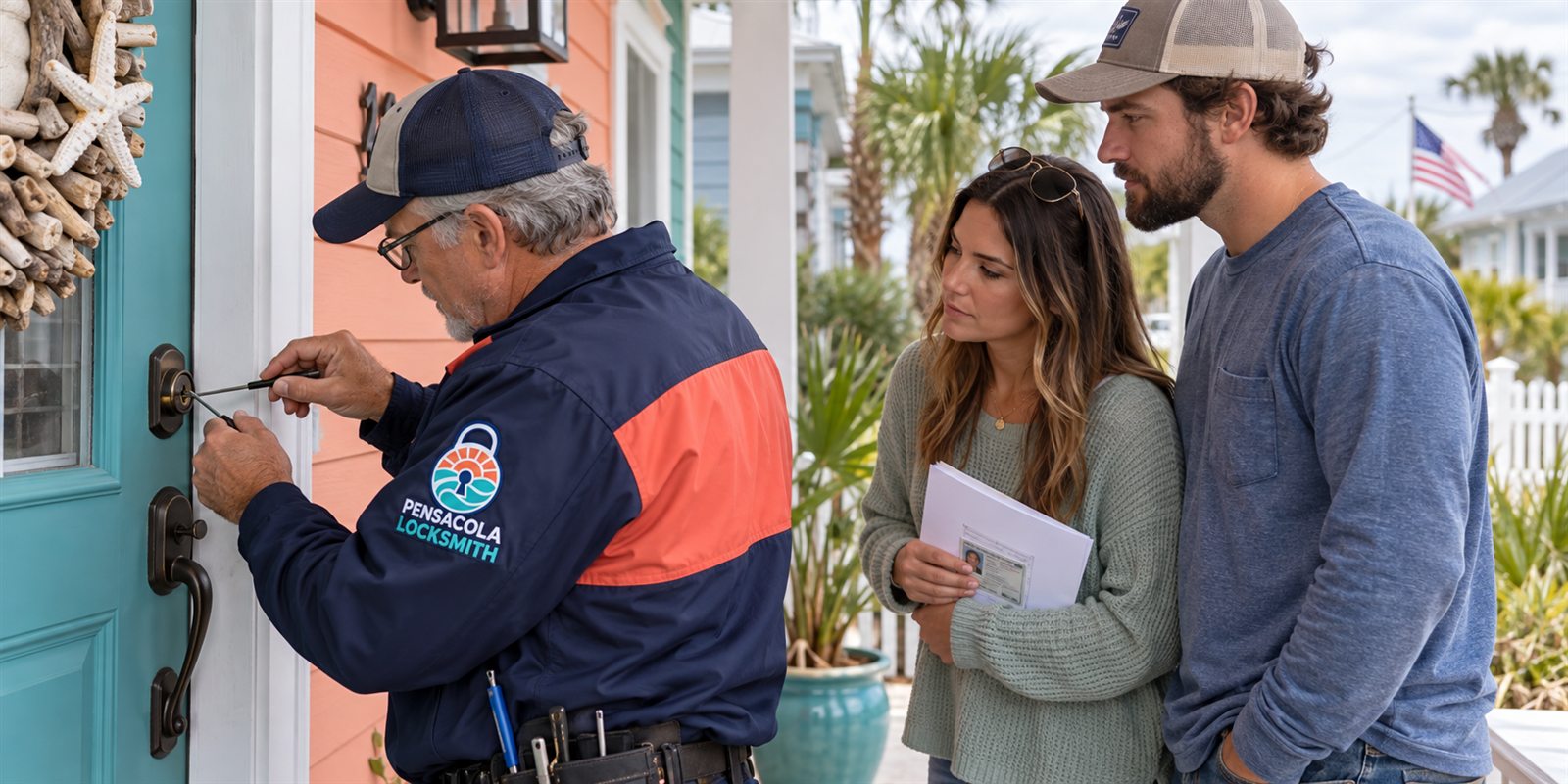
Before we remove a cylinder or cut a new key, the locksmith checks that you own the property or have authority over it. That might mean a lease, a utility bill, a vehicle registration, or the word of the owner for a rental. It sounds formal, but it is how a trustworthy locksmith avoids helping the wrong person get into the wrong door.
If you are a tenant, the situation can be more complicated, since the lock belongs to the property owner. Tell us who owns the property, and we may need to contact them or the property manager before changing anything. For a simple extraction without changing the lock, your authority as the occupant is often enough, but we will explain what we need.
For a business, an employee with authority can usually authorize the work. Let us know who holds that authority when you call. And if the lock is part of a master key system, tell us. Replacing a cylinder in such a system can affect other keys, and the work has to be done in a way that does not break the rest of the system.
Preventing the next broken key
Treat a stiff lock as a warning light. If the key needs force, if you have to lift the door or lean on it to get the bolt to move, or if the key feels gritty, something needs attention. The door may have shifted, the strike may be misaligned, or the lock may need cleaning. Fixing the cause costs less than repeated key replacements.
Check your keys the same way. Look for hairline cracks near the shoulder, bends along the blade, and edges that look rounded or smoothed compared with a new key. A key that looks worn is a key that is close to the end of its life. Replace it while it still works, using a clean original or the lock's own code if possible.
Avoid hanging heavy key rings from a key while it sits in the lock. The weight puts constant side pressure on the blade and the pins, which speeds wear. Keep the rarely used keys on a separate ring, and keep the one you use daily light. Small habits like these add years to a lock and to the keys that run it.
Staying secure while the lock is out of action
A broken key often leaves you with a door that will not lock, or one that will not open. If the door is locked and the fragment is stuck, you may be shut out of your own home. If it is unlocked and the lock is jammed, the home is open to anyone who walks by. Either way, think about security while you wait for the technician.
If you are inside and the door cannot be locked from the outside, consider whether another door can be secured, or whether a household member can stay until the work is done. Never leave a vehicle or a business unattended with a jammed lock if you can avoid it. Ask a neighbor or colleague to keep an eye on things.
During storm season, a stuck lock is more than an inconvenience. If you are preparing to leave ahead of a hurricane, a door that will not lock properly is a real worry. Call as early as you can, so the lock can be repaired or replaced before you go. Planning ahead gives the technician time to do the job carefully rather than in a rush.
Common questions
Can a broken key always be removed without replacing the lock?
Often yes. Most fragments come out with an extractor tool, and the lock can be tested and used again. If the fragment is deep, bent, or the pins are damaged, the technician may remove the cylinder and work on it at the bench. If the cylinder itself is worn or scarred, replacing it may be the sensible choice. The technician explains the options before work continues.
Should I try to pull the broken piece out myself?
If a good portion sticks out, gentle gripping with fine pliers may work. If it is flush or barely visible, stop. Pushing or prying often drives it deeper or bends pins. Never use glue. Keep the broken pieces and call us, so the technician can see what kind of key it was and plan the right tools.
Can you make a new key from the broken one?
In many cases yes. If the larger piece includes the full cut pattern, it can serve as a pattern. If the key is badly worn, the technician may prefer to cut a new key by the lock's own code or measurements, which gives a cleaner result. Ask for a spare while the technician is already there.
Do I have to prove I own the property?
We check ownership or authority before working on a lock, which protects you and others. A lease, bill, registration or the owner's confirmation can serve as proof. If you rent, tell us who the owner is. If you work for a business, tell us who has authority to approve the work.
How do I get a quote and confirm availability?
Call us and describe the lock, the door and what happened. Quotes are given by phone. If the job turns out to be complicated, a technician visits and the service call charge is explained before dispatch. Please call to confirm availability for the time you need.