
Content note: this page was written by Claude (AI) for Pensacola Locksmith.
Why a move-in lock change matters
A house changes hands with a long invisible trail of keys behind it. The seller had copies, and so did whoever lived there before. Real estate agents often use lockboxes, but they may also have cut keys for showings. Cleaners, lawn crews, painters, a neighbor who watered plants, a relative who helped during an illness: any of them could still be carrying a key that works. Nobody is accusing anyone of anything, but you cannot know the number, and that is the whole point.
Changing the locks turns an unknown into a known. After the work, the only keys that open your doors are the ones handed to you. That is a clean starting line, and it costs far less in worry than leaving it open. Many people spend real effort on paint colors and furniture and skip this step because it is invisible. It is one of the few move-in tasks that quietly protects everything else you are about to carry through the door.
There is also an insurance and accountability angle that is worth thinking about. If something goes wrong in a home and there is no sign of forced entry, the first question is usually who had access. Being able to say that the cylinders were changed on the day you took possession is a simple, believable answer. It is a small piece of simple peace of mind, and it fits easily into the first weekend in the new place.
Timing matters too. The first days in a new home are when your guard is lowest: boxes are stacked by the door, the garage may stand open for hours, and strangers such as movers, installers and delivery crews come and go. If you fold the lock change into the same busy stretch, the house is secured before the clutter and the foot traffic make it hard to think. It becomes part of the move rather than a chore you keep postponing until something prompts it.
Rekey or replace: choosing the right path
Most move-in jobs come down to two options. Rekeying keeps the existing hardware and changes the internal pins so that old keys no longer turn the cylinder. Replacing swaps the whole lockset for a new one. Rekeying is a good fit when the lock is in decent shape, the finish still looks right, and you simply want different keys. It is quick, and it lets several doors share one key if you want that convenience.
Replacement makes more sense when a lock is worn, loose, sticky, mismatched or visibly dated. Gulf Coast humidity and salt air are hard on exterior hardware, and a lock that has spent years near the water can feel rough no matter what you do to the pins. If the latch drags, the knob wobbles or the finish has pitted, a new lockset is a better investment than a fresh set of pins in a tired body.
Some owners also use the move as a chance to upgrade grade or style. A heavier deadbolt, a keypad entry, or matching handles on every door can make a house feel finished. A technician can look at each door and explain which option fits, including tradeoffs in effort and hardware. Quotes are given by phone, and if a job turns out to be more involved, a technician visits and the service call charge is explained before dispatch.
Cost and effort differ, but the honest way to decide is by condition, not by habit. Ask three questions of each lock. Does it operate smoothly with the current key? Is the finish and body sound, with no cracks, rust bleed or loose screws? Is the grade appropriate for an exterior door? If the answers are yes, rekeying is usually enough. If any answer is no, replacement is the better path, and a technician can explain exactly why when they look at the hardware in person.
Which doors to handle first
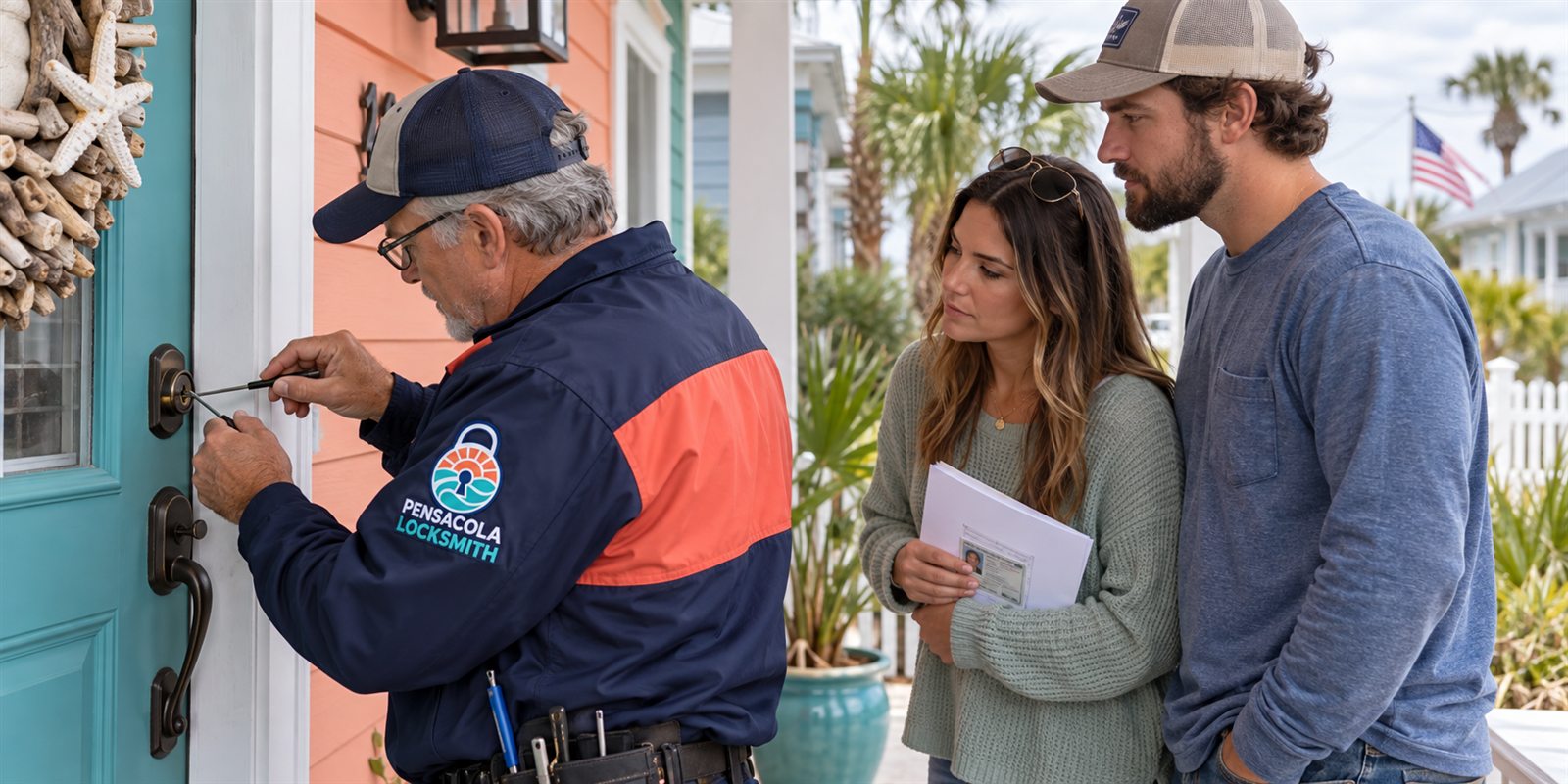
Start with the doors that face the outside world. That means the front door, the back door, any door from the garage into the house, and any side entrance. Sliding doors and French doors count too, though their locking hardware is different and is often a latch rather than a key cylinder. These are the entry points where an unknown key would actually matter, so they get priority.
Next, think about the less obvious entries. Detached garages, sheds, workshops, a gate lock, a mailbox lock and a storage closet in a shared building all hold keys that follow the property around. Many people forget the garage entry door, which is often the weakest link because it is out of sight. A Pensacola home near the water may also have an outdoor shower enclosure or boat storage with its own padlock or cylinder.
Interior locks are lower priority. Bedroom privacy knobs and bathroom locks are not security devices in the usual sense, and they rarely need to be changed. A home office or a closet used to store valuables might be an exception. The practical approach is a short list in order of exposure, with the front and garage doors done on day one and the rest scheduled when convenient.
A useful trick is to walk the property once with a notepad before anyone arrives. Touch every lock and every latch. Note which doors have keyed cylinders on the outside, which are keyed on both sides, and which have only a thumbturn inside. Double cylinder deadbolts, which need a key from inside too, deserve special attention for safety reasons, since a fire or storm evacuation should never depend on finding a key in the dark. A technician can swap those for a safer arrangement if appropriate.
What a technician checks during a move-in visit
Before opening or rekeying anything, a locksmith checks that the person asking has the right to do so. For a home, that usually means a closing document, a lease, or some other reasonable proof that you are the owner or the authorized occupant. This protects you as much as it protects the property, because it keeps the service from being used by someone who has no claim to the door.
Then the technician looks at the whole door, not just the cylinder. They check that the deadbolt throws fully into the strike, that the latch lines up, that the door is not sagging on its hinges, and that the strike plate is anchored with screws long enough to reach the framing. A beautiful new lock in a loose frame is still easy to defeat, so small corrections here are part of doing the job properly.
They also look at how the locks wear. A key that sticks, a thumbturn that is hard to turn, or a latch that only works if you lift the door are all signs that something is out of alignment. Humidity can swell wood and make a door rub the jamb in summer and release in winter. Pointing these out lets you decide whether to fix them now or note them for later.
After the work is done, a good technician hands over the keys, explains what was changed, and has you test each lock while they are still there. Turn each key several times from outside, lock and unlock from inside, and try the door with and without the deadbolt thrown. If anything binds, it is much easier to correct on the spot. Ask about spare keys at that moment too, because duplicating from a fresh set keeps the copies accurate and consistent.
- Proof of ownership or authority to occupy
- Deadbolt throw and strike alignment
- Strike plate screw length and frame condition
- Hinge tightness and door sag
- Cylinder wear and smooth key action
Smart locks and keypads for a new home
A move is a natural time to ask whether you want keys at all. Keypad deadbolts let you set codes for family, a dog walker or a cleaner and remove them later without collecting anything. That is especially handy if you are busy during the first weeks, when contractors and delivery people may need access while you are at work. Codes can be deleted the moment a project ends.
Smart locks add features such as phone control and activity logs, and they come in styles that keep a normal key cylinder as a backup. The tradeoff is batteries and electronics. Salt air and heat are not kind to cheap hardware, so the finish and build quality matter more than a long feature list. Ask what happens when the batteries run low and whether a physical key still works.
Whichever style you pick, plan for the unglamorous parts. Write down who knows the codes. Replace the batteries on a schedule instead of waiting for a warning. Keep one traditional key somewhere safe. Technology reduces the number of keys in circulation, but it does not remove the need for a clear, simple plan about who can enter and how you would get in if the system failed.
If you rent out part of the property, host guests, or share a driveway entrance with family, programmable access can reduce the number of physical keys you track. You can also schedule temporary codes for a repair visit and watch them expire automatically, depending on the model. Still, choose a unit that matches your door preparation and handing, because some doors need extra boring or a different latch. A technician can confirm fit before you buy, which prevents returns and wasted weekends.
Keep track of every key from day one
Once the locks are changed, the real discipline is keeping the new keys under control. Decide how many copies you need before you start handing them out. A common starting point is one for each adult, one spare stored away from the house, and none given to services unless there is a reason. The fewer copies exist, the more meaningful the work you just paid for becomes.
Write a simple list: who holds a key, which doors it opens, and when it was issued. It does not need to be fancy. A note on your phone is enough. When a contractor finishes, ask for the key back or plan to rekey after a longer project. Treat a borrowed key the way you treat a borrowed tool: you expect it to return.
If you have a lot of doors, ask whether they can share a single key. A good locksmith can key several locks alike so that one key opens the front, back and garage doors. This reduces the clutter on your ring and the chance of leaving one behind. On the other hand, some people prefer separate keys for storage areas, and that is a reasonable choice.
Think about the physical care of keys as well. Mark spare keys with a small tag that carries a code you understand, never your address. Store one set in a lockable place away from the front door, and avoid the familiar hiding spots near the entry that are well known to anyone who has ever looked. If you employ a house sitter or have long stays away, tell only the people who need to know and set a plan for collecting the key when the stay is over.
Moving into a rental or a shared building
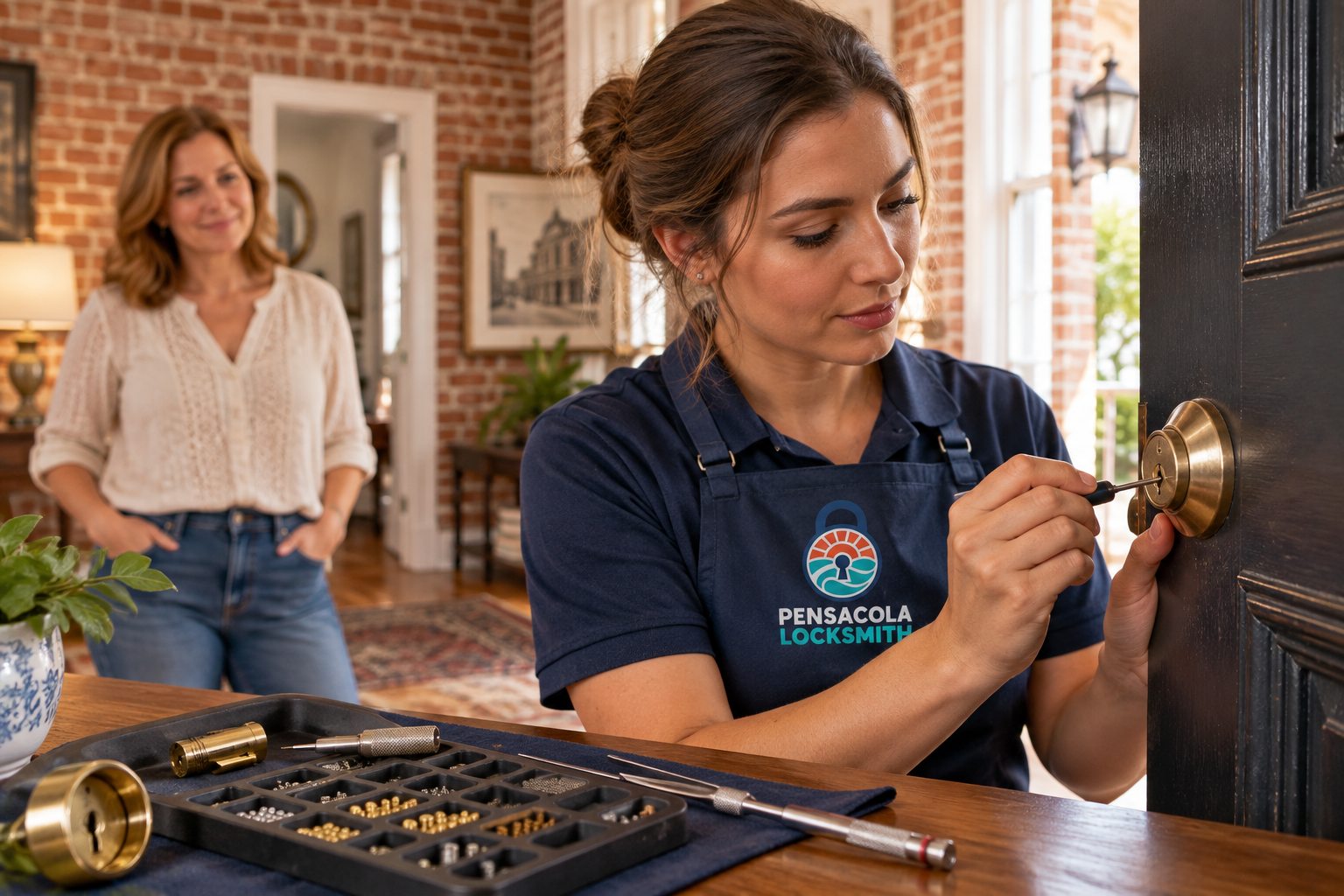
Renters have different options and different duties. In many leases, the landlord is responsible for the locks and may handle a rekey between tenants. If you want to make changes yourself, check the lease first and talk to the landlord. A locksmith will ask for authority before working on a rental door, and that can mean written permission from the owner or property manager.
Even when you cannot change the main lock, you can improve things within the rules. Ask whether the unit was rekeyed since the last tenant left. Request a written note of how many keys were issued. Add a removable door security bar or a portable travel lock for use when you are at home, if the lease allows it and it does not damage the door.
Shared buildings add a layer. A common entrance, mailbox, laundry room or storage cage may have its own keys that you cannot control. Be careful with those, and tell the manager if a key goes missing. Pensacola has plenty of rentals tied to the military, the university and tourism, so turnover is common and rekey requests are routine for property managers who want to keep things tidy.
If you are the landlord moving a new tenant in, the same checklist applies in reverse: rekey between occupants, keep a record of issued keys, and consider master keying only when it genuinely helps. Document the date of each change, because it shows tenants and any future inspectors that the property was reset. A locksmith will check your authority as owner or manager before work, which is part of keeping a rental door from being altered by someone who has no right to it.
Storm season and the other move-in details
Living on the Gulf Coast means thinking about hurricane season as part of your first weeks in a house. Make sure every exterior door closes and latches properly, because a door that is slightly out of true can fail under wind pressure. Check that the deadbolt fully extends and that the strike is solidly fastened. A technician can look at this during the same visit as your lock change.
Think about where the keys will be if you ever need to leave quickly. A spare key in a safe place that is not at the house, with a trusted person, can save a bad evening. Keep your car key and house key separable if you use a valet or a service that needs only one of them. Small habits like this make everyday life smoother.
Finally, remember the little things that tend to fall off a move-in list: the garage remote, the gate code, the mailbox key, the key to the community pool or a pool gate lock if there is one. Reset codes that came with the property and delete old programming. Then take a quiet five minutes to test every lock from inside and outside before you call the job finished.
Weather also affects the schedule of the work itself. Humid, rainy weeks can make wooden doors swell and bind, so a lock that feels fine in the dry season may tighten later. If you move during summer, tell the technician what you notice and whether the door has been rubbing. Small adjustments to hinges or the strike, combined with a light dry lubricant on the latch, can prevent seasonal sticking and keep the new locks working like they should through the year.
Common questions
Do I really need to change the locks if the previous owner seemed trustworthy?
Trust is not the issue, because you cannot know every person who ever received a copy. Previous owners hand keys to cleaners, contractors, relatives and agents over the years. Changing the locks gives you a known starting point. It is a modest step compared with the value of the home and the things you are about to move inside.
How soon after closing should I rekey or replace the locks?
As soon as you have possession is a sensible target, ideally before you sleep there the first night or leave belongings unattended. Call us to confirm availability and to talk through your doors. A technician will check ownership or your authority to occupy before starting, so have your closing paperwork or lease handy.
Is rekeying as secure as buying new locks?
For a lock in good condition, rekeying changes which keys work, which is the main security goal at move-in. New hardware makes sense when the lock is worn, damaged, loose or lower in grade than you want. A technician can look at each door and explain which approach fits the hardware and your priorities.
Can all my doors use the same key?
Often yes. Locks of compatible brands and types can be keyed alike so one key opens the front, back and garage entries. This cuts down the number of keys you carry. Some people keep storage areas on a separate key, which is also reasonable. Tell us how you prefer to live and we can plan it that way.
What if I rent and the landlord owns the locks?
Read your lease and speak with the landlord first. A locksmith checks authority before touching a rental door, so written permission from the owner or manager may be needed. Many landlords will rekey between tenants on request. If not, ask how many keys were issued and whether the cylinders were changed since the last tenant.