
Content note: this page was written by Claude (AI) for Pensacola Locksmith.
What roadside assistance usually covers
Roadside programs come bundled with many things: a vehicle purchase, an auto insurance add-on, a credit card, a membership group or a standalone subscription. Their standard menu is similar across most of them. They help with dead batteries, flat tires, running out of fuel, minor mechanical stops, towing to a repair shop and, in many cases, lockouts where the keys are inside the car.
The value of these plans is convenience and predictability. You call a single number, give your location and wait for a contracted provider to arrive. Many members already have the benefit included, so there may be no payment at the time of service. Some plans limit the number of calls per year or the towing distance, and those limits are worth knowing before you need them.
The scheduling is controlled by the plan. Your call goes into a dispatch system and is matched with a provider in the network, which may be a tow operator, a garage or a locksmith under contract. Timing depends on demand, weather and location. A plan cannot promise an arrival time in advance, and busy periods, such as holiday weekends or after storms, can stretch waits.
What a mobile locksmith typically handles
A mobile locksmith comes to the vehicle with the tools to open doors, cut keys and program electronic keys on site. The scope includes lockouts, broken keys in a lock or ignition, worn ignition cylinders, key duplication and replacing lost keys, including when every key has been lost. Many of these tasks go beyond what a general roadside provider is equipped for.
The advantage is specialization. The technician understands how locks, keys and immobilizer systems work together, and carries blanks, cutting equipment and programming tools. When a job involves making a new key from nothing, a locksmith can often complete it at the vehicle instead of requiring a tow to a dealership.
The tradeoff is that a locksmith is typically paid directly by you, unless your plan reimburses it. Quotes for straightforward jobs are given by phone. If the job is complicated, a technician visit may be needed first and the service call charge is explained before dispatch. You should always call to confirm availability for your location and time.
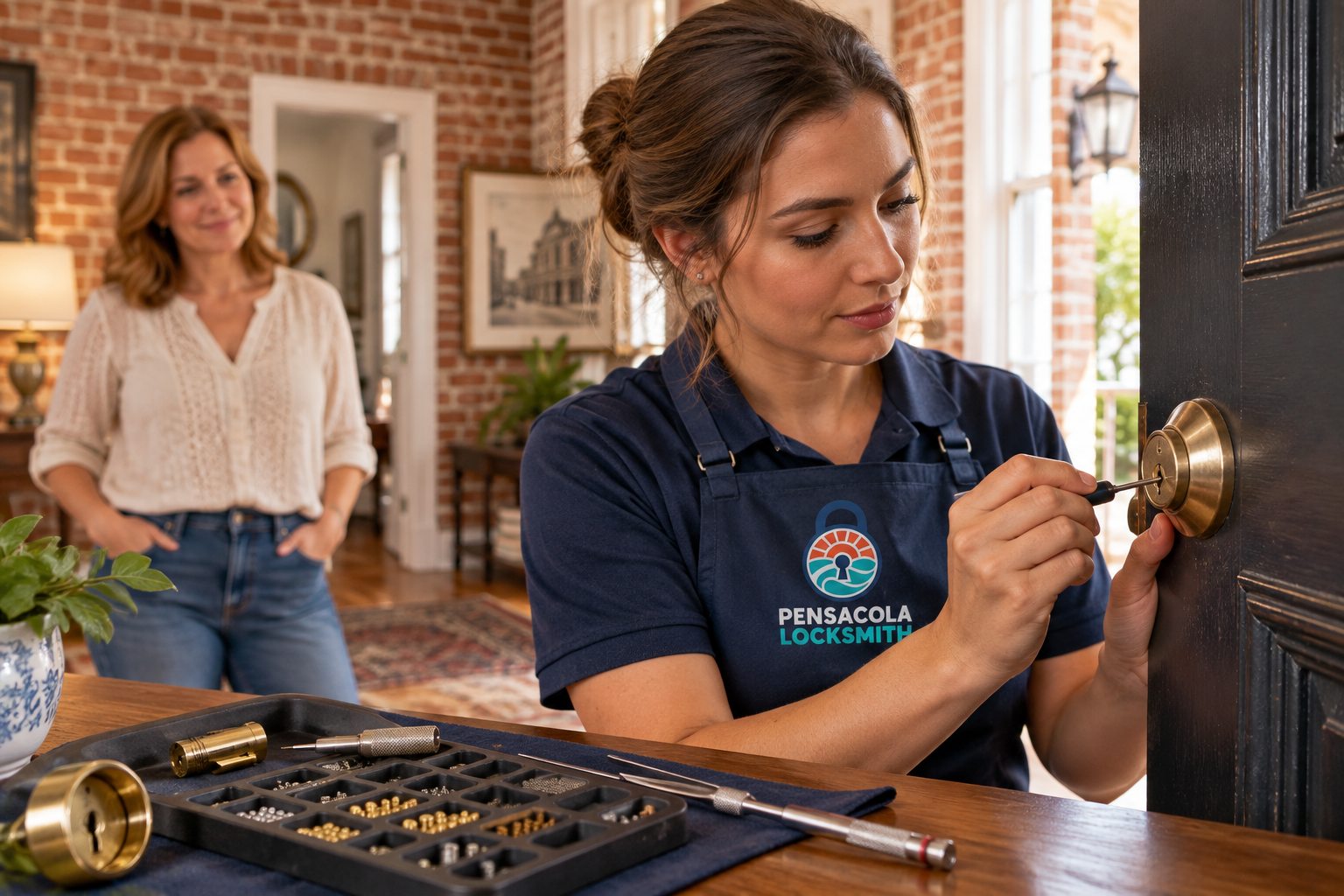
Simple lockouts: where either can work
If your keys are sitting on the seat and the doors are locked, either option can usually help. A roadside plan may send someone with a lockout kit, and a locksmith will do the same with tools suited to your vehicle. For a one-time lockout with a plan you already have, using the plan first makes financial sense.
There are reasons to choose a locksmith even then. If you need to get inside quickly for safety or comfort, if the plan estimate is longer than you can wait, or if your plan has used up its lockout calls, a direct call may fit better. Some people also prefer a technician who handles locks every day, particularly on vehicles with delicate door mechanisms or side airbags near the lock linkage.
In both cases, expect to show that the vehicle is yours. A legitimate provider will ask for identification and a registration or insurance card that matches the vehicle before opening it. That step protects you and prevents someone else from gaining access to a car that is not theirs. Have documents ready, and if they are locked inside the car, other proof such as a matching ID and information about the vehicle may help.
Lost keys and all-keys-lost situations
This is where the gap between the two options widens. If you have lost every key to a modern vehicle, the solution is to create a new key and program it to the car. A roadside plan typically does not do this. At best it tows the car to a dealer or shop, where the key can be ordered and programmed, which can take time and add towing costs.
A locksmith with the right equipment can often make and program a key at your location. The technician checks ownership, identifies the key type and cuts the blade, then programs the transponder or smart key to the vehicle. The steps depend on the make and system, and some vehicles need more specialized procedures than others.
Because the details vary, a quick call with the vehicle make, model and year lets the locksmith say whether it can be done on site. A few vehicles are difficult and may require a dealer. In those cases an honest locksmith will tell you so instead of starting work they cannot finish. Describe your situation clearly, and confirm availability before you plan on a same-day solution.
Broken keys and ignition trouble
A key that snaps off in the door or ignition is not something a roadside plan is set up to fix. Extracting the broken piece requires careful tools, and in an ignition it may involve disassembling parts of the steering column. A locksmith can remove the fragment, then cut a new key and, if needed, repair or replace the cylinder.
Worn ignition cylinders show up as a key that sticks, a steering wheel that will not unlock, or a car that does not start without jiggling the key. These faults are mechanical and specific to locks. Calling a locksmith early is wise, because forcing a stuck key can turn a small repair into a bigger one.
A roadside provider might diagnose a no-start as a battery or starter problem, and that is a reasonable first guess if the dash lights are dim. If the lights are bright and the key will not turn, the problem is more likely the ignition or steering lock. A short description to the locksmith by phone can help sort out which kind of problem you have.
Cost, coverage and who pays
The cost picture is different for each path. With a plan, the service may be included up to a limit, or may require a payment at the time. Plans tend to be the better value when your issue is the kind they were designed for, such as a simple lockout. For key creation or lock repair, you would normally pay a locksmith directly.
Some plans reimburse a locksmith if you cannot use their network, but the rules vary. Ask before paying anyone, and keep a receipt. If you rely on reimbursement, read the terms about maximum amounts and required documents.
A phone quote from a locksmith for a simple job lets you compare before committing. For more complex cases, a technician visit is the honest answer, and the service call charge is explained before dispatch. Avoid anyone who will not explain charges ahead of time, and do not pay for a service that was not discussed. Your insurance may also have a role, which our guide on insurance and locksmith costs covers.
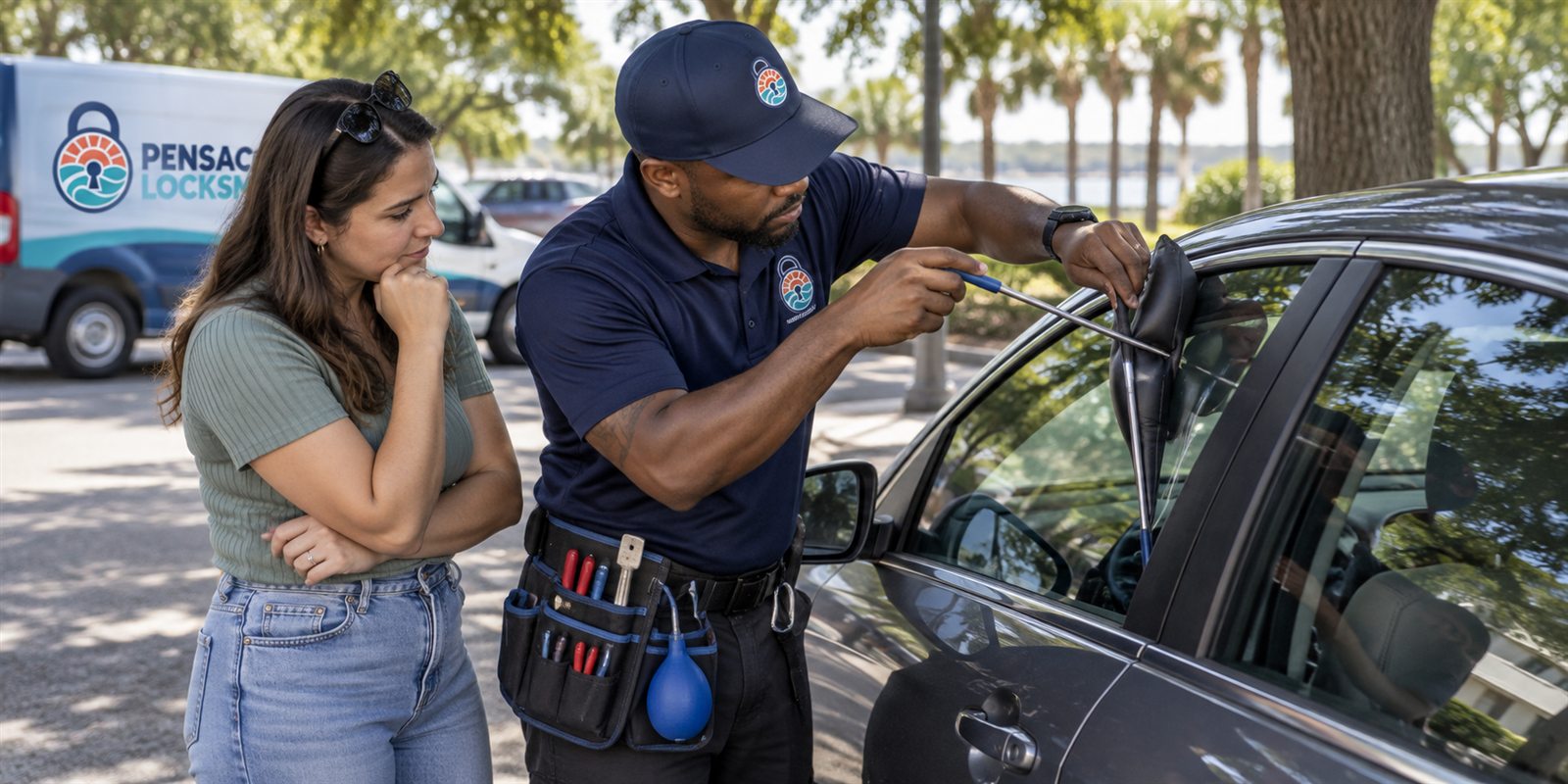
Safety and location considerations
Where you are stuck changes the decision. In a busy parking lot with plenty of people, waiting is comfortable. On a dark road, in extreme heat, or with a child or pet locked in the car, the situation is urgent and emergency services are the right first call. If a child or animal is trapped in a hot vehicle, call emergency services right away rather than waiting for any locksmith or plan.
Gulf Coast summers make a closed car dangerously hot very quickly, and storms bring sudden rain and wind. Think about shade, shelter and charging for your phone while you wait. Share your location with someone you trust.
Beachside lots, boat ramps and rural stretches around the county can be harder to find. Give clear directions and landmarks. Naval air station traffic, tourism peaks and event weekends can also slow arrival from any provider, so patience helps. Whichever you choose, call to confirm availability and make sure someone knows where you are.
Keyless entry, smart keys and newer vehicles
Newer vehicles often use smart keys, push-button start and remote fobs, and these complicate the decision. A fob with a dead battery may simply need a replacement cell, and many owners do not realize the fob has a hidden mechanical key blade inside. Check your owner's manual, because the manufacturer usually shows where the backup blade and the emergency start position are located.
If the fob is lost entirely, the replacement process is more involved. The new fob must be paired to the vehicle's computer, and the old fob should be removed from memory so a lost or stolen one cannot start the car. A locksmith with the right equipment can handle the pairing for many makes, while others need dealer-level tools.
A roadside provider can usually open a door or jump a battery on these vehicles but is not set up to program keys. That is not a flaw, only a difference in purpose. If your problem is that the car does not recognize your fob, or a fob was lost, the better call is to a locksmith or the dealer.
When you call, have the make, model and year, and say whether the car uses a push-button start. The locksmith can tell you what is realistic for your vehicle, whether on-site work is possible and whether a visit is needed first. Remember that ownership is checked before any key is cut or programmed.
Tows, dealers and the long way around
Sometimes the plan will offer a tow to a dealer as the default solution for a lost key. That route works, but it has costs in time and money. You may need to wait for the car to be towed, wait again for a key to be ordered and programmed, and arrange a way home in the meantime. For some vehicles, that is the only path, and a locksmith will tell you honestly if so.
For many other vehicles, a mobile locksmith can complete the job where the car sits, which saves the tow and often shortens the wait. The question is whether the locksmith has the right software and blanks for your model. A short phone call answers that before anything is scheduled.
Think about the tradeoffs for your own schedule. If you are on vacation and the car is your only way to the airport, a quick mobile fix is worth exploring. If you are at home and have time, comparing options calmly may be wiser. Either way, avoid pressure from anyone who insists on an immediate decision without explaining what the job involves.
Questions to ask any provider on the phone
Whoever you call, a few questions help you judge the offer. Ask what exactly the service covers, whether there is a service call charge, and how any total will be explained before work begins. Ask whether the technician can handle your kind of vehicle and your specific problem. A confident, clear answer is a good sign, while vagueness is a reason to keep looking.
Ask about identification too. A responsible provider will say that proof of ownership is required before opening or programming anything. If someone says they will skip that step, be careful, because it means they would do the same for anyone standing beside your car.
Take notes on what you are told, including the name of the person you speak with and any figures discussed, so you can compare it with what is presented at the end. Complicated jobs begin with a technician visit, and the service call charge is explained before dispatch, which keeps expectations aligned from the start.
Finally, ask what happens if the job turns out to be different than described. A good provider tells you plainly how that would be handled and asks for your approval before changing the plan.
A simple way to decide in the moment
Ask yourself a few questions. Do I have a plan, and does it include lockouts? Is this just a lockout, or is a key lost or broken? Is the wait acceptable, or is the situation urgent? If it is a simple lockout and the plan is available, start with the plan. If it involves a lost or broken key, a worn ignition or a programming need, a locksmith is the better first call.
If you are unsure, a short call to a locksmith takes only a few minutes and can clarify what is possible. Describe the vehicle and what happened, and ask what the technician can do. The answer can help you choose between waiting for a plan provider, arranging a tow or booking a mobile visit.
Whichever way you go, stay organized. Keep your registration, insurance card and ID handy, note the vehicle details, and keep receipts. Ownership is confirmed before any lock or key work begins, and a prepared customer gets through the process more quickly.
Preparing now so the next problem is easier
Most key trouble can be softened by preparation. Make a spare key and keep it somewhere safe and separate from the original, such as with a trusted family member. For vehicles with electronic keys, a spare programmed before you lose the original is far easier than creating one from scratch.
Save the details of your roadside plan in your phone: the number, your member ID and what services are included. Know your vehicle's make, model and year, and keep your registration accessible. These small steps shorten any call.
Finally, notice early signs of wear. A key that has become hard to turn, a worn blade or a remote that works only sometimes is a warning. Having it checked or replaced on your schedule beats dealing with it on the side of the road. Call us to discuss spare keys, and we will confirm availability for a convenient time.
Common questions
Should I call roadside assistance or a locksmith for a lockout?
If you have a plan with lockout service and the situation is not urgent, starting with the plan makes sense. If the plan is unavailable, the wait is too long, or a key is lost or broken, a locksmith is a good direct option. Either provider will check that the vehicle is yours.
Can roadside assistance make me a new car key?
Typically not. Plans usually handle lockouts, towing and basic repairs. Making and programming a key is locksmith or dealer work. A mobile locksmith can often do it at your location, depending on the vehicle. Describe the car by phone to see what is possible.
Will my roadside plan reimburse a locksmith?
Some do under certain conditions, others do not. Ask your plan before paying, keep the receipt and read the terms about limits and documents. A locksmith can describe the work on the invoice to help you submit the request.
What if my child or pet is locked in the car?
Call emergency services immediately. Heat builds fast in a closed car, especially on the Gulf Coast. Do not wait for a plan provider or locksmith when life is at risk. Once the emergency is handled, a locksmith can help with any lock damage.
What does a locksmith need from me before opening my car?
The technician checks that you own the vehicle or are authorized to use it, usually through identification and a registration or insurance card matching the car. This protects you and prevents unauthorized access. Call us to confirm what to have ready and to check availability.