
Content note: this page was written by Claude (AI) for Pensacola Locksmith.
What key control really means
Key control is not a product you buy. It is a set of decisions and records that answer three questions at any moment: who can open each door, how do you know, and what do you do when that changes? A business with good key control can answer these in minutes. A business without it often discovers the answers only after something goes missing, which is the worst time to start asking.
The size of the business does not matter much. A two-person office with one front door and a storage closet benefits from the same thinking as a twenty-person shop. The difference is only in how much paperwork you need. For a very small team, a single sheet of paper may be enough. For a larger one, a spreadsheet or a simple logbook works better.
Good key control is also about people, not just metal. Staff should understand that keys are a responsibility, that copying them without approval is not allowed, and that losing one should be reported straight away without blame. When people fear punishment they hide mistakes, and a hidden lost key is far more dangerous than a reported one.
A short written policy gives the whole system weight. One page is enough: keys remain the property of the business, they may not be copied, lost keys must be reported at once, and keys must be returned when employment ends or roles change. Have new hires read and sign it. People tend to follow rules they have seen in writing and agreed to in person.
Map your doors before you count your keys
Start by walking the building and listing every lock that matters: front entrance, back door, loading door, office, storage room, cash area, server closet, cabinets, gates and any padlocks. Note the brand if you can see it, the type of key and whether the door is used daily or rarely. This door map is the foundation of everything that follows.
Next, group doors by sensitivity. The front door might need to be opened by every opener of the day, while the cash office or the room that stores inventory might need access for only two people. Separating public doors from private ones lets you give most staff one key and a few trusted people another, rather than handing everyone everything.
Check which doors share the same key. Many small buildings were set up over years with mixed hardware, so you may find that one key opens three doors by accident, or that two similar-looking doors need different keys. Understanding the current situation helps you decide whether to rekey for a cleaner layout. A technician can help map this during a visit, and we can discuss it by phone first.
Think about the people who are not on your payroll but still need access. Cleaners, delivery drivers, repair technicians, landlords and inspectors often hold keys or codes. Decide in advance how they get access, whether through a key you control, a lockbox or a staff member who lets them in. Each outside key deserves a line in your log with a clear purpose.
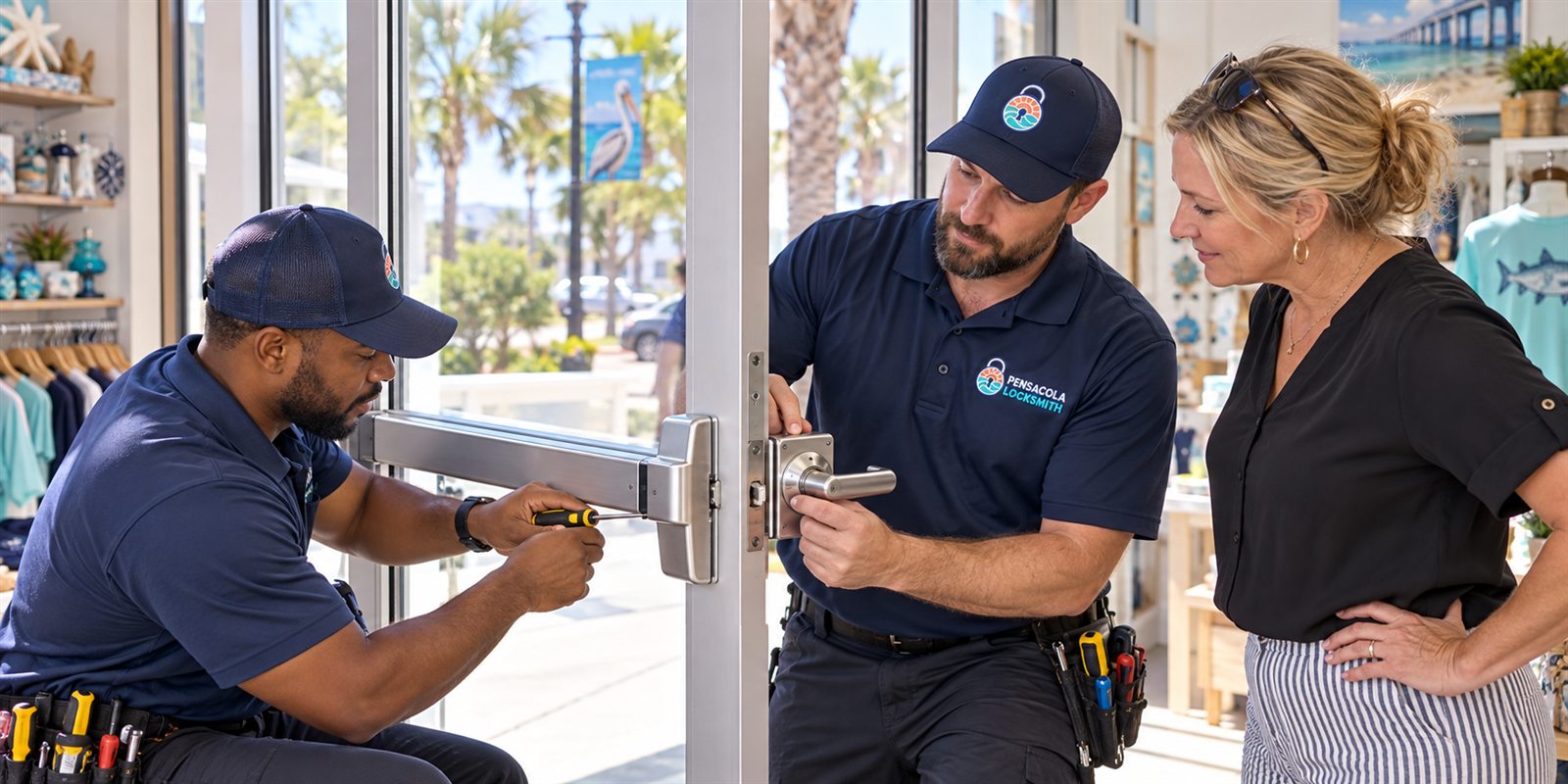
Decide who needs which key
Apply the principle of least access. Give each person only the keys that their job requires. A part-time cashier who opens the front door at eight does not need a key to the storage cage. A bookkeeper who works late may need the office door but not the loading dock. Every extra key is an extra risk, not a mark of trust.
Write down the reasoning. A simple table with names across the top and doors down the side, marked with who holds what, is easy to read and update. Add the date each key was issued. When someone asks for access to a new area, you can see at once what you already gave and decide if the change is justified.
Treat keys for owners and managers with the same discipline. Owners often hold a full set and a few spares, and those spares are the ones that go missing. Decide where spare keys live, who can reach them and how their use is recorded. A locked key cabinet or a small safe with a sign-out sheet is enough for most small businesses.
Match the door to the person, then check that the match makes sense in daily life. If the opener needs the front door, the alarm panel and the cash drawer, those three items should be reachable with as few keys as possible. If a key set is awkward, staff will take shortcuts, such as propping doors or sharing codes, that undermine your plan.
- List every door and lock
- Group doors by sensitivity
- Assign keys by job need
- Record issue dates and holders
Issuing, signing and retrieving keys
When you hand over a key, make it a small ceremony. Ask the employee to sign a line on the key log that states which key, which door and the date. Explain the rules in plain words: do not copy it, do not lend it, do not leave it in a vehicle, and report loss immediately. Ten minutes of clarity at the start prevents months of confusion.
Mark keys carefully, but not with the business name or address. A stamped code number that matches your log is better than a tag saying front door at the shop. If a key is lost on the street, a finder should not be able to work out where it fits. Use code letters or numbers that mean something only to you.
At the end of employment, make key return a standard step in the exit routine, alongside returning uniforms or devices. Check the key off the log in front of the person. If a key does not come back, treat it as unaccounted for and decide quickly whether to rekey. Delaying invites risk, particularly when the departure was unfriendly.
Pay special attention to the last key in the chain, the one that opens the building at night. Whoever closes should have a clear routine: lock every door, set the alarm, check the back entrance and confirm nobody remains inside. A closing checklist near the exit helps new staff, and it makes missed locks less likely on tired evenings.
Keys that should not be copied freely
Many keys can be duplicated at any hardware counter, which defeats the purpose of tracking them. Restricted keyways are designed so that blanks are controlled and copies need authorization. Moving to a restricted system for the most sensitive doors makes unauthorized copying much harder. Ask a technician about options and what the process looks like for adding authorized copies.
Even without a restricted system, you can discourage copying through policy and by marking keys. Some businesses stamp keys with a warning, though that alone does not stop a determined person. Combined with a log and regular audits, it communicates seriousness. The real protection comes from the ability to rekey quickly when you suspect a problem.
If you use a key for a leased space, check your lease. Landlords sometimes control the locks, and changing them might require notice or a copy for the property manager. Ask before you rekey so you do not create a dispute. We check ownership or authority before rekeying, so have your lease or the landlord approval ready.
Not every key is metal. Padlock combinations, safe codes, alarm codes and wifi-enabled door controllers deserve the same care. Record who knows each one and when it was last changed. Change them when people leave. A combination that has not changed in years has probably been shared more widely than anyone realizes.
Alarm codes, keypads and cards
Mechanical keys are only part of the picture. Many small businesses also use alarm codes, keypad locks or access cards. These need the same discipline. Give each person an individual code if the system allows it, so you can remove one person without affecting others. Shared codes are convenient, but they are impossible to attribute and tend to leak.
Change codes when someone leaves, when a code has been used by a contractor, and on a regular schedule such as twice a year. Avoid obvious numbers like birthdays, repeated digits or the last four digits of the business phone. Keep a record of who knows what, in a place that is itself secure, not on a sticky note beside the keypad.
Cards and fobs can be disabled when lost, which is an advantage over metal keys. If your system supports it, deactivate any card that goes missing and issue a new one. A technician can also program or reprogram electronic access hardware, after checking ownership or authority. Call us to discuss what your setup supports.
If a key goes missing, act quickly and calmly. Search the likely places first, then decide based on risk. A key to a supply closet may justify a short wait, while a key to the cash office or the main entrance deserves faster action. Rekeying promptly is almost always cheaper than dealing with theft later.

Audits, spot checks and warning signs
Once or twice a year, hold a key audit. Ask each key holder to show their keys and compare them with the log. Do it politely and make it routine, so nobody feels singled out. Missing or extra keys show up quickly. This simple exercise often reveals forgotten copies that have been in drawers or old key rings for years.
Watch for warning signs between audits: doors found unlocked, items missing, unexplained after-hours entries, or a lock that has been changed without notice. Take these seriously but calmly. A pattern may point to a lost key, a former employee with access, or a problem with the hardware, and each calls for a different response.
Keep a record of incidents and what you did about them. If you rekeyed after a loss, note the date. If you added a new lock, note the model. Over time this becomes a history that helps you see what works. It also helps if you need to explain events to an insurer or a landlord later.
Keep spare keys out of sight and under control. The classic habit of hiding one under a mat or a planter is known to every thief. A small locked cabinet inside the building, a lockbox with a code that changes or a trusted person who holds the spare is better. Record where spares live in your log.
When to rekey and when to replace
Rekeying is often the right response after a lost key, a staff change under difficult circumstances, a break-in attempt or the takeover of a space with unknown key history. It changes the internal pins so that old keys stop working while new keys work. The hardware stays in place, which makes it quicker and gentler than replacing whole locks.
Replacement is better when locks are worn, damaged or too basic for what they protect. A cheap knob lock on a storage room that holds valuable stock may deserve an upgrade to a stronger deadbolt or a restricted cylinder. Think about the value of what is behind the door and whether a better lock is justified.
Tell us what happened and what you want to protect, and we can suggest the right step. Quotes are given by phone. If the job is complicated, a technician visits and the service call charge is explained before dispatch. We check ownership or authority before rekeying or programming, so be ready to show that you run the business or lease the space.
Review your plan when your business changes. Opening a new location, adding a storage unit, hiring seasonal staff or changing hours all alter who needs which key. Each change is a good moment to look at the door map and the log. Small adjustments made regularly are easier than a big cleanup after something goes wrong.
Keeping it simple and keeping it going
The best system is the one you will actually maintain. Resist the urge to build something elaborate. A one-page door map, a key log, a short written policy and a twice-yearly audit are enough for most small businesses. Put reminders in your calendar, and assign one person to own the process so it does not fall through the cracks.
Review the system when something changes: a new hire, a move, a renovation or a seasonal staffing surge. Seasonal businesses near the beaches often add and remove staff quickly, so key control matters even more. Treat each wave of staffing as a prompt to check your records and retrieve or reissue keys.
If you are unsure where to begin, call us. We can talk through your doors and staffing by phone, suggest a sensible plan and explain how rekeying or master keying could simplify things. Please call to confirm availability. A calm, practical system now will save time, worry and possibly money when something unexpected happens.
Common questions
How many keys should a small business have per door?
As few as the work requires. Each person gets only the keys their job needs, plus a controlled spare held securely by the owner or manager. Record every key in a log with names and dates. If the count does not match the log during a check, investigate and consider rekeying that door.
What should I do when an employee leaves without returning a key?
Treat the key as unaccounted for. Decide quickly whether to rekey the doors it opened, especially if the departure was tense or the doors protect cash or stock. Rekeying changes the pins so old keys stop working. Call us to discuss the doors involved and the best order of work.
Is a restricted key system worth it for a small shop?
It can be if you have sensitive areas and want to stop casual copying. Restricted keys require authorization to duplicate, which supports your log. The tradeoff is a more involved process when you need a new key. Call us to talk through whether it fits your doors and your staff size.
Can I rekey doors in a leased building?
Often yes, but check your lease first. Some landlords control the locks or require a copy of every key. We check ownership or authority before rekeying, so have your lease or the landlord approval available. A short conversation with the property manager can avoid misunderstandings and rework.
How do I get a quote for a key control plan?
Call us and describe your doors, how many staff have keys and what you want to protect. Quotes are given by phone. If the work is complicated, a technician visits and the service call charge is explained before dispatch. Please call to confirm availability for your location.