
Content note: this page was written by Claude (AI) for Pensacola Locksmith.
Signs that someone tried the door
The clearest sign is new marking around the lock. Bright scratches on the faceplate or the cylinder ring, small gouges in the wood next to the latch, or dents in the metal show that a tool was used. Marks that are dull or dirty are more likely old wear. Fresh marks are shiny, with exposed metal or pale wood visible.
Other signs are less visible. A key that suddenly feels rough, a cylinder that turns slightly in its housing, a deadbolt that no longer extends fully, or a knob that droops can all result from an attempt to pick, drill or twist the hardware. Even when the lock still works, internal parts may be bent or broken.
Do not dismiss small things. Intruders often try several doors before finding a weak one, and a failed attempt on yours is a warning. Photograph the marks, note the date, and tell neighbors. A pattern of attempts in the area is useful information for people nearby and for the local police if you choose to report it.
Timing can also tell you something. If the marks appeared overnight or while you were away, the attempt was recent. If you notice them after a long absence, they could be older. Check any outdoor camera footage, ask neighbors whether they saw anyone, and compare with photos you may have taken of the door earlier. Details like these help the police and your insurer, and they help the technician judge how serious the attack was.
How locks are commonly attacked
Several methods leave a trace. Drilling aims at the shear line of the cylinder and leaves small holes in the face. Prying uses a flat tool between the door and frame to push the bolt back, leaving dents in the edge. Twisting or wrenching a knob or lever can snap the internal spindle or break the latch retractor.
Cylinders can also be pulled out with tools that grip the front, which scratches and tears the surrounding rose or escutcheon. Bump keys and picks tend to leave less visible evidence, though a key that feels gritty can be a clue. Some tampering results in a lock that has been jammed on purpose, so it will not open from the inside either.
Each of these has a different cost to the lock. A single scratched ring may mean nothing more than a cosmetic fix. A bent bolt, a cracked cylinder plug or a displaced lock case means the lock cannot be relied on. The technician will look for each and tell you which applies.
Some attacks target the electronics rather than the metal. Keypad locks can have their cover pried off, batteries removed, or buttons worn by repeated use that reveals the code. Smart locks can be tampered with at the faceplate or the bolt. Signs include loose covers, mismatched screws, and a lock that resets itself or loses its settings. Treat these as seriously as scratches on a mechanical cylinder and have the lock tested.
- Drill holes or metal shavings near the keyway
- Pry marks along the latch edge of the door
- Cylinder ring torn, bent or loose
- Knob or lever that spins without moving the latch
- Deadbolt that sticks halfway
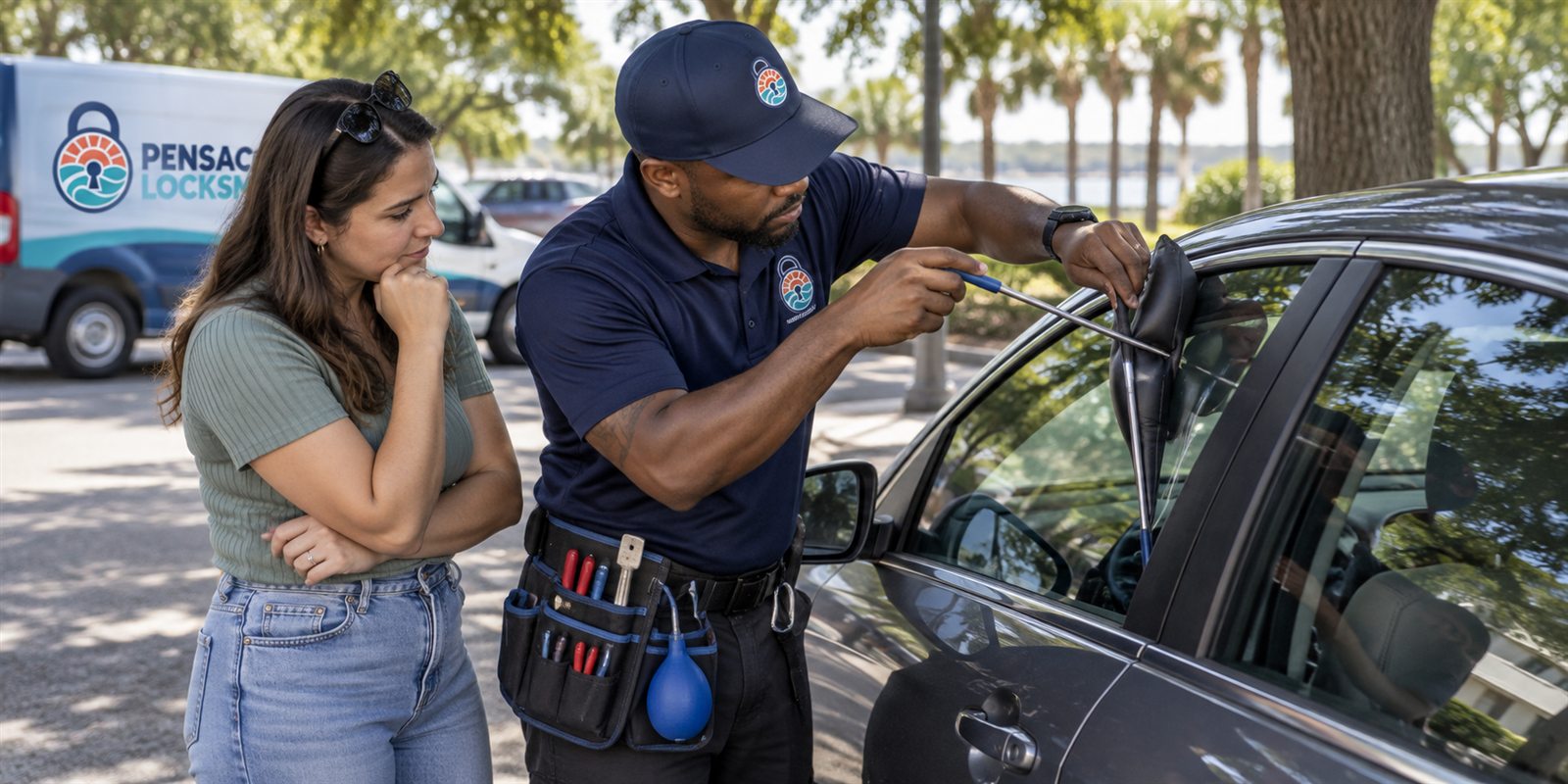
What a technician inspects first
The inspection starts with the lock itself. The technician checks how the key enters, whether the plug turns smoothly, and whether the bolt extends the full length. A cylinder may feel normal and still have damaged pins inside. Removing the lock for a closer look is common when something seems off.
Next comes the latch and the strike. The latch bolt should be straight, with a clean beveled face and a smooth spring action. The strike plate should show an even mark from the bolt, not a bent lip or a torn edge. Screws should be tight and long enough to reach the framing behind the jamb.
Finally, the technician looks at the door and the frame around the lock. Cracks in the wood, bulges in the metal skin, and loosened hinge screws all indicate stress. Sometimes the lock survived and the frame did not. A complete inspection prevents the situation where a new lock is fitted to a door that cannot support it.
Notes from the technician's visit are a useful by-product. Ask for a plain description of what was found, such as bent bolt, cracked jamb or drilled cylinder. Having this written down helps with insurance and gives you a baseline to compare against if another incident occurs. A professional will usually be glad to explain what they see while they work, so do ask questions as the inspection proceeds.
Replace or repair: how the decision is made
Cosmetic scratches on a sound lock can usually be left. If the cylinder has been drilled or its pins are visibly damaged, replacement is the sensible route. A drilled lock can sometimes be made to work with a patch, but it is no longer reliable, and it may fail at the worst moment.
For latches and deadbolts, a bent bolt or a weakened spring is a reason to replace the unit. These parts are inexpensive relative to the cost of a second incident. A sound latch should move freely, return fully and sit square in the strike. Anything less is worth changing.
When the entire lock set has been attacked, many homeowners choose to upgrade rather than copy what was there. A higher grade deadbolt, a pick resistant or bump resistant cylinder, and a reinforced strike are common upgrades. A technician can show what is available and explain how each one changes the level of protection.
Another factor is how long the existing lock has been in service. An older lock that has been tampered with is often not worth saving, because wear and damage together make failure likely. A newer lock with minor damage may be easier to justify keeping. Think about replacement as part of a longer plan for the door, not only as a reaction to this event, and weigh what is sensible for your situation.
Frame, strike and door damage
Attempts that involve prying often damage the door edge and the frame rather than the lock. Look for a crushed spot along the jamb, a split in the wood, or a strike plate that has pulled away. Even a small crack can grow with the next impact, so reinforcement matters.
Steel and aluminum frames can bend, which opens a gap that makes the door easier to defeat. A bent frame may sometimes be reshaped, but the metal can weaken. In that case, a new frame or a replacement section may be advised. A locksmith will say when the job belongs to a door or glazing contractor.
Where wood is damaged, repair options include gluing and clamping splits, fitting a metal reinforcement plate over the strike area, or replacing the jamb. Long screws into the framing behind the jamb make a significant difference. The aim is to restore the structure so that the lock has something solid to hold onto.
Think also about the cost of delay. A door with a weakened frame may hold up until the next attempt and then fail completely. Spending a little effort now on a reinforcement plate and long screws is a reasonable trade compared with a break-in that costs you property and peace of mind. A technician can suggest the smallest set of changes that makes a real difference, rather than selling more than you need.
Rekeying and key control after tampering
If an attempt reached the inside of the cylinder, or if there is any chance a key was copied, rekeying is wise. Rekeying changes the internal pins so existing keys no longer work. It is faster than replacing the whole lock when the hardware itself is sound, and it gives you a clean set of new keys.
Even without proof that keys are at risk, many people rekey after an attempted entry for peace of mind. Keys that have been lent, lost or handed to contractors are an unknown. Closing that gap is a small step compared with the worry of not knowing who might hold a working copy.
The locksmith will check ownership or authority before rekeying, as with any lock work. For rental properties, the landlord should be informed, since the lease may set rules about lock changes. Keep a record of new keys and who has them so that you can manage access later.
For households with children, older relatives or tenants, make sure everyone knows about any change. A new key that is not distributed leads to lockouts, and a code that is not shared leads to calls at awkward hours. Agree on a simple plan for who holds spare keys and where, and update it whenever someone moves in or out. Good key habits are part of the security of the home.

Reporting, records and insurance
An attempted entry is worth reporting even when nothing was taken. A record helps if a pattern develops, and police may want to know if several homes in an area are being tested. Your insurer may also want to hear about it, especially if you are making a claim for repair costs.
Take clear photographs of the damage before any repair. Include close ups of the lock, the strike, and the frame, plus a wider shot of the door. Keep the old parts if possible, because they can serve as evidence. Ask the locksmith to describe the work on the invoice in plain terms.
If you rent, tell the landlord or property manager promptly. If you manage a business, log the incident and review other doors. A checklist of what was damaged, what was replaced and when, gives you a trail that is useful for future claims and for deciding what else to improve.
Lighting deserves a second look. A motion sensing fixture near the door, with a bulb that works and a sensor that is clear of cobwebs and foliage, is a modest improvement. Make sure it points toward the approach to the door and not into your neighbor's windows. Check that any cameras have a clear view of the lock area and that the recording is working, since an unmonitored camera gives little benefit.
Deterrence that fits Gulf Coast homes
Visible measures matter. Good lighting near doors, trimmed shrubs that remove hiding places, and a doorbell camera make a house look less easy. Coastal homes also face weather that wears down hardware, so look at finishes. A lock with a corroded face looks neglected, and it fails sooner.
Choose hardware suited to humidity and salt air. Stainless or solid brass parts handle the climate better than thin plated steel. Fasteners should resist rust, since a rusted screw head is hard to remove when the lock needs service. A little extra care when selecting parts pays off over the years.
Seasonal and rental homes need a particular routine. Check doors and locks between stays and before the start of hurricane season. If you live in a neighborhood with tourist traffic, a stranger trying doors may not stand out, so do not rely on others to notice. Good habits and strong hardware are your best defense.
After the work, check everything again the next day. Lock and unlock several times from outside and inside, with the door open and closed. Make sure the new keys work at every door that was rekeyed. If anything feels wrong, call back sooner rather than later. A short follow up costs little, while a hidden fault found months later could be harder to fix and more disruptive.
What to expect when you call
Explain what you have noticed: which door, what the damage looks like, and whether the lock still works. Mention if anyone entered or if you think the attempt failed. A few photos help the technician bring the right parts. Quotes are given by phone, and call us to confirm availability.
On site, the technician confirms that you own the property or have authority, then examines the lock, latch, strike, frame and door. Findings are explained in plain terms, with options for repair or replacement, so that you understand what is needed now and what could wait.
If the situation is more involved, such as several damaged doors or structural problems, a technician visits to assess it and the service call charge is explained before dispatch. You will have a chance to decide how to proceed with the full picture in view.
Rental properties, shared entries and commercial doors
Apartments and duplexes have extra layers of responsibility. A tenant who finds signs of tampering should tell the landlord or manager promptly, because the lock and frame are usually the owner's property and the lease may require approval for changes. The locksmith will want confirmation of who has the authority to approve the work before starting, and will not simply act on a verbal claim.
Shared entries, such as a common door in a small building, are used by many people, so a single compromised lock affects everyone. In these cases, rekeying and redistributing keys to all residents is a coordinated task. A property manager or association usually handles it, and a locksmith can work with them to supply a key schedule and new keys.
Commercial doors face their own risks, including storefront glass and panic hardware. Attempted entry often targets the back door or a side entry that is less visible. After any attempt, review closing procedures, check alarm sensors, and make sure that exit hardware still works as it should, because security repairs must never block a safe exit for staff and customers.
Common questions
My lock still works but has scratches. Should I replace it?
Not necessarily. Surface scratches on the faceplate may be only cosmetic. What matters is whether the key turns smoothly, the bolt extends fully and nothing wobbles. A technician can check the inside of the cylinder and the latch and tell you whether it is safe to keep using.
Is rekeying enough after an attempted break-in?
If the lock is undamaged and you want to make existing keys useless, rekeying is a good step. If the cylinder, bolt or latch was attacked, replacement is better. Many people do both: replace what is damaged and rekey the rest so all doors share a new key.
How can I tell if the frame was damaged?
Look for cracks along the jamb, a strike plate that has shifted, gaps between the door and frame, or screws that have loosened. Press on the door near the latch to see if it moves more than before. A technician can examine the structure and advise whether it needs reinforcement.
Should I report an attempted entry that failed?
It is a good idea. A record can help if more incidents occur, and your insurer may want to know. Take photographs first and keep any damaged parts. A locksmith can describe the damage in writing, which supports your report.
Can a damaged lock be repaired instead of replaced?
Minor issues such as a bent strike or a loose rose may be repaired. A drilled or pried cylinder, bent bolt or weakened spring is better replaced. Quality matters more than saving a part. The technician will explain which components are worth keeping.