
Content note: this page was written by Claude (AI) for Pensacola Locksmith.
Why the keys you receive are not the whole story
When a home changes hands, the seller gives you the keys they have on hand. What the seller cannot tell you is how many copies were cut over the years. Previous owners, tenants, contractors, cleaners, neighbors who watered plants, and relatives may all have held a key at some point. Most of those people never return them, and nobody tracks it. That is not a sign of bad intent, just the normal way keys drift around a house over a decade or two.
The practical answer is to treat the existing keys as unknown. A lock only protects you when you know exactly who can open it. If the cylinders stay as they are, every unaccounted copy still works, and there is no log, no alert and no way of knowing who has used one. Rekeying changes the inside of the cylinder so old keys stop working and new ones take over.
This is a small, inexpensive job compared with the size of a home purchase, yet many buyers skip it because the move itself is overwhelming. Call us to talk through the number of locks and the type of hardware, and a quote is given by phone. If the job turns out to be complicated, a technician visits and the service call charge is explained before dispatch.
What to look at during the final walk-through
The final walk-through is the best moment to look at hardware, because the house is usually empty and every door can be tested without furniture in the way. Bring the keys you have been given if the agent allows it, and try each one in each lock. Note which locks stick, which keys turn roughly, and which doors do not latch smoothly. A sticky lock now is a small repair you can raise before closing rather than after.
Count the exterior doors, not just the front one. Many houses have a back door, a garage entry door, a side door, sliding glass doors, and sometimes a laundry room door that leads outside. Condos and townhomes may have a balcony slider and a storage closet. Write down every keyed opening, including mailbox keys, pool gate locks and any shed. This list becomes the working plan for the locksmith visit.
Also look at the condition of the frame and strike plates. Gulf Coast humidity swells wood, and salt air corrodes hardware near the water. A deadbolt that looks fine but has short screws in the strike plate is easy to defeat. Make a note of anything that looks loose, rusted or mismatched, so those items can be handled in the same visit as the rekey.
Rekey, replace or upgrade: choosing the right path
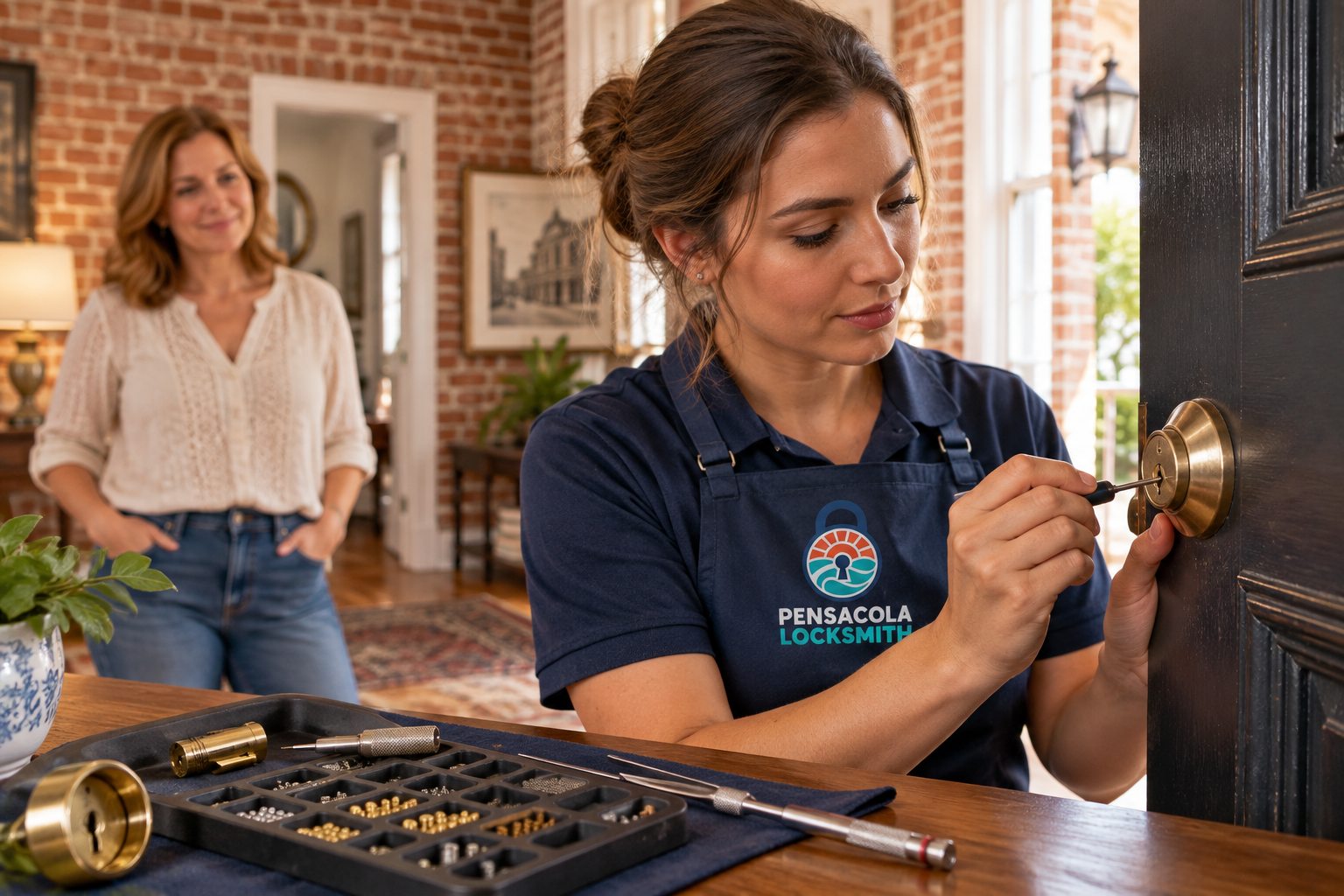
Rekeying keeps your existing hardware and changes the pins inside each cylinder to match a new key. It suits locks that are in decent condition and that you like. It is also the usual choice when you want every lock on the house to work with a single key, which is much easier than carrying five different ones around. The look of the door stays the same, which matters in neighborhoods with a consistent style.
Replacement makes sense when the hardware is worn, bent, loose in the door, or simply low quality. A deadbolt that takes two hands to turn is a lock that will eventually fail. Replacing at the time of purchase is also a chance to change finish, upgrade the grade of the bolt, or add a keypad on a door where you do not want to manage keys at all.
Upgrades are a longer conversation. Smart locks, reinforced strike plates, longer screws that reach the stud, and door jamb reinforcement all add resistance to forced entry. None of these are required, and a good technician will not push them. Explain how you live, who comes and goes, and whether you rent the place out part of the year, then decide what makes sense for the budget you have.
Timing the work around closing and move-in
The best time for a rekey is right after you receive the keys and before the movers arrive. The house is empty, doors are easy to reach, and no one is waiting on a locked room. If you can arrange the visit for the same day as closing, you sleep the first night knowing the old keys are dead. Availability varies, so call us to confirm availability and talk about scheduling.
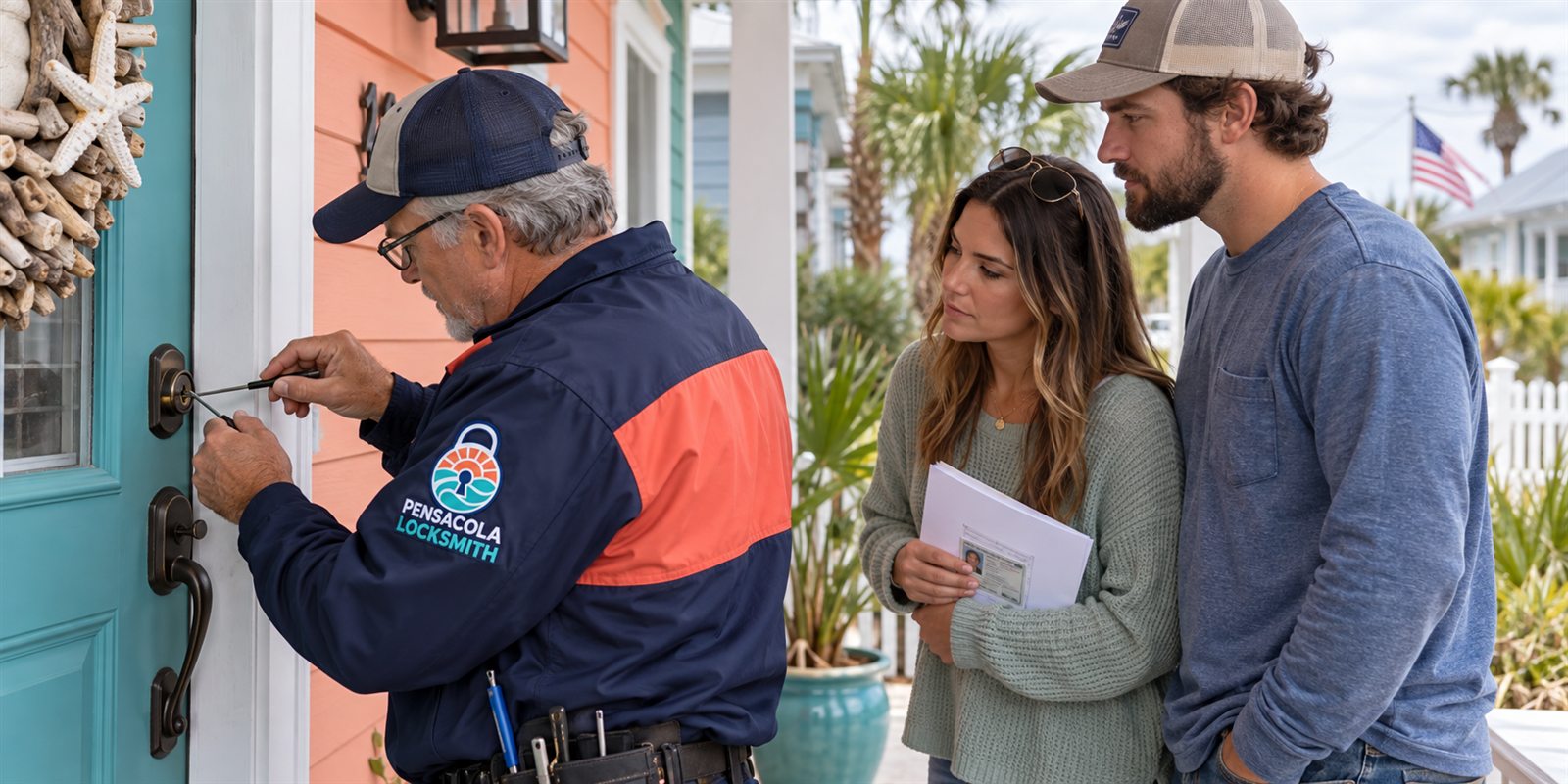
Ownership matters here. A locksmith checks that you have the authority to change the locks before starting work. Bring the closing documents or other proof that you now own the property, along with an identification card. This is not an obstacle, it is a protection for you and for every other homeowner, because the same rule stops someone from rekeying a house that is not theirs.
If closing is delayed or the keys come late, do not try to get in by force. A lockout at a house you do not yet fully control can cause damage and tension with the seller. Ask your agent to arrange access, and call us once the keys are officially yours. Planning one extra day is better than a broken door frame that has to be repaired at your own cost.
Garage doors, gates and the locks people forget
New owners often rekey the front and back doors and forget everything else. The garage entry door, the garage opener, the side gate, a pool fence latch, and a storage room all belong on the list. Garage remotes in particular may be programmed to the previous owner's system and still work with the opener. Clearing the old remotes and codes is as important as changing a cylinder.
Keypad garage entries and gate codes should be reset the same day. Many keypads ship with a default code that stays unchanged for years, and previous owners may have shared theirs with anyone who needed to get in. Check the opener's memory as well. Most openers allow you to erase all stored remotes, then program only the ones you hold in your hand.
Outdoor locks around Pensacola take a beating from salt air and humidity. Padlocks on gates and sheds often seize up within a few seasons if they are not lubricated or chosen with weather resistance in mind. Put new ones on the list now rather than discovering a frozen lock during a storm. Tell the technician what is exposed to the weather so the right hardware is brought.
Older homes and the special case of historic hardware
The Pensacola area has a good number of older houses with original hardware, including mortise locks set deep into the door and decorative knobs that are no longer made. These locks are worth keeping when possible, because they match the character of the house. A skilled technician can often rekey a mortise lock, rebuild its internals, or fit a modern cylinder into the original body.
Older doors also tend to have problems that have nothing to do with the lock. Settling floors change how a door sits in its frame. Paint buildup stops the latch from seating. Humidity expands wood in summer and shrinks it in winter. Before spending money on new hardware, ask the technician to check alignment, because many locks that feel worn are really just fighting a crooked door.
If you are buying a historic home, ask about restrictions before replacing exterior hardware. Some neighborhoods and properties have rules about visible changes. A technician can describe the options that keep the look intact while improving security behind the scenes, such as a hidden reinforcement plate or a modern cylinder inside a period-style escutcheon. Bring photographs of each door when you call.
Smart locks and keypads for new owners
A new home is the easiest time to move to keyless entry because you are already resetting everything. Keypad deadbolts let you give each person their own code, remove that code later, and stop worrying about who has a physical copy. They suit families with children, dog walkers, house cleaners, and anyone who gets locked out more often than they would like to admit.
Keypads and smart locks come with tradeoffs. They rely on batteries, and a dead battery needs a plan, whether that is a backup key, a terminal for a nine-volt battery, or a code on a second door. Wireless models depend on a hub or app, which means software updates and account passwords. Decide how much connectivity you want, and keep at least one traditional key as a fallback.
Installation quality decides whether the lock works for years. The door must be bored correctly, the bolt must line up with the strike, and the keypad must sit snug. A technician will also check that the door closes without being pushed, because motorized bolts struggle when a door drags. Ask what happens during a power or Wi-Fi outage so you understand exactly how the lock behaves.
Hurricane season and a secure first year
Living near the Gulf means planning for storm season. Doors take a lot of stress in high wind, and a weak frame or short screws can fail before the lock does. When you rekey, ask the technician to look at the hinge side and the strike side of each exterior door. Long screws driven into the wall stud make a real difference to how the door holds under pressure.
Keep a spare set of keys somewhere that does not rely on your house. A trusted relative, a safe deposit location or a lockbox away from the property all work. In an evacuation, you may be gone for days, and returning to find a swollen door or a lock jammed with debris is stressful. A little preparation avoids an emergency call in the middle of a messy week.
After any major storm, test every lock. Humidity, water intrusion and flying debris can bind cylinders and bend latches. If something sticks, do not force the key. Forcing a key can snap it off in the cylinder, which turns a minor repair into a bigger one. Call us to describe the problem, and we can advise whether a cleaning, a rekey or a replacement is needed.
Condos, townhomes and shared-building questions
Buying a condo or townhome adds a layer that single-family buyers do not face. The front door of a unit may be your responsibility, but the building entrance, mailroom, gym and parking gate belong to the association. Before changing anything on your unit door, read the association rules or ask the manager. Some communities require a matching exterior finish, a particular lock brand, or a spare key kept on file for emergencies.
Many associations keep a master key or an access record for fire and maintenance reasons. If that applies to you, ask what the arrangement is before a rekey, because changing the cylinder without telling the association can lead to a locked-out inspector or a fine. A technician can rekey the lock to a key that you control while the association keeps its own procedure for true emergencies.
Rental-friendly buildings near the beaches and downtown often see frequent turnover. If you plan to rent your unit out, think now about whether keypad codes would save you trouble. A code unique to each guest can be set and removed from afar, and nobody has to meet anyone at the door. Tell us how the unit will be used, and we can describe options that fit the building.
Questions worth asking any locksmith before work begins
Ask what the job will involve and how the quote is built. A reputable locksmith can describe the work in plain words, tell you whether the price is given by phone, and explain what happens if the job turns out to be larger than expected. For anything complicated, the technician visits and the service call charge is explained before dispatch, which keeps expectations clear from the start.
Ask about identification and ownership checks. If a locksmith is willing to rekey any house for anyone without asking a single question, that is a red flag. A responsible technician wants to know that you own or have authority over the property. This might feel like extra paperwork, but it is the same rule that keeps your own home safe from someone with bad intentions.
Ask what you will receive when the job is done. You should end up with working keys, a lock that turns smoothly, and clear instructions about any keypad or smart device. Test every key before the technician leaves. If anything feels off, say so right then. Good work includes a short walk-through so that you know exactly how everything operates before you close the door.
A simple checklist for your first week
Start with the list you made during the walk-through and number each lock. Decide which ones will be rekeyed to match, which ones need replacing, and which ones need a separate key for safety or privacy reasons. Gather any remotes, fobs and codes into one place. This turns a vague worry into a job a technician can estimate over the phone.
Next, decide who gets keys. Most families need two or three copies, not ten. Cut spares from the new key only, and avoid handing keys to casual acquaintances. Ask each person to confirm they received theirs. Keep a short note somewhere safe listing who holds what, so when someone moves out or stops working for you, you know exactly what to retrieve.
Finally, make the rekey a habit rather than a one-off. Any time a contractor, tenant, babysitter or former partner has had access and the relationship ends, consider changing the locks again. It is a small task compared with the peace of mind it gives. For anything you are unsure about, call us and describe what you have, and we will explain the options in plain terms.
- List every keyed opening, including gates, sheds and mailboxes
- Bring proof of ownership and identification to the appointment
- Reset garage remotes and keypad codes the same day
- Keep one spare key away from the property
Common questions
Should I rekey or replace the locks on a house I just bought?
If the locks are in good condition and you like them, rekeying is usually enough because it makes every old key useless without changing the hardware. If a lock is worn, loose or low quality, replacement is the better choice. A technician can look at each door and explain which approach fits it.
Do I need proof that I own the house before the locks are changed?
Yes. A locksmith checks ownership or authority before rekeying or replacing locks. Closing documents plus a photo identification card are typically enough. The check protects you and other homeowners by preventing anyone from changing locks on a property that does not belong to them.
How do I find out the cost before anyone comes out?
Call us and describe how many locks you have and what type they are. A quote is given by phone. If the job looks complicated, a technician visits and the service call charge is explained before dispatch, so there are no surprises when the work begins.
What about garage remotes and keypad codes from the previous owner?
They should be cleared. Most garage openers can erase all stored remotes and codes so that only the ones you program afterward will work. Keypad locks and gate codes should also be reset to new values. Do this along with the rekey so the whole house changes hands at once.
Can I schedule a visit for the same day as closing?
Call us to confirm availability. Same-day scheduling depends on the day and the job, so it helps to call as soon as you know your closing date. Have your proof of ownership ready and a list of every lock you want addressed.