
Content note: this page was written by Claude (AI) for Pensacola Locksmith.
The locks on a typical RV or travel trailer
A travel trailer or motorhome has a surprising number of locks. The main entry door usually has a deadbolt or a latch with a key, and sometimes a separate handle lock. Exterior storage bays, often called basement compartments, each have a latch, and many are keyed alike so one key opens them all. There may also be a lock on the generator compartment, the fuel door and the propane cover.
On a motorhome, add the cab doors and the ignition, which are automotive locks with their own keys. Towable trailers add the hitch coupler lock, a wheel lock or a tongue lock, and sometimes a lock on the spare tire. Each of these exists for a different reason, and each can fail in a different way.
Understanding the layout helps when something goes wrong. If the entry door key will not turn, that is a different problem from a stuck compartment latch. Knowing which lock is failing and what kind it is lets the technician bring the right parts. When you call, describe the vehicle type and exactly which door or compartment is involved.
Why RV keys are so often shared and why that matters
Many RV compartment locks come from a small number of manufacturers and use a limited number of key patterns. The result is that a key from one RV can open compartments on many others. People in campgrounds sometimes discover that their storage bay key fits a neighbor's rig. It is not a flaw in your lock alone, it is how the industry has long worked.
This sharing matters most for compartments that hold valuable items such as tools, generators, bikes or grills. A thief who carries a handful of common keys can try them on bays quickly. Replacing the standard cylinders with ones that use a different pattern cuts that risk. A locksmith can swap cylinders or rekey them to a unique key.
If you bought the RV used, assume you do not know who has copies of the original keys. Changing the entry lock and the compartment cylinders after purchase is a sensible step. Ownership documents are checked before any work, since the locksmith needs to confirm you have the right to change locks on the vehicle. Call us, describe what you have, and ask what is realistic.
Entry door problems: stuck, broken and locked out
The entry door on an RV is light compared with a house door, and its lock sees vibration on every trip. Over time, latches loosen, strike plates shift and the door stops closing cleanly. A lock that worked in spring may stick in the humid summer when the door frame swells. Dirt and insects can also work their way into the mechanism.
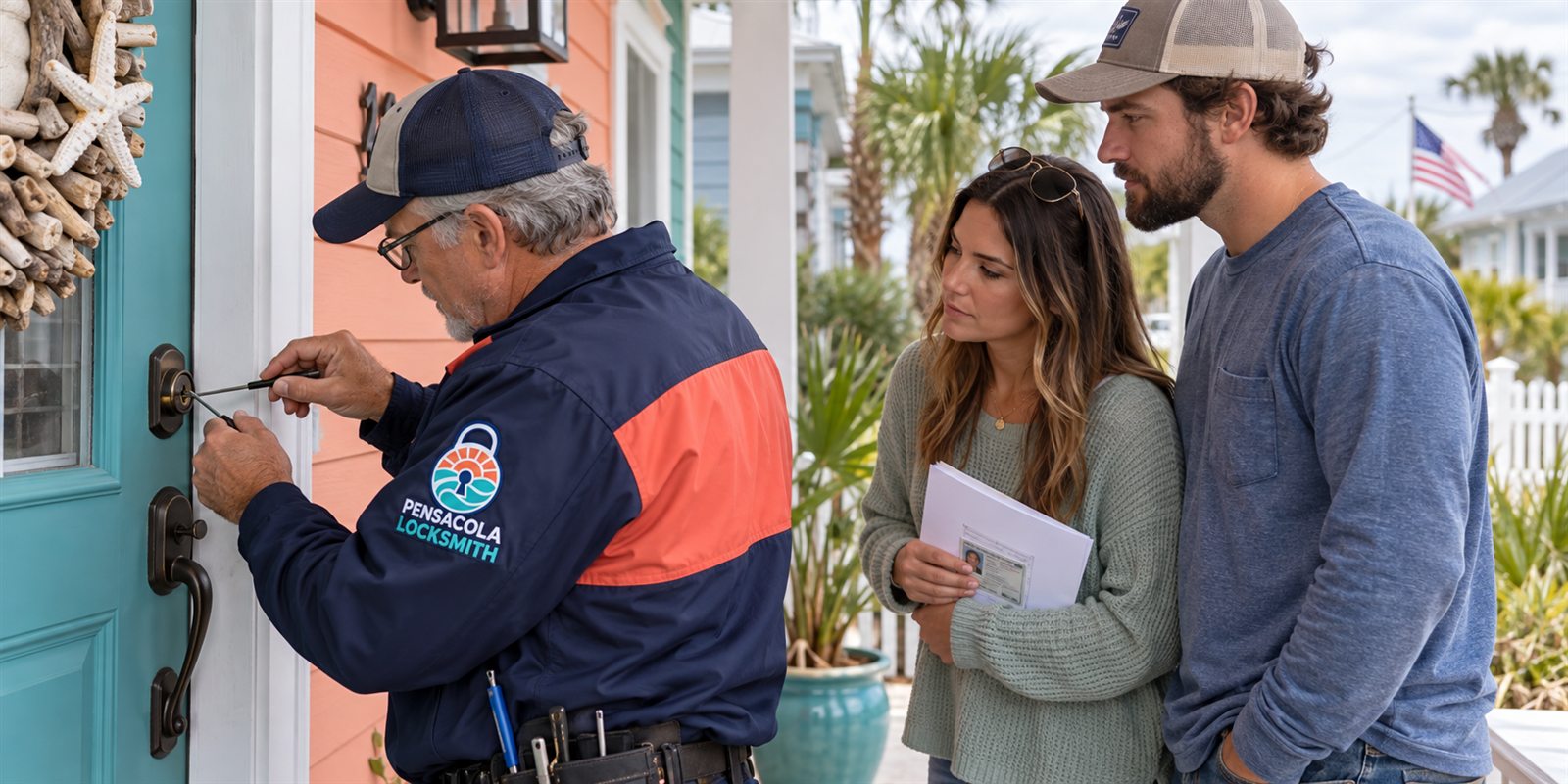
If you are locked out, the technician examines the latch type and chooses a non-destructive opening if possible. Many RV entry locks can be bypassed without damage, but some are built in ways that require care. Forcing the door can bend the thin frame and cost far more than a service call. Before opening, ownership is confirmed through registration or title and identification.
If the latch itself has failed, replacement is common. Parts are readily available for most designs, though the exact model matters. Taking a photo of the lock and the door edge helps the technician bring a match. Call us, tell us where the RV is parked, and describe whether it is a lockout, a broken key or a lock that will not latch.
Compartment latches and the cam locks that fail
Storage bay doors typically use a quarter-turn latch with a simple cylinder. They are exposed to weather, road spray and the sun. The cylinder can corrode, the plastic parts can crack, and the key can break off in the lock. Because they are cheap, they are often replaced rather than repaired, though careful cleaning solves many problems.
A stuck compartment is more annoying than serious until your gear is inside. If a key will not turn, do not force it. A small amount of the right lubricant sprayed into the keyway sometimes helps. If the key has broken, avoid pushing it deeper. A technician can extract the remains, cut a new key and, if the cylinder is worn, replace it with a stronger one.
While you are at it, check the door gasket and the hinge. A bay door that does not seal lets in water and dust, which damages everything stored inside and the lock itself. Replace worn rubber and tighten loose hardware. If you want a fresh start, rekeying all compartments to a single new key is a modest job that gives you control of your own set.
Hitch couplers, tongue locks and trailer theft
Trailers are stolen far more easily than people expect, since a thief with a truck can simply hook up and drive away. Coupler locks and tongue locks prevent the trailer from being hitched to another vehicle. Wheel locks and hitch pin locks add to the barrier. None is perfect, but together they make theft slower and less attractive.
The locks themselves are exposed to rain, mud and road salt, and they seize if not cared for. A coupler lock that will not release is a common call. Lubricate the lock periodically, keep it covered when not in use, and store the key in a place you will remember. If you lose the key, a technician can often open the lock without damage, or else cut it with minimal harm to the coupler.
Ownership checks apply here as well. Because trailer locks are a theft target, the locksmith needs proof that the trailer belongs to you, such as registration or a title and identification. It may feel like a hassle, but it protects you the same way. Call us with the type of lock and where the trailer is, and we will explain what the visit involves.
- Coupler locks that block hitching to another vehicle
- Wheel locks and hitch pin locks as additional barriers
- Covered locks to keep out rain and road grit
- Keys stored away from the trailer itself
Gulf Coast storage: humidity, salt and sun
Many RVs and trailers around Pensacola are parked outside, in driveways, storage lots or near the water. Humidity encourages corrosion, salt air accelerates it and strong sun dries out rubber and lubricant. A lock that sits unused for months is exposed to all three, and it often fails the first time you try it after a long gap.
Prevention is simple, though easy to forget. Turn every key at least once a month, even if you are not traveling. Rinse salty residue from exposed locks. Apply a suitable lubricant to the keyway and hinges, avoiding thick grease that traps grit. Cover the coupler when parked. These small steps cost little and prevent many of the stuck-lock calls technicians see.
Before a long trip, test everything. Check the entry lock, each bay, the propane cover and the hitch lock. It is better to find a stiff cylinder in your driveway than at a campground two states away. If something feels rough, have it serviced now. A locksmith can clean or replace parts while you are still near home and have your documents handy.
Lost keys, spare keys and what to carry on the road
Keys get lost on the road at the worst times. A good plan is to carry a full spare set, stored somewhere other than the usual place. A second set in a separate bag, kept inside a locked compartment, works well. Another option is to leave a copy with a trusted person at home who could send it if needed.
Take a photo of the key stamps and any numbers on locks. If a replacement is needed, that information helps a technician cut a key quickly. Some RV locks use key codes printed on the cylinder or on the key, and those can sometimes be used to make a new key. Without a code, the technician may need to work from the lock itself.
Ownership proof matters on the road too. Keep a copy of your registration and insurance information in a place you can reach, even if you are locked out of the vehicle. A phone photo works. Call us when you are in the Pensacola area and need a key made or a lock replaced, and let us know how soon you plan to move on so we can discuss realistic options.
Motorhome ignition and cab doors
A motorhome built on a truck or van chassis has the same type of ignition and cab door locks as other vehicles of that kind. That usually means chip keys that must be programmed, along with remote fobs for some models. A lost key to the cab is a bigger issue than a lost bay key, because it leaves the vehicle unable to move.
Creating a new key requires the same steps as for a car or truck. The technician verifies ownership, determines the key type and cuts and programs a new key. Some chassis are straightforward and others require specialized equipment. We will tell you plainly if your vehicle needs a dealer or specialist instead of promising something we cannot deliver.
Do not overlook the batteries. A fob that suddenly stops working may only need a new battery, which is a simple fix. Also keep in mind that a motorhome may have a separate house battery system that does not affect the ignition. If the engine will not start, a lock or key problem is only one of several possibilities, and a technician will often help you separate them.
Campgrounds, storage yards and shared security
Your lock is only one layer of protection. A campground or storage yard with a staffed gate, good lighting and tidy spacing protects better than any single padlock. When choosing where to park, ask how access is controlled and who has gate codes. Shared codes spread widely are less secure than they appear.
At home, think about how visible your trailer is from the road and whether it can be blocked in. Parking a trailer so that its hitch cannot be reached makes theft harder. Pair that with a coupler lock and you have a real obstacle. Remove valuables from the vehicle when it will sit for a long time.
If you rent storage, find out whether the facility rekeys gates and doors when staff leave. You cannot control that, but you can choose operators who take it seriously. For your own property, call us to talk through coupler locks, gate hardware and compartment cylinders, and we will explain what is worth changing and what is fine as it is.
Enclosed cargo trailers and utility trailers
Not every trailer is a camper. Enclosed cargo trailers, race trailers and landscaping trailers often have rear ramp doors, side doors and sometimes roll-up doors. These carry tools and equipment, so thieves target them. Many come from the factory with a basic paddle latch and a thin lock that is easy to defeat. Upgrading is worthwhile if the contents are valuable.
Common upgrades include a hardened hasp, a puck-style lock that protects the shackle, and a deadbolt on the side door. The lock is only as strong as what it is attached to, so check that the door skin and frame can resist prying. A technician can look at how the door is built and recommend a setup that suits it, rather than selling you a lock the structure cannot support.
Keying everything alike is convenient, and it also means one lost key opens all of it. Think about what you keep in the trailer and how often you need access. For open utility trailers, the main concern is the hitch and the equipment tied down on top, which calls for a coupler lock and sturdy chains with locks. Call us and describe what you tow and carry.
Buying used: checking locks before you commit
If you are shopping for a used RV or trailer, the locks tell you something about how it was treated. Try every key. Turn the entry lock several times, test each bay and check the hitch lock if there is one. Stiff or rough locks suggest corrosion or neglect, and missing keys can be a sign that the seller does not know who else has copies.
Ask how many keys come with the vehicle and whether any special keys exist, such as for a propane cover or a generator bay. A seller who cannot answer may have lost track. Plan to rekey after purchase, and factor the work into your decision. Confirm the paperwork is in order, since a locksmith will need it to prove you may change the locks.
A locksmith can sometimes inspect the locks before you buy, though that depends on access to the seller's location. If you are close to Pensacola, call us to talk through what to check. After purchase, a rekey of the entry door and compartments, plus a spare set kept apart from the main one, gives you a clean start with a vehicle you did not own before.
Hurricane season and moving a rig quickly
Hurricane season is a practical concern for people who keep RVs and trailers along the Gulf Coast. If you need to move quickly, you do not want to find a seized hitch lock or a missing key. Test the coupler lock and the tow connections in advance and keep keys in a known spot.
If a storm is close, secure what you can. Lock compartments, close and latch all doors and covers, and remove anything that can blow away. After the storm, check every lock and latch for damage or debris. Wind-driven rain can enter locks and cause corrosion, and bent frames can prevent doors from closing properly.
If you need service after a storm, expect demand to be high. Call us to confirm availability, describe the damage and be ready with your ownership documents. If a door or latch is damaged and the vehicle must be secured, tell us, and we will discuss what can be done at the site. Quotes are given by phone, and complicated work begins with a technician visit and an explained service call charge.
Common questions
Why does my RV storage bay key fit someone else's bay?
Many RV compartment locks use a limited set of common key patterns, so one key can open many rigs. If a bay holds valuables, replace the cylinder with a different pattern or rekey it to a unique key. A locksmith can do this at the vehicle after confirming ownership.
Can you open an RV without damaging the door?
Often yes. Many entry locks can be opened without damage, though the thin door frames need care. Forcing the door usually costs more than a service call. Ownership is checked first, so have registration and identification ready. Tell us the RV type when you call.
What can I do if my trailer coupler lock will not release?
Try a suitable lubricant in the keyway and gently work the key. Do not force it. If it stays stuck, a technician can often open it without harm or cut it with minimal damage to the coupler. Proof that the trailer is yours is needed before the work.
Should I rekey an RV I just bought?
It is a sensible step. You do not know who holds copies of the old keys. Changing the entry lock and compartment cylinders gives you control of the set. A locksmith will check your ownership documents before making changes.
Can a locksmith make a key for my motorhome ignition?
In many cases yes, depending on the chassis and key type. Ownership is confirmed first. Some vehicles need a dealer or a specialist, and we will say so honestly. Call us with the make and key type and we will explain what is realistic.