
Content note: this page was written by Claude (AI) for Pensacola Locksmith.
Why doors swell in humid weather
Wood absorbs moisture from the air, and as it does, it expands. Doors, jambs and thresholds all take on water, but not at the same rate. End grain, the cut surface at the top and bottom of a door, absorbs the most. Unsealed edges swell more than painted ones, which is why a door often starts rubbing at the bottom corner first.
On the Gulf Coast, the relative humidity is high for much of the year, and rain events are frequent. A door that was fitted in a dry spell may be tight in summer. Air conditioning cycles can add to the swings, as indoor air dries out while the outside face stays damp.
Other materials respond too. Fiberglass swells very little, but the wooden frame around it does. Steel doors may expand slightly with heat and rust where paint is chipped. Metal frames can shift as the wall around them moves. Understanding what your door is made of helps in finding the cause.
Painting practices make a difference too. A door painted in dry weather and then exposed to a wet season may swell and crack the paint along the edges. Multiple coats of paint over the years also thicken the door and the frame, making the fit tighter than it was designed to be. If your door has been painted many times, it may simply have run out of clearance, and trimming is the real remedy.
How swelling affects the lock
A latch bolt and a strike plate must line up within a small margin. When a swollen door shifts by a few millimeters, the bolt hits the edge of the plate or misses the opening. The door then needs a push, a lift or a slam to catch, and the lock appears to be failing.
Deadbolts are even more sensitive. A bolt that has to travel into a hole in the frame binds if the door and frame move relative to each other. You may need to pull the door toward the hinge side to throw the bolt, and it may feel as though the key is stiff when really the bolt is rubbing.
Over time, forcing the lock damages it. Slamming, pushing and wrenching the key bend the bolt, wear the strike, and strain the cylinder. What began as an alignment problem becomes a hardware problem. Recognizing the cause early saves the lock and your hands.
It helps to know that a sticking bolt and a sticking key are different symptoms. When the key will not turn inside the cylinder, the cylinder is the problem. When the key turns but the bolt will not move in or out of the frame, alignment is the problem. Describing which of these you experience makes it much easier for the technician to bring the correct tools and parts.
- Door rubs on the frame at the top or latch side
- Bolt hits the edge of the strike
- Lock works easier on dry days
- Paint marks or shiny spots along the edge
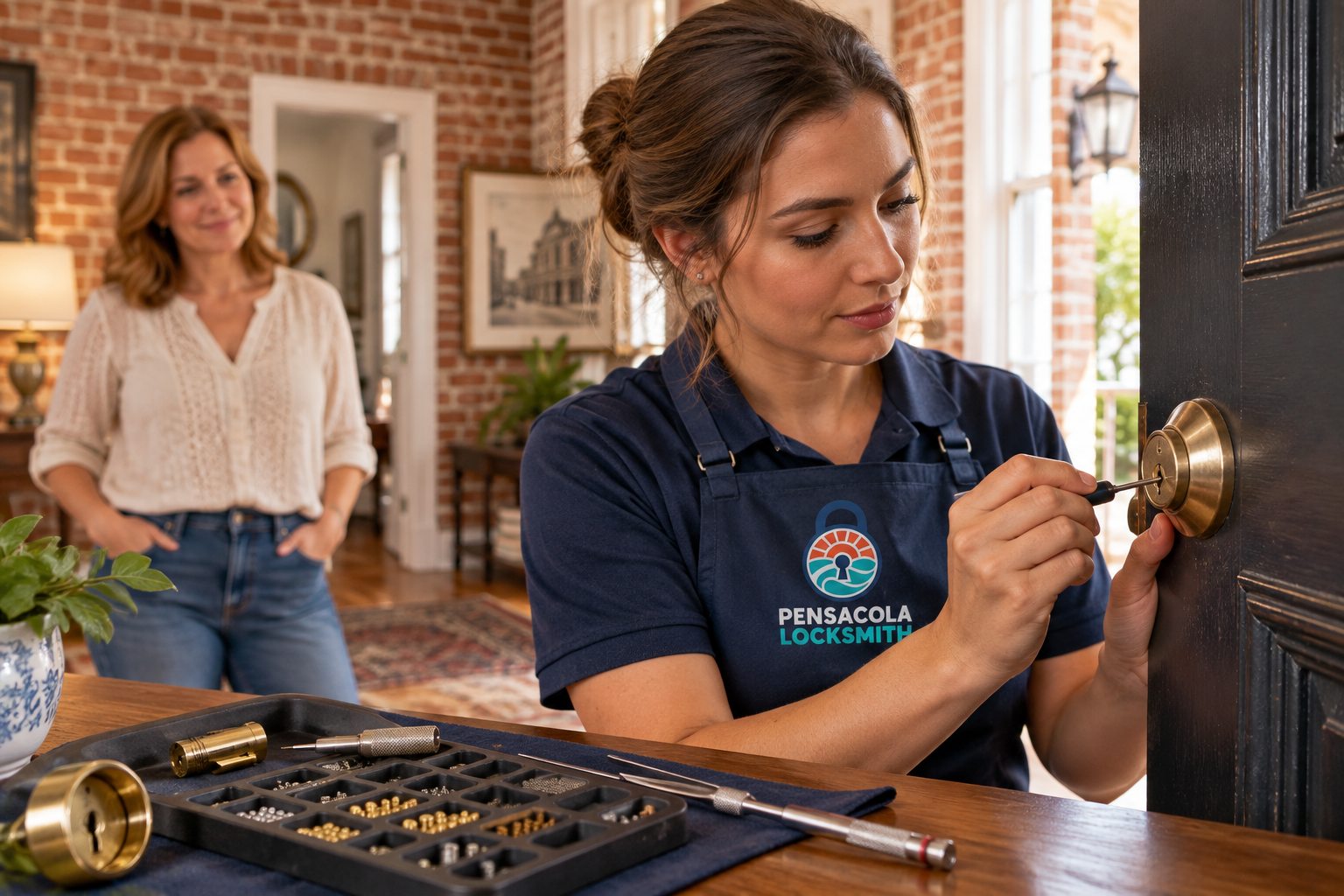
Telling a door problem from a lock problem
A simple test helps. With the door open, operate the lock. If the key turns smoothly and the bolt moves freely, the lock mechanism is probably fine. If it is stiff even with the door open, the lock itself is the issue. If it feels fine open but sticks when closed, alignment is the cause.
Next, close the door slowly and watch where the bolt meets the strike. Mark the bolt tip with lipstick, chalk or tape and close the door. The mark shows where the bolt lands on the plate. If it sits above or below the hole, the door has shifted or the plate needs moving.
Look at the gaps. An even reveal around the door suggests good fit. A gap that narrows to nothing in one corner, or paint worn from the edge, tells you where the door is rubbing. These clues point to the real fault and help prevent unneeded lock replacement.
Photographs taken in different seasons can help in difficult cases. If you can show the gap at the latch side in dry weather and in wet weather, the technician sees how much the door moves. Some doors move so much that no single adjustment suits both conditions. In that case, a compromise setting, or replacing a door that is poorly built, may be the sensible course.
Hinges, the usual culprit
Before blaming moisture, check the hinges. Loose hinge screws let the door sag, particularly at the top hinge where leverage is greatest. The latch side of the door drops, and the bolt misses the strike. Tightening the screws sometimes solves the whole problem in a few minutes.
If the screw holes are stripped, the screws will not hold. A common repair is to use longer screws that reach the wall stud behind the jamb. These pull the frame and door back into place and give a more solid mount. A locksmith can do this, or may suggest a carpenter for more extensive work.
Worn or rusted hinges deserve replacement. A hinge with a loose pin or heavy corrosion allows the door to move in ways it should not. Replacing hinges with a better quality set, using stainless or coated screws, keeps the door properly hung and preserves lock alignment for years.
Hinge adjustment is not always possible, but many modern hinges allow a small shift using shims. A thin cardboard shim behind a hinge leaf can push the door a fraction of a millimeter toward the latch side, correcting a slight drop. This is a classic carpentry trick that works well when the hinge screws are secure. A locksmith or a handy homeowner can do it in a few minutes.
Adjusting the strike plate
When the door has settled into a slightly new position, moving the strike plate can be simpler than altering the door. A small misalignment can be fixed by filing the opening in the plate. Remove the plate, file the edge where the bolt hits, and refit. Always keep the plate secure afterward.
For larger shifts, the plate may need relocating. A technician chisels a new mortise, fills the old one, and sets the plate in its new position. The wood needs to be solid for the screws to bite. Using long screws into the framing makes the plate hold better and adds security.
Be careful not to enlarge the opening too much. A large hole around the bolt weakens the lock, since it leaves less material resisting force. The goal is a snug fit, with the bolt entering cleanly and the door sitting without rattle. Adjustment should restore function while keeping security intact.
Where the lock set is a deadbolt, the bolt should enter the strike with a little clearance all around. If it touches the sides of the hole, use a round file to open it slightly, or move the strike. A bolt that is forced into a tight hole wears quickly and can bend. Smooth operation without force is the target, since force is a sign something is wrong.
Planing, sanding and sealing the door
If the door itself is swollen, the edge may need trimming. Planing or sanding removes a thin layer where it rubs. Do this only to the point of clearance, because removing too much leaves a gap that lets in air and water when the door dries out again. Often just a few passes are enough.
Sealing is as important as trimming. Bare wood on the top, bottom and edges takes up water and swells again. Priming and painting every edge, including the bottom, slows moisture uptake. Use paint suited to exterior use and let it cure before closing the door against the weatherstrip.
Be careful around the lock. Avoid sanding the latch area in a way that exposes the hardware, and mask the lock before painting. Paint in the strike opening or on the latch bolt can cause new sticking problems. A locksmith who works on door hardware will take care of this part to prevent surprises.
Be careful with heavy planing on a door that has a fire rating or a manufacturer's warning label. Excess trimming can violate the terms of the rating, and some doors have an internal core that must not be exposed. A technician will check the door before any work and tell you if the job should go to a door specialist instead. Respecting those limits protects both safety and your home.
Frames, thresholds and storm effects
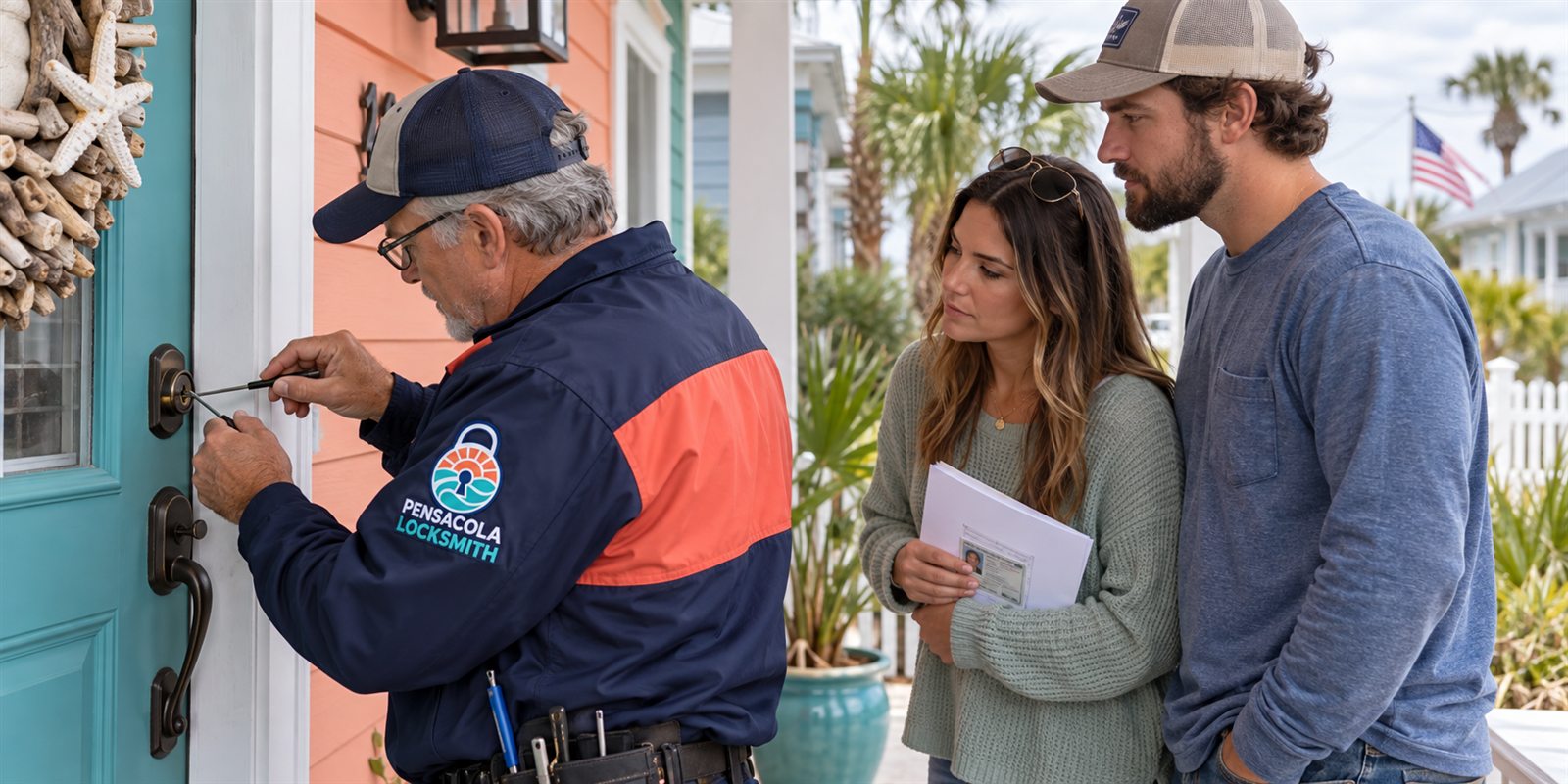
Frames can move too. Water at the bottom of a jamb can cause rot, and the frame softens and shifts. A threshold that has swelled or lifted can bind the bottom of the door. After heavy storms, walls and slabs may settle slightly, and a door that fitted before is now out of square.
Check the frame for soft spots by pressing with a screwdriver. If it sinks in, wood is rotting. A locksmith cannot repair a rotten jamb, and a new lock will not hold in it. A carpenter or door contractor should fix the frame, and then the lock can be fitted properly.
After flooding or prolonged wetting, give wood time to dry before making permanent adjustments. Doors that are trimmed while swollen will be too loose when they dry. If safety requires quick action, a temporary measure can secure the door until conditions improve.
For homes with persistent moisture problems, think about the larger picture. Poor drainage, a crawl space with standing water, or leaking gutters can cause repeated swelling in every door and window. Fixing the source helps all the hardware in the house. A locksmith can adjust the lock, but a lasting solution may require attention to the building itself from other trades.
Preventing seasonal sticking
Good drainage and ventilation make a large difference. Gutters that channel water away, porch roofs that shelter the door, and a gap for air to circulate keep wood drier. Keep plants and mulch away from the base of the door. A dehumidifier inside can help in very damp homes.
Maintain the weatherstripping and threshold. Replace brittle seals, and check that the door sweep keeps rain out. A small gap at the bottom can let water wick up into the wood. Paint or seal any cut edges whenever the door is trimmed or the lock is changed.
Make small adjustments before they become big. If you notice the door rubbing in a damp week, check the hinges and strike then. Early attention prevents damage to the lock and avoids emergency calls. A regular look twice a year, before and after the wet season, is enough for most homes.
After adjustment, test the door in different conditions if possible. Try it early in the morning and in the humid afternoon. Check that it closes without slamming, that the latch holds, and that the bolt works without lifting or pulling. If the door still binds in certain weather, tell the technician so that further small tweaks can be made without starting the whole job again.
What to expect when you call
Tell the dispatcher how the door behaves in wet and dry weather, whether the lock works with the door open, and where it rubs. Mention the door material and age. A photo of the gaps and the strike is helpful. Quotes are given by phone, and call us to confirm availability.
On site, the technician confirms ownership or authority, then tests the door, hinges, strike and lock. Often the fix is adjusting or relocating the strike, tightening or replacing hinges, and cleaning the lock. If the lock itself is worn, it will be replaced.
For more involved cases, such as a rotten frame or a warped door, a technician visits to assess it and the service call charge is explained before dispatch. You will be told if a carpenter is needed before lock work can finish, so there are no surprises.
Interior doors, closets and bathrooms
Interior doors suffer from humidity too, especially in bathrooms, laundry rooms and homes where the air conditioning is turned off for long periods. A privacy knob that stops latching, a closet door that rubs, or a bedroom door that sticks every summer are all common complaints. The same principles of hinge, strike and edge sealing apply, although the stakes are lower than for an exterior door.
Privacy locks on bathrooms and bedrooms are simple devices, but they can jam when the door shifts. If a child or adult is locked inside, a small emergency release is usually available on the outside, often a slot or a tiny hole in the knob. Keep a thin tool nearby so you can open it quickly, and teach older children how to unlock from inside.
Pocket doors and sliding closet doors have their own tracks and latches that swell and collect dust. Cleaning the track, checking the rollers, and adjusting the latch often resolves the issue. If a door needs a new lock or a replacement latch, a locksmith can supply matching hardware that fits the existing preparation, so you do not have to redo the whole door.
Common questions
Why does my door stick only in summer?
Humidity makes wood swell, so the door and frame grow tighter in damp weather. The bolt then misses the strike or the door rubs. Hinge screws may also loosen with seasonal movement. Checking hinges, adjusting the strike and sealing the edges usually helps.
Do I need a new lock if the door sticks?
Often not. If the lock works smoothly with the door open, the problem is probably alignment. Replacing the lock will not fix a swollen door or a sagging hinge. A technician can test the lock and tell you whether the lock or the door is at fault.
Can I plane the door myself?
Small trimming is possible for a handy person, but go carefully. Remove only what is needed, and seal the cut edge with primer and paint. Do not trim a door that is swollen from a flood until it dries. A locksmith or carpenter can help if you are unsure.
My strike plate seems misaligned. Can it be moved?
Yes. Small shifts can be handled by filing the opening, and larger ones by relocating the plate. The plate should be secured with long screws into the framing. The technician aims for a snug fit so the lock stays secure.
When is the problem a rotten frame?
If a screwdriver sinks easily into the jamb or threshold, or paint is peeling and the wood is soft, rot is likely. A lock will not hold in rotten wood. A carpenter or door contractor should repair the frame, and the locksmith can fit the lock afterward.