
Content note: this page was written by Claude (AI) for Pensacola Locksmith.
Why GMC owners often need help where the vehicle sits
Trucks, large SUVs and vans are awkward and expensive to tow, and many owners rely on them for work, family or towing a boat. When a key disappears, the idea of loading the vehicle on a flatbed adds cost and hassle. Mobile key service avoids that by working at the curb, the job site or the driveway.
The technician carries a portable key cutter, a supply of key blanks and fobs, and diagnostic equipment for programming. Most of what a shop does with a key can be done from the back of a service vehicle, provided the vehicle can be accessed and the ownership checks are satisfied.
This is especially useful around Pensacola, where vehicles go to boat ramps, beaches, base gates and construction sites. A key lost in any of those places can leave a large vehicle stuck far from home, and a technician who comes to it is a practical answer.
The key and fob styles on GMC vehicles
GMC has used a range of key forms. Older vehicles often use a metal key with a chip in a rubber or plastic head. Others use a transponder key paired with a separate remote fob. Many newer ones combine lock, unlock, panic and remote start buttons in a single fob that also holds the emergency blade.
Vehicles with push-button start use a proximity fob. You carry it, press the brake and press the button. The vehicle senses the fob inside the cabin. Some vehicles also let you unlock a door by touching the handle, and the fob handles that function too.
Large vehicles often carry extra functions on the fob: remote start, a liftgate or tailgate release, and sometimes a button to open windows. When you call, mention what buttons your fob has, because every function adds a check at the end of the job.
If you are unsure what you have, look at the ignition. A keyway means a blade and chip system. A start button means proximity. A technician can usually narrow it from there with the vehicle identification number.
How the chip and the vehicle compare notes
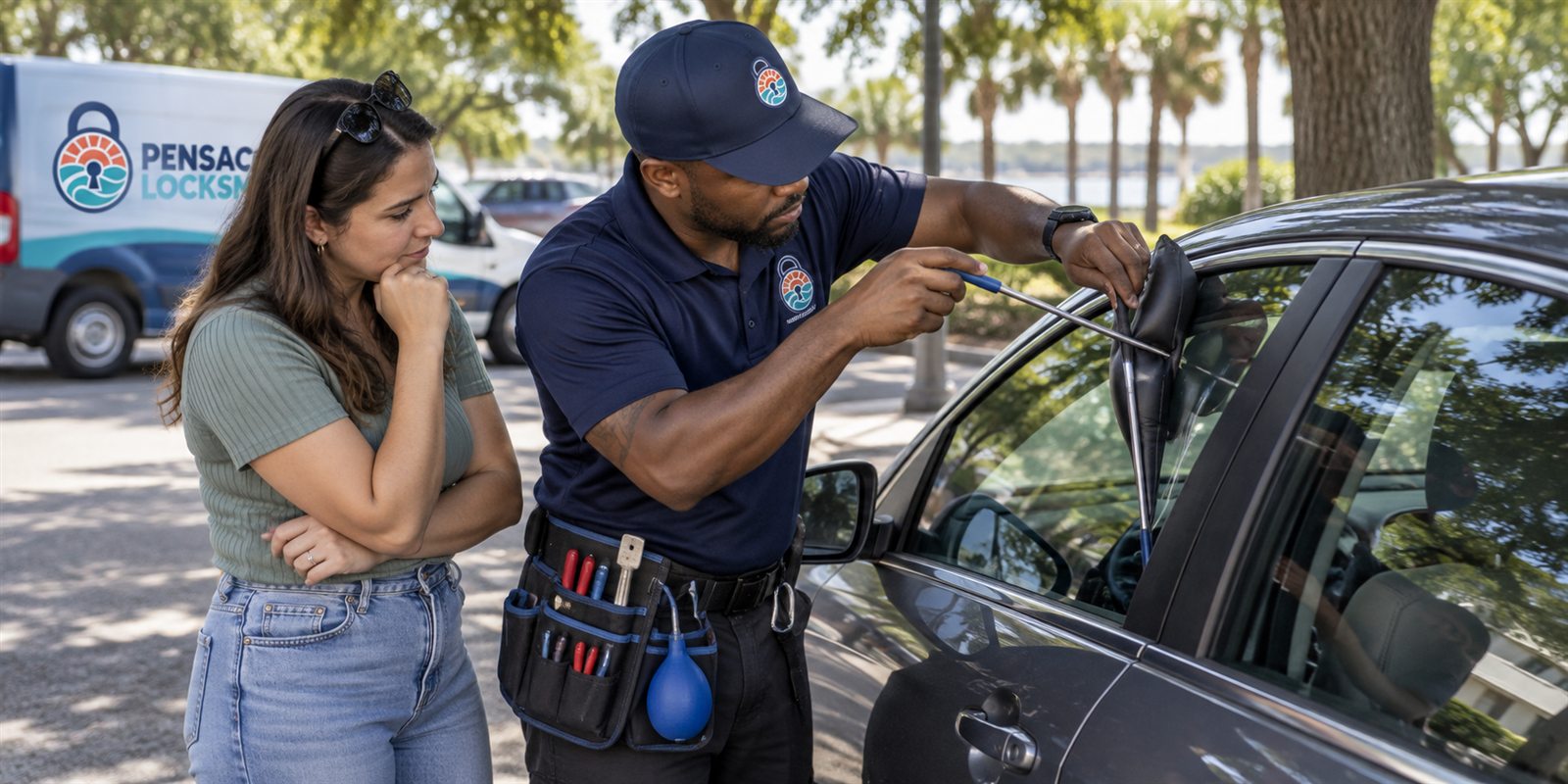
A modern GMC will not start unless it recognizes the key. The key carries a coded chip, and the vehicle's computer reads it when the key is turned or the fob is detected. If the code is missing or unknown, the engine may crank without firing, or a security light may appear on the dash.
Many systems on these vehicles use a relearn procedure to add keys. Depending on the model, the process may involve a timed ignition sequence, a diagnostic tool or both. Some vehicles allow onboard learning if you already hold working keys, while others require a tool.
A technician determines which approach your vehicle uses and follows it carefully. Rushing or guessing can lock the vehicle's security system into a delay, and that delay can last long enough to ruin an afternoon.
Programming also lets the technician remove old keys from the vehicle's memory where the system supports it. That is a valuable security step when a key has been stolen or lost somewhere it could be found.
Ownership comes first, every time
Before cutting or programming a key, or opening a locked vehicle, the locksmith checks ownership or authority. A photo ID and a registration or title that match are the typical proof. For recent purchases, a bill of sale with the ID may be enough.
For work trucks and company SUVs, the person who calls may not be the owner. A letter from the company, a fleet document or a call from the owner can supply the authority. If you are not the registered owner, it helps to arrange this before the technician arrives.
The process may feel strict when you are in a hurry, but it is the reason a lost key does not become a stolen vehicle. Every honest owner benefits from a trade that takes this seriously.
If you are unsure what to show, ask when you call. The dispatcher or technician can tell you which documents are accepted, and you can gather them while waiting.
What the technician needs from you
Be ready to give the make, model, approximate year, number of working keys and whether the vehicle is locked. Mention if the key is broken in the ignition, because that changes the first step.
The vehicle identification number is the best single item. You can read it on the dashboard near the windshield or on the driver door jamb. With it the technician can confirm exact key type and programming route.
Describe the location with care. A flat driveway is simple. A gravel lot, a boat ramp, a base entrance or a soft shoulder is trickier. Large vehicles also need room around the driver door, so move other cars if you can.
Gather any keys, fobs or pieces. An old fob that no longer works still tells the technician what buttons and hardware your vehicle uses. Photos of the fob front and back can also help during the call.
Towing, trailers and the keys that go with them
GMC vehicles are often bought to tow, and towing adds keys to the picture. A boat trailer hitch lock, a camper door, a toolbox and a locking fuel cap may each use a separate key. When one key goes missing, it is easy to forget which lock it belonged to. Sorting that out before the call helps the technician plan the right blanks.
Many trucks also have a key for the cab and a separate cut for a bed cover or a camper shell. These are mechanical locks without chips, so they can be cut quickly once the type is known. The ignition and door keys are the ones that need programming, and the technician can handle both in the same visit.
If you tow regularly, keep a spare key stashed with your trailer paperwork rather than in the truck. A lockout at a boat ramp with the keys on the console is a classic Gulf Coast mishap, and a spare in the hands of a family member or friend turns it into a short wait instead of a long one.
Remember that a locked, loaded trailer behind a stuck truck is a safety matter as well as an annoyance. If you are blocking a ramp or a lane, move what you safely can and let people know. A technician can work while you manage the rest, but your priority should be keeping everyone out of traffic.
Cutting the blade for a big vehicle
Cutting a GMC key starts with matching the blank to the lock. Some vehicles use an edge cut, some a milled channel. The technician selects the blank, then cuts it using a copy source, a code, or information from decoding the lock.
If a working key is available, copying is quick. If not, the technician decodes the door or ignition lock to derive the cuts. Trucks that have seen heavy use can have worn locks, which makes decoding trickier but still routine for a trained locksmith.
The new blade is tested in the door and the ignition. Some GMC vehicles have extra locks, such as a toolbox, a tailgate or a glove box, and the technician checks that the key fits where it should.
Any burrs are filed away. A well finished key slides smoothly and does not drag on the tumblers. If the lock is gritty, a light cleaning and a dry lubricant help. Avoid oily sprays, which attract sand and dust.
Programming the chip, remote and extras
With the blade ready, the technician connects a diagnostic tool to the data port under the dash. The vehicle's information is read, a key learning routine begins and the new key is presented. When the car accepts it, the engine start is tested.
Remote functions come next. Lock, unlock, panic, remote start and tailgate release are all tested. On proximity models, the technician confirms that the vehicle detects the fob in different parts of the cabin and that it shuts off properly when the fob is removed.
If you have two working keys, the process may be simpler, because the vehicle may allow onboard learning. If you have none, the technician follows the full procedure. Either way, the technician tells you what the plan is.
Unexpected problems do occur. A weak vehicle battery, a damaged data port or an aftermarket module can all interfere. A power supply during programming protects against voltage drops, and the technician will point out any component that blocks the process.
Fob care in a truck's rough environment
Truck keys live hard lives. They bounce around toolboxes, ride on heavy key rings and spend time on wet decks. The weight of a large ring can wear the ignition cylinder, and the stress can crack a fob case.
A lighter key ring is easier on the ignition. Remove unneeded keys, tags and gadgets. If you must carry a lot, consider a detachable ring so the vehicle key is not hanging by itself on the cylinder.
Moisture and heat are the other enemies. A fob left on a hot dashboard, or soaked in a boat or at the beach, can fail early. Dry any wet fob thoroughly with the battery removed, and replace weak batteries before they die.
Check the emergency blade now and then. If you have never removed it, you may not know how, and the moment the battery dies is a bad time to learn. A quick trial on a calm day takes seconds.
- Use a light key ring to reduce wear on the ignition
- Replace the fob battery on schedule
- Practice removing the emergency blade once
- Keep a spare key somewhere safe and dry
Gulf Coast conditions that affect keys and locks
Salt air, humidity and sand are part of life in Pensacola. They corrode lock cylinders and coat key blades with residue. Over time, door locks can feel rough and ignitions can get sticky, and the sensation is often blamed on the key.
Regular care helps. Wipe blades occasionally, avoid pushing sand-covered keys into locks, and use a dry graphite style lubricant rather than heavy oil. If locks have grown stiff, mention it during the visit so the technician can look at them.
Hurricane season is another planning point. If you need to evacuate, you want every key and fob accounted for. Keeping a spare in a dry container with your documents is a simple precaution.
Visitors with rental trucks and residents with campers or trailers often have more than one key in play. Keep track of which key opens what, and label spares so nobody has to guess at the worst time.
How the visit and the quote work
Call us, describe the vehicle and situation, and expect a quote by phone for routine jobs. Please call to confirm availability for your location. If your situation is complicated, a technician may need to visit first. The service call charge is explained before dispatch.
On site, the technician checks ownership or authority, inspects the vehicle and explains the plan. The work follows: cutting, connecting, programming, testing. You may stay and watch, and questions are welcome.
When the job is done, test everything. Start the engine twice, press each button, try the emergency blade and confirm no warning lights remain. If you want a spare, adding it in the same visit saves a second trip.
Store the old key pieces or hand them to the technician. A key that was erased from the vehicle's memory is harmless, but it is still sensible not to leave loose keys lying around.
When a key is not the real problem
Sometimes a GMC that will not start has nothing wrong with the key. A weak battery, corroded terminals or a worn starter can mimic key trouble. A dash that flickers or a click without cranking points toward the electrical system rather than the immobilizer.
If one key starts the vehicle and another does not, the second key is likely the issue. If no key works but the dash lights up normally, the immobilizer antenna or module may be at fault, and a technician can test for that before replacing keys.
The technician will tell you if a new key will not fix the problem. That honesty may save you from paying for something unnecessary. If the real fault lies with the vehicle, you will be pointed toward the right kind of repair.
Avoid repeated cranking attempts. They can drain the battery and, on some systems, trigger a longer security delay. Stop after a few tries and note what the dash shows.
Planning for spare keys in busy households
Families with a GMC tend to share it among several drivers, and keys move around. One goes to the office, one stays on a hook, and one ends up in a teenager's backpack. Within a year it can be hard to say how many keys exist or where they are.
A simple system helps. Decide how many keys you want, label them if they are identical, and keep one in a place that is not the vehicle. If someone moves out or a key is lost, think about whether to remove the lost key from the vehicle's memory as well.
Military households relocating to or from the naval air station also face a particular problem: a vehicle sold or bought quickly with only one key. If you buy a used GMC, consider making a spare soon, and ask whether the previous owner's keys can be removed from the system.
Students, visitors and seasonal workers who borrow vehicles should check with the owner before calling a locksmith. The technician will need the owner's authority, and a short call or message to the owner can prevent a delay at the curb.
Common questions
Can a locksmith make a GMC key if I have lost every key?
Usually yes. After checking ownership, the technician decodes the lock to cut a blade and programs a new key to the vehicle. It takes more steps than copying a key you already hold, and some models involve security delays. Call us with the model and year and we can explain what to expect.
Can the remote start button on my fob be programmed too?
On vehicles that support it, yes. The remote functions, including lock, unlock, panic, tailgate release and remote start, are taught after the engine key is registered, and each one is tested before the technician leaves. Some functions depend on what the vehicle was built with.
Why does my truck crank but not start with the new key?
That usually means the chip in the key has not been registered with the vehicle. The blade turns the ignition, but the immobilizer does not recognize the key. Programming the key to the vehicle solves it, as long as the chip is of the correct type.
Does the locksmith need to see proof that the vehicle is mine?
Yes. A photo ID and a registration, title or similar record are checked before opening, cutting or programming. For company or family vehicles, written authority or a call from the owner is needed. It protects every vehicle owner from key theft.
How is the cost determined?
It depends on the key style, whether any working key remains and the programming needed. Routine jobs are quoted by phone. If a more complicated job needs a technician to visit first, the service call charge is explained before dispatch. Call us to confirm availability.