
Content note: this page was written by Claude (AI) for Pensacola Locksmith.
The kinds of window locks you are likely to have
Most homes in the Pensacola area have a mix of window types, and each has its own lock style. Single-hung and double-hung windows usually carry a cam latch, also called a sash lock, mounted where the two sashes meet. Casement windows, which crank outward, use a multipoint handle that pulls the sash tight against the frame at more than one spot.
Sliding windows and patio sliders use a latch hook, a thumb-turn or a small clamp that grabs the frame. Awning and jalousie windows, common in older homes and some sunrooms, depend on operator hardware and simple catches. Aluminum-framed windows found in many mid-century homes often carry thin cast latches that wear quickly.
Knowing which kind you have matters because replacement parts are specific to the manufacturer and style. A photo of the lock, a measurement between mounting holes and a note of the frame material give us most of what we need to talk through the repair. We can often identify the part by sight, but not always, so having the old lock available helps.
Why window locks fail on the Gulf Coast
Humidity and salt air are the biggest enemies. Zinc and plated steel latches corrode, swell and seize. A lock that was smooth when the window was installed can become stiff, then refuse to turn, then snap when someone forces it. Corrosion also affects the keeper, the small catch on the opposite sash, which can pit and lose its grip.
Alignment is the second cause. Houses settle, sashes sag, and weatherstripping compresses over time, so the latch and keeper no longer meet where they should. The latch then either misses the keeper or jams against it. People often blame the lock when the real problem is that the sash has dropped slightly in its frame.
The third cause is simple wear and repeated force. Latches that are slammed shut, windows that are painted over, and plastic parts baked by sun all break eventually. Older vinyl and aluminum windows are especially prone to brittle plastic, and it is common to find a broken tab hidden under paint. Each cause points to a slightly different fix.
What a technician checks before touching anything
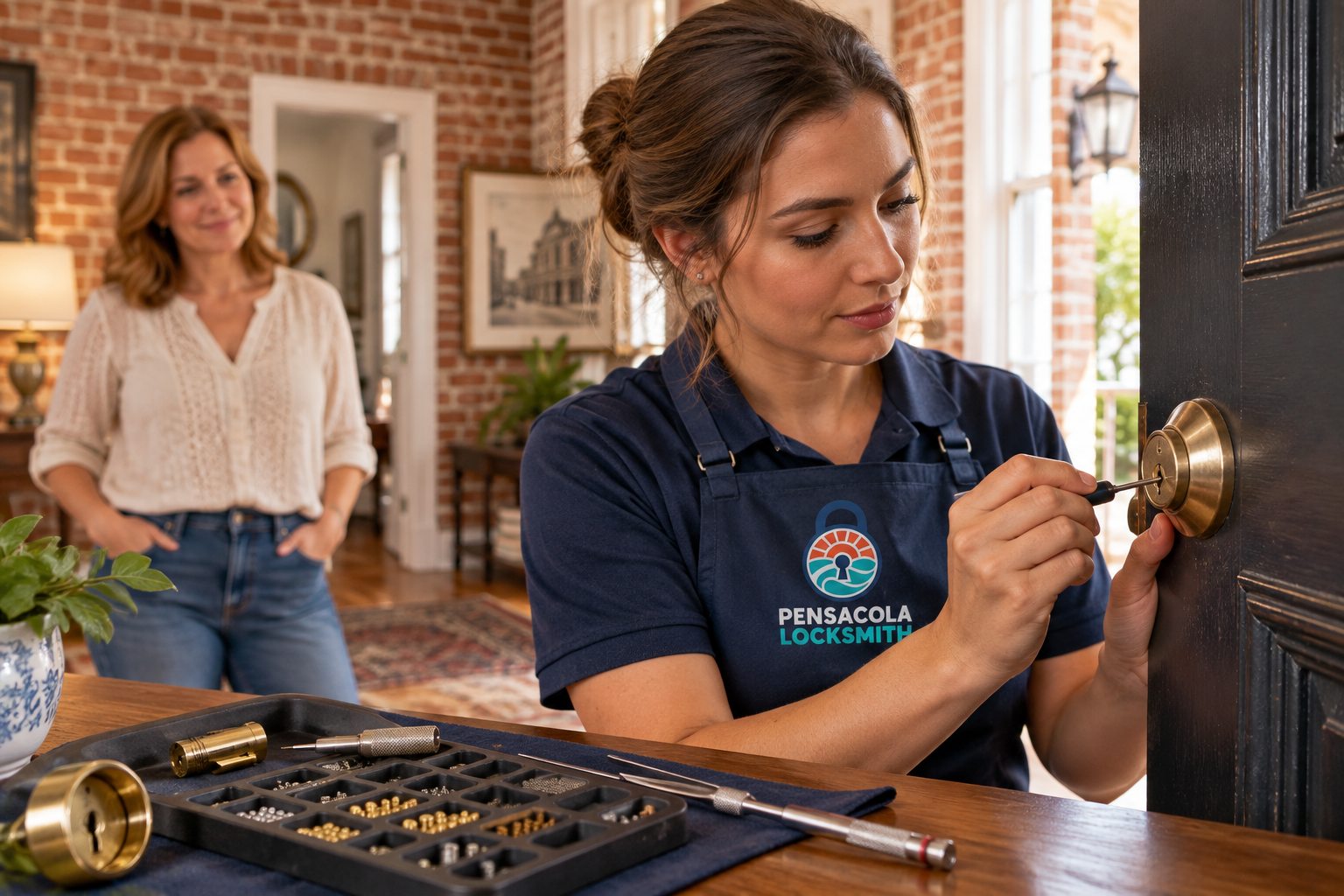
Repair starts with observation. The technician works the window through its full travel, watching how the sashes move, whether they bind and whether they close square. A window that rubs or sticks will often strain its lock every time it is shut, so fixing only the lock leaves the real cause in place.
Next comes a close look at the lock itself, the keeper and the mounting holes. Stripped screw holes in thin aluminum, cracked plastic housings, bent cams and missing keepers are all common findings. The technician also checks whether the lock engages with enough bite to hold the sash firmly, because a latch that only grazes the keeper provides almost no security.
Finally, the whole window is considered. Cracked glass seals, failing balances and damaged frames can make a lock repair pointless. When that is the case, we will say so plainly rather than put a new latch on a window that is about to fail. The goal is a window that closes and locks reliably, not a part that merely looks new.
Simple repairs that often work
Many window locks can be restored with small, inexpensive adjustments. Cleaning corroded parts, applying a suitable dry lubricant and tightening or replacing loose screws solve a surprising number of complaints. Where holes are stripped, a longer screw, a larger screw or a filler method can restore a firm mount without replacing anything.
Adjusting the keeper is another common fix. Many keepers can be repositioned or shimmed so the latch meets them squarely. On sliders, the technician may adjust the rollers so the sash sits at the right height, which brings the latch and catch back into line. These adjustments take little time and avoid ordering parts.
A few things are worth avoiding at home. Heavy oil attracts dirt and gums up mechanisms. Forcing a stuck latch can snap it and leave the window unlockable. Painting over hardware makes things worse. If a latch does not move easily with gentle pressure, stop and call us rather than adding force that turns a repair into a replacement.
When replacement is the better answer
Some locks are not worth saving. A cracked housing, a sheared cam, a latch whose spring has failed or a mechanism so corroded it will not stay clean all call for a new part. Trying to nurse a failing lock along often leads to a window that will not lock at the worst possible moment.
Replacement is simple when the exact part is available or a compatible one fits the existing holes. Many manufacturers stock replacement latches for common window lines, and universal designs exist for typical single-hung and slider applications. Matching the finish, so the new latch does not clash with the old trim, is a small but appreciated detail.
For older or discontinued windows, matching parts can be difficult. In those cases, the choice may be between an adaptable aftermarket lock, a secondary lock added to the frame or, for windows near the end of their life, replacing the window itself. We will describe the tradeoffs honestly so you can weigh cost, appearance and security in your own terms.
Sliders, patio doors and added security
Sliding glass doors and large sliding windows are a special case because the standard latch is often the weakest link. Many patio sliders can be lifted out of their track or forced by a pry tool, and the factory latch offers little resistance. Repairing the latch is only part of the picture.
Common add-ons include a secondary pin lock that passes through the sash and frame, a track bar or a bar-style insert that blocks the door from sliding, and anti-lift devices that stop the panel from being raised out of its track. Each is inexpensive in materials and adds a visible layer of protection that casual intruders tend to avoid.
For ground-floor windows, a simple keyed or thumb-screw secondary lock can allow ventilation while limiting how far the window opens. That is useful for homes where people like fresh air at night but want a stop in place. We can recommend options based on the window type and how you actually use it.
Storm season, rentals and special situations
Hurricane season brings its own concerns. A window that does not latch firmly is more likely to rattle, leak or fail under wind pressure. Before storm season, many homeowners walk their windows and find a few locks that no longer engage. It is a good time to repair them, rather than discovering the problem when a storm is approaching.
Rental owners and property managers face a different issue. Guests open and close windows constantly, and worn latches turn up often. Quick checks between stays catch broken locks before they become complaints. Keeping a few matching replacement latches on hand for common window types saves repeated trips and keeps the property consistent.
Older and historic homes sometimes use period hardware that is worth preserving. Where possible, we repair rather than replace so the character of the window is kept. For safety, any window used as an emergency exit must remain operable from the inside without a key or special tool, and we respect that requirement in every recommendation.
How a repair visit typically goes
When you call, describe the window type, the symptom and whether it is a single window or several. Photos help if you can describe what you see. We will talk through likely causes and give a quote by phone where the job is straightforward. If it is more complicated, a technician visits and the service call charge is explained before dispatch.
On site, the technician inspects, repairs or replaces the lock, and tests the window several times. Each latch is checked for firm engagement, smooth operation and clean closure. If the sash is out of square or the frame is damaged, the technician explains what that means and what your options are.
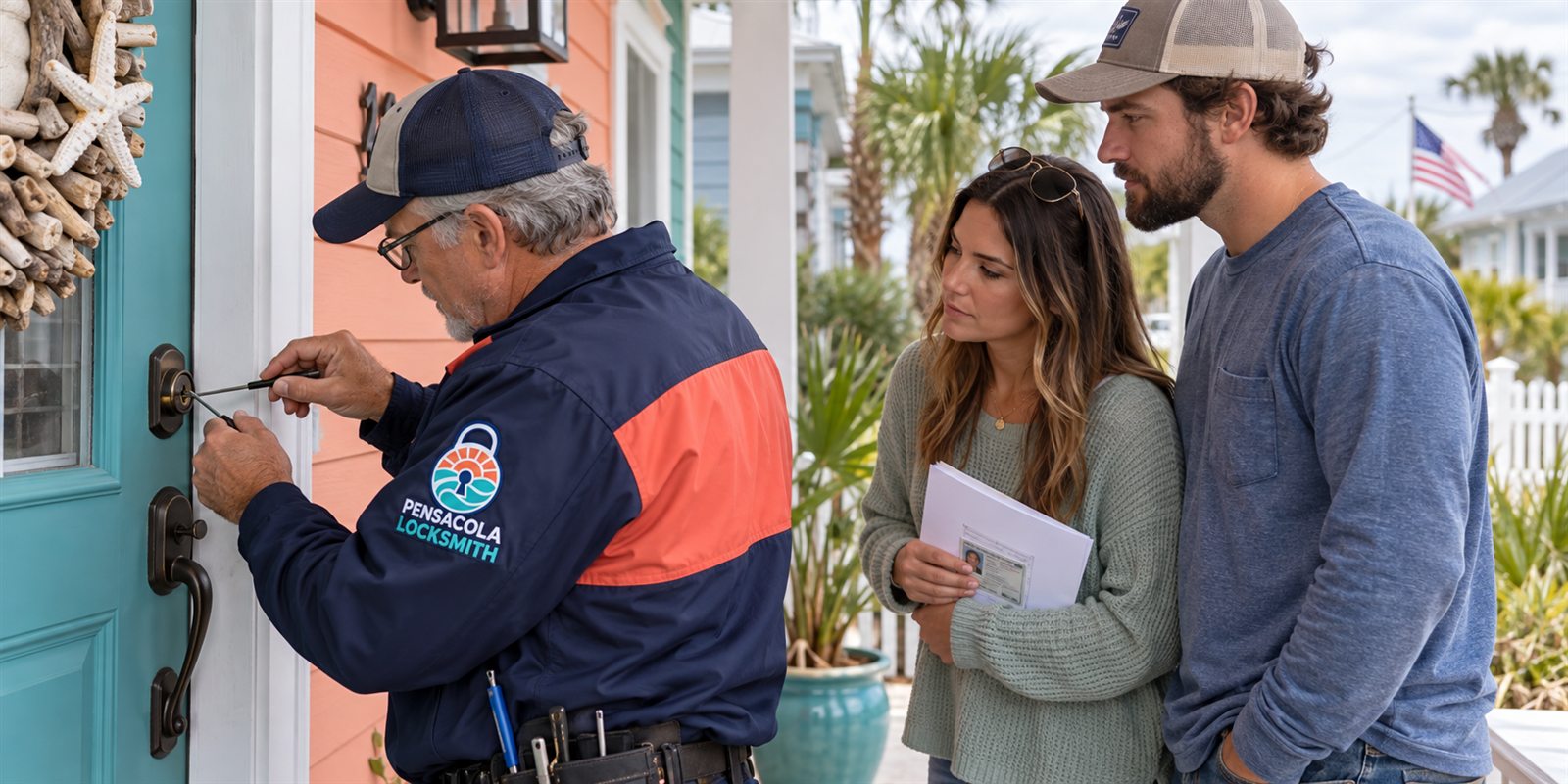
Because window work involves entry to a property, we confirm ownership or authority first, whether you own the home, rent it or manage it. After the repair, you receive plain guidance on care: what lubricant to use, what to avoid and what signs to watch for. Please call to confirm availability in your part of Escambia County.
Preparing and caring for your windows
A little preparation makes the visit smoother. Clear access to the window, move curtains and furniture, and keep pets out of the way. If you have the old lock or any parts that fell off, keep them together. A broken piece is often the best clue to the manufacturer and style, and it helps us find a match.
For routine care, wipe the tracks and hardware occasionally, especially on sliders where sand and grit collect. Keep weep holes clear so water drains properly. Use a dry lubricant sparingly on moving parts and avoid painting over latches. Check the locks each season, working them gently to feel for changes before they become failures.
If you notice a window that will not lock, treat it as a priority rather than a chore. An unlocked ground-floor window is an open invitation, and it is also often an early sign of a larger alignment or frame problem. Calling early usually keeps the fix small and inexpensive, and it keeps the home secure.
Reading the clues a failing latch gives you
Window locks rarely fail without warning. The first sign is usually extra effort: a latch that needs a push, a thumb-turn that grinds, or a sash that has to be lifted slightly before the lock will engage. Those small changes are the hardware telling you something has shifted or begun to corrode, and they are the best moment to act, while a simple adjustment is still enough.
The second sign is sound. A latch that clicks without gripping, a sash that rattles in its frame when the wind picks up or a rasping noise as the cam turns all point to wear. Rattling is especially worth noting during storm season, because a loose sash lets in air and water and puts additional strain on a lock that is already weak.
The third sign is visual. White or green crust on metal parts, rust streaks below the latch, cracks in plastic housings and gaps between the sashes when the window is closed are all clear signals. Take a quick photo and keep it. When you call, describing what you saw, and when it started, helps us choose the right part and the right approach.
Safety, egress and what we will not do
A window lock is a security device, but a window can also be a way out in an emergency. Bedroom windows in particular must stay usable from the inside without keys, tools or special knowledge. We will never recommend a modification that traps people, and we will point out when a requested change would make escape harder than it should be.
Keyed window locks are sometimes suggested for security, but they carry that safety tradeoff. If a key is needed from the inside, it must be kept somewhere everyone in the household can reach quickly and without thinking. For most bedrooms, a simple thumb-operated secondary lock gives the benefit of limiting entry without removing the escape route.
We also decline work where ownership or authority is unclear. If you rent, we may ask for permission from the landlord or manager before replacing hardware. If you manage a property, a letter or a record is enough. This is a routine step, and it protects everyone involved. Call us if you are unsure what documentation applies to your situation.
Old windows, new hardware: fitting the two together
Many Pensacola homes carry windows from several eras, and a single house can hold wood sashes, aluminum sliders and newer vinyl units. Each wants different hardware. Wood windows often take brass or steel sash locks that screw into the meeting rail, and those are usually repairable. Mid-century aluminum windows tend to use thin cast latches that are harder to match.
When a part cannot be matched, a technician can sometimes adapt a standard latch by drilling new mounting holes in a clean spot, or fit a surface-mounted secondary lock that works independently. The goal is a secure, tidy result that does not damage the frame. Careful hole placement matters, especially in thin aluminum where an error cannot be undone.
Finish is worth a thought too. Brass, bronze, white, black and brushed finishes are all common. A new latch in the wrong color can look odd on an otherwise tidy window, so we try to match what is there. If an exact match is not possible, we describe the closest option and let you decide whether the difference matters to you.
Common questions
Can a stuck window lock be fixed instead of replaced?
Often yes. Cleaning, dry lubrication, tightening screws and adjusting the keeper fix many stuck latches. If the housing is cracked, the cam is sheared or the mechanism is badly corroded, replacement is better. A technician inspects the lock and the window together and explains which approach makes sense before doing the work.
Why does my window latch no longer line up with the catch?
Most often the sash has dropped slightly, weatherstripping has compressed or the house has settled. The latch is fine but the parts no longer meet. Adjusting the keeper or the sash rollers usually restores the fit. Replacing only the latch would not solve the underlying misalignment.
Can you add extra security to a sliding door?
Yes. Common options include a secondary pin lock, a track bar and anti-lift devices that stop the panel being raised out of its track. These are simple additions that make forced entry harder. We can suggest options that suit your door type and the way you use it.
Do you replace the whole window if the lock is broken?
Not unless the window itself is failing. Our work focuses on the locks, latches and related hardware. If the frame, glass seal or balance system is damaged beyond a simple repair, we will tell you so, and you can decide whether to repair the hardware or have the window addressed separately.
How do I get a quote for window lock repair?
Call us and describe the window type, the problem and how many windows are affected. Quotes are given by phone for straightforward jobs. For anything complicated, a technician visits and the service call charge is explained before dispatch. Please call to confirm availability, and have proof of ownership or authority ready.