
Content note: this page was written by Claude (AI) for Pensacola Locksmith.
Why this door deserves attention
Once a garage door is open or forced, the interior door is the only barrier left. Many people leave it unlocked because they are carrying groceries, because kids come and go, or because the key sticks. A door that is annoying to lock tends not to get locked.
Builders also tend to choose the most basic hardware for this position. A light knob set, a short latch, and screws that barely reach the frame are common. The door itself is often hollow, and the frame may be softwood that splits under impact.
Thinking of it as an exterior door changes the priorities. It should have a working deadbolt, a solid strike, and a frame that can take a hit. It also needs to be easy to use, because a lock that is hard to operate will be skipped.
There is also a family safety side. Children, older relatives and guests all use this door, and it may be the one people use to bring in shopping or take out the trash. Hardware that is smooth and predictable gets used correctly. Hardware that sticks, jams or needs a trick to work gets propped open or left unlocked. Fixing the everyday annoyance is often the quickest way to improve security.
Typical faults technicians find
The most common complaint is a latch that does not catch. Doors in garages are exposed to temperature swings, humidity and vibration from the overhead door. Hinges loosen and the slab drops a little, so the latch no longer lines up with the strike. You might hear it hit the plate but not slide in.
Next are worn cylinders. Garages hold dust, pollen, and fine grit that work into keyways. The key starts to feel gritty, then stiff, then it sticks or breaks. Salt air adds corrosion to the pins and springs, which makes the problem worse for homes near the bay or the beaches.
Then come structural issues. A strike plate attached with short screws, a split jamb after a past forced entry, or a door that was cut for a larger lock and now has a loose fit. These are repair jobs that reach beyond the lock itself.
A less obvious fault is a worn latch bolt. The angled face of the bolt wears down over years of use, and the spring behind it weakens, so the bolt no longer snaps out cleanly. It may feel as if the door needs a firm push to close. Replacing the latch assembly is quick and restores a clean action, and it is often combined with a new strike for better holding.
- Latch hits the strike but does not enter
- Key is rough, sticky or snaps
- Deadbolt turns but does not extend fully
- Door rattles in the frame when pushed
Fire rated doors and what that means for hardware
In many houses and townhomes, the door from the garage is required to be solid or fire rated, and often self closing. That affects what you can do. Drilling large holes in a rated door or changing its closing behavior can affect how it performs, so the work needs to respect the door as it was built.
A locksmith will look for a label on the hinge edge of the door. If one is present, the technician works within the existing bores where possible and avoids modifications that would compromise the rating. A replacement lock must fit the existing preparation or the door may need replacing by a door contractor.
If you live in a community with an association, check whether there are rules about exterior door hardware. Some require a particular finish. A technician can suggest options that fit the look without weakening the lock.
If your door is not rated but is a hollow core slab, the question becomes whether it is worth keeping. Hollow doors can be kicked through with little effort, and adding a deadbolt to one gives limited benefit. A solid core or steel slab would make a bigger difference. A locksmith can point out the weakness, though door replacement itself usually falls to a carpenter or door contractor.
Alignment, hinges and the strike plate
Most latch problems in these doors are alignment problems. Start by looking at the hinges. Loose screws, especially in the top hinge, let the door sag toward the latch side. Tightening them is easy, though if the holes are stripped they need longer screws that reach into the stud behind the jamb.
The strike plate is the next focus. Look at where the latch bolt marks the plate when you close the door. If the mark is above or below the opening, the plate or the door needs adjusting. Small shifts can be handled by filing the opening, but large ones are better corrected by moving the plate or the hinge.
A reinforced strike with long screws gives more strength than the short ones that came with the lock. Anchoring into framing behind the jamb makes forced entry harder. This is one of the more effective and least expensive improvements, and a locksmith can do it during a repair call.
Another thing to examine is the gap between the door edge and the frame. A wide gap lets a tool reach the latch, while a very tight one causes binding when humidity swells the wood. Aim for an even reveal of a few millimeters along the latch side. Adjusting the hinges or planing the edge can restore an even gap, and a latch guard plate can cover the exposed edge for extra protection.
Deadbolt choices for the garage entry
A single cylinder deadbolt uses a key on the garage side and a thumb turn inside the house. That works well here, since no one inside needs a key to leave. A double cylinder needs a key on both sides, which can be a hazard in an emergency and is not usually a good idea on a door people use daily.
Keypad and smart deadbolts are popular for this door because they remove key juggling. They also bring battery and humidity considerations. In a garage that gets hot in summer, batteries age faster, and some models do not like moisture. Choose one rated for the conditions, and keep a mechanical key backup.
Whatever type you pick, the bolt should extend fully into the frame and not wobble. The throw should be a clean motion. If you have to lift the door or pull it to make the bolt turn, there is a fit problem to correct first.
Think about lighting and routine too. A keypad that glows or a lock you can reach with one hand makes it easier to secure the door at night. Anyone who regularly comes through from the garage in the dark benefits from hardware that is easy to find and operate. It sounds small, but good habits begin with good design.
Keys, openers and who has access
Garage access tends to spread. Neighbors, cleaners, contractors, family members and former tenants may all have had a key or a door code at some point. If you cannot say who has access, rekeying or changing the code is a sensible next step. It costs little compared with the uncertainty.
Many people also leave a spare key in the garage, in a coat pocket or on a hook near the door. If the garage is ever opened by a stranger, the key to the house is waiting. Consider storing spares somewhere less obvious, or moving to a keypad where there is no physical key to find.
For homes with a remote opener, remember that the remote is also a form of access. Lost remotes can be reprogrammed or the opener code reset. That falls outside lock work, but a technician can point you in the right direction.
If you rent the property, ask the landlord before changing codes or hardware. Some leases restrict alterations, and the owner may keep records of who has keys. A locksmith will ask for authority from the owner or the manager before working on a rented property, which protects both the tenant and the landlord and keeps the record straight.
Weather, salt air and garage conditions
The Gulf Coast climate is tough on garage hardware. Humidity, rain blown under the door, and salt in the air all speed up corrosion. Brass finishes tarnish, plated parts blister, and steel screws turn orange at the heads. After hurricane season, many homeowners find swollen or stiff doors.
Choose hardware with a durable finish and stainless or coated fasteners where possible. Keep the weatherstrip in good condition so water does not run down the door edge and into the lock case. A little regular care goes a long way.
If the garage floods or has had storm water inside, check the door bottom and frame for swelling or rot. A soft jamb cannot hold a strike properly, and a lock repair will not last until the wood is addressed. A technician will tell you when the problem is carpentry.
Painting is a hidden culprit in many garage doors. Layers of paint on the edge or in the strike opening can stop the latch from seating, particularly in damp weather when the wood swells. Sanding the opening back to bare material and sealing the edges can solve a problem that looks like a lock failure. It is a reminder that not every sticking lock needs new hardware.
What to expect when you call a locksmith
Tell the dispatcher what the door does: does the key turn, does the latch catch, is the door painted shut, is it fire rated, and what brand of lock is on it? A photo is useful. Quotes are given by phone, and call us to confirm availability for your area.
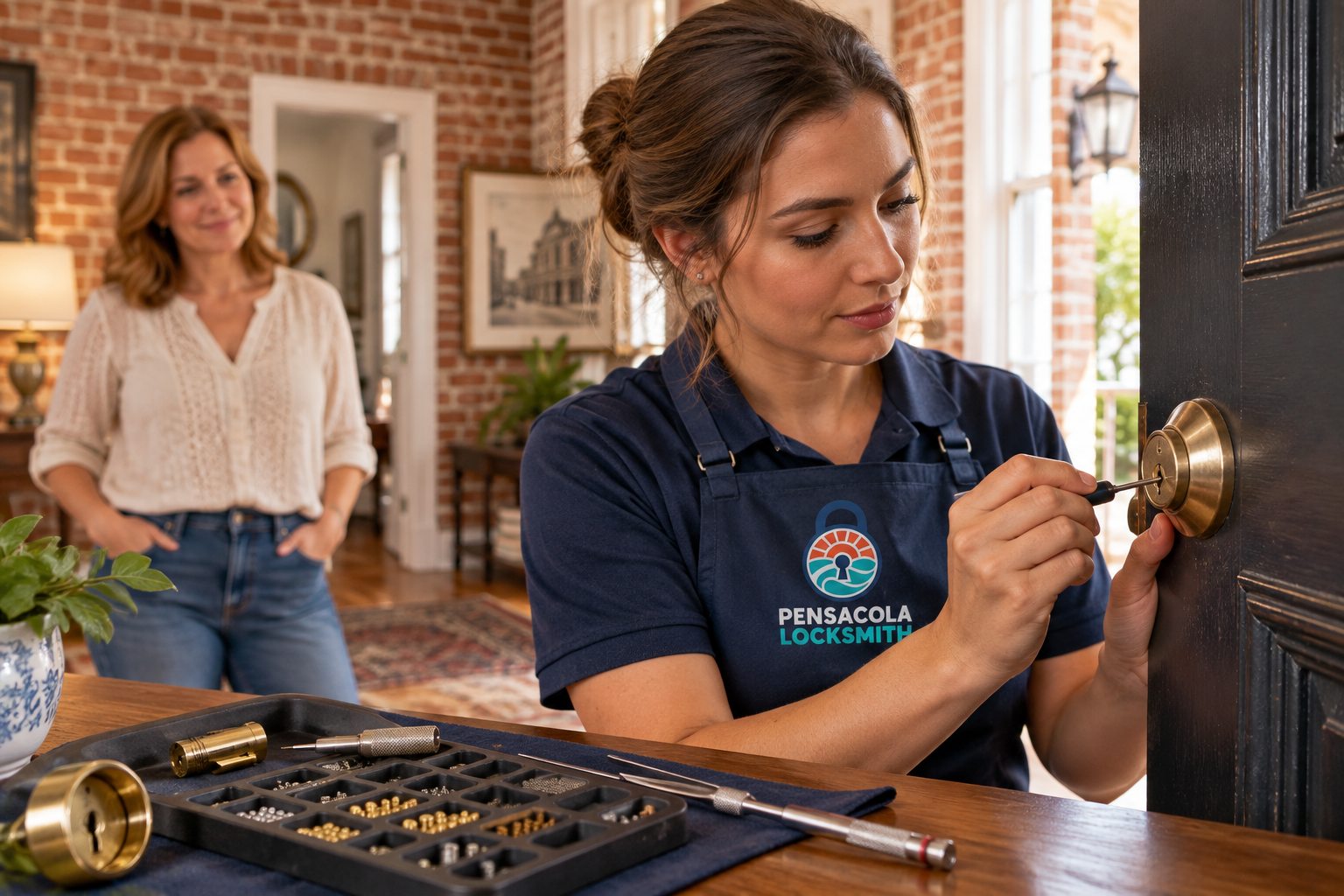
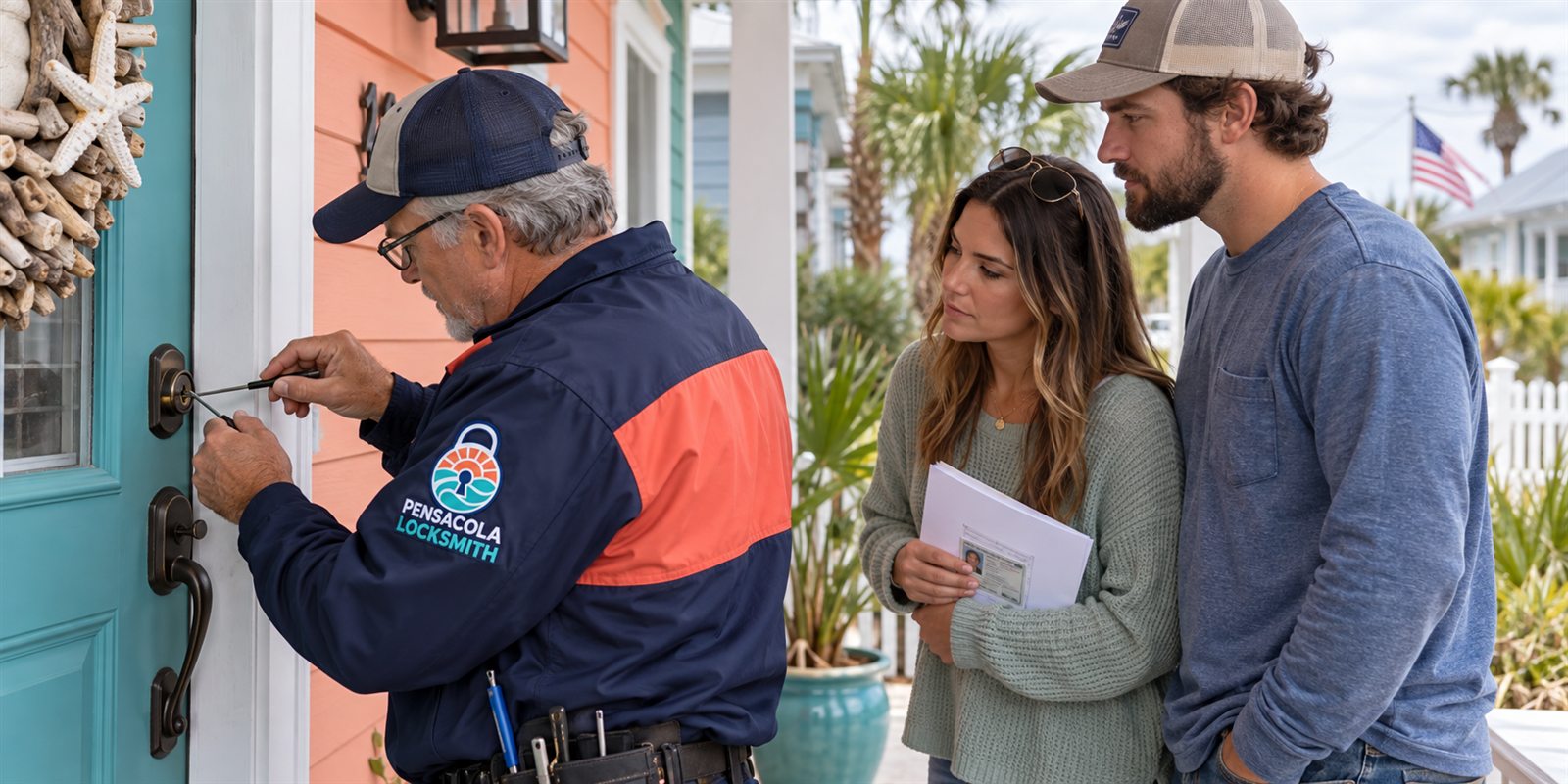
On arrival, the technician confirms that you own the home or have authority to authorize the work, then inspects the lock, strike, hinges and frame. Many repairs are done on the spot with parts carried in the vehicle. If the door needs more than a lock, such as a new jamb section, you will be told plainly.
For complicated jobs, a technician visits to assess the situation and the service call charge is explained before dispatch. You can then decide how much of the work to do now and what can wait.
Before the technician leaves, test the door from both sides, with the garage door open and closed. Check that the bolt extends fully, the door closes without slamming, and the key or code works every time. Ask about any advice for maintaining the hardware, and note anything the technician suggests addressing later, so you are not caught off guard.
Break-in patterns worth knowing about
Garage entries are a common point of attack because they are partly hidden from the street. A person who gets into the garage can work on the interior door without being seen, and a kick or a pry can be enough if the strike is weak. Many forced entries through this door damage the jamb rather than the lock itself, which is why reinforcement matters.
Another pattern is the unlocked door. Many incidents involve no force at all, just a door that was left open or unlocked while the garage door was ajar. Building the habit of locking the interior door every time, even when you are home, closes that gap. A keypad or auto-locking deadbolt can help by doing the job for you.
If you have already had an incident, do not assume the damage is limited to what is visible. Check the strike plate screws, the jamb behind the plate, and the hinges. A locksmith can secure the door, and advise whether a carpenter should repair the frame. Securing the opening comes first, and a call to confirm availability will tell you how soon someone can help.
Planning an upgrade that fits your home
If you are going to spend time and effort on this door, think about the whole package. A quality deadbolt, a long-screw strike, hinge screws that reach the studs, a solid slab, and good weatherstripping work together. Replacing only one element leaves the weakest remaining part in charge, so an honest assessment of each piece is worthwhile.
Consider also how the door fits in with the rest of your keying. Many homeowners like to have the front door, the garage entry and the back door on the same key to carry fewer keys. Others prefer separate keys for each so that handing out one does not open everything. Both are workable, and a locksmith can set it up either way.
Ask about options when you call. Quotes are given by phone for standard work, and for anything more complicated a technician visits and the service call charge is explained before dispatch. That way you can plan your upgrade in stages, without feeling pressured to do everything on the same day.
Questions to ask yourself before the visit
Take a few minutes before the technician arrives to think through how the door is used. Who comes through it daily? Does anyone need to get in when the house is empty, such as a dog walker, a cleaner or a family member? The answers affect whether a key, a keypad or a smart lock is the better fit, and whether the codes or keys should be tracked.
Look at the door from the garage side in daylight. Is the weatherstripping flat and in place? Is there a gap along the bottom that lets in water and insects? Does the door close on its own or does it stay ajar? These small notes help the technician see problems that are about the door as a whole rather than the lock alone.
Clear a bit of space around the door so that the work is easy. Move bins, bikes and boxes that block the swing. Make sure the technician can reach the hinges and the frame. If pets are in the garage, keep them secured. A tidy workspace helps the visit go faster and lets the technician focus on getting the hardware right.
Common questions
Do I really need a deadbolt on the door to the garage?
It is strongly worth having one. If someone gets into the garage, the interior door is the final barrier. A knob lock alone is easy to defeat. A properly installed deadbolt with a reinforced strike makes forced entry much harder, and a keypad version avoids carrying keys when your hands are full.
Why does my garage door lock work some days and not others?
Humidity and temperature changes cause wood and metal to expand and contract, which shifts alignment slightly. Loose hinge screws make it worse. If the lock works better when the door is pulled or lifted, the latch and strike are probably not lining up. Adjusting hinges and the strike usually helps.
Can the lock on a fire rated door be replaced?
Usually yes, provided the new lock fits the existing preparation and does not require enlarging holes. The technician checks the door for a label and avoids modifications that would affect its performance. If the lock cannot fit, the door itself may need replacing by a door contractor.
Is a smart lock a good idea in a hot garage?
It can be, but heat and moisture shorten battery life and can affect electronics. Pick a model rated for outdoor or harsh conditions, keep spare batteries, and make sure a mechanical key override is available. The technician can advise on options that suit your door.
Should I rekey after a break-in through the garage?
Yes, rekeying or changing locks is recommended if keys could have been taken or copied. Also check the strike plate, jamb and door for damage. Securing the opening comes first, then lock work. A locksmith checks ownership or authority before starting.