
Content note: this page was written by Claude (AI) for Pensacola Locksmith.
Know what belongs to you and what belongs to the association
Condo documents divide responsibility between the unit owner and the association. In many buildings, the interior of the unit and the door lock belong to the owner, while the door slab, frame and exterior surfaces are treated as common property. Balcony doors, windows and sliders can also fall in a gray area. Reading your declaration or asking the manager clarifies the boundary.
This matters because changing something that belongs to the association without approval can cause disputes, fines or orders to undo the work. Even a seemingly small change, such as a new door handle in a different finish, may need sign-off. The easiest path is to ask before you buy hardware or schedule work.
Ask three questions: which parts of my entry door can I change, do I need written approval, and does the association require a copy of the key? Get the answers in writing if possible. We check ownership or authority before rekeying or programming, so be ready to show that you own the unit or have the owner permission.
Request a copy of the association rules for doors, locks and balconies, and read them before spending money. These documents often include requirements about door color, hardware finish, notice periods and the number of keys the association must hold. Knowing the rules saves you from choosing a lock that must later be removed.
Your front door lock and deadbolt
The lock on your unit door is the heart of your security. Many condos come with a basic knob and a standard deadbolt. A quality deadbolt with a hardened bolt, a solid strike plate and long screws that reach the frame offers noticeably better resistance than the builder-grade version. Check that the bolt extends at least an inch and that it moves smoothly.
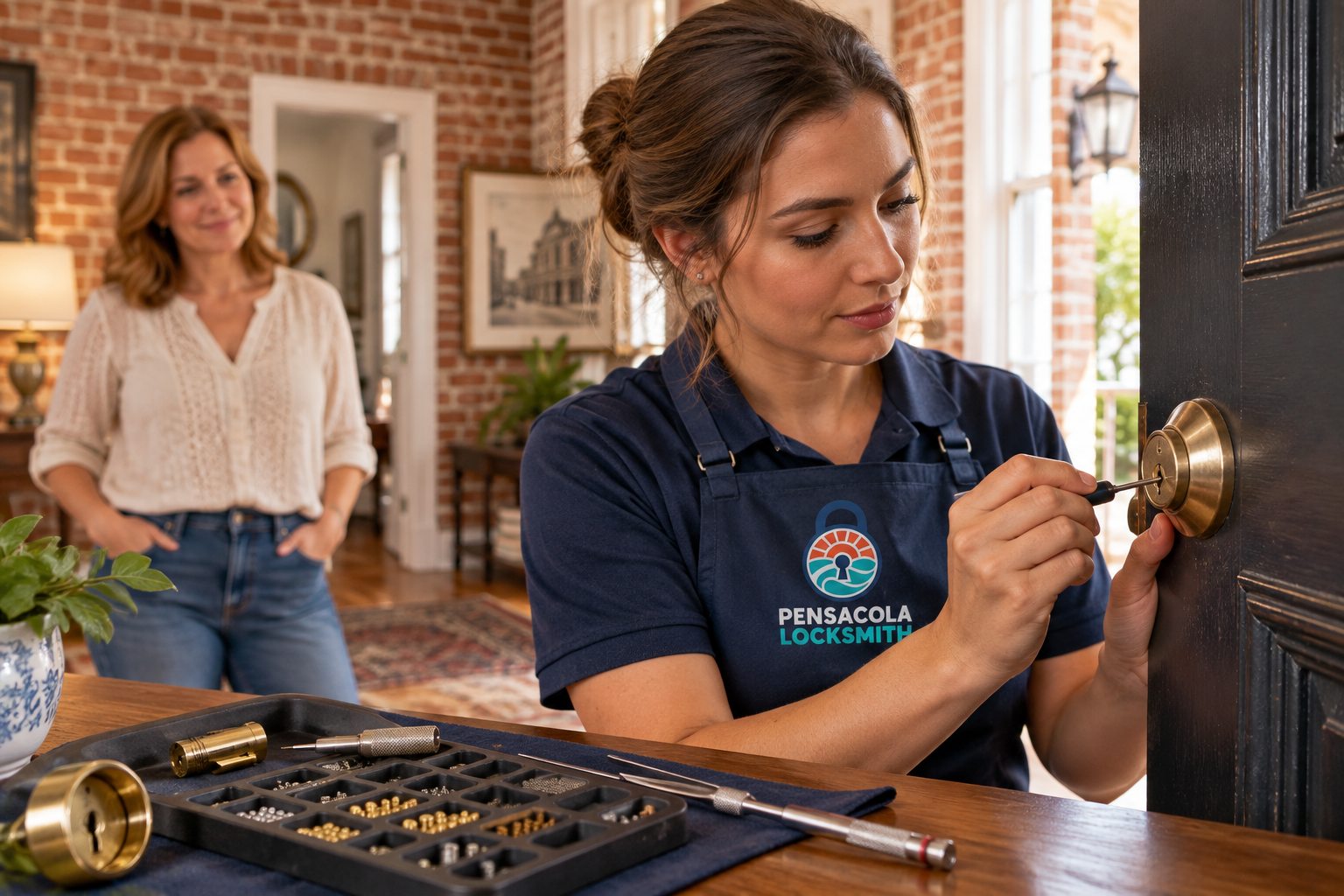
If you recently bought the unit, rekeying is a smart first step. Previous owners, agents, contractors and family members may all hold keys. Rekeying changes the internal pins so those old keys stop working, usually quicker and gentler than replacing the hardware. It also lets you choose how many keys you want and keep better track.
Smart locks are popular in condos, and many associations allow them when they fit the existing door preparation. Check whether the association needs a master or emergency access, since some buildings require a mechanical key to be available for fire or maintenance staff. We can talk through the options by phone.
If you hold the only key to your unit, consider leaving a spare with a neighbor, a family member or a trusted manager. Lockouts happen, and a nearby spare turns a long delay into a short one. Choose someone who lives close, and tell them how and when to use the key. Record where spares are kept.
Hinges, frames and the door itself
Condo doors are often fire rated, which limits what you can do to them. Drilling extra holes, adding certain plates or replacing the slab may break the rating. Before you alter the door, ask the manager or a professional whether modifications are allowed. Changing hardware that was designed for the door is generally safer than altering the door itself.
Look at the hinges. If they have short screws, replacing a few with long ones that reach the framing improves strength without changing the look. Check the gap between door and frame, and the weatherstripping. A door that is slightly out of alignment can make even a good lock feel loose and harder to operate.
A door viewer, or peephole, and a good chain or limiter bar are simple additions for answering the door safely. Wide-angle viewers are easy to install in most doors that allow it. Again, check the rules before drilling. Visibility and awareness of who is at the door are part of security as much as the lock.
Look at the quality of the strike plate and the frame around it. In older buildings the frame may be soft or cracked, and in newer ones it may be held by short screws. A reinforced strike plate installed with long screws spreads force through the framing. Check association rules, because the frame can be common property.
- Check rules before altering the door
- Use long screws on hinges
- Add a wide-angle viewer if allowed
- Keep weatherstripping in good shape
Balcony doors and sliding glass
In upper-floor units, balcony doors may feel safe because of the height, but they can be reachable from neighboring balconies or from lower levels. Sliding glass doors often have a weak factory latch. A secondary lock, such as a pin lock or a security bar in the track, adds protection without altering the door frame.
Check the track and rollers. Dirty or worn rollers let the door be lifted or shifted. Keep the track clean, and replace damaged parts. Salt air from the Gulf can corrode aluminum tracks and latches, so look for pitting and stiffness. A light dry lubricant on the latch helps.
Some associations restrict visible changes to balconies, such as bars or added hardware, for appearance reasons. Choose interior-mounted solutions where possible, and confirm what is allowed. If you leave the unit for a long time, make sure the balcony door is locked and secure, because it is a common blind spot.
If your unit has a door between the garage and the living space, or a service door that opens to a corridor, treat it with the same care as the main entry. Back doors are often forgotten. Make sure they have deadbolts, solid latches and proper alignment, and keep them locked even when you are home.
Shared entries, mailrooms and amenity areas
The building entrance, lobby, garage gate, mailroom, pool gate and fitness room are usually managed by the association. You cannot change them yourself, but you can influence how they work by talking to the board or manager. Tailgating, propped doors and shared codes are common weak spots in condo security.
Be careful about holding doors for people you do not know, especially late at night. Report broken door closers, damaged latches, or doors that do not shut. Associations rely on residents to notice these things. A faulty gate or entry door affects everyone, and a quick report to management often leads to a fix.
If the association is considering new access control, such as fobs or keypads, take part in the discussion. Ask how lost fobs are deactivated, who manages the system, and how often codes change. Good policies matter as much as good hardware. We can offer general advice by phone, though decisions rest with the association.
Windows on lower floors need attention too. Check latches and add secondary locks or pins where permitted. Window film and bars may need approval. For upper floors, the risk is lower but not zero. A locked window gives peace of mind and also keeps weather out during sudden storms.
Rentals, guests and seasonal owners
Near the beaches, many condos are used as vacation rentals or second homes. This creates many key holders: cleaners, rental managers, guests, maintenance, friends and family. Without a plan, keys and codes spread widely. A keypad lock with individual codes lets you issue and remove access without handing over metal keys.
Change codes between guests, or use time-limited codes where the lock supports them. Keep a record of who has access. If you use a lockbox for key handover, place it according to association rules, and change the combination regularly. Rekeying every so often is a reasonable habit for rental units.
If you are away for long periods, ask a trusted person to check on the unit. Let the association know who has permission to enter. Remove valuables, and consider a lockable closet for personal items. We check ownership or authority before any work, so bring proof that you own the unit or manage it.
Lighting and visibility matter. A well-lit entry, a clear view through the door viewer and a camera or doorbell, if allowed, deter opportunists. Ask management about corridor lighting and keep your entry release of clutter. Good security is a combination of sensible habits, solid hardware and cooperation between neighbors and management.
Storm season and condo living
Hurricane season changes how you secure a condo. If you evacuate, close and lock the balcony door, check the entry door latch and make sure windows are shut. Follow association instructions about shutters, balcony furniture and storage. Loose items can become hazards and cause damage to the building and neighbors.
After a storm, check the door for swelling, misalignment or corrosion. Electronic locks may need new batteries or may have been affected by moisture. If the door sticks, do not force it. Call us and describe what you see, and we can advise and quote by phone.
Keep important documents and a spare key in a safe place outside the building. If the association controls access after a storm, you may need to show ownership to enter. A copy of your deed, an owner card or recent association statement is useful. A calm, prepared approach makes the aftermath much easier.
Consider insurance. Some condo insurance policies reward good locks or require them for certain coverage. Ask your insurer what they expect, and keep records of upgrades. A locksmith can provide a description of the work performed, although the insurer decides coverage. Photographs of your door and hardware are useful.
Working with a locksmith in a condo building
When you call, tell us the building name, your unit and what you need. Mention the type of lock, whether the door is fire rated, and whether the association has rules about changes. Quotes are given by phone. Please call to confirm availability for your location and to ask about timing.
We check ownership or authority before opening, rekeying or programming locks. Have identification and proof of ownership or a letter from the owner if you are a tenant or manager. For lockouts, the process includes confirming you live in the unit. This protects you and your neighbors.
If the job is complicated, for example a damaged frame or an unusual lock, a technician visits and the service call charge is explained before dispatch. After the work, ask for a short explanation of what changed and how to maintain it. Share new key details with the association if required.
Plan for emergencies. Ensure that you can leave your unit quickly if needed, even in the dark. Keep keys in a consistent place, and avoid double-cylinder locks that require a key from the inside unless the rules and your situation support them. Check with the association about emergency access and keep contact numbers handy.
Moving in, moving out and selling a unit
When you buy a condo, rekey before you move in, and get all keys from the previous owner and the agent. Ask the association for the number of keys they hold to common areas, and request that old fobs be deactivated. This gives you a clean start without cost to the building.
When you sell or rent out the unit, think about who will receive keys and when. Agents, photographers, inspectors and buyers will visit. A lockbox with a code that you can change, or showing by appointment only, helps you control access. After the sale, hand over a verified set and make sure no old keys remain with you or others.
If you need help during any of these moves, call us. Quotes are given by phone. We check ownership or authority before opening, rekeying or programming, so have your deed, closing papers or lease ready. If the job is complicated, a technician visits and the service call charge is explained before dispatch. Please call to confirm availability.
Everyday habits that add to security
Hardware is only part of the picture. Lock the door whenever you leave, even for a minute to get the mail or take out the trash, since many unit break-ins involve unlocked doors. Do not leave keys in obvious places like a hallway table in view from the door, and keep your keys off your car dashboard.
Get to know your neighbors. People who notice each other are more likely to notice something unusual. If you travel, ask a neighbor to bring in packages and keep your entry looking lived in. Avoid posting travel plans publicly. These small habits cost nothing and make a unit a less attractive target.
Keep a short list of contacts: the property manager, the association office, the after-hours number and a locksmith. Put it somewhere you can reach even if you are locked out. We check ownership or authority before opening, rekeying or programming, so keep proof of ownership accessible. Quotes are given by phone, and please call to confirm availability.
Questions to bring to your association
A short list of questions can save weeks of back and forth. Who owns the entry door and frame? May I change the lock or add a smart lock? Does the association need a key or code for emergencies? Are there approved hardware finishes? What is the process for approval, and how long does it take? Write the answers down and keep them with your unit paperwork.
Ask about shared systems too. How are lost fobs deactivated? Who changes gate and mailroom codes, and how often? Are cameras in use in common areas, and who reviews them? You may not get every answer immediately, but asking shows that residents care and often prompts the board to improve its procedures.
Finally, ask who to call in an emergency after hours, and keep that number with your locksmith contact. When you call us, we check ownership or authority before opening, rekeying or programming. Quotes are given by phone, and please call to confirm availability.
Common questions
Do I need association approval to change my condo lock?
It depends on your documents. Many associations let owners change the lock itself but control the door slab and frame. Some require a copy of the key. Ask the manager before work begins and keep the answer in writing. We check ownership or authority before changing any lock.
Is rekeying a good idea when I buy a condo?
Yes, it is a common first step. Previous owners, agents and contractors may hold keys, and you cannot know how many copies exist. Rekeying makes those keys useless. Call us to discuss, and we can quote by phone and confirm availability.
Can I add a smart lock to my condo door?
Often yes, if the door preparation suits the lock and the association allows it. Check whether a mechanical key must remain available for emergencies. Replace batteries regularly and keep a backup key. Call us to talk through compatible options for your door.
How do I make my balcony slider safer?
Use a secondary lock such as a track bar or pin lock, keep the track and rollers clean, and check the latch for corrosion. Interior-mounted solutions usually avoid association objections. If the latch is damaged, call us and describe it.
What if I am locked out and my documents are inside?
We still check ownership or authority. A property manager, neighbor or association office may be able to confirm that you live there, and mail or a phone message can help. Call us first, explain the situation and we will tell you what can work before a technician is dispatched.