
Content note: this page was written by Claude (AI) for Pensacola Locksmith.
What kind of key does my Kia use?
Kia has built vehicles with several key styles, and the answer depends on how the vehicle was equipped. Some use a metal blade key with a chip hidden in a plastic head. Others use a remote head key, where lock and unlock buttons sit on the same piece as the blade, and many use a flip style key with a folding blade.
Models with a push-button start use a proximity fob, often called a smart key. You can leave it in a pocket or bag, and the car senses it when you approach the door or press the start button. A small mechanical blade is tucked inside for emergencies.
Telling these apart is easy. Look at the ignition area: a keyhole means a blade and chip system, and a round start button means a proximity system. Describe it to the technician, and mention any extra buttons such as trunk release or remote start.
Trim level can change the equipment too. Two Kias of the same model might have different key types depending on options. That is why the technician confirms with the vehicle identification number instead of assuming from the model name alone.
The chip and the computer: why both must agree
Inside every modern Kia key is an electronic chip, and inside the car is a computer that expects to hear from it. When the two recognize each other, the engine is allowed to run. When they do not, the car may crank without starting, show a key icon or refuse to turn over at all.
This arrangement protects the vehicle from theft by hot-wiring, and it explains why a blade cut alone is not enough. The cut part opens the lock, but the chip part earns the right to start the engine.
Programming adds the new key's identity to the car's memory. In a secure system, the technician uses diagnostic equipment and sometimes a security code or a verification step. Where the vehicle supports it, lost keys can also be removed from memory so they no longer start the car.
If you are replacing a key because it was stolen or lost somewhere unsafe, mention that on the phone. The technician can discuss whether to erase the old key from the vehicle's list during the visit, which is a sensible security step in that situation.
Information that speeds things up
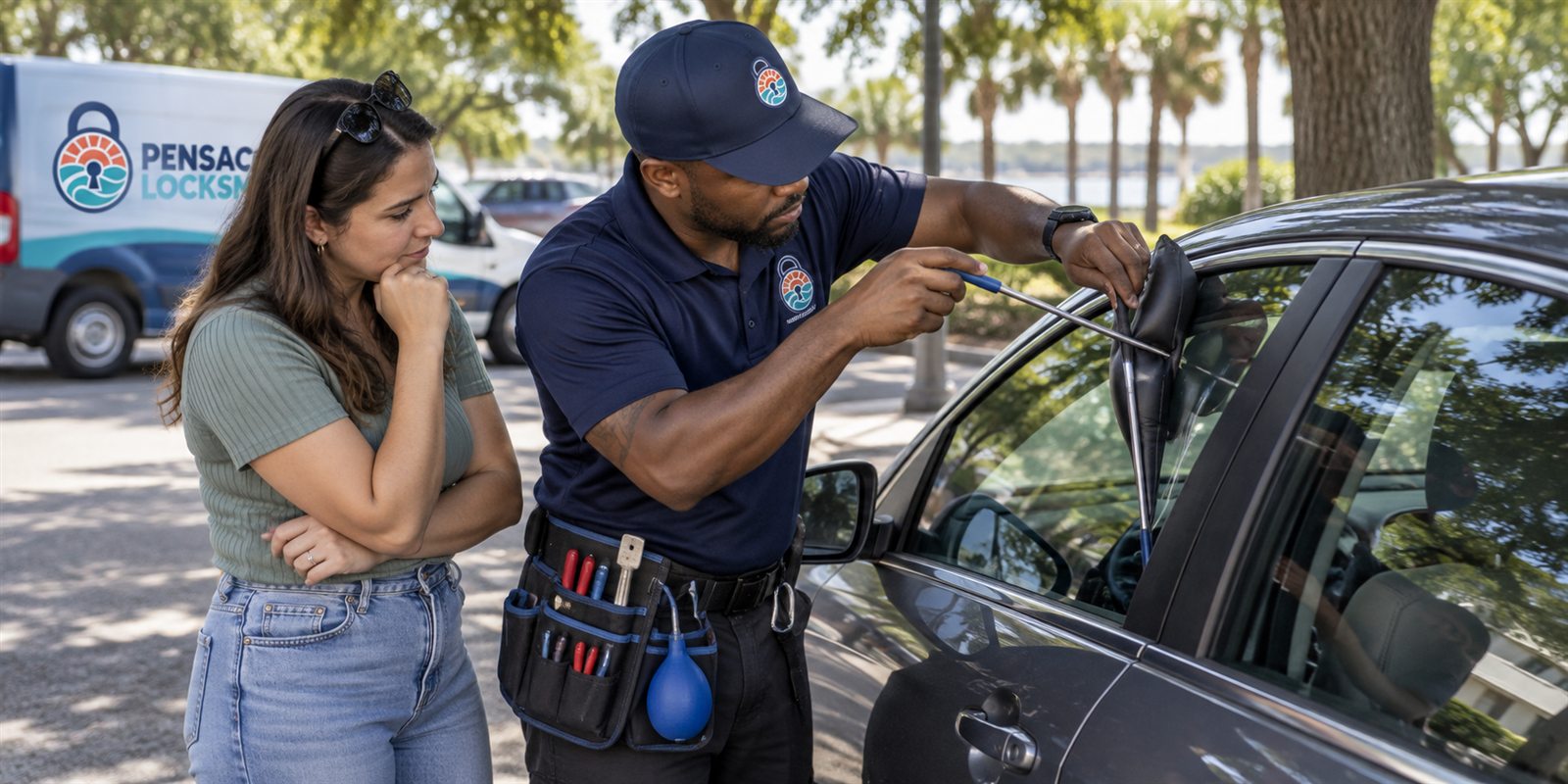
Before the visit, gather a few facts: make, model, approximate year, color if the vehicle is hard to find, and the exact location. The technician will also ask about the number of working keys and whether the vehicle is currently locked.
The vehicle identification number is the most useful single detail. It is on the dashboard at the windshield base and on the driver door jamb sticker. A clear photo of either works and lets the technician confirm key type and programming path.
If you still have a broken key, bring the pieces. A cracked head may still hold the chip, and a snapped blade can help the technician match the cut. Even a worn spare gives clues about how the original was shaped.
Mention any previous key work. Vehicles that have had aftermarket alarms, remote starters or earlier programming sometimes behave differently, and the technician would rather hear about it before starting than discover it mid-session.
Who can have a key made, and what gets checked
A locksmith will not cut or program a key for a vehicle without confirming the requester has the right to it. The technician looks at a photo ID and a registration, title or similar proof, and compares the names. This happens before opening a locked car, as well as before any key work.
Some customers find this surprising when they are standing next to the car with no key. But the process is the reason a lost key does not turn into a stolen car, and it protects you in the opposite situation, where someone else tries to claim your vehicle.
Vehicles owned by a business, a relative or a leasing company need a bit more paperwork. A letter of authority, a fleet record or a call from the owner can fill the gap. Ask in advance so you can have it ready when the technician arrives.
A person who recently bought a used Kia may still be waiting for the title. A bill of sale and a matching ID are often enough to start, but the technician decides what is acceptable, and it is better to ask during the call than to find out at the curb.
How the blade gets cut in a driveway
Mobile cutting is done with a compact machine powered from the service vehicle. The technician secures the blank, follows a code or copies a pattern, and shapes the blade to fit. Many Kia keys have a milled groove down the side of the blade, so the machine has to be the type that follows that path precisely.
If you have a working key, the process is simple: read it, cut a match, test. If you have no key, the technician may decode the door or ignition lock to learn the cuts, or use code information tied to the vehicle where it is available. That takes more patience, but it is routine for a trained locksmith.
The new blade is tested in the door and the ignition before any programming. If it binds, the technician recuts. A blade that only turns after a wiggle is a blade that will fail later, and a locksmith who shrugs off that detail is not doing the job properly.
Afterwards the cuts are deburred so no sharp metal remains. That is a small detail, but a rough edge can wear the ignition and your pocket lining alike.
Teaching the car to accept the new key
With the blade ready, the technician connects a diagnostic device to the data port beneath the dashboard. It communicates with the immobilizer, allowing the new key to be registered. Some Kias accept keys with a short routine, while others require extra security steps.
After the engine key is learned, the remote functions are programmed. Lock, unlock, panic and any hatch release are tested. On smart key models, the technician confirms that the fob works from different positions in the cabin and that the car stops when the fob is removed.
A second key is worth adding in the same session. Programming two keys at once is often more practical, because some systems cycle through all stored keys and a spare added later can require repeating steps. Ask about it when you call.
If the process hits an obstacle, such as the car refusing communication, the technician will check the battery voltage, the fuses and the data port. A weak battery is a common culprit, and a power supply held during programming prevents it from interrupting the work.
Problems that look like key trouble but are not
Sometimes a Kia that will not start has a different cause. A tired vehicle battery, a corroded terminal or a faulty starter can mimic an immobilizer problem. The dash may flicker, the clicks may sound odd, and the key may be blamed unfairly.
If a car starts reliably with one key but not another, the second key is the likely problem. If neither key works, but the dash lights up normally, the immobilizer or the antenna ring around the ignition could be at fault. A technician can test the signal path before assuming a new key will fix it.
A smart key that suddenly cannot be found by the car often needs only a new battery. Place the fob against the start button, which usually has a backup reader. If the car starts that way, the fob battery is weak.
Lock cylinders can also be stubborn. Dirt, salt air and years of use create sticking in doors and ignitions. A cleaning and a light dry lubricant often restores smooth action, and it is a sensible thing to ask about while the technician is on site.
- Try the spare key to see whether the problem follows the key or the car
- Look for a battery warning on the dash before blaming the fob
- Hold a smart fob against the start button as a backup test
- Note any dash light behavior to describe to the technician
Spare keys: a small habit with a big payoff
Most people only learn how much a spare key matters on the day they have none. With one working key, the locksmith can copy and authorize from it, which keeps the job simpler and more predictable. With none, the work involves decoding, extra security steps and sometimes a visit before pricing. The difference in effort is large, and the difference in stress is larger.
A good spare plan has three parts. Make the spare while you still hold a working key. Store it away from the vehicle and from your daily bag, ideally at home or with a trusted person. And test it every few months, because a spare with a dead battery or a worn blade is no help at the moment you need it.
For households with more than one driver, label spares clearly. A small tag with a vehicle nickname avoids the confusion of three similar Kia fobs on one hook. If a teen or a visiting relative borrows a car regularly, consider giving them their own key, so the primary key does not travel everywhere.
If you are buying a used Kia, ask how many keys came with it. Many used vehicles arrive with a single key, and the previous owner may still have another. Sorting that out early, and removing any unknown keys from the car's memory when possible, gives you a cleaner starting point.
Coastal conditions and the life of a key
Pensacola's salt air, humidity and summer heat are tough on keys and locks. Metal blades can corrode, plastic fob cases can crack from heat, and moisture can creep into the electronics. A Kia parked near the beach or Pensacola Bay faces more of this than one parked inland.
After a beach day, a quick rinse of sandy keys and a thorough drying of the fob can prevent trouble. Do not soak a fob. Wipe it, let it air dry, and if it got wet, take the battery out for a few hours.
Tourists renting vehicles and residents with boats or paddle boards often carry keys in wet places. A waterproof pouch for the key is a cheap habit that saves a lot of grief, and a spare held by a friend on land is better still.
Hurricane season also deserves a thought. Keys left in vehicles during an evacuation or storm surge can be damaged. Gather your keys, including spares, with your documents and keep them dry and together.
What the visit looks like from start to finish
You call, describe the vehicle and situation, and receive a quote by phone for routine jobs. Please call to confirm availability for your location. If the job is complicated, such as all keys lost on a smart key model, a technician may need to visit first, and the service call charge is explained before dispatch.
On site, the technician checks ID and ownership, inspects the vehicle, and decides on the plan. You will hear what is being done at each stage, whether it is cutting, connecting the tool, or testing, and you can ask questions along the way.
When the job is done, test every function with the technician present. Start the engine more than once, try each button, and verify the emergency blade in the door lock. Ask about spare keys and fob batteries if you have not already.
Keep the leftover pieces of old keys safe or dispose of them thoughtfully. A discarded old key that is no longer erased from the car's memory could, in rare cases, still start the vehicle, so ask whether lost keys were removed.
Special situations: rentals, fleets and shared cars
Short term rentals and tourism bring many Kias through Pensacola, and key problems follow. A guest who loses a fob at the beach or locks a key inside a car must usually involve the owner. The locksmith needs the owner's authority, so a quick call to the rental provider or property manager is the first step.
Small businesses that run a few vehicles face a different issue. Employees come and go, and keys wander. When a worker leaves with a key, consider having the vehicle's key list refreshed so only current keys work. A technician can discuss what the vehicle supports and how long it takes.
Shared family cars, student cars and vehicles passed between military households also change hands frequently. A key that was fine for years may suddenly be one of three unknown copies. Keeping a simple record of who holds which key helps a lot when something goes wrong.
In all these cases, clear communication saves time. Tell the locksmith who owns the vehicle, who is present, and what documents are available. If the owner is out of town, a short message or phone call from them to confirm authority can resolve things much more quickly than a long back and forth at the curb.
Common questions
Do I need to bring my Kia to a shop for a new key?
No. A mobile locksmith brings the cutting and programming equipment to wherever the vehicle is parked, whether that is a driveway, a lot or a roadside spot. The technician checks ownership, cuts the blade, programs the chip and remote, and tests everything on site. Call us to confirm availability for your location.
What is the difference between a transponder key and a smart key?
A transponder key has a metal blade that turns in the ignition, with a chip in the head that the car reads. A smart key is a proximity fob that lets you start the car with a button, without inserting anything. They use different hardware and programming steps, so the technician identifies which one your Kia has.
Can the lost key be disabled so it cannot start my car?
On many vehicles, yes. During programming the technician can erase the stored keys and add only the ones you hold, so a lost key will no longer start the engine. Whether this is possible depends on the model and its system. Mention it on the phone if security is a concern.
What documents will the locksmith want to see?
A photo ID and proof you have the right to the vehicle, such as the registration, the title or a purchase record. If the car belongs to someone else or a business, bring written authority. The check happens before opening, cutting or programming, and it protects every owner.
How long does a Kia key job take?
It depends on the key type and the vehicle. A simple copy with a working key can be quite quick, while all keys lost on a smart key model takes longer because of decoding and security steps. The technician explains the process, and we do not promise arrival times, so call to confirm availability.