
Content note: this page was written by Claude (AI) for Pensacola Locksmith.
How a keys in the trunk lockout happens
It usually happens in the middle of ordinary life. You load groceries, luggage or beach gear, set your keys on top of the bags, and close the lid without thinking. Or you drop the keys into a bag, put the bag in the trunk, and shut it before you notice. On some vehicles the lid latches itself on closing, and nothing about the moment feels unusual.
The situation is different from a locked passenger cabin. In many cars the doors are still unlocked, so you can sit inside, but the trunk will not open without the key, the fob button or an interior release. If the keys are inside the trunk and the fob is as well, the electronic latch may not respond to anything you press.
Some vehicles also lock the trunk or hatch automatically when the car is locked or when you walk away with the fob. Others disable the trunk release from inside when the car is in motion. Knowing what your vehicle does helps us choose a method, so a short description of the car and how it behaves is useful when you call.
Trunk releases by general vehicle type
Sedans typically have a trunk lid that opens upward on hinges, with a latch near the rear edge. Many have a release lever or button inside the cabin, often on the driver's side floor or door, and some have a cable that runs from the lever to the latch. Others rely on an electric release linked to the fob or a button on the dash.
Hatchbacks, wagons and SUVs use a rear hatch or liftgate rather than a separate trunk. These often have an electric latch, a handle with a button, and sometimes a manual lock cylinder hidden in the trim. Some folding rear seats open the cargo area to the cabin, which can give another way to reach items.
Many vehicles also have a trunk emergency release inside, a glow in the dark handle meant to let someone trapped inside the trunk get out. That handle is only reachable from the inside of the trunk, so it does not help here, but it shows the latch design. A technician considers all of these when planning how to get in.
Ways a technician can get to your keys
The first and simplest method is through the cabin. If the doors are open or can be opened, a technician checks for an interior trunk release, a pass through from the rear seat, or folding seat backs. In many sedans, the rear seat folds down enough to reach the trunk space, and a long tool can retrieve keys without touching the trunk lid at all.
If that is not possible, the next approach is working on the trunk lock itself. Some trunks have a key cylinder that can be opened without damage by a technician who knows the lock type. Others need access to the latch mechanism, which may be reached through a small gap or through trim panels. These methods require care so paint and seals stay intact.
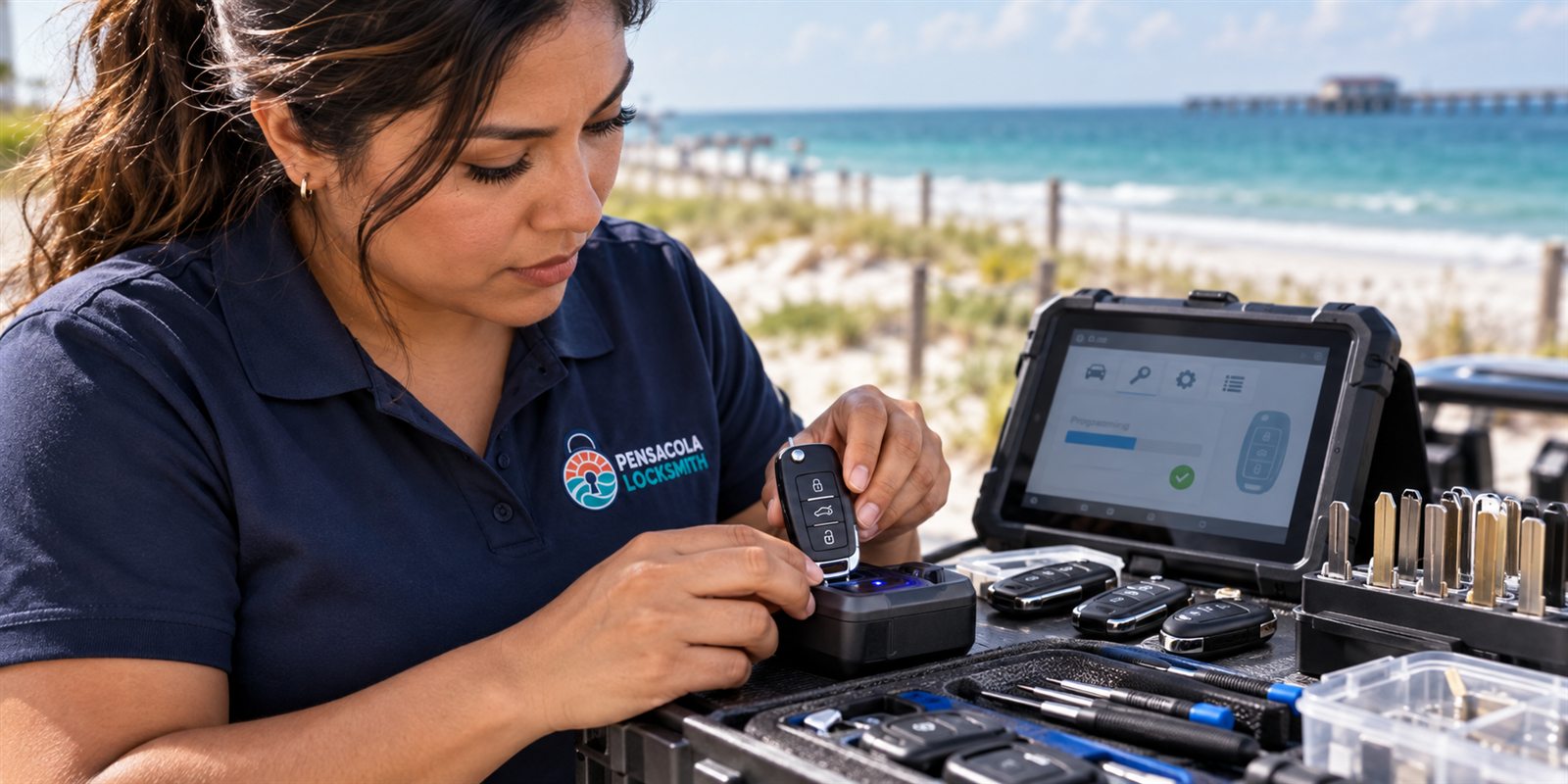
In certain vehicles, the best option is to create a replacement key or program a new one, which avoids entering the trunk entirely. That route depends on the vehicle, its security system and the proof of ownership we can verify. The technician explains the choices, the likely time, and the possible effects on the vehicle before beginning.
Why damage can happen and how we limit it
Forcing a trunk can do real harm. Prying at the lid can bend the sheet metal, crack the paint, scratch the seal and leave gaps where water can seep in. Pensacola's rain and humidity can then turn a small mistake into rust or a damp carpet. The goal is to avoid pressure on the body panels wherever possible.
We use soft wedges, protective coverings and gentle tools, and we work slowly. A trunk latch is a small mechanism, and a wrong pull can break a part that costs more than the lockout itself. We tell you if a method carries any risk for your specific vehicle, so you can decide how to proceed.
Sometimes a cosmetic mark is unavoidable on an older or well worn vehicle. If so, we say that before we start. Honest expectations matter. If we think another route, such as retrieving the key through the cabin, is safer, we will choose it even if it takes longer, because less damage is almost always the better outcome.
Ownership checks before we open anything
Before we open a trunk, rekey a lock or program a key, we check that you own the vehicle or have the authority to access it. This usually means a registration or title that matches your identification, or a note from the owner if the car is borrowed or company owned. We ask a few simple questions as part of the process.
This step is for your protection. A trunk can hold valuables, tools, documents and personal items. Opening it for someone who has no right to be there would be a harm to the real owner. It also guards the technician and the business. A short wait while we verify is part of doing the job responsibly.
If the car belongs to a rental company, an employer or a family member, tell us at the start. We can often work with a quick phone call to the owner or fleet manager. If we cannot confirm authority, we cannot open the vehicle, and we explain what you can do next. We never skip this step for any reason.
What to do before you call
Stay calm and look at the whole situation. Check whether any of the doors are unlocked and whether a passenger or the cabin is accessible. Look for an interior trunk release lever, usually marked with a small trunk icon, and see if the rear seat folds. Sometimes a few seconds of looking solves the problem.
Do not use tools to pry at the trunk or hit the lid. It is tempting if you are late, but it can crack the paint or bend the latch. If you have a spare key at home or with a family member, that may be the easiest solution, and a friend could bring it to you. Consider whether waiting is more practical.
If you do call, have the make and general type of vehicle, whether it has a physical key or a push button start, and whether the doors are locked. Tell us where you are parked and whether the car is in a safe place. If you are in a hot parking lot, find shade and water first. Your comfort matters while you wait.
Safety around beaches, bridges and parking lots
In a coastal area, lockouts happen in a wide mix of places: beach parking, boat ramps, shopping lots, hotel garages and roadsides. Each brings its own risks. A beach lot in summer is hot, and a person waiting there should have water and shade. A roadside is dangerous if the car is close to traffic, so move away from the road.
If you are on a narrow shoulder or near a bridge, stay clear of passing traffic and keep children and pets with you away from the road. Turn on your hazard lights if the car is running or the battery still works. If the situation feels unsafe, tell us, and consider calling for other help first.
Heat is a serious concern if a pet or a child is inside the vehicle. In that case, treat it as urgent and call emergency services immediately rather than waiting for a locksmith. Our work is about keys and locks, and people and animals come first. We can help once everyone is safe and the situation is calm.
Push button start, fobs and hidden keys
Modern vehicles often use a proximity fob rather than a metal key. The car senses the fob nearby and allows starting. If the fob is in the trunk, the car may detect it and, depending on the design, refuse to lock itself, or may lock and then refuse to start. Some cars warn you when the fob is left inside, but not all.
A fob in the trunk may still contain a hidden mechanical key, a small blade that slides out. If the fob is in the trunk, that blade does not help you, but if you have a second fob at home, you may be able to use it. Fobs can be programmed to a vehicle, and a technician can add a new one if ownership is verified.
Signal interference and battery drain can also complicate things. If a fob battery is weak, the trunk may not respond to the button. Replacing the battery is a simple fix when the fob is in your hand. When it is inside the trunk, the problem becomes retrieving it. We explain these details so you know what is realistic.
Older cars, classics and aftermarket changes
Older vehicles often have a simple mechanical trunk lock, sometimes with a separate key from the ignition. Those locks can wear out or seize with age and corrosion. Opening them may mean working carefully with a pick or cleaning the cylinder. A very old car may have fragile paint and trim, so we move slowly.
Aftermarket alarms, remote starters and trunk poppers add complexity. A previous owner may have installed a switch or relay that is hard to find. Wiring may hide in unusual places. If you know your car has a modification, tell us on the phone, because it can change how we approach the job.
Classic or rare cars call for extra respect. Original paint, chrome and trim are hard or impossible to replace. We choose methods that leave no trace, even if they take longer. If the car has particular value, we recommend allowing time and discussing the plan in detail before we start. Your goal and ours are the same: no new marks.
After the trunk is open: avoiding a repeat
Once your keys are in hand, a few habits prevent another lockout. Make a point of putting keys in a pocket or purse before loading the trunk, never on top of bags. Some people clip keys to a belt loop or a bag strap. Having a routine, like holding the keys until the trunk is closed, becomes automatic with practice.
Consider a spare key kept in a safe place away from the vehicle, such as at home or with a trusted person. A spare fob can also be programmed for convenience. It does not have to be a high end solution; a simple backup is often enough to get you out of trouble when the primary key is out of reach.
If your trunk latch felt sticky, the lock stiff or the release unreliable, mention it. A worn latch can fail at the wrong time, and a quick repair may prevent another incident. A technician can look at the mechanism and tell you if it needs service. A small fix now is better than another long wait later.
Quotes, service calls and availability
Quotes are given by phone based on what you tell us about the vehicle and the situation. A simple retrieval through the cabin is a different job from one that requires working on the latch or programming a key. We give you the information we can and explain what could change it before dispatching anyone.
If the job is complicated, a technician visits and the service call charge is explained before dispatch. We will not send someone without telling you what to expect. You can ask questions and decide whether to go ahead. We would rather you feel informed than pressured, since this is already a stressful moment.
Please call to confirm availability for your location in Pensacola or Escambia County. Have your location, your vehicle type and a brief account of what happened ready. We will ask about ownership, and then talk through the options. Stay with the vehicle if you can, and keep a phone charged so we can reach you.
Rental cars, shared vehicles and borrowed cars
Pensacola sees plenty of visitors, and many of them drive rental cars. Locking the keys in a rental trunk is common during a beach trip, and it adds a layer of paperwork. The vehicle belongs to a rental company, so the renter needs to show an agreement and, in many cases, get approval from the company before anyone opens or reprograms anything. Having the rental contract on your phone or in your wallet speeds this up.
Shared and borrowed vehicles work the same way. If a friend or relative owns the car, we need to confirm they are fine with the work, and a quick call to them is usually enough. Company vehicles may have a fleet manager who needs to approve. This is not a delay for its own sake. It keeps the people who actually own and use the vehicle in control.
Military families moving through the area, students and workers on short assignments may all be driving cars that are registered somewhere else. That is fine. Bring the registration or title and an ID, and tell us the situation honestly. We will tell you what we can verify, what we need, and what the next step is, even if it takes a few extra minutes of phone calls.
Common questions
Can you open a trunk without damaging the car?
In most cases yes. We start with the gentlest option, often retrieving the keys through the cabin or working on the trunk lock itself. Prying is a last resort. If any method carries risk for your vehicle, we explain it before starting so you can decide.
My doors are unlocked but the trunk is shut. What can I try?
Look inside for a trunk release lever or button, usually on the driver's side. Check whether the rear seat folds down to reach the trunk space. Do not pry at the lid. If neither works, call us and describe the vehicle type, and we can suggest a method.
What if the key fob is locked in the trunk?
Some cars refuse to lock or start when the fob is nearby, and others behave differently. A technician can often reach the fob through the cabin or work on the latch. If needed, a replacement fob can be programmed once ownership is confirmed.
Do you need proof that the car is mine?
Yes. We check ownership or authority before opening or programming anything. A registration or title that matches your identification usually works. If the car is borrowed or company owned, we may need to speak with the owner.
How much does it cost?
Quotes are given by phone based on the vehicle and the situation. If the job is complicated, a technician visits and the service call charge is explained before dispatch. Please call us to confirm availability in Pensacola and Escambia County.