
Content note: this page was written by Claude (AI) for Pensacola Locksmith.
Why the usual hiding spots fail
Hiding places are chosen by instinct, and instinct is shared. Under the mat, inside a planter, behind a loose brick, on a ledge above the door: anyone who has ever thought about where a key might be knows these places. A person who wants to get in does not need special skill, only a minute of looking at the usual spots near the door.
A hidden key also depends on secrecy that you cannot maintain. Neighbors see you retrieve it. Delivery people walk past. Guests and workers notice. Over time, more people know than you realize, and you have no way of telling who. A key hidden in a place many people know about is a key that effectively belongs to all of them.
There is another problem: the key and the lock are right next to each other. Even if your hiding place is clever, you have placed the access tool at the exact spot where it is most useful. If someone finds it, there is no delay and no noise, and nothing will suggest that anything happened. A forced entry is at least obvious, while a found key can be silent.
None of this means you should go without a spare. Lockouts are real, and a spare saves a lot of trouble and expense. It means the spare should live somewhere that does not depend on nobody noticing. The best options separate the spare from the door and put some form of control between a finder and your home.
Consider also how a casual observer thinks. Someone walking a street looking for easy chances tends to check the handful of spots that cost almost nothing to try. If the key is not there, they move on. If it is there, the whole decision is made for them in seconds. Your goal is to be a house where that quick check turns up nothing, so the easy chance simply never appears.
A trusted person with a key
The simplest and often best option is to give a spare to someone you trust: a family member, a close friend, a neighbor you know well. They can open the door, check on a pet, or bring you the key if you are locked out. A human holder is much harder to guess than a flowerpot, and they can help in ways a hidden key cannot.
There are conditions. Choose someone who lives close enough to help and who is reliable about keeping the key safe. Ask them to store it in a secure place and not to label it with your address. Make sure they understand that it is not to be lent out. Check in once a year to confirm they still have it and that it is where they said it would be.
Think about what happens if the relationship changes. People move, friendships end, neighbors sell their homes. If the holder leaves your life, get the key back or rekey your locks. A spare in the hands of someone you no longer speak to is a loose end that you do not want to leave hanging.
For couples or families, remember that everyone who lives with you probably has a key already, so the spare is for the case where all of you are locked out or away. A person outside the household covers that case. Keep a list of who holds copies so that nothing is forgotten in a move or an emergency.
Give the holder simple instructions in writing. Explain when it is acceptable to use the key, who else may know where it is, and what to do if it goes missing. A spare in a kitchen drawer with the address written on a tag is much weaker than one in a closed envelope with nothing on it. Small habits on their side make your arrangement safer than you could manage alone.
Lockboxes and how to use them well
A combination lockbox holds a key behind a code. It can be mounted discreetly near the door or in a less obvious spot, and you can share the code with someone who needs access. It is more secure than a loose key under a mat because opening it requires knowledge, and you can change the combination whenever you like.
Mounting matters. A box hung from a doorknob or a flimsy rail can be removed with the key inside. Fix it to solid masonry or a structural member with proper fasteners. Place it where it is not visible from the street. Choose a model with a hardened shackle or body, and check that it is designed for outdoor use in humid, salty air.
Do not use a code that anyone can guess, such as a birthday, an address or a repeating number. Pick a code with no connection to you and change it from time to time, particularly after a contractor or guest has used it. Keep a record of the code in a safe place, as forgetting it defeats the purpose.
Remember that a lockbox is still a key near your door. If it is opened, the finder has full access. For that reason, some people mount the box away from the main entry, such as on a back fence post or a garage side. Each location has tradeoffs, and a technician can talk through what suits your property.
- Mount to solid masonry or structure, not a rail
- Choose an unguessable code and change it periodically
- Pick a weather rated model for coastal air
- Keep the code written down somewhere safe
Keypad locks and codes instead of keys
The strongest way to reduce spare key worries is to need fewer physical keys. A keypad deadbolt lets you enter a code, so there is no key to hide. You can give a temporary code to a visitor, a cleaner or a family member, and delete it afterward. That avoids the problem of someone keeping a copy forever.
Keypads still have weak points. Batteries die, so replace them on a schedule and know how to open the lock from outside if the power fails. Choose a model with a physical key override or an external contact for a battery. Keep that override key in a secure place, since it is again a spare key to be managed.
Codes can be shared and forgotten as well. Do not use obvious combinations, and do not write the code on the door frame. Delete codes of people who no longer need access. Some models record when each code was used, which can help you notice unusual activity. Choose a model that fits your door and your comfort with technology.
Salt air and heat are hard on cheap electronics, so quality and finish matter in Pensacola. Look for sealed internals and a durable face. A keypad that works well in a showroom may struggle after a humid summer. A technician can recommend models that stand up to local conditions and install them properly on your door.
Think about the codes you hand out as small keys with an expiry date. A dog walker needs access on weekdays, a cleaner on one afternoon, a relative during a hospital stay. Keep notes on who got what and when, and clear them out regularly. A lock that carries twelve forgotten codes is not much better than a drawer full of old keys.
Spare car keys: a different set of risks
Cars bring their own issues. Modern keys often contain a chip and a remote, and losing one can be expensive and inconvenient. A spare is therefore worth having, but where you keep it matters. Never store a spare in or on the vehicle, including in a magnetic box under the bumper. Thieves know the trick, and a key in the car makes theft easy.
Keep the spare at home in a secure location, such as a drawer or a small safe, away from the front door. Tell family members where it is. If you travel, leave the spare with someone you trust or take it along, and keep it separate from the main key so one loss does not leave you stuck.
Check the spare from time to time. Batteries in remotes can die, and a spare that has sat for years may not work when you need it. Test it every few months and replace the battery on a schedule. Make sure that it still starts the car, not only unlocks the doors, since chips can fail to sync after a battery change.
If you have only one key for your vehicle, make a spare before you lose it. Making a copy when you have one working key is much simpler than creating a new one from nothing. A technician will check proof of ownership before cutting or programming a key, as part of protecting vehicle owners.
Safes, cabinets and indoor storage
Where you store spare keys inside your home also matters. A drawer by the front door is convenient but obvious. A small key cabinet with a lock, mounted out of sight, keeps keys organized and a bit safer. A fireproof or small floor safe can protect valuable keys such as a vehicle's spare and a safe deposit key.
Label carefully. Use codes or initials that make sense to you but not to a stranger. A tag that says front door or the full address gives away what the key opens. Keep spare keys for the garage, the shed and the gate together so you can find them quickly when needed. Check the cabinet on a regular schedule.
Consider flooding and storms in a coastal area. A safe or cabinet placed too low can be damaged by water. Keep keys above likely flood level, in a container that resists moisture. A waterproof pouch inside a drawer is a simple extra layer. These small touches matter if you need to leave quickly.
Do not forget less obvious keys. The mailbox, the pool gate, the boat, the storage unit and the office all have their own keys. A tidy system with a list of what each key opens avoids frantic searches. It also helps in an emergency when someone else must find something on your behalf.
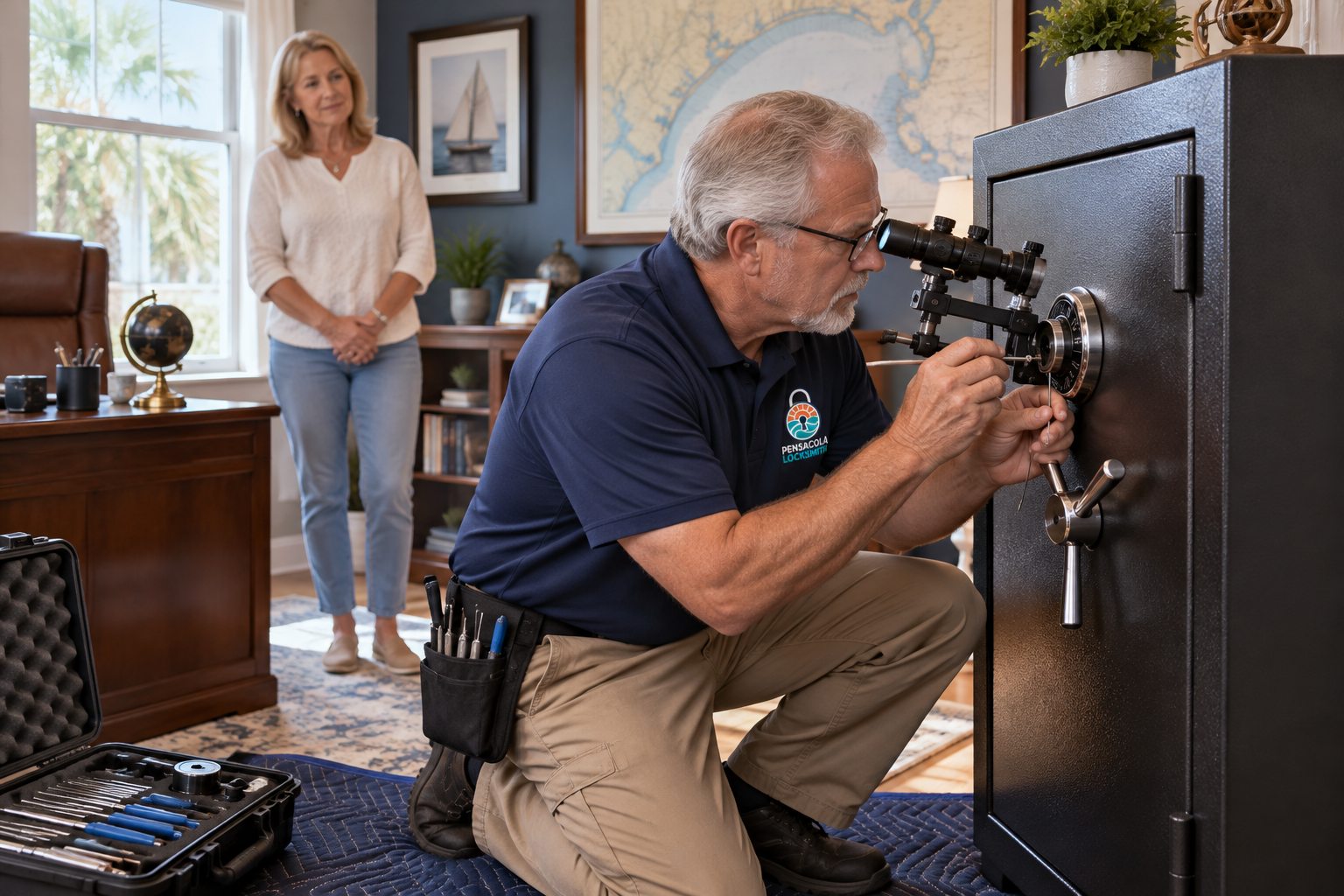
If you use a small home safe, bolt it down so it cannot be carried away, and choose one with a reliable lock that does not depend on a battery alone. Keep the combination somewhere only you and one other trusted person know. A safe full of spare keys is a very tidy answer, but only if it opens when you need it to and stays closed when you do not.
Rentals, shared homes and families
In a rental, the landlord may already hold a spare. Ask about the policy and where it is kept. Do not hide your own spare in an outdoor spot without permission, as it may violate the lease and creates a hazard for the landlord and other residents. A trusted neighbor or a lockbox approved by the landlord is a better route.
Shared homes have more keys in circulation, which makes tracking harder. Agree on one place for the household spare and tell everybody. If someone moves out, make sure their key is returned and consider rekeying. A roommate who leaves with a key, even in friendly circumstances, is one more person with access to the home.
Families with older relatives or teenagers face special concerns. A relative who is prone to lockouts may benefit from a keypad or a lockbox that they can use confidently. A teen might lose a key often; a keypad or a smartphone based option may reduce the number of replacements. Choose solutions that fit habits, not ideals.
If you rent out a room or host guests, avoid giving out your main key. Use a separate lock on a guest room or an access method that can be changed easily. This keeps your own security separate from your guests, and it gives you a clean way to end access when the stay is over.
When a spare is lost or compromised
If a spare key goes missing, treat it as a real event. You cannot know if it was lost in a drawer or picked up by someone else. Weigh the risk: if the key carried your address, rekeying is prudent. If it was a loose key in your own house, it may be fine, but you may still choose peace of mind.
Rekeying is quick and keeps your existing hardware. A technician changes the internal pins so the old key no longer works, and gives you new keys. Before doing so, they check that you own or are authorized to alter the lock, which protects you and your neighbors. Call us to confirm availability and discuss your doors.
After the rekey, update your records. Note who holds a new key, where the spare is kept, and when the work was done. Throw away or return old keys so they do not cause confusion later. If you used a lockbox, change the code as well.
Over time, a good habit is to review your key arrangements once a year. Look at who holds copies, whether the hiding place is still sensible, and whether the hardware is in good shape. A spare key is useful only if it is safe, findable and working, and a short yearly check keeps all three true.
Common questions
Is it ever okay to hide a key outside?
It is a risk because common hiding places are the first ones checked, and the key sits right next to the lock. If you must, use a mounted lockbox with an unguessable code placed away from the main door. Better yet, leave a spare with a trusted person or switch to a keypad lock.
Where should I keep a spare car key?
Keep it at home in a secure spot away from the front door, never in or on the vehicle. Test it every few months and replace the remote battery on a schedule. If you have only one key, make a spare soon. A technician will check proof of ownership before cutting or programming it.
Are lockboxes safe?
They are safer than loose keys if mounted to solid material with a code that is hard to guess. They still hold a key near your door, so choose the location with care and change the code now and then. Use a weather rated model, since humidity and salt air can seize cheap ones.
Should I switch to a keypad lock so I need fewer keys?
It can reduce the number of keys you track and lets you give temporary codes. Keep fresh batteries, know how to enter if power fails, and choose a quality model for coastal weather. We can talk through options for your door by phone and confirm availability for a visit.
What should I do if a spare key goes missing?
If it carried your address or you cannot account for it, rekey the lock. Rekeying makes the missing key useless while keeping your hardware. A locksmith checks ownership or authority first, then changes the cylinder. Record who holds the new keys and update any lockbox codes.