
Content note: this page was written by Claude (AI) for Pensacola Locksmith.
Why doors are the weak point in a storm
When wind pressure builds against a house, the entry doors take some of the heaviest loads. A door is a large flat surface held in place by a few hinges and a latch, so any weak part in that chain can let the whole door flex, rattle or burst inward. Once a door opens during a storm, pressure inside the house can change quickly and damage spreads to the roof and walls.
Most failures are not dramatic. They start with loose screws, short hinge screws that only bite into thin trim, a latch that barely catches the frame, or a strike plate held by two small screws. These are cheap parts, and fixing them before the season is far easier than repairing a split frame afterward.
A locksmith looks at a door as a system: the slab, the hinges, the frame, the strike, the lock and the weatherstripping. Strengthening that system is not about turning your home into a fortress. It is about removing the easy failure points so the door behaves the way it should when the weather turns hard.
Walk through the house at the same pace a storm inspector would. Open and close every exterior door, watch how it swings, and listen for scraping, ticking or rattling. A door that feels loose in good weather will feel worse when the wind pushes on it. Write down anything unusual and group the problems by door so you can plan repairs efficiently.
Start with hinges and screws
Open the door and look at each hinge. The screws should be tight and, ideally, long enough to reach through the frame trim into the solid framing behind it. Many builders use short screws that grip only the thin jamb. Replacing at least one screw in each hinge with a long screw, around three inches in length, is a simple upgrade that ties the door to the structure of the house.
Check for hinge wear as well. If you can lift the door by the handle and feel it move, or if the door has started to sag and drag on the threshold, the hinge pins or screw holes may be worn. Stripped holes can be repaired with wood filler and dowels or with longer screws. Do not ignore a door that rubs, because that friction also makes the latch work against the frame.
On outward-opening doors, the hinge pins are exposed on the outside and should be fixed so they cannot be tapped out. Ask a technician about security studs or non-removable pins if your door falls into this category. Coastal moisture can also rust hinges, so a light application of suitable lubricant helps both noise and wear.
Hinge problems often hide behind paint. If screw heads are painted over or stripped, scrape the paint carefully and check whether a screwdriver can still seat firmly. Stripped holes can be refilled with glued wooden dowels, then re-drilled. It takes patience, but a hinge that is firmly anchored carries far more load than one held by a few threads of soft wood.
- Tighten every hinge screw
- Add long screws into the framing
- Look for sagging or rubbing
- Check pins on outward-opening doors
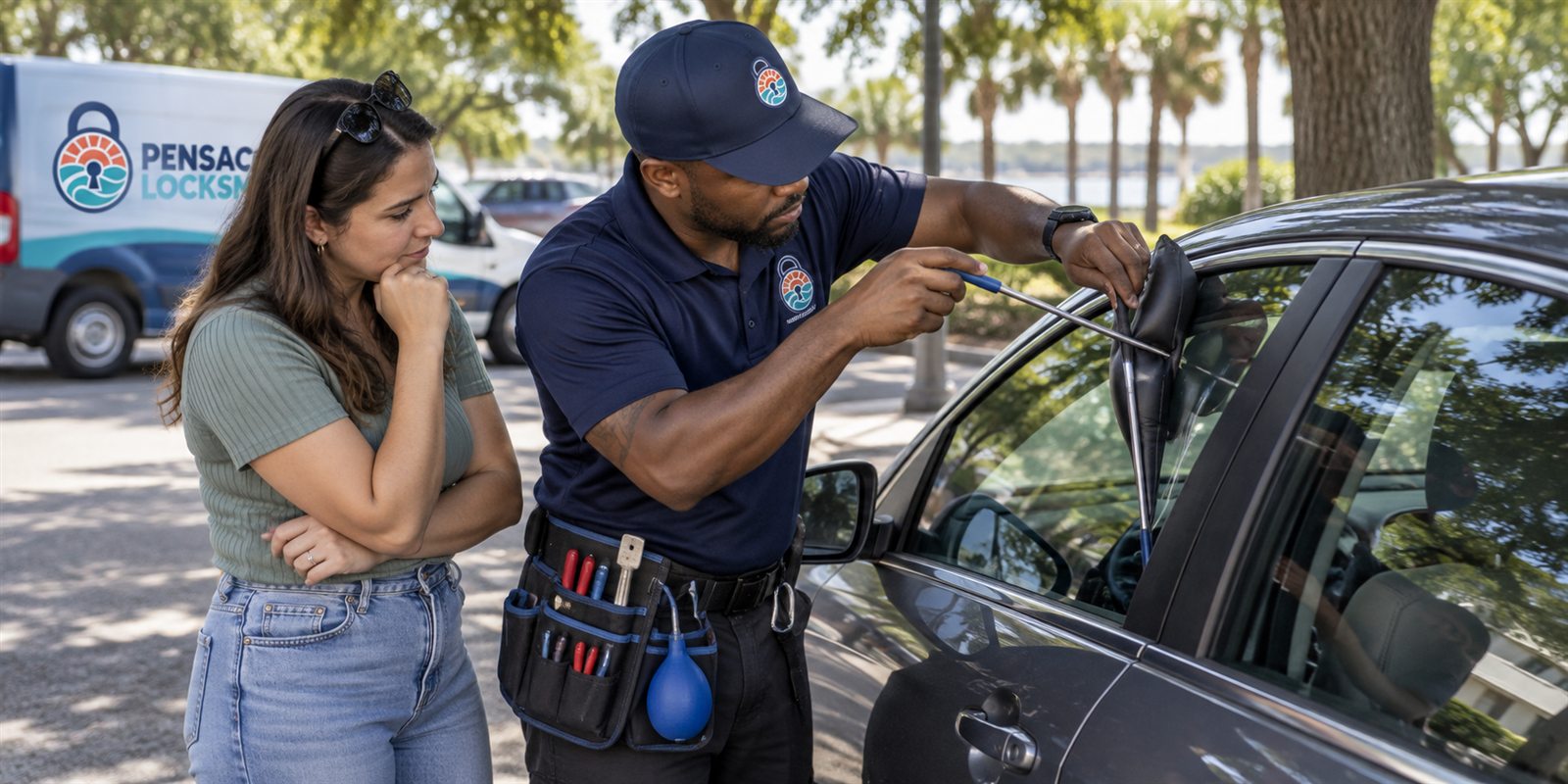
Strike plates and the frame
The strike plate is the metal piece on the frame where the bolt lands. It is usually the weakest link on a residential door. A typical plate is held by short screws that bite into soft jamb wood, and a hard push can split the wood and let the bolt slide out. Replacing the plate with a reinforced version and long screws spreads the load across the stud behind the jamb.
Inspect the frame itself for cracks, soft spots or termite damage. Wood near the lock often shows hairline splits that go unnoticed until a door is stressed. Gaps between the door and the frame should be even from top to bottom. An uneven gap suggests movement in the frame, and that deserves attention before a storm tests it.
Check that the bolt extends fully into the strike hole without forcing. A bolt that barely catches, or that has to be lifted into place, is not holding the door as designed. Adjusting the strike plate position by a few millimeters, or repairing the hole, can restore a firm engagement. A technician can handle this during a routine visit.
A reinforced strike plate is only useful if the screws reach something solid. Pilot holes drilled slightly smaller than the screw help prevent splitting. Some homeowners add a full-length door jamb reinforcement plate that spreads force along the whole frame. A technician can recommend a version that fits your door style and keep the finished look tidy and consistent with your existing hardware.
Deadbolts and latch hardware
A good deadbolt extends at least one inch into the frame when thrown, and it should turn smoothly with no sticking. Salt air and humidity along the coast can corrode brass and zinc parts over time. If a deadbolt feels gritty, or if the key needs wiggling to turn, take that as a sign to service or replace the lock before storm season, not during it.
Doors with a knob lock only, and no deadbolt, rely on a latch that is easy to push back. Adding a deadbolt gives a much more solid hold. Double-cylinder and keyed-inside locks are controversial because they can slow an escape in an emergency, so discuss the right choice for your home with the technician rather than assuming.
Double doors and French doors need special care. Their inactive leaf is often held by small flush bolts at the top and bottom, and those can be weak or neglected. Check that the bolts slide fully into their holes, and replace worn ones with sturdier versions. Sliding glass doors need a different approach, covered below.
When you choose a deadbolt, look at the bolt itself. A hardened steel bolt that resists sawing is better than a plain one, and a rotating collar around the cylinder helps resist twisting. Fit matters as much as features. A quality bolt in a poorly aligned hole will bind and wear quickly, so allow time for careful installation and adjustment.
Garage doors, side doors and sliding doors
Garage doors are among the largest openings in a home, and a wind-damaged garage door can compromise the whole structure. Check the tracks, brackets and rollers for loose bolts, and look for dents or cracks in the panels. The door that connects the garage to the house deserves the same attention as the front door, because it often has lighter hardware.
Remember that an electric opener will not work during a power outage unless it has a battery backup. Know how to disengage the opener and lock the door manually, and make sure you can reach the release from inside. Do not assume the lock on a garage door is enough to hold it against strong wind without proper reinforcement.
Sliding glass doors should have a working latch plus a secondary bar or pin lock. A dowel in the track is a low-tech option, but a purpose-made security bar is better. Check the rollers and track for debris and corrosion, since a sliding door that rides poorly can pop out of its track under pressure. Impact-rated glass is a separate topic for a window professional.
For garage doors, never try to repair springs or cables yourself. They hold enormous energy and can cause serious injuries. If a track is bent or a door looks out of balance, have a qualified garage door professional handle it. A locksmith can help with the locks and latches on the service door and with any keyed or electronic entry that connects to the opener.
Smart locks, keypads and power loss
Electronic locks are convenient, but storms test them. Batteries drain, and electronics can be affected by moisture or surges. Replace the batteries before the season starts, even if the lock has not warned you yet. Confirm that the lock has a physical key override and that you know where the key is, because a dead lock with no key means a lockout at the worst time.
Some smart locks rely on a home network or a phone app to unlock. When the power or internet goes out, the app may not connect. Keypad codes and manual keys still work on most models, but you should test them in advance. Write down any master or backup codes and store them somewhere safe and dry, not only on a phone that might be dead.
If you plan to evacuate, consider changing the codes you gave to guests, cleaners or contractors. Time-limited codes make this easier. When you return, check the lock for water intrusion, clean the keypad and test every function before you rely on it again. A technician can service or replace units that look corroded.
Create a tidy list of the codes and passwords tied to your locks, and keep it somewhere private and protected from water. If you use a smart lock hub, write down how to reset it. During a power outage, you may need these instructions, and your phone may be low on battery. A printed copy in a sealed bag is a simple safeguard.
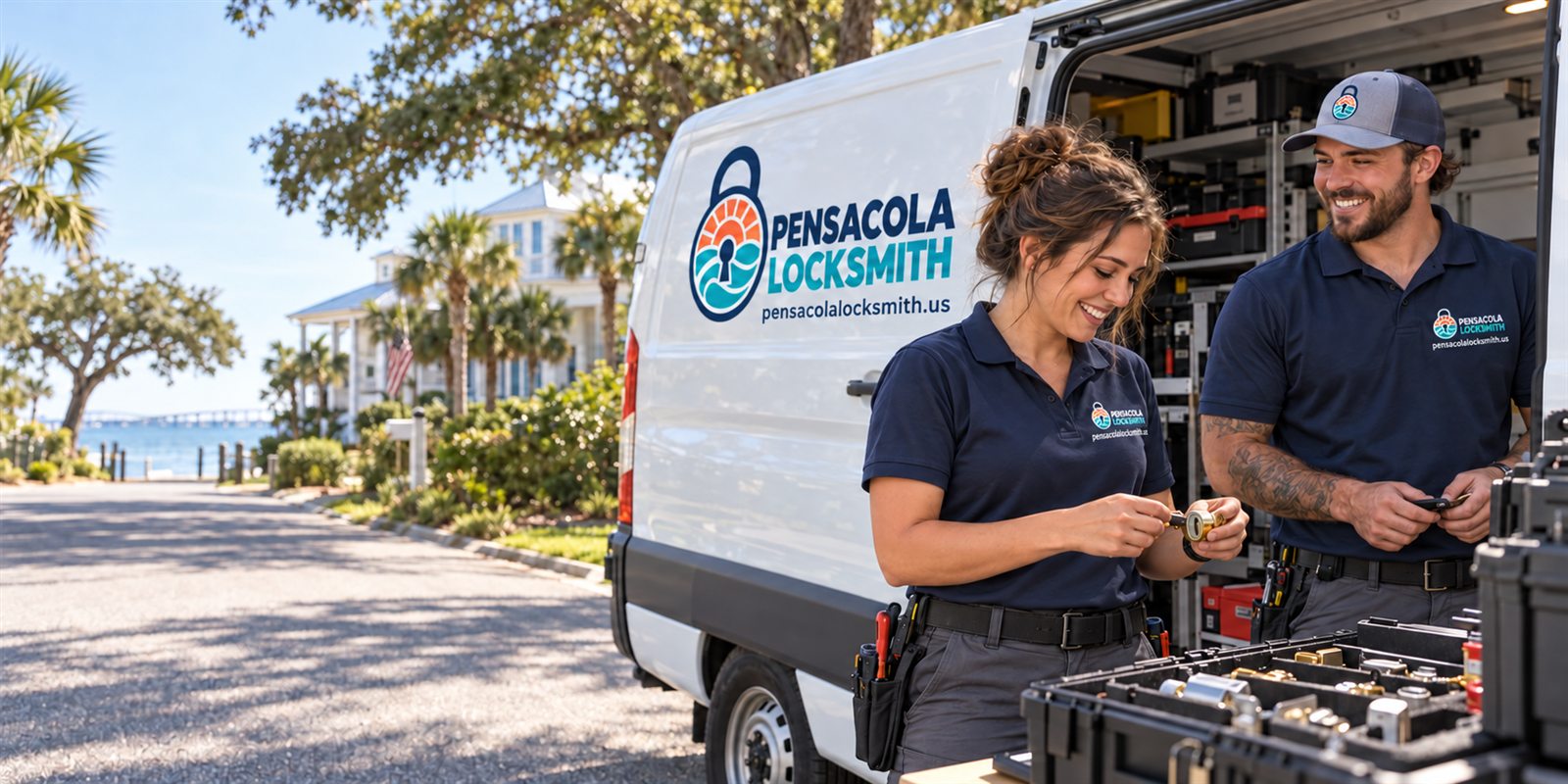
Prepare your keys and records
Before a storm, gather all your keys in one place and make sure every spare is labeled in a way that does not reveal your address. Keep a set with you if you evacuate, and leave another with someone you trust outside the area. A key that is lost in a flood or a hurried departure becomes a problem, so having duplicates in separate locations is wise.
Take photos of each door, lock and the frame before the season, along with the serial numbers or brand marks if you can find them. These records help with insurance conversations and with repairs, because a technician can match hardware quickly. Store the photos in the cloud as well as on your device.
Check that you have working copies of keys for every lock, including outbuildings, sheds, storage rooms and padlocks on gates. If any key is hard to turn or feels worn, get a new copy cut from the original, not from a copy of a copy. We ask you to call for details on duplicate and replacement keys.
Spare keys deserve their own plan. Give one to a trusted person outside the storm zone, keep one in a waterproof container with your travel documents, and make sure each key is cut cleanly from the original. Duplicates of duplicates drift out of tolerance and can fail in stiff locks. We can discuss key cutting and replacement when you call.
Protecting hardware from coastal weather
Gulf Coast humidity and salt carried on the breeze are tough on metal. Over a few seasons, lock cylinders can stiffen, finishes can pit and screws can rust. A yearly cleaning and lubrication routine makes a big difference. Use a dry graphite or a product made for lock cylinders rather than heavy oil, which can attract dirt and gum up the pins.
Wipe the exterior of locks, handles and hinges with a damp cloth to remove salt film, then dry them. If you see rust spots, address them early. For exposed locations, consider hardware with corrosion-resistant finishes, and ask a technician which products hold up near the water. Stainless steel and certain coated brasses perform better than basic plated parts.
Weatherstripping and door sweeps matter too. Worn seals let wind-driven rain push in around the edges, which can swell wood and rust hardware from the inside. Replace brittle or flattened seals before the season. A door that closes with light, even pressure and seals evenly is easier on its lock and less likely to jam.
Do not forget the small stuff. Window latches, sliding door pins, shed locks and gate hardware all add to your home overall security. A single weak entry point can undo careful work elsewhere. Make a final pass the week before an expected storm, tighten anything loose, and test every lock once more. Then you can focus on the other preparations on your list.
When to call a locksmith, and a simple timeline
Plan your checks early in the season, not when a storm is already in the forecast. At that point supplies run short and everyone is rushing. A calm weekend in spring is a good time to walk through every entry point with a screwdriver and a flashlight, and to make a list of what needs work.
Call a locksmith when you find a damaged frame, a lock that does not turn smoothly, a door that will not latch, or hardware you want to upgrade. Describe what you see when you call and we can quote by phone. If the job is complicated, a technician visits and the service call charge is explained before dispatch. Please call to confirm availability.
Remember that we check ownership or authority before opening, rekeying or programming anything. Have your identification ready if the work involves changing keys or getting into a locked space. After a storm, return to the same checklist: inspect, tighten and test. Security and safety come from small details done well before they are needed.
Common questions
When should I start checking my locks for hurricane season?
Start well before the season begins, ideally in spring, when you can work calmly and hardware is easy to get. Check hinges, strike plates, deadbolts, garage doors and any smart lock batteries. Waiting until a storm is in the forecast leaves little time for repairs, and technicians tend to be busy.
Are long hinge screws really worth it?
Yes. Short screws only grip thin trim, while longer screws reach the wall framing and tie the door to the structure. It is an inexpensive change that makes the door far less likely to pull away under pressure. A technician can swap them during a routine visit and check the rest of the frame.
Should I switch from a smart lock to a plain key lock?
Not necessarily. Smart locks work well when batteries are fresh and a physical key override is available. Test the key, keep spare batteries on hand, and note backup codes somewhere dry. If you want a simpler setup for rental or evacuation use, discuss options with a technician by phone.
Can salt air really damage my locks?
It can. Humidity and salt carried by sea breezes encourage corrosion, which stiffens cylinders and weakens finishes. Cleaning exteriors, using a suitable dry lubricant and choosing corrosion-resistant hardware all help. If your key has become hard to turn, have the lock serviced before it fails completely.
Can a locksmith help after a storm if my door will not close?
Often yes, depending on the damage. Please call and describe the door and frame, and we can say what is likely and quote by phone. We check ownership or authority before work. Call to confirm availability, since demand can be high after severe weather. A technician visits if the job is complicated.