
Content note: this page was written by Claude (AI) for Pensacola Locksmith.
Start by working out which kind of failure you have
A trunk that will not open can fail in several different ways, and the fix depends on which one you are dealing with. Before you pull anything apart, spend two minutes sorting the symptoms. Does the trunk button on the key fob do nothing at all? Does the interior release lever or button click but leave the lid shut? Does the lid seem to unlatch but refuse to rise because something is pushing against it? Each of these points to a different part of the system.
If nothing happens when you press the fob and the dash lights are dim or the car cranks slowly, the problem may simply be a weak battery. Trunk releases on most modern cars are electric, so a battery that is nearly flat may run the lights but not have enough current to fire the latch motor. Try the release from inside the cabin and also try the physical key in the trunk lock if your car has one.
If you hear a motor whirring or a solenoid clicking but the lid stays down, the electrical side is probably working and the latch itself is jammed, bent or corroded. If you hear nothing and the lights are healthy, a fuse, a switch or a wire may be at fault. Write down what you hear and see, because describing it clearly on the phone helps the technician arrive with the right tools.
Common reasons a trunk latch stops releasing
The most common reason is simple wear. A trunk latch is a small steel mechanism that opens and closes thousands of times, and over the years its springs weaken, its pivots dry out and its plastic parts become brittle. Along the Gulf Coast, humid air and salt carried in from the water speed up that corrosion. A latch that was slow for months may suddenly stop catching the release at all.
A second cause is a broken release cable or rod. On many cars a plastic-coated steel cable runs from the interior lever to the latch. If it stretches, frays or slips out of its clip, pulling the lever feels loose and nothing happens at the latch end. A third cause is a failed electric actuator, the small motor that pulls the latch open when you press a button.
A fourth cause is the lock cylinder in the trunk lid. If you rarely use the key there, the pins and wafers can seize with dirt and moisture. Finally, a heavy load pressing on the lid, or a lid that has shifted slightly after a minor impact, can bind the latch against its striker so that even a healthy mechanism cannot release.
- Weak or dead car battery
- Worn, corroded or bent latch mechanism
- Stretched or disconnected release cable
- Failed electric release motor or blown fuse
- Seized trunk lock cylinder or misaligned lid
Safe things to try before you call
There are a few gentle checks that cost nothing and carry little risk. First, confirm the car is unlocked and, if it has a child safety or valet setting, that the trunk lockout is not switched on. Some cars have a valet mode that disables the electric trunk release from the fob and the dash. Check the owner manual or the glove box for a small switch or a key position that controls it.
Second, try every release you have. Use the fob, the interior button, the interior lever, and the physical key in the trunk lock. Press firmly but do not hammer. If the car has folding rear seats, look for a pull strap or lever behind the seatback or a release inside the cabin that lets you reach the trunk from the passenger side.
Third, give the lid a light press downward while someone else operates the release. If the latch is binding, relieving pressure can let it slip loose. Do not pry at the seam with a screwdriver. That can bend the lid, crack the paint and leave bare metal exposed to humid air, which is a bigger and more expensive problem than the one you started with.
Using the rear seats or interior access
Many sedans and hatchbacks let you reach the trunk from inside the passenger cabin. Fold the rear seatbacks forward using the release levers on top of the seat or in the trunk side, then slide through or reach through to the trunk release. Some seats are locked from the trunk side only, which defeats this approach, but many are not. If your seats fold, you may be able to push the latch open by hand from inside.
Once you have access, look for a manual release handle on the latch or a glow-in-the-dark pull cord. These are safety features meant for people trapped inside, and they usually mean the latch can be operated by a simple pull or push. You can often use that same handle to open the lid from within when the outside release fails.
If the seats will not fold, do not force them. The latching hardware behind the seatback is metal and can bend, and the upholstery tears easily. Also be careful with loose cargo that may shift. If you cannot reach the latch without prying, it is time to stop and have a technician look at it with proper tools rather than risk damage to trim, wiring or the structure behind the seat.
What a mobile locksmith can do on site
A mobile locksmith who works on vehicles can often get a stuck trunk open without drilling or cutting. The technician starts by diagnosing whether the failure is electrical, mechanical or a lock cylinder problem. With the battery tested and the release behavior observed, the technician can choose the least invasive way in. That might mean accessing the latch through a rear seat opening, working through the cabin trim, or operating the lock cylinder directly.
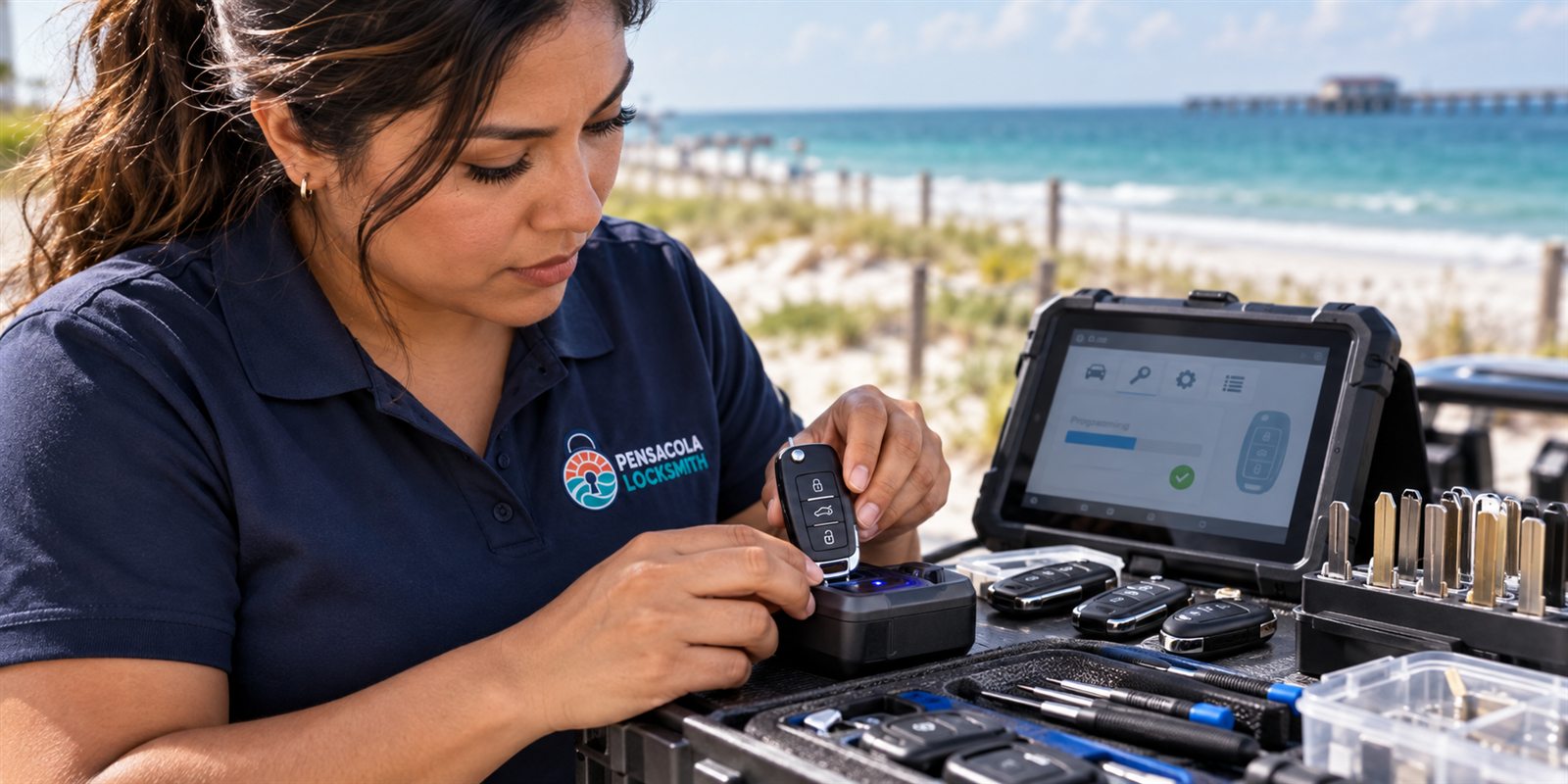
If the trunk uses a conventional key cylinder, a technician can pick or decode it without damaging the finish. If the cylinder is seized, the technician may loosen it with lubricants and careful manipulation, or replace the cylinder and cut a matching key. For electric latch faults, the technician can test the actuator, check wiring continuity and judge whether the part needs replacement.
Some jobs are not just a lock problem. A bent latch striker, a damaged lid hinge or a failed body control module is a repair for a body shop or mechanic. A good technician will tell you that plainly rather than pretend otherwise. When a job looks complicated, a technician visits first and the service call charge is explained before dispatch. Quotes are given by phone, so call us and describe what you see.
Ownership checks and what to have ready
Before a locksmith opens, rekeys or programs anything on a vehicle, the technician checks that you own the car or have authority to work on it. This protects you, and it protects the vehicle owner if the person on the phone is not the owner. Have your driver license and either the registration, the title or a rental or lease agreement ready. If you are working for a business, bring paperwork showing the vehicle belongs to the company.
It also helps to have the vehicle year, make and model written down, the exact trunk symptoms, and your location. Tell the technician if the key fob battery is fresh, whether the car was recently jump-started, and whether anything heavy is inside the trunk. These details shape which tools the technician brings and whether a replacement latch or cylinder might be needed.
Choose a safe spot for the work. A flat, well-lit parking area with room to open doors and the lid is best. If the car is on a roadside, in a lot with heavy traffic or by the water in an exposed location, mention it when you call so the technician can plan. Call us to confirm availability; nothing is promised until you speak with someone.
Climate, salt air and keeping the latch healthy
Pensacola's mix of humid summers, salty air near the bay and the Gulf, and occasional heavy storms is hard on exposed metal parts. The trunk latch sits behind a rubber seal but still sees moisture, and once rust forms on the pivots, the mechanism can seize. Washing the car after trips to the beach, especially the lower rear edge and the area around the lid, removes salt before it settles.
A little maintenance goes a long way. Once or twice a year, open the trunk and inspect the latch and striker for rust or dried grease. Work the latch by hand a few times with the lid open and apply a light silicone or lithium-based lubricant suitable for latches. Avoid spraying thick grease that attracts sand and dust, which then acts like grinding paste.
Check the rubber seal and drain holes too. If water pools in the trunk floor, the latch wiring and the emergency release cable can corrode. If you see standing water, damp carpet or a musty smell, address the leak soon. During hurricane season, a car parked outside through repeated storms is more likely to collect moisture in places you cannot easily see.
Do not load the trunk in a way that causes trouble
Overloading the trunk can stress the latch and the lid hinges. A heavy item leaning against the lid from inside may press on the latch when you close it, bending the striker or preventing the lid from seating properly. Secure heavy items against the back of the seat or in a cargo organizer so that nothing leans against the inside of the lid. If the lid has to be slammed hard to close, something is wrong.
Be careful with long items. Lumber, pipe or ladders that hang out of a half-closed trunk can bend the lid or the latch. If you must drive with the lid tied down, use a soft strap and check that the latch has not been bent or loaded unevenly. Afterward, test the release a couple of times to see if it still works smoothly.
For people who work from their vehicle, such as tradespeople or delivery drivers, a stuck trunk can mean lost work. Keep a basic set of hand tools in the cabin as well as the trunk, and know where your emergency release is. If your trunk gets locked with tools inside, a mobile locksmith can often help you reach them without damaging the vehicle.
Getting at the spare tire and emergency gear
The most stressful version of this problem is when the spare tire, jack and warning triangle are all trapped behind a trunk that will not open, and you also happen to have a flat. In that situation, tell the technician at the start of the call. Some vehicles carry a spare under the floor and can be reached from underneath, while others keep the tire in a compartment that only opens from inside the trunk. Knowing the layout saves time and avoids needless damage.
If you are on the side of a busy road, put safety first. Move the car as far from traffic as you can, switch on the hazard lights, and have passengers wait in a protected spot away from the lane. Do not crawl under the car or work near moving traffic to reach a latch. A locksmith can reach the latch from the cabin in many cases, and a tow service can move the vehicle to a safer place if the location is dangerous.
Afterward, consider keeping a small kit in the cabin rather than only the trunk: a flashlight, a basic tire gauge, gloves, a reflective triangle and a phone charger. It is a small habit that turns a trunk failure from an emergency into an inconvenience, and it costs very little to arrange before the next storm season or the next long drive along the coast.
When to repair and when to replace the latch
If the latch is simply dirty or dry, cleaning and lubrication may bring it back. If a spring or pivot is worn, replacing the whole latch assembly is usually more reliable than patching the old one. Parts for most common vehicles are available, and installation is typically a matter of removing the trunk trim, unbolting the old latch, fitting the new one and adjusting the striker so the lid closes without force.
For electric releases, the actuator is part of the latch on many cars, so replacing the latch also replaces the motor. If a fuse has blown, find out why before swapping it. A short in the wiring harness near the hinge, where wires flex every time the lid opens, is a common culprit. A technician can test the circuit and tell you whether the wire needs repair.
Always ask what will be done and why before work begins. A trustworthy technician explains the diagnosis, shows you the failed part where possible, and lets you decide. If your car is under a manufacturer program or a service contract, ask whether work done elsewhere affects it. Keep any paperwork from the repair for future reference.
Common questions
Why does my trunk button click but the lid will not pop?
A click usually means the release motor or solenoid is getting power but cannot move the latch. The latch may be rusted, jammed against a bent striker, or held down by something pressing on the lid from inside. A technician can try to release it manually and then judge whether the latch needs cleaning or replacement.
Can I use a screwdriver to pry the trunk open?
It is not a good idea. Prying can bend the lid, crack paint and expose bare metal to Gulf Coast humidity, leading to rust. It can also damage the weather seal and wiring. Try the seat folds, the key cylinder and the manual release first, and call a technician if those fail.
Will a locksmith need proof the car is mine?
Yes. The locksmith checks that you own the vehicle or have authority to work on it before opening or programming anything. Keep your license and the registration, title, or rental or lease paperwork handy. This protects both you and the true owner of the vehicle.
Can a dead battery keep the trunk from opening?
Yes. Most modern trunk releases are electric, so a weak battery may not provide enough current to fire the latch. Try jump-starting the car or use the physical key in the trunk lock if your car has one. If the battery is fine and the trunk still will not open, the latch or wiring may be at fault.
How do I find out the cost of getting my trunk opened?
Call us and describe the symptoms, your car make and model, and your location. Quotes are given by phone. If the job looks complicated, a technician visits first and the service call charge is explained before dispatch. Call us to confirm availability before you plan around a visit.