
Content note: this page was written by Claude (AI) for Pensacola Locksmith.
What a deadbolt does that a doorknob lock does not
The latch in an ordinary doorknob holds the door closed with a spring-loaded bolt that has a beveled edge. That design lets the door close easily, but it also means the bolt can be pushed back with a thin tool or forced with a pry bar. A deadbolt works differently. Its bolt is a solid piece of metal that slides straight out of the door and into the frame, and it does not retract unless the key or thumb turn moves it.
Because the bolt has no bevel and no spring, there is nothing for a card or a tool to push back. The only ways in are to turn the lock, to defeat the cylinder, or to break the door or the frame. That is why deadbolts are usually installed above the doorknob on exterior doors, where they add a second layer of protection.
A deadbolt cannot make up for a weak door or frame. A strong bolt in a hollow door with a thin frame is a bit like a heavy chain on a flimsy gate. The best results come when the lock, the strike plate, the screws and the door itself are all considered together. Choosing well means looking beyond the lock body at the whole opening.
Understanding grades
Deadbolts in the United States are commonly rated by grade, from the highest to the lowest, based on standards that test cycles of use, resistance to force and durability. Grade 1 is the highest and is designed for heavy use and strong resistance. Grade 2 is a solid residential choice. Grade 3 is the lowest of the three and is generally intended for light residential use.
A higher grade usually means heavier materials, thicker steel in the bolt, stronger internal parts and better resistance to prying and impact. It does not automatically mean the lock cannot be defeated, but it raises the effort required. For a front door, a back door facing a quiet yard or a door to a garage, consider a higher grade if your budget allows.
Do not rely on the packaging alone. Look for the grade on the box or the product information, and compare it with other models. A lock with a premium look but a lower grade may be mostly decoration. Ask a locksmith to show you the difference by hand: the weight, the smoothness of the throw and the feel of the cylinder tell you a lot.
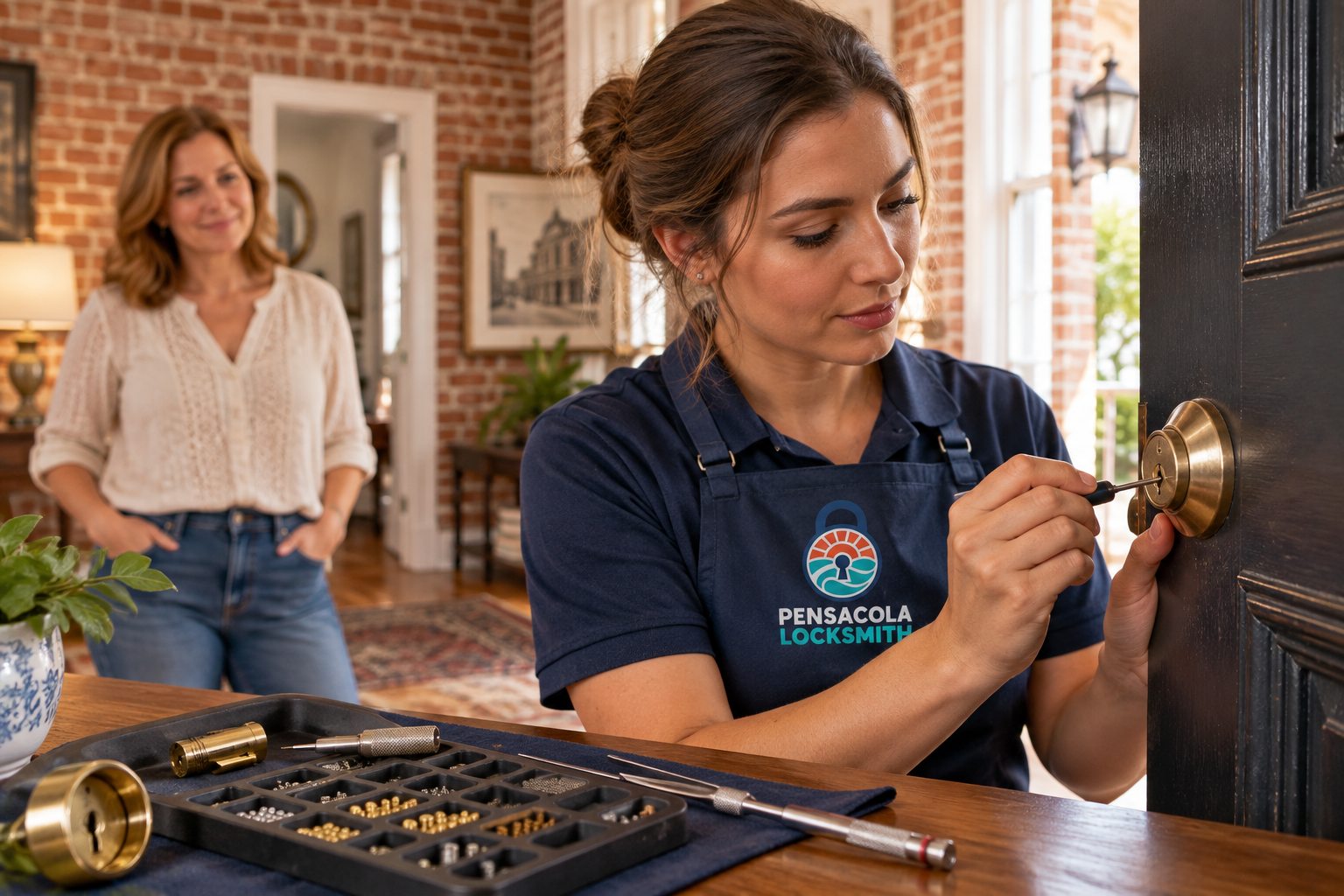
Single cylinder, double cylinder and thumb turn
A single cylinder deadbolt has a key slot on the outside and a thumb turn on the inside. It is the most common type for homes because it is fast to operate from inside, which matters in a fire or an emergency. You can leave without hunting for a key, and everyone in the household can open the door without special tools.
A double cylinder deadbolt has a key slot on both sides. It is sometimes used on doors with glass panels, because it prevents a person from breaking the glass and reaching in to turn a thumb turn. The tradeoff is serious: in an emergency, anyone inside needs a key to get out. Many local codes restrict or prohibit double cylinder locks on residential exits for this reason.
A third option is a keyless or keypad deadbolt, which uses a code instead of an outside key. Others use a lever or knob on the inside with a keypad or smart control outside. Whatever you pick, think about who needs to enter, how often, and what happens when the power or battery fails. For safety, make sure a deadbolt on an exit door can always be opened from inside without a key.
Bolt throw, strike plate and screws
The bolt throw is the length that the bolt extends from the door edge into the frame. A longer throw gives more hold, because more of the bolt is buried in the frame. Many quality deadbolts have a throw of about one inch, though you may find shorter ones in lower grades. When you compare models, check this dimension and look for a bolt made of hardened material.
The strike plate is the metal plate screwed into the door frame that receives the bolt. The bolt is only as strong as what it is anchored to. A thin strike plate held by short screws can pull out of a soft frame under force. A better approach is a reinforced strike plate with long screws that reach deep into the framing behind the door jamb.
Replacing the standard screws with longer ones, ideally three inches, can make a significant difference. Ask a locksmith to check the frame, since cracked or rotted wood needs repair before any lock can perform well. In humid coastal areas, wooden frames can swell, soften or rot, so inspect them when you replace a deadbolt. A good lock in a bad frame is wasted money.
- Look at the bolt throw and the bolt material
- Use a reinforced strike plate
- Install long screws that reach the framing
- Check the frame for rot or cracks
- Make sure the door is solid enough for the lock
Cylinder features that resist attack
The cylinder is the part with the keyway, and it is where most attempts to bypass a lock are focused. Basic cylinders can be picked or bumped by a person with the right tools and training. Better cylinders use security pins with unusual shapes that make picking harder, hardened inserts that resist drilling, and tighter tolerances that reduce bumping.
Some manufacturers offer restricted keyways, meaning the key blanks are controlled and cannot be freely copied at any hardware kiosk. This helps if you worry about unauthorized duplicates. The tradeoff is that making a spare takes a visit to an authorized provider, so you plan ahead rather than copy a key on a whim.
A locksmith can also rekey a cylinder later, changing its pin pattern to match a new key. This is a flexible way to manage keys without replacing the whole lock. Ask about the options for your model, and ask whether the cylinder can be keyed to match other locks in the house so you use a single key. Ownership is checked before rekeying.
Matching the deadbolt to your door
Doors differ, and the lock should suit them. Standard residential doors are cut with a large hole for the lock body and a smaller hole in the edge for the bolt. Most deadbolts fit these standard preparations, but older doors, historic doors and custom doors may have different sizes. Measure the diameter of the hole and the distance from the edge of the door to the center of the hole, called the backset.
Door thickness matters too. Most residential doors are about one and three quarter inches thick, though some are thinner or thicker. Check what the lock supports, and choose accordingly. Steel and fiberglass doors have internal reinforcement blocks where locks go, so drilling in the wrong place can damage the door. Wood doors can split if the holes are cut badly.
Older homes, including the historic houses found around Pensacola, sometimes have mortise locks or doors with unusual dimensions. A locksmith can often retrofit a modern deadbolt without ruining the door's character. If the door is valuable or original, ask for the least invasive option. Tell the technician about the age and condition of the door when you call.
Finishes, humidity and salt air
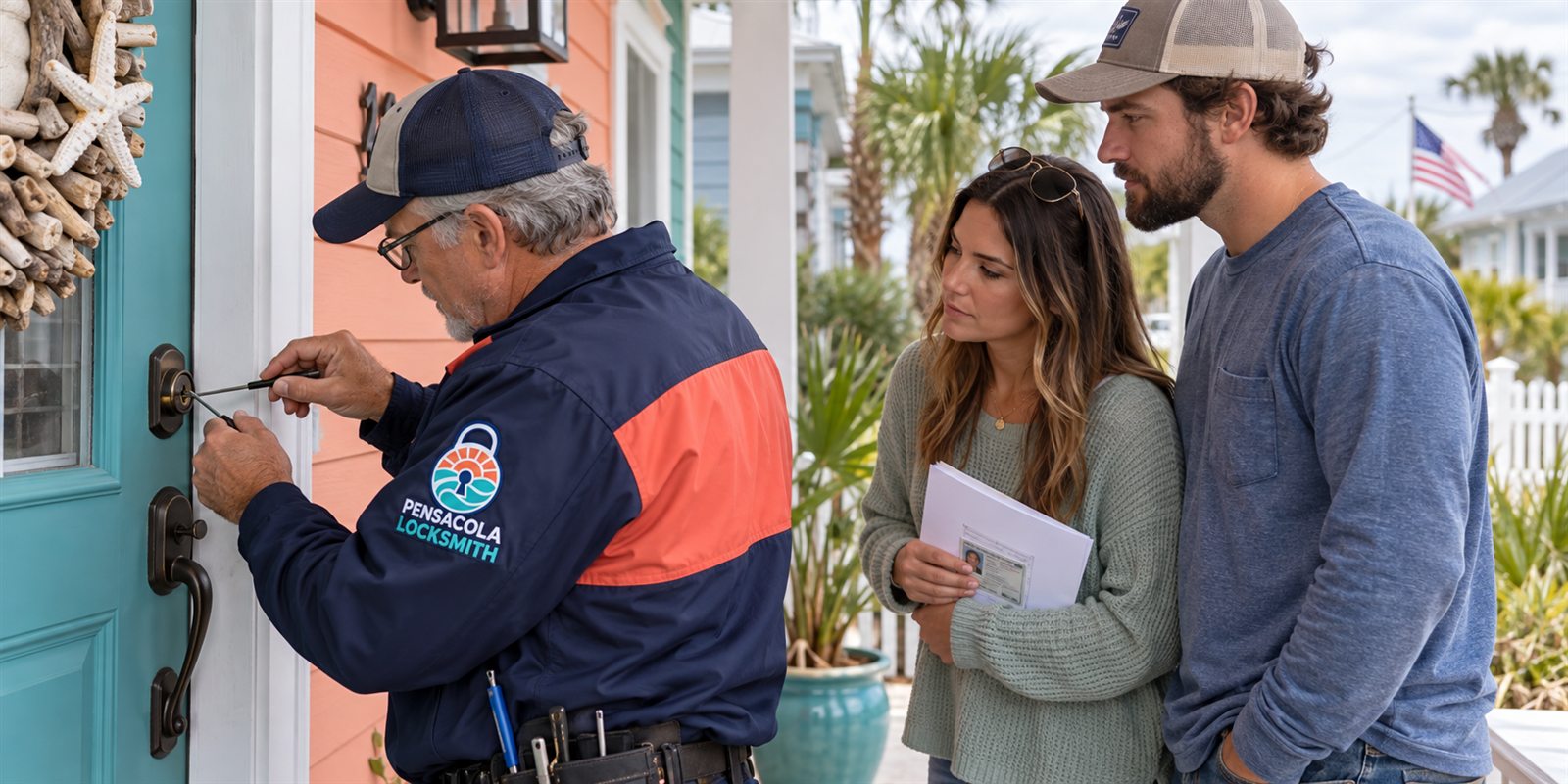
In coastal areas, the finish on hardware affects how long it looks good and works well. Salt-laden air attacks metal, and humid conditions keep surfaces damp. Cheap plated finishes can pit, peel and corrode within a few seasons, especially on doors that face the water or take afternoon sun and rain. Look for finishes designed to resist tarnish and corrosion.
Solid brass and stainless steel components hold up better in salty environments than lightly plated zinc. PVD finishes, which are a hard coating applied by vapor deposition, also have a good reputation for durability. Ask a locksmith which products tend to last in your area, and which have performed poorly. Local experience is valuable.
Internal parts matter as much as the surface. A lock that looks fine but has a corroded cylinder will stiffen and eventually fail. Regular maintenance helps: wipe the exterior with a damp cloth, and use a dry lubricant in the keyway now and then. After storms, check the lock for water intrusion and operate it several times. If it feels rough, address it early.
Smart and keypad options within a deadbolt
Many people consider an electronic deadbolt, with a keypad, a touch pad or a phone connection. These add convenience: you can give a guest a temporary code, lock the door remotely or avoid carrying a key. For rental properties and busy households, that flexibility can be valuable. But they bring extra considerations, such as battery life, software updates and security of the system.
Check what happens when the battery dies. Most models allow you to use a physical key or a backup power connection, but not all. Check whether the lock can be operated from inside without a key at all times. Check how the lock behaves in a power outage, which can happen during hurricane season. A product that works only with a working phone is a poor choice for emergencies.
Even with electronics, the mechanical strength matters. A smart lock with a weak bolt and a flimsy strike plate is still a weak lock. Ask for the grade, the bolt throw and the cylinder details, just as you would for a mechanical lock. For a fuller discussion of electronic locks, see the related guide on choosing a smart lock.
Garage doors, back doors and sliding doors
Not every entry is a front door, and the lock choice changes with the opening. The door from a garage into the house is often overlooked, yet it is a favorite route for an intruder who has gained access to the garage. Treat it like any exterior door, with a solid door, a good deadbolt and a strong strike plate, and keep it locked even when you are home.
Back doors and doors to a patio or porch often have glass panels, which creates the double cylinder question again. A better answer is often laminated or security-film glass, a deadbolt placed away from the glass, or a door without glass at all. Sliding doors need a different approach, such as a secondary bar or pin lock, because a standard deadbolt does not fit.
Side gates, storage rooms and detached sheds may call for a different type of lock, such as a heavy-duty padlock with a shrouded shackle or a deadbolt rated for outdoor use. Choose hardware that can handle sun, rain and salt. In storm season, consider how the door and frame will cope with wind and flying debris, and make sure hinges and screws are strong enough to match the lock.
Installing it right: DIY or professional
A deadbolt installation looks simple, but small errors can ruin the result. Misaligned holes mean the bolt does not line up with the strike plate, so the lock drags or fails. A hole drilled too large weakens the door. A bolt that does not extend fully into the frame offers little protection. If you are not experienced with a hole saw and door prep, consider having a technician do it.
A professional will check the door, the frame, the strike plate and the alignment. They will test the lock repeatedly, adjust the strike and make sure the bolt throws smoothly. They can also advise whether the door needs reinforcement or repair first, and whether other locks should be rekeyed to match. They can also remove the old lock without damage.
If you do install it yourself, follow the instructions closely, use sharp tools, and test the lock many times with the door open and closed. Do not close the door with the bolt extended, which can damage the frame. Keep the packaging and any extra keys. If anything feels off, stop and call us for advice. We can confirm availability and talk through the work.
Putting it all together: a simple decision path
Start with the door. Is it solid and in good shape? Is the frame sound? If not, repair these first. Next, decide on grade and cylinder type. For an exterior door on a home, a higher-grade single cylinder deadbolt with a reinforced strike plate and long screws is a strong baseline. Add a restricted keyway or a smart feature only if they meet a real need.
Then consider the setting. If you live near the water, choose a corrosion-resistant finish. If you rent out the property, think about code-based or rekeyable options that make turnovers simple. If you have children or older family members, make sure the lock is easy to operate from inside. If you have glass nearby, think about layered security rather than a double cylinder.
Finally, plan the key system. Do you want every door to share a key? Do you want a master key for a business? Who will hold spares? A locksmith can help design a system that works for you, and can rekey existing locks to match. Call us with your questions. Quotes are given by phone, and a technician can visit when the situation is more complicated.
Common questions
What is the difference between a deadbolt and a regular door lock?
A regular knob latch uses a spring bolt with a beveled edge that can be pushed back or forced. A deadbolt uses a solid bolt that slides straight into the frame and does not retract unless the key or thumb turn moves it. That makes it much harder to defeat without damaging the door.
Is a double cylinder deadbolt a good idea?
Usually not for homes. It requires a key on both sides, which can trap people inside during a fire or emergency, and many local rules restrict it. It may be considered for doors with glass nearby, but layered security and a single cylinder lock with a good door are generally safer choices.
Do I need a higher-grade deadbolt for my front door?
A higher grade generally means stronger parts and better resistance to force, which is worth considering on main entry doors. Pair it with a reinforced strike plate and long screws in a sound frame. A good lock in a weak frame does not give the protection you expect.
Will salt air damage my deadbolt?
It can. Salt and humidity corrode cheap plated finishes and internal parts. Look for corrosion-resistant finishes such as solid brass, stainless steel or durable coated surfaces, and wipe and lubricate the lock occasionally. After storms, operate it a few times and check for roughness.
Can a locksmith install or rekey a deadbolt for me?
Yes. A locksmith can install, adjust, reinforce or rekey a deadbolt after confirming you own or have authority over the property. Call us for a quote by phone. If the job is complicated, a technician visits and the service call charge is explained before dispatch. Call to confirm availability.