
Content note: this page was written by Claude (AI) for Pensacola Locksmith.
What the car checks before it will start
Modern cars do not start simply because a key turns or a button is pressed. Before the engine is allowed to run, the car checks that it is being asked by an authorized key. Inside the key or fob is a small chip that holds a code. The car sends out a low-power signal, the chip answers, and if the answer matches what the car expects, the starter and fuel systems are allowed to work.
This security system is called an immobilizer. It exists to stop thieves from starting a car by cutting a copy of the metal key or by tampering with the ignition. A metal key without the right chip can turn the ignition and still not start the engine, because the car never hears the correct reply. That is why a perfectly shaped key can fail.
Because the check is invisible, the symptoms can look confusing. The dashboard may light up normally, the starter may not crank at all, or the engine may crank and then stop. Understanding that the car is making a decision, not just completing a mechanical circuit, helps you work out where the break in the conversation is.
The security light on the dashboard
Most cars show a small light when the immobilizer is active. It may look like a car with a key, a lock, or a padlock. Under normal conditions, it flashes slowly while the car is off, lights briefly when you turn the ignition on, and then goes out as the car recognizes the key. If it stays on or flashes quickly while you try to start, the car has not accepted the key.
That light is one of the most useful clues you have. A steady or rapidly flashing security light tells you the problem is about recognition, not about the battery or fuel. It points toward the chip, the fob, the antenna ring around the ignition, or the car's own security module. Your owner's manual will describe what the light does on your particular vehicle.
Take a note of what the light is doing before you call anyone. Does it flash when you insert the key? Does it stay on after you turn the ignition? Does it behave differently with the spare? Giving this detail to a locksmith or a mechanic speeds up the diagnosis, because it separates a recognition problem from a general starting problem.
A weak fob battery
The most common and simplest cause is a weak battery in the fob. In a push-button car, the fob uses its battery to transmit its code. When the battery is low, the range shrinks, and eventually the car cannot hear it at all. You may notice that you must hold the fob closer to the door, or that the buttons need several presses before the car responds.
Many cars show a warning on the dashboard such as key battery low, but not all do. If your fob has become unreliable lately, assume the battery is a prime suspect. Replacing it is typically a small job. You open the fob case, note the battery type printed on it, and fit a new one of the same type, taking care to match the orientation.
Even with a dead fob battery, most push-button cars have a backup. A spot in the console, cup holder or near the steering column lets the car read the chip using a very short-range method that needs no battery. Your manual will say where to hold the fob. Try that before assuming the fob has failed. If the car starts that way, the battery is almost certainly the cause.
Pairing and programming problems
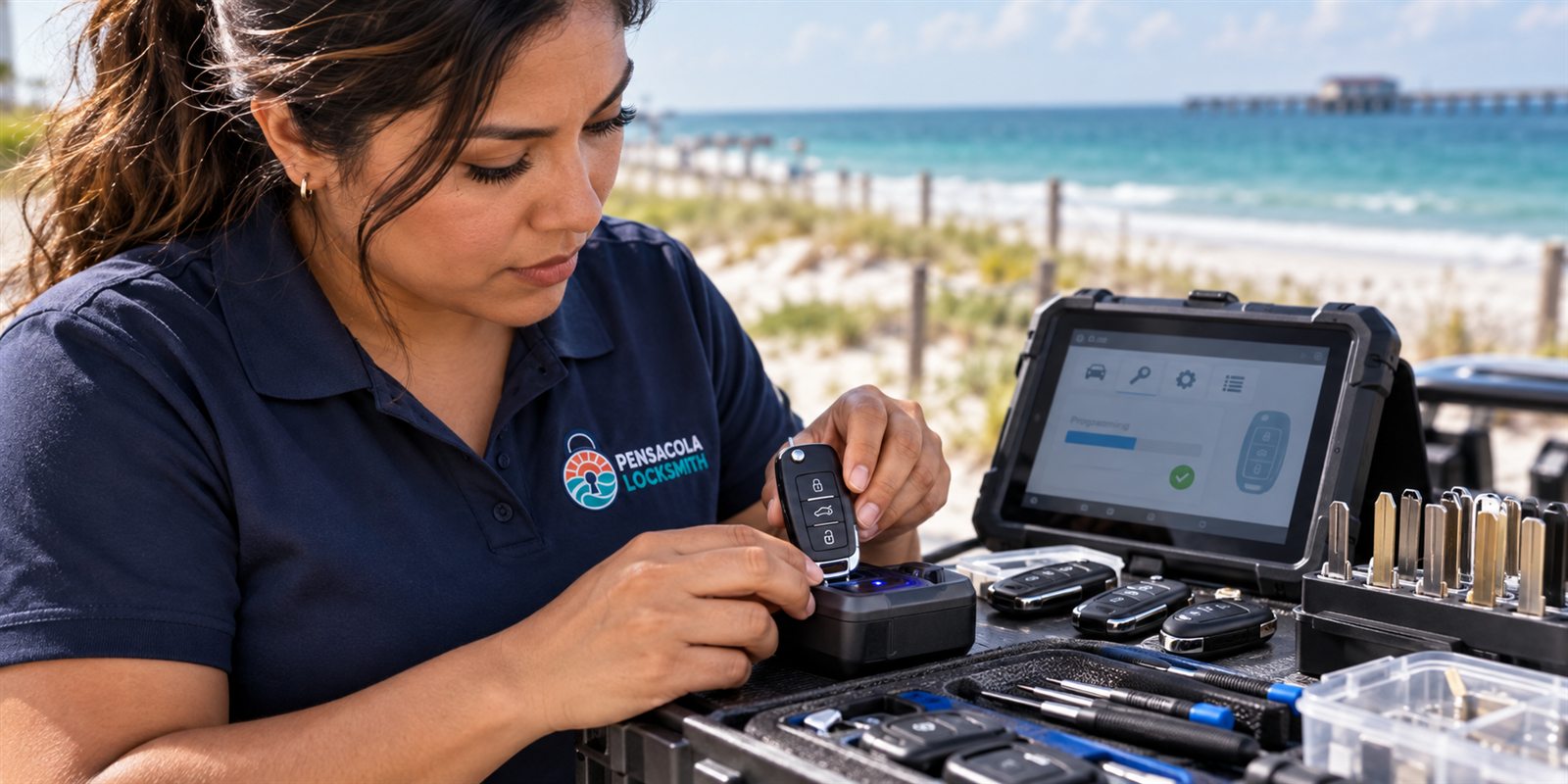
Each key or fob must be introduced to the car so that it recognizes it. This process is called programming or pairing. A new key that was cut and not programmed will turn in the ignition but not start the car. A fob that has been reset, a car whose computer has lost its memory, or a key that was programmed incorrectly can all produce the same result.
Sometimes keys lose their pairing after a battery disconnect, a major repair or a replaced control module. The car may forget which keys it trusts. In that case, the keys have to be programmed again, which requires the right equipment and the right authority. A locksmith with proper tools can often do this on site, depending on the vehicle.
Ownership comes into play here. Programming a key gives access to the car, so a locksmith confirms that you are the owner before doing it. Have your registration or title and a photo ID. This is a normal safeguard, and it applies even to someone programming a spare for their own vehicle. Call us if you are unsure what documents apply to you.
A damaged fob or chip
Fobs live hard lives. They get dropped, sat on, rained on and left in hot cars. The circuit board inside can crack, a solder joint can fail, or the chip can be damaged. Water is especially harmful, and humid Gulf Coast conditions mean moisture is a constant threat. A fob that has been through the wash often stops working altogether.
If the fob has a visible crack, a loose case, or rattles when you shake it gently, suspect physical damage. If the buttons work but the car will not start, the chip may be the problem. If the buttons do not work and a new battery does not help, the board inside may be damaged. A technician can test the fob and tell you whether repair or replacement is more sensible.
A fob with a damaged chip cannot always be repaired. The solution is usually a replacement key or fob, which must then be programmed to the car. The old fob can be removed from the car's memory so that a lost or damaged one cannot be used. Getting a spare made before the last working fob fails is the simplest protection you can give yourself.
Interference and a confused car
Sometimes the key is fine and the problem is in the environment. Strong radio signals, other fobs, or devices that sit close to the fob can interfere. A common culprit is keeping the fob next to a phone, a second fob, or a metal object that blocks the signal. Try separating the fob from other items and holding it near the start button or the designated spot.
Another cause is two keys for the same car in close proximity. Some cars become confused by two fobs in the cabin, and may refuse to start or may pick the wrong one. If you have two fobs, take one out of the car and try again. This is a quick test that costs nothing and sometimes resolves a puzzling no-start.
A weak or failing car battery can also make the car act confused. Low voltage can cause the security system to misbehave, lights to dim, and the start button to be ignored. If dashboard lights are dim or the car clicks, the battery may be at fault. Having it tested or jump-started is a sensible step before concluding that the key has failed.
Check the simple things first
Before assuming a complex failure, go through some basics. Is the car in park or neutral? Is the brake pedal pressed firmly? Is the clutch pushed in if it is a manual? Is the steering wheel locked so that the ignition cannot turn? These are the common reasons a start is blocked, and none involves the key at all.
Try the spare key or fob. This one test gives you a lot of information. If the spare starts the car, the problem is the original key. If neither starts the car, the issue is probably on the car's side: the battery, the immobilizer module, the antenna ring or the starter. Knowing this saves you from replacing a key that is not at fault.
Check whether the car cranks. If the engine turns over but does not catch, the immobilizer may be allowing the starter but cutting fuel or spark, or the issue could be unrelated to security, such as fuel or ignition. If it does not crank at all, the battery, starter or security system may be to blame. Describe exactly what you hear and see when you call.
- Shifter in park or neutral and brake pressed
- Spare key tried, and second fob removed from the car
- Fob held at the backup spot shown in the manual
- Dashboard lights checked for a weak car battery
What a locksmith can and cannot do
A locksmith who works with transponder and proximity keys can test a fob, read whether the car sees the key, and program new keys. If you have lost all your keys, a replacement can often be made and programmed to the car. If a fob has failed, a new one can be provided and paired. Many of these jobs can be done at your location, which saves towing.
There are limits. Some vehicles need a specialist dealer procedure or a security code that only the manufacturer can release. Some cars have a fault in the immobilizer module or antenna that is a repair rather than a key issue. A good technician will say so rather than trying to force a solution. If the problem is mechanical or electrical beyond the key system, a mechanic is the right next call.
Quotes for straightforward work are given by phone. If the problem is complicated, a technician visits and the service call charge is explained before dispatch. We cannot promise an arrival time, so please call us to confirm availability. Be ready to tell us the vehicle, what the dashboard light does, and whether you have another key.
When no key works at all
If every key fails, including spares, it is natural to worry about the cost. But it is also good news in a way, because it narrows the possibilities. The cause is more likely the car than the keys: a weak battery, a fault in the immobilizer system, a damaged antenna ring around the ignition, or a computer that has lost its stored key data.
At that point, a technician can connect a diagnostic tool to see what the car reports. Some immobilizer faults can be reset or relearned, and the keys reprogrammed. Others need a replacement part. Be wary of any advice that suggests bypassing the immobilizer permanently, because that removes a security feature and may affect your insurance and the safety of the car.
Also consider recent events. Was the battery replaced or disconnected? Was the car flooded, jump-started or repaired? Did someone attempt to break in? Any of these can disturb the electronics. Telling the technician about recent events helps pinpoint the cause. If you suspect a break-in attempt, contact the police as well.
Planning ahead so you are not stranded
A few habits protect against a no-start. Replace the fob battery before it is dead, ideally once a year or when range begins to shrink. Learn where your car's backup start spot is, and try it once when nothing is wrong. Keep a spare fob somewhere safe, separate from the main one, and test it every few months to make sure it still works.
Do not wait until your only key fails. Having a spare made while you still have a working key is simpler and less stressful than creating one from scratch after a loss. Cloning or programming from an existing key is generally quicker than an all-keys-lost situation, which can take extra steps and time.
Protect your fobs from water and heat. Do not leave them on a dashboard in summer sun or in a pocket that goes through the laundry. A small silicone cover helps with knocks. In humid coastal conditions, a fob that feels damp should be dried out gently and checked. When in doubt, call us, describe your symptoms, and we will tell you what is likely and what to do next.
Key types you may encounter
It helps to know what kind of key you have, because the troubleshooting differs. A basic metal key with a plastic head that contains a chip is a transponder key. It turns in the ignition like any other, but the chip must be recognized. A flip key folds a blade into a fob with buttons. A smart key or proximity fob has no blade you use, and works with a start button.
Each type has its own failure pattern. Transponder keys fail mostly through chip damage or wear on the blade. Flip keys add a hinge and spring that can break, and the blade may snap off. Proximity fobs depend on batteries and antennas, and are sensitive to water. Knowing which you have lets you describe the problem clearly and helps the technician bring the correct tools.
If you are not sure, look at the key and your owner's manual. Note any brand markings on the fob and whether it has a hidden emergency blade. Tell us on the phone, and a technician can usually identify the system from your description. For unusual or less common systems, we will say honestly if the job may need special equipment, and a visit may be required first.
Common questions
Why will my car not start even though the fob unlocks the doors?
Unlocking the doors and starting the engine use different checks. The immobilizer must read the chip in the key before the engine will start. A weak fob battery, a damaged chip, pairing problems or a car battery issue can block the start. Try the spare and the backup start spot.
What does the flashing key light mean?
It usually means the immobilizer is active and has not accepted the key. A slow flash with the car off is normal. A steady light or fast flashing while you try to start suggests the car does not recognize the key. Check your manual and try a spare.
Can a locksmith program a new fob?
Often yes, depending on the vehicle. We check ownership first, using the registration or title and a photo ID. Some vehicles need a dealer procedure. Quotes for straightforward work are given by phone, and complicated jobs begin with a visit and a service call charge explained before dispatch.
Will changing the fob battery fix it?
Sometimes. A weak battery is the most common cause of poor range and starting trouble in push-button cars. Replace it with the same type, and try holding the fob at the backup spot in your car. If that works, the battery was the problem.
Should I bypass the immobilizer?
No. Bypassing removes a security feature and may affect your insurance and the safety of the vehicle. A proper fix is to find why the car does not recognize the key and repair or reprogram it. A locksmith or mechanic can help work out the cause.