
Content note: this page was written by Claude (AI) for Pensacola Locksmith.
Call 911 first, then everything else
When a child or a pet is trapped in a locked car, the order of your actions matters. Dial 911 first. Do not call a locksmith first, do not search for a phone number online, and do not wait to see whether the person sleeping inside wakes up on their own. Emergency dispatchers can send police, fire and medical crews who carry tools made for exactly this situation and who are trained to protect a child or animal while entering a vehicle.
Give the dispatcher your exact location, such as the name of the parking lot, the nearest cross street or a landmark you can see. Describe the vehicle, its color, and where it is parked. Say clearly whether the person inside is a baby, a toddler or an older child, or what kind of animal it is, and whether they are responsive. Stay on the line if asked to do so, because the dispatcher may give you instructions as things change.
A locksmith is a good tool for a calm lockout. A trapped child or pet is not a calm lockout. Responders have the authority, training and legal protection to take immediate action, including entering the car by force when necessary. If a locksmith is already on the way when you realize the situation is urgent, tell the locksmith to treat it as a 911 call and wait for emergency crews.
Why a closed car becomes dangerous so quickly
A parked car works like a greenhouse. Sunlight passes through the glass, warms the seats, dashboard and floor, and those surfaces release heat into the air that is trapped inside. Even on a mild day, the inside of a closed vehicle can become much hotter than the air outside in a short time. On a sunny Gulf Coast afternoon with high humidity, the interior can reach a danger point faster than most people expect.
Cracking a window does very little to help. Studies of closed vehicles show that a narrow gap barely changes how quickly the cabin heats up. Parking in the shade also offers limited relief, because the sun moves and the heat already absorbed by the interior keeps radiating. Running the air conditioning before you stepped out does not keep the car cool once the engine shuts off.
Small children and animals are at much higher risk than adults. A child's body heats up faster than an adult's body, and a dog cannot cool itself by sweating the way people do, relying on panting, which does little in hot, humid air. Heat illness can progress from discomfort to a medical emergency before the person trapped inside is able to call for help or even cry out.
What to do while you wait for help
While you wait for crews, stay beside the vehicle and keep watching the person or animal inside. Try every door handle, including the rear doors and the trunk, because one may be unlocked. Check whether a window has been left open far enough for you to reach the lock. If you have a key fob, try the unlock and panic buttons, and try them again from different positions near the car, as range and battery strength vary.
Make as much noise as you safely can to keep a child or pet responsive, and speak calmly through the glass. If the person inside is a child old enough to understand, tell them to stay put and that help is coming, and if they can reach the lock or the door handle, coach them through it. For an infant, you will not be able to do much beyond calling for help and staying close.
Ask bystanders to help in simple ways. One person can flag down the responders, another can look for the vehicle owner by checking with nearby businesses, and another can watch for any change in the child's or animal's condition. If you have a spare key at home or with another person, arrange for it to be brought, but do not let that delay the emergency call.
Should you break a window yourself
This is a serious decision, and the law differs from place to place. In some situations, a person who breaks a window to save a child or animal may have legal protection, and in others they may not. Rules also change over time, so do not assume what applies. The safest course is to let 911 dispatchers advise you, and follow their instructions about whether to wait or act.
If the dispatcher tells you responders are seconds away, wait. If the person inside is unresponsive, in visible distress or showing signs of heat illness, follow the dispatcher's direction on whether to act. Do not take that step lightly. Breaking tempered glass produces sharp fragments that can injure a child, so if you ever do have to act, choose a window far from the child, and keep the broken glass away from them.
Be honest with yourself about the risks. A thrown rock or a hard strike can send glass into the cabin, and the force can hurt anyone near that window. Side windows are usually made of tempered glass, which shatters into small pieces, while many windshields are laminated and far harder to break. If you can wait for trained responders, they will do it more safely than you can.
Recognizing signs of heat distress
Knowing the warning signs helps you describe the situation to a dispatcher and decide how urgent it is. In a child, look for flushed or very pale skin, heavy sweating that suddenly stops, unusual sleepiness, limpness, confusion, fussiness, vomiting or fast breathing. A child who has stopped responding to your voice or to tapping on the glass is in serious trouble, and you should say so immediately on the phone.
In dogs and other pets, signs include heavy panting, drooling, bright red gums, stumbling, vomiting, collapse and glassy eyes. Cats and small animals may show open-mouth breathing or lethargy. Animals in carriers or covered crates are at even greater risk because airflow is limited. If an animal appears to have collapsed, tell the dispatcher so animal control or medical responders can prioritize.
Do not rely on your own judgment that the child or animal looks fine. Appearances can change quickly, and symptoms may not be visible through tinted glass. Treat every locked-in situation as time sensitive. Even if the victim is awake and alert, the interior temperature continues to rise, and the situation should be handled by professionals as soon as possible.
After the rescue: caring for the child or pet
Once the person or animal is out of the car, move them into shade or an air-conditioned space right away. Responders will lead on medical care, but you can help by following their instructions. Loosen or remove extra clothing from a child, offer sips of water if the child is alert and the responders say it is fine, and avoid ice-cold baths unless directed, because rapid cooling can cause its own problems.
For animals, move them to a cool spot, offer small amounts of cool, not ice-cold, water, and wet the fur with lukewarm water while heading to a veterinarian. Even if the animal seems to recover, a veterinary exam is wise because heat injury can affect organs in ways that are not obvious at first. Ask a vet or the responders what to watch for over the next day.
Be gentle with yourself and with the caregiver involved. These situations usually happen through a lapse in routine, a distraction or a change in who is responsible for the child that day. The goal now is care and prevention, not blame. Emergency crews may ask questions and file a report, which is a normal part of the process.
Where a locksmith fits in afterward
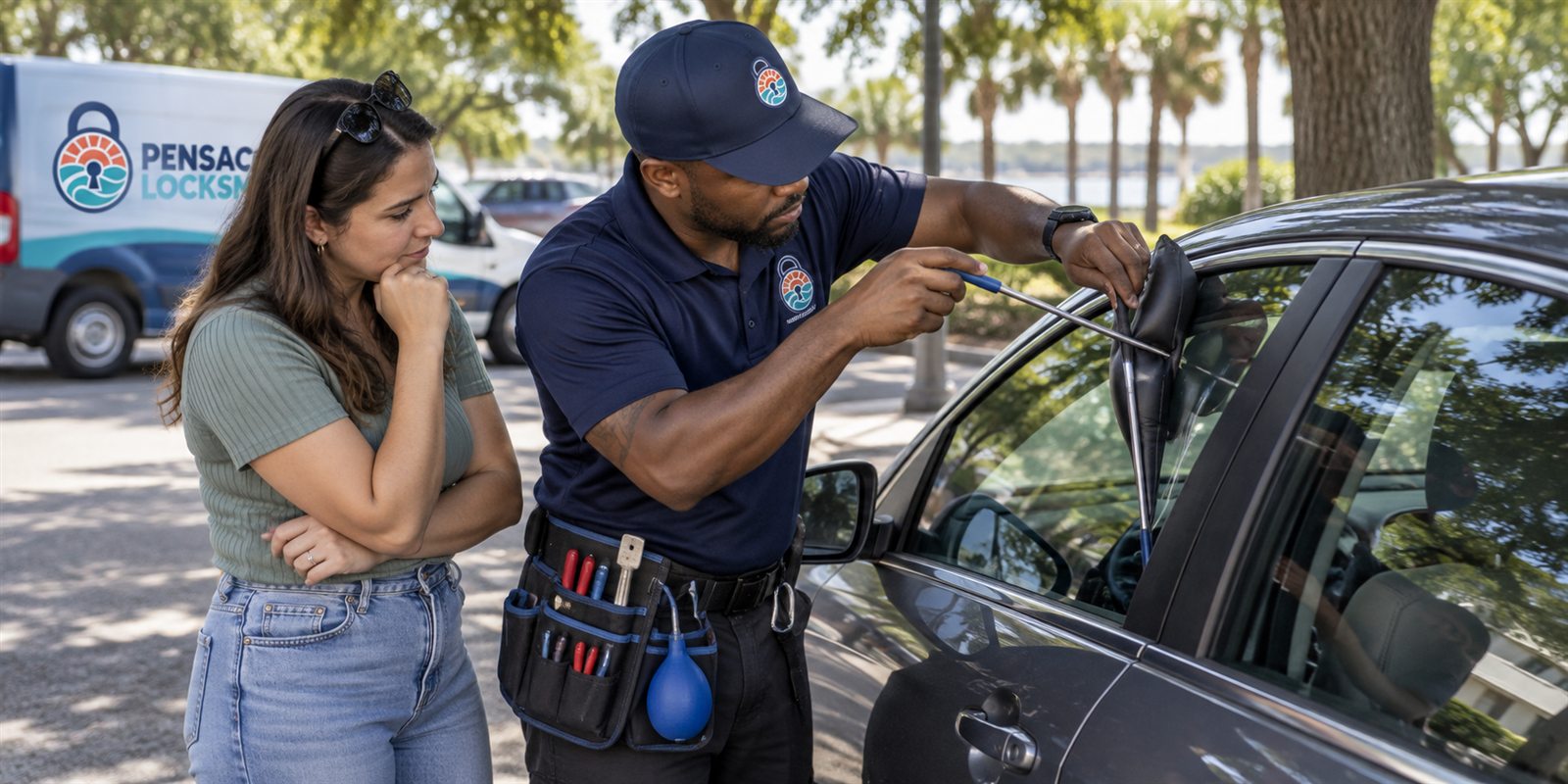
After the emergency is handled, a locksmith can help with the practical side. If responders had to break a window, the vehicle may be unlocked but damaged, or its locks and electronics may have been disturbed. A mobile locksmith can check that the doors, trunk and ignition work normally, and can reset or reprogram a key fob that stopped responding. Glass replacement is usually a separate trade.
If the cause was a lost, damaged or faulty key, a locksmith can duplicate or replace it after confirming that you own the vehicle or have authority to work on it. That check is routine: expect to show identification and proof of ownership, such as registration, title or a lease or rental agreement, before keys are cut or programmed.
A locksmith can also help you reduce the chance of a repeat. This might include adding a spare key that stays in a safe place, repairing a failing door lock or central locking system, or replacing a worn fob that sometimes locks the car on its own. Call us to confirm availability and describe what happened. If the job is complicated, a technician visits and the service call charge is explained before dispatch.
Why cars sometimes lock with someone inside
Understanding how it happens helps prevent it. Many modern cars lock automatically once they reach a certain speed or when the key fob is carried away from the vehicle. A fob dropped into a bag or left on a seat can be locked in the car when someone closes the door. Child safety locks on rear doors mean a child cannot open the door from inside, and a baby in a car seat cannot reach any handle at all.
Keyless entry systems have their own quirks. With some, the car locks itself when the driver walks away carrying the fob, even though a child remains inside. Battery failure in the fob or in the car can prevent the doors from unlocking at the moment you need them. A dead battery can also disable the power windows, which removes an easy way to ventilate or open the cabin.
Distraction is the most common cause of all. A quiet child asleep in the back, a change in routine, a phone call or a busy errand can interrupt the habit of checking the back seat. It can happen to a careful, loving caregiver. The best protection is a habit that does not depend on memory alone.
Pensacola heat, parking lots and beach days
The Pensacola area draws visitors and residents to the beaches, the bay and the waterfront for much of the year, and that means a lot of parked cars baking in lots near the sand. Beach trips are a classic setup for a lockout: wet hands, towels, coolers, keys tossed into a bag and a rush to get everyone out of the car. The same chaos that leads to a dropped fob can lead to a child or a pet being forgotten for a few minutes.
Summer heat in this region comes with high humidity, which makes the air feel heavier and reduces the body's ability to cool itself. Asphalt lots and dark upholstery hold heat well into the evening. Even in the cooler months, a bright day can warm a closed car more than you would guess, so the danger is not limited to the hottest weeks of the year.
Tourism and rentals add another layer. Visitors may be driving an unfamiliar car with a fob or a push-button start they have never used, and they may not know the automatic locking habits of that model. If you rent a car, ask how the locks and the fob work before you leave the lot, and make sure everyone in your group knows which door handles to try and how to use the manual release.
What to tell the dispatcher and what to remember later
In the moment, a short, clear report helps the dispatcher send the right crews. State your location, the vehicle description, who or what is trapped, how old the child appears to be, whether the person is awake, and whether the car engine is running. Mention whether any doors are unlocked and whether there is anyone nearby who knows the owner. Speak slowly and answer the questions you are asked.
Afterward, write down what you can remember: the time you noticed the car, the time you called, the responders who arrived and anything the dispatcher told you. If you are the caregiver, you may need that information for a report. If you are a bystander, your account may help responders and family understand what happened. Being a clear, calm witness is one of the most useful things you can offer.
If you are the owner of a vehicle that was damaged in a rescue, contact your insurer or the responding agency about next steps, and then arrange repairs to the glass, trim and locks. A mobile locksmith can inspect the lock and key systems after the glass is replaced. Call us to confirm availability, and have your identification and ownership paperwork ready for the technician.
Habits that keep it from happening
Build a simple routine and stick to it every time. Many families put a bag, a shoe or a phone in the back seat as a visual cue that someone is back there. Others set a rule that the driver always opens the rear door and looks before locking the car, even when nobody is expected to be in it. Make the routine automatic, so it works on tired mornings and chaotic afternoons.
Keep your keys and fob in your hand when you load or unload, not set on a seat, in the cup holder or in a bag in the car. If you load a child, keep the keys in your pocket or hand and do not set them down. Ask your childcare provider to call you if your child does not arrive as expected, so a mix-up gets caught early.
For pets, the rule is simple: leave them at home on warm days. Gulf Coast heat and humidity make even short stops risky, and errands tend to run long. If you must bring an animal along, choose a stop where it can come with you or have another person stay with it. Keep a spare key somewhere safe and known to a trusted person.
Common questions
Should I call a locksmith or 911 if a child is locked in a car?
Call 911 first. Emergency crews are trained and equipped to reach a trapped child safely and quickly. A locksmith can help later with keys, locks and fobs, but should not be your first call when a child or pet is in danger. Tell the dispatcher your exact location and the condition of the person inside.
Is cracking a window enough to keep a car safe?
No. A small gap barely slows the heating of a closed vehicle, and the inside can become dangerous quickly, especially in strong Gulf Coast sun and humidity. Shade and open vents also provide only limited protection. Never leave a child or animal in a parked car, even for a short errand.
Can I break a window to get a pet out?
Laws vary and can change, so follow the 911 dispatcher's guidance about whether to wait or act. Side glass breaks into sharp pieces that can hurt the animal, so responders are best placed to do it safely. If help is close, waiting for them is usually the safest choice.
What can a locksmith do after the emergency is over?
A locksmith can check that the locks and doors work, replace or duplicate a lost key, and reprogram a fob that stopped responding. Ownership or authority is verified first. Call us to confirm availability. If the job is complicated, a technician visits and the service call charge is explained before dispatch.
How can I make sure I never forget a child in the back seat?
Use a routine that does not rely on memory: place a bag or shoe in the back seat, always open the rear door to look before locking, and keep your keys in your hand when loading. Ask childcare providers to call you if your child has not arrived. Small habits protect families.