
Content note: this page was written by Claude (AI) for Pensacola Locksmith.
Why move day is the perfect storm for lockouts
On an ordinary day you have a routine with your keys. On move day that routine disappears. You are carrying boxes in both arms, running between a truck and two buildings, answering questions from helpers, and probably handling keys from two different homes. The simplest mistakes happen under these conditions: a door swings shut behind you with the key still on the counter, or a key ring gets dropped into a box that is already sealed and loaded.
Doors themselves add to the trouble. Many people prop a door open with a box, then a gust of wind or a helper nudges it, and the latch catches. If the lock is the kind that engages automatically when the door closes, you are outside before you notice. Homes along the coast often have strong breezes off the water, which makes this more common than you would think, particularly with lightweight exterior doors and screen doors.
Add the emotional weight of the day. People are tired, hot, and short on time, with a truck rental ticking away or a friend who only had the morning available. That pressure makes it harder to think clearly about a lockout. The best thing you can do is slow down for a moment, take stock of exactly what is locked and where the keys are, and then choose a practical way to move forward.
Locked out of the old place versus the new place
The location of the lockout changes your options. At the old home, you may still own or rent the property, and the problem is mostly a matter of speed. You might be on a deadline to hand over the keys, so a lockout can complicate things with a landlord or a buyer. A locksmith can open the door so you can finish cleaning and complete the walkthrough, and the lock should still work afterward when the next occupant arrives.
At the new home, the situation is more delicate. You may have just received the keys, and you might not yet have proof of residence beyond a lease or closing paperwork. A locksmith needs to confirm you are allowed in, and a fresh lease, a signed contract, or a message from the landlord or agent can serve as that proof. If you rent, the property manager may need to approve any work on the lock, so check your lease before changing hardware.
There is also the question of who else holds keys. Previous tenants, former owners, and contractors may still have copies of the keys to the new place. That is a quiet risk many people overlook. The moment you finally get inside, it is worth thinking about whether you want the locks rekeyed so only you hold working keys. A lockout can actually be a helpful nudge to take that step before the first night in your new space.
The usual suspects on move day
Most move day lockouts follow a few repeating patterns. Knowing them helps you avoid them and helps you describe the problem clearly if you do need help. The first is the keys sealed in a box. Someone packs the final box, tapes it shut, and loads it onto the truck, and the ring goes with it. The second is the door that locks behind you with keys inside on a counter or a windowsill.
A third pattern is the mismatch in keys. A landlord hands over a key that is meant for a different lock, a new buyer receives keys that do not turn, or the lockbox code was entered wrong. A fourth is the garage or side entry that you assumed was open but turns out to be secured from inside. Another common one involves a key that sticks or breaks in the lock because it was a worn copy.
Last, there is the smart lock or keypad that needs a code or a battery the previous occupant never reset. The device may be perfectly fine and just waiting for the right code, or the batteries may have drained in an empty house. Whatever your situation, write down what you tried, which doors you checked, and what kind of lock you have. That information helps the locksmith decide what to bring.
- Keys packed in a sealed box on the truck
- Door that auto locked behind you
- Wrong or worn key from the previous occupant
- Dead battery in a keypad or smart lock
- Secondary doors locked from the inside
First steps before you call anyone
Before calling, take five minutes to rule out the easy fixes. Walk around the property and test every door and window you are allowed to use, gently and without forcing anything. Check the garage entry, the patio slider, and any side gate. Ask the people helping you if anyone has a spare, and look through the truck and the nearest boxes for the ring. Boxes labeled for the kitchen or the entry table are common hiding places for keys.
If you are renting, call the property manager or landlord. They may have a spare, a lockbox, or a way to reach a maintenance person quickly. If you are buying, the real estate agent may hold a key or know who does. Calling these people first can save a service call, and it is also courteous, since they may need to know about any change you make to the locks.
Do not try to force a lock, pry a window, or break glass. Those actions create damage that costs more to fix than the lockout itself, and they can cause injuries. Forcing a door may also affect your deposit or a closing. A trained technician can open most doors without damage. If you reach the point where you need one, call us, describe the door and the lock, and we can explain what happens next.
What the locksmith does and what they need from you
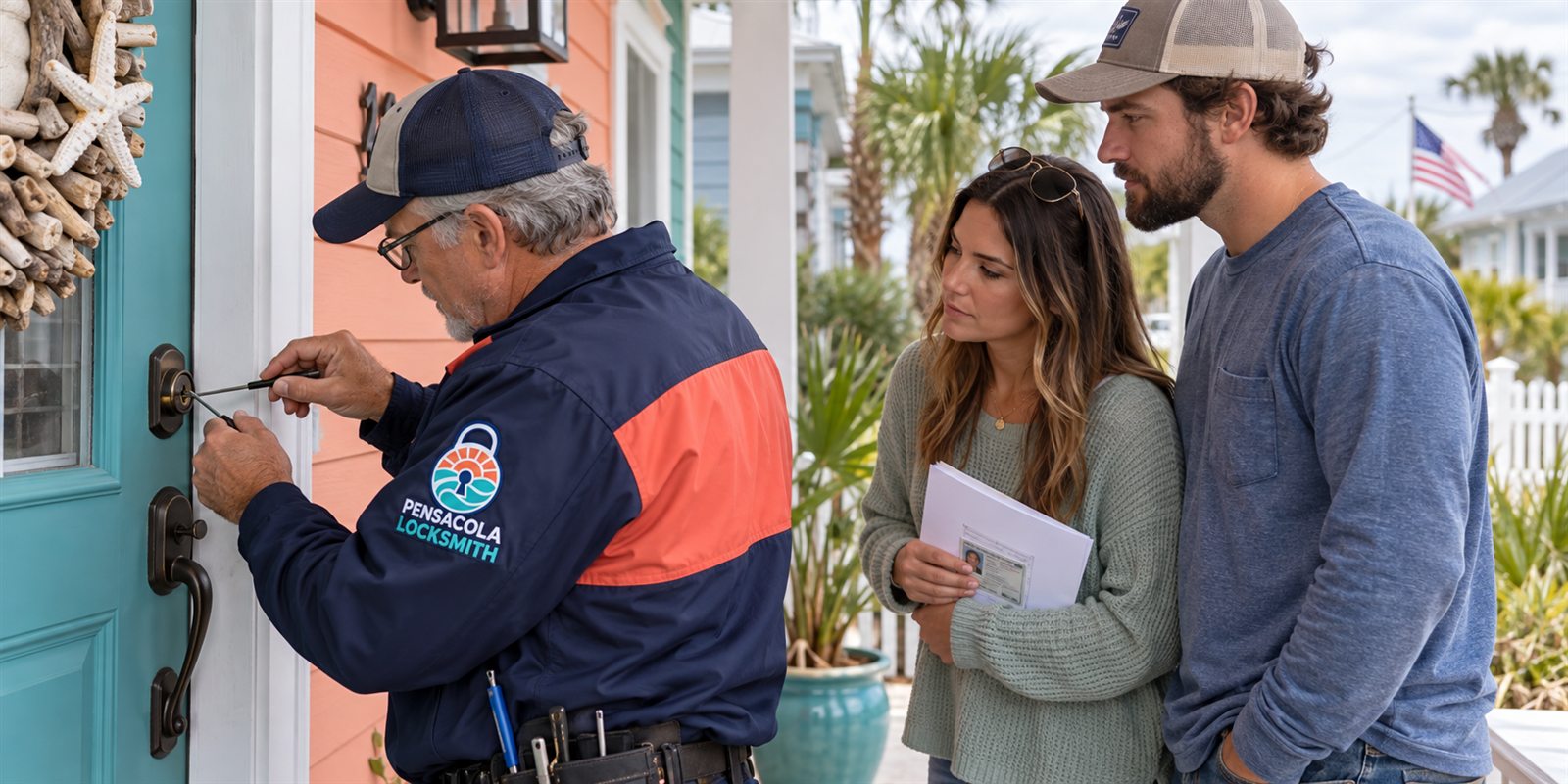
When a technician arrives, the first step is a conversation, not a tool. They look at the door, the lock, and the frame, and they ask for proof that you live there or have permission to enter. Ownership or authority is checked before any lock is opened, rekeyed, or changed. For a new home that might be a lease, a closing document, or confirmation from the property manager. For your old home, it might be your ID with the same address.
Then the technician chooses the least damaging approach. Many standard locks can be opened with specialty tools that leave the cylinder working and the door untouched. Some doors, particularly those with deadbolts, high security cylinders, or damaged latches, are more involved. Quotes are given by phone, and if the job is complicated, a technician visits and the service call charge is explained before dispatch. Please call to confirm availability, since move days are often popular.
After the door is open, the technician can discuss what comes next. This is a natural moment to ask about making new keys, rekeying the lock, or checking that every exterior door works smoothly. If you only needed to get in, the visit ends there. If you want more done while the technician is present, it is often efficient to handle it in the same visit, since the tools are already on site.
Rekey the new place before you settle in
One of the most valuable things you can do in a new home is change who holds working keys. When you move in, you rarely know how many copies of the old keys exist. Past owners, tenants, relatives, cleaners, contractors, and real estate agents may all have had access. Rekeying changes the internal workings of each lock so those old keys stop working, and you receive new keys that only you and your household hold.
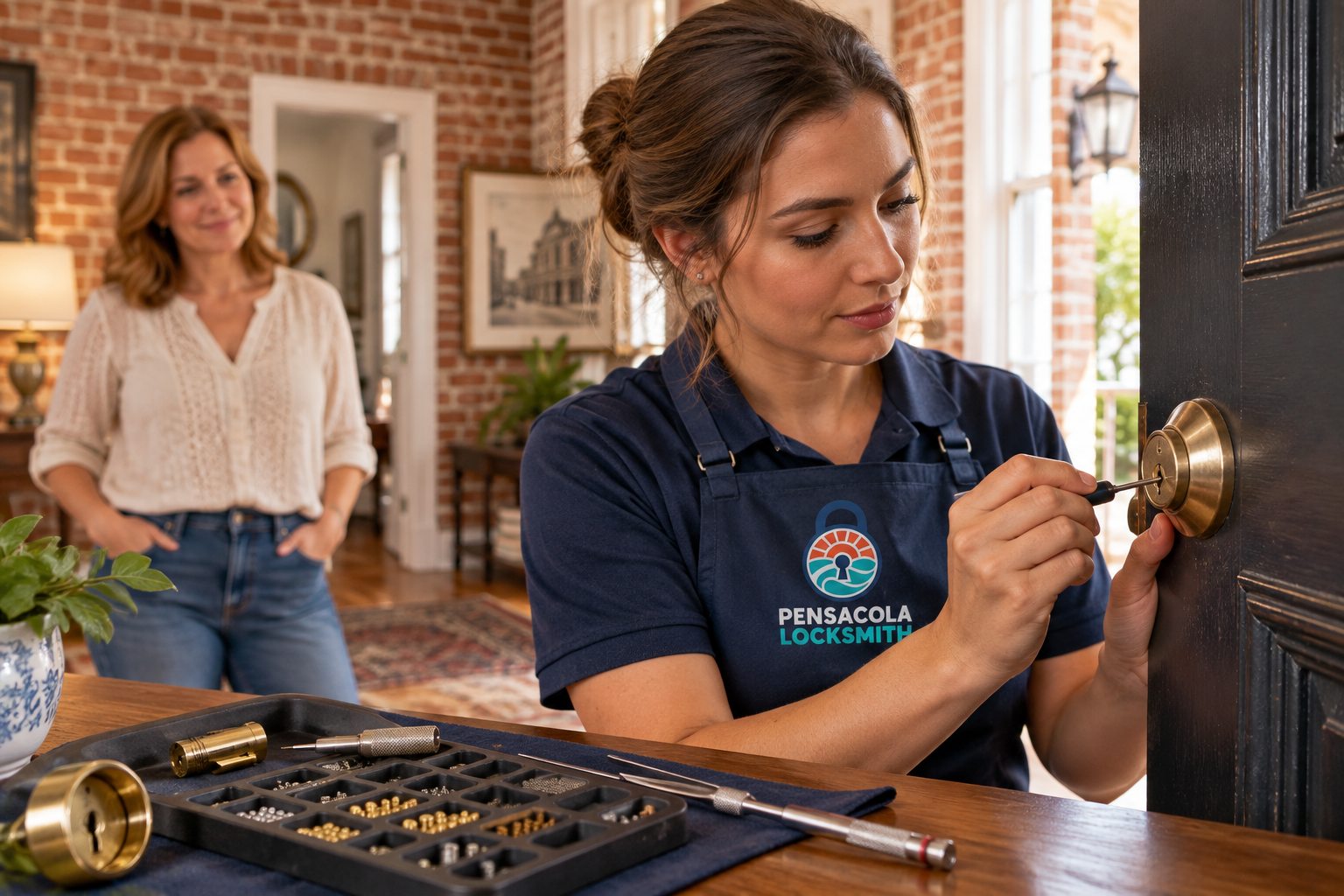
Rekeying is generally faster than replacing locks, and it keeps your existing hardware in place. If you like the look of the knobs and deadbolts, that is a plus. If a lock is worn, loose, or damaged, replacing it may be the better choice. A technician can look at each door and explain which approach fits. You can also choose to have all the locks keyed alike, so one key opens every door, which is a simple way to carry fewer keys.
If you rent, check with your landlord before changing locks, since many leases require permission and may require you to provide copies of the new keys. Property managers are often open to rekeying when it is explained as a security improvement. For homeowners, the decision is entirely yours. Many people schedule the rekey for the first day in the home, so the very first night is spent behind locks no stranger can open.
Keeping keys safe during the rest of the move
A little discipline during the rest of the day prevents a second lockout. Designate one safe place for the keys, such as a specific pocket, a carabiner on a belt loop, or a zippered bag that stays with you. Tell everyone helping that the keys live in that spot and nowhere else. If you have multiple sets for the old and new place, label them clearly and keep them on separate rings.
Never leave keys sitting on the counter, a windowsill, or a pile of boxes. Those are the places keys disappear. If you need to leave a door unlocked for helpers, stay near it or use a doorstop so it cannot swing shut. A simple rubber wedge costs very little effort and saves a lot of frustration. For a front door with an automatic latch, tape over the latch for the day if that is allowed.
Also consider the moving truck. Take the truck key out of your pocket and keep it with the other keys, but not on the same ring if possible, since a lost truck key causes its own problem. If a helper drives the truck, make sure they know where the keys are. A short briefing at the start of the day, taking two minutes, can prevent a long wait in the afternoon sun.
Special situations: apartments, storage units, and vehicles
Apartment moves bring their own complications. Many buildings use shared entrance doors, fob systems, or mailbox keys in addition to your unit key. A lockout may involve more than one lock, and only some of them can be handled by a locksmith. The building manager usually controls access to common doors, so reach out to them for those. For your own unit door, a locksmith can help, with the same ownership checks as any home.
Storage units often use padlocks that you supply. A lost key to a padlock is a different task, and the facility may have rules about who can cut or remove a lock. A locksmith can sometimes open a padlock, but you should confirm with the facility first and be ready to show that the unit is yours. Keep a spare key for any padlock somewhere other than the same ring.
Vehicles can also be involved. A lockout of the rental truck or your own car in the middle of a move is a separate problem, but one a mobile locksmith can address. The technician will check ownership or authority before opening any vehicle, and for a rental, you may need to contact the rental provider as well. Keep paperwork for both the truck and your car easy to find.
Local notes for moving around Pensacola
Pensacola has a mix of housing that affects lockouts. Older homes in historic neighborhoods may have original hardware, including mortise locks and antique knobs, that are charming but delicate. Opening these takes patience, and rekeying may involve special parts. If your new home is older, tell the locksmith on the phone so they bring the right tools. Do not expect a modern deadbolt in every doorway.
Newer developments and condominiums near the water often have keypad locks, fob entries, and sliding glass doors facing the Gulf breeze. Salt air is rough on exposed metal, and a lock that looks fine can be sticky or worn inside. If a key feels rough going in, mention it when you call. The technician may recommend servicing or replacing the lock rather than simply opening it.
Because the area has a steady flow of students, military families, and seasonal residents, moves happen constantly, especially around the start of school terms and common lease dates. That means popular days can be busy for any service. Plan ahead if you can, and call to confirm availability rather than waiting until the truck is already half unloaded. A short phone call earlier in the week can make move day much smoother.
A checklist to avoid the next lockout
Before the move, count your keys. Gather every copy for the old home, including the ones given to relatives and friends, and decide what to return. Make at least one spare of each key you plan to keep, and store the spares in different places. Pack a small bag with your essentials, such as medications, chargers, and keys, and keep it with you instead of loading it onto the truck.
During the move, keep the bag within reach, prop doors safely, and communicate with helpers about which doors should remain open. Walk through the old place one last time before locking up, confirming that you have your keys in your hand, not in a box. At the new place, test each key in each lock before you start unloading, so a bad copy is found early instead of late.
After the move, rekey or at least change the codes on any keypads. Hand out new keys only to people who need them, and keep a short list. Check that your garage opener, mailbox key, and any storage unit key are accounted for. A calm routine like this takes a few minutes and turns the most stressful day of the year into one that ends with a locked door you can trust.
Common questions
Can I get into my new home if the landlord is unreachable?
A locksmith can often open the door, but will need proof that you have the right to be there, such as a signed lease or other documentation. Ownership or authority is checked first. Some leases also require landlord approval for lock work, so try to reach them. Call us and we will explain what is needed.
Will opening the door damage the lock?
Most standard residential locks can be opened without damage using specialized tools. Some damaged, high security, or older locks are more difficult and may need repair or replacement. The technician will tell you what to expect once they see the door. Quotes are given by phone, and complicated jobs are explained before dispatch.
Should I rekey a house I just bought or rented?
It is a smart step. You cannot know how many copies of the old keys exist or who holds them. Rekeying makes those keys useless while keeping your existing hardware. Renters should check with the landlord first, since many leases require permission. A locksmith can rekey several doors in one visit.
What if my keys are inside the moving truck?
If the truck is locked with the keys inside, treat it like a vehicle lockout. A technician can open many vehicles after checking ownership or authority. For a rental, you may need to involve the rental provider. If the keys are in a box inside a locked house, the door can be opened instead. Please call to confirm availability.
Can a locksmith help with apartment building doors?
A locksmith can work on your own unit door after confirming you live there. Shared entrances, fob systems, and mailboxes are usually controlled by the building manager, so contact them for those. If you are unsure which door is yours to change, call us and describe the situation, and we will point you in the right direction.